
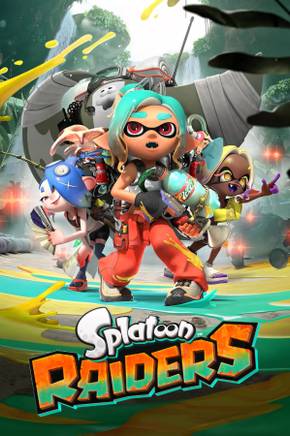
First Released July 23, 2026


Published Jul 21, 2026, 9:00 AM EDT
The Splatoon series has been around for over a decade now, and as it ventures off into new territory, it's still worth inking along with.

I'll never forget the first time I saw Splatoon. I was off to Nintendo of America's headquarters to preview the original, and although it was pretty much universally liked by everyone who played it, there was a question of whether it would take off. Well, it most certainly did.
The original was released in 2015, and since then the series has hosted multiple sequels and DLC expansions, many in-person competitive tournaments, a lot of at-home Splatfest events like "cake versus ice cream," and amiibo figures. It's a bona fide franchise for Nintendo, and the Inkling even appeared as a playable character in Super Smash Bros. Ultimate to seal the deal.
That popularity hasn't waned. Splatoon has an undeniable charm to it, and Nintendo is really leaning into that with Splatoon Raiders. Although it could stand to use a few post-launch tweaks, it's a pretty amenable transition from a multiplayer focus to adventure-based gameplay.
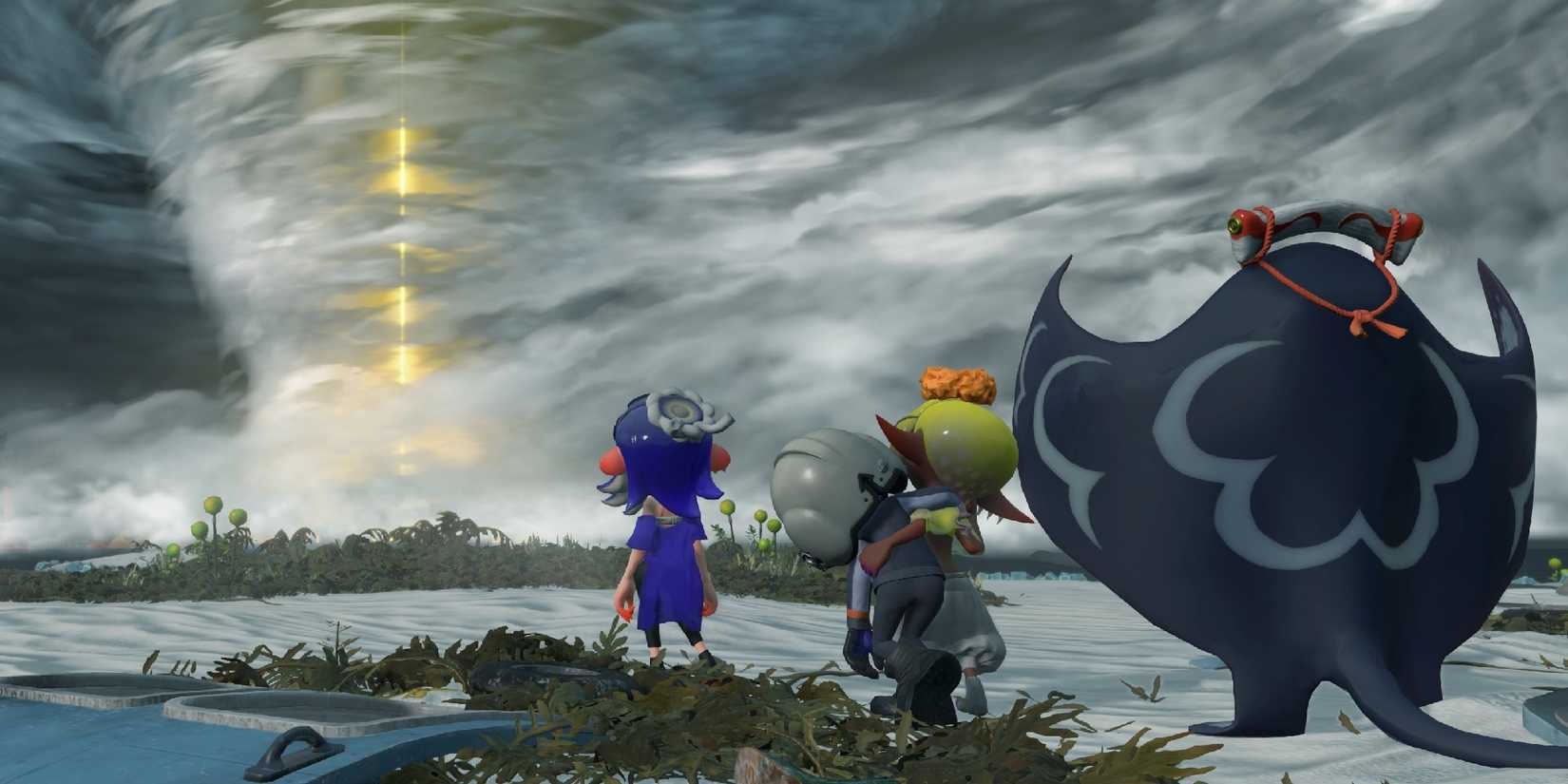
Splatoon Raiders eschews a pretty big core component of the other core Splatoon games, in that there is no competitive multiplayer of any kind. Instead, think of this like a level-based adventure game, where you delve into dungeons and story maps to gather loot. In that sense, it's a more single-player and co-op-oriented game, so as you might imagine, there needs to be a lot of depth for players to cling to.
You'll get that in spades when it comes to the gear sets, and player builds. There are three core play styles on offer (three tanks centered around speed, power, and tactics), and leveling them all requires some dabbling in the others. For example, after playing and leveling up the power tank, you'll need to level the speed tank for a bit to get your "main" to the next stage.
It's a clever way to incentivize players to try new builds, but since you don't need the full amount of XP, you aren't forced to play with something you don't enjoy for hours on end. Over time, you can earn the right to mix and match abilities and equipment, including gadgets, weapons, relic powers (perks), cosmetics, and your NPC buddy that accompanies you in a little robot. Classic weaponry like rollers, katanas, bows, rifles, snipers, slosh buckets, and more are back to choose from, and in a class-based/co-op game, it's even more fun to experiment with different combinations.
The "Hideout Ship," which serves as your base of operations, is a lot of fun to build up. While it initially starts as a barebones raft of sorts, it'll eventually blossom into a place where you can kick back between matches and play a handful of minigames on an arcade machine, or tinker with your perfect build through multiple storefronts and a construction table.

Where Splatoon Raiders really excels is in its freedom of experimentation. For starters, it's very easy to load up a stage, fail, and then come back swinging with a brand-new loadout in 30 seconds. While there are a lot of options to pick from, selecting them is dead simple through a pause menu, and the snappy response times keep things painless.
This is important because not every level is a brute force dungeon. Some are races or challenges, and others are even more hectic. For multiple stages, no weapons are allowed. Select boss fights are more like damage (DPS) checks, as the game throws droves of enemies at you to force you to keep up.
If you're a hardcore Splatoon fan, you may want to look at selecting hard mode out of the gate. Although the difficulty doesn't impact any rewards whatsoever, you may find it more enjoyable if you have to make more strategic choices for some of the tougher stages (co-op alters the difficulty automatically based on how many players you're grouping with).
Once you've conquered everything there is to do, you can replay levels on "spicy" difficulty (which generally doubles it, with exceptions) and garner more loot. The best part of Splatoon Raiders is that it's so addicting because levels are so short. Even if you fail or come back with a new game plan, it doesn't feel like you wasted any time.

My main issue with Splatoon Raiders is how some of the traditional stages (where you're running through an environment) are a bit bland, and the layouts are often way too linear. Raiders could use more unique Salmonids, because while bosses and elites do show up in plentiful numbers in stages, I wanted to see more stark design changes to help those "epic" moments stand out more.
With some more complex stages added after the initial tutorial, it would be easier to immerse yourself in the idea of exploring the unknown for loot. Instead, it creates an air of every level feeling somewhat the same, even if the moment-to-moment gameplay can consistently pull you through that funk.
Even with that caveat in mind, the simple joy of selecting a new way to ink up a stage and blast away Salmonids is still incredibly addicting. If you were worried that Splatoon Raiders wouldn't feel like a proper Splatoon game, don't be. I can't help but wonder what some quality-of-life updates and an expansion could do for this game, though, as it aims to reach its full potential.


![‘Super Troopers 3’ Is the R-Rated Release Fans Have Been Waiting For [Exclusive]](https://static0.colliderimages.com/wordpress/wp-content/uploads/2026/07/super-troopers-3-2.jpg?w=1600&h=900&fit=crop)



 English (US) ·