


Published Mar 21, 2026, 1:45 PM EDT
Nicholas Raymond is an author and journalist based out of Alabama, where he proudly roots for the Alabama Crimson Tide football team. A graduate of the University of Montevallo, he has a degree in mass communication with a concentration in journalism.
Thanks to the release of the highly anticipated first trailer, Spider-Man: Brand New Day is confirmed to see Peter Parker tackle a new, deeply personal challenge - mutations within his own DNA. From the looks of things, this problem relates closely to the inclusion of Mark Ruffalo's Bruce Banner, who apparently now works as a professor as Empire State University.
The Spider-Man: Brand New Day trailer reveals that Peter Parker will somehow develop organic webbing, not unlike Tobey Maguire's Spider-Man. Presumably perturbed by that and possibly other changes, such as waking up naked in a web, Peter Parker will consult Dr. Banner, who mentions the DNA mutations in the trailer.
What Peter is going through, and how it seems he'll be handling it, is new to the Marvel Cinematic Universe but not comic book lore. This is a threat many versions of Spider-Man have dealt with in the past, so not only is there a precedent for such a plotline, but there's multiple blueprints for how it might play out on the big screen.
Spider-Man's History With DNA Mutations Explained
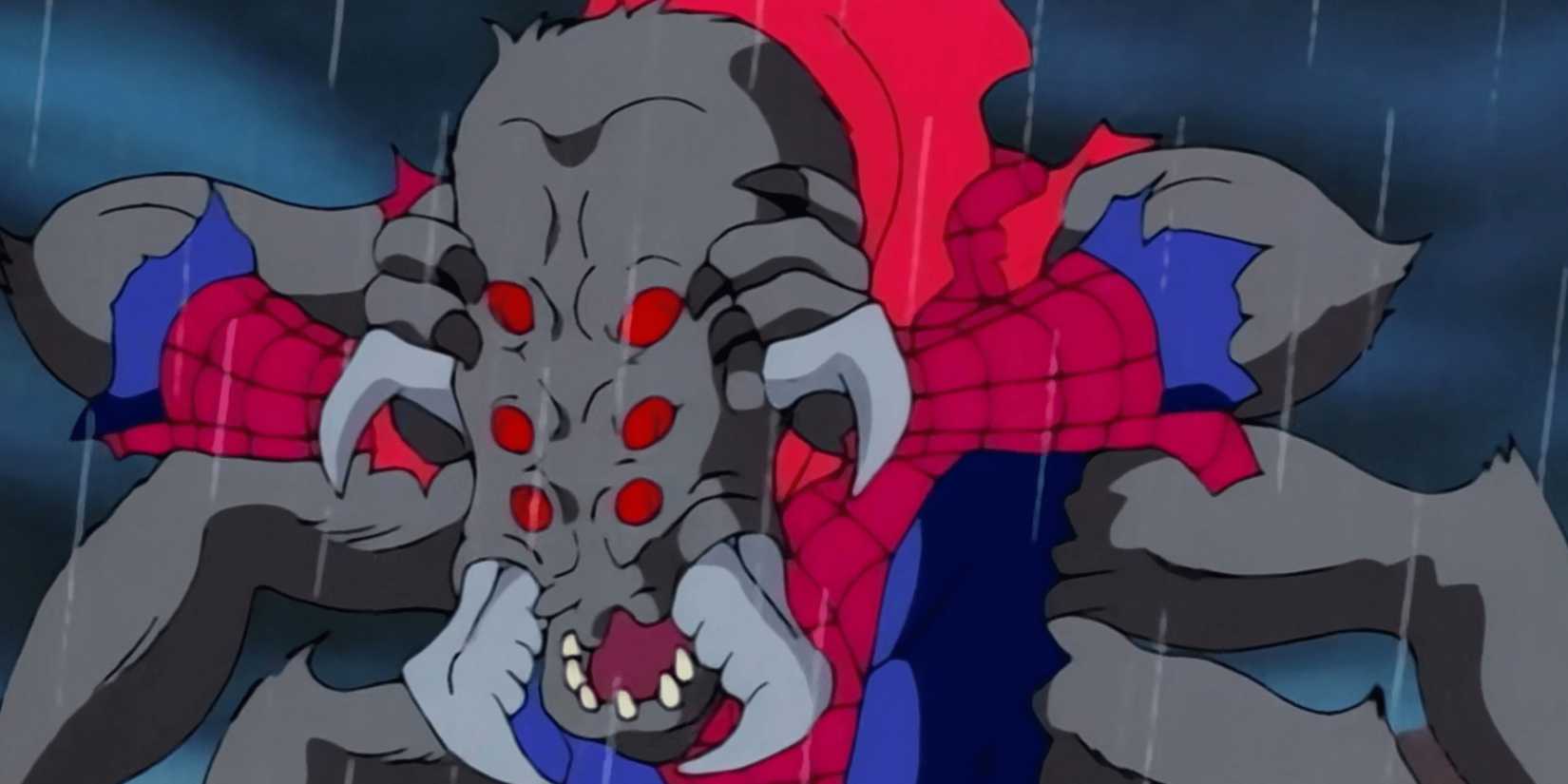
In 1971's The Amazing Spider-Man #100, Peter Parker was in the midst of some difficult personal trials, from Harry Osborn's drug abuse to the recent death of Captain George Stacy. Driven by stress and a growing desire to rid himself of his powers, Peter created a serum to do just that, but instead caused a mutation in his DNA that gave him four additional arms.
Although knowledgeable in biology, Spider-Man knew this was not a problem he could solve himself and consulted the human alter ego of the Lizard, Dr. Curt Connors. Dr. Connors tried to help him, but their efforts were interrupted by Morbius the Living Vampire. This kicked off a three-way battle between Spider-Man, Morbius, and the Lizard.
It all culminated in Peter and Dr. Connors using Morbius' DNA to create a cure for Spider-Man's mutation, restoring the hero to his normal state. The story, now remembered as the Six Arms Saga, served as the basis for a multi-episode arc in the 1990s Spider-Man cartoon, Spider-Man: The Animated Series, which added some new elements to the dilemma.
In the cartoon, Peter created the serum not because of his frustration with having super powers, but because Dr. Connors warned him that his DNA was gradually mutating. Spider-Man tried to take preemptive measures, leading to a collaborative effort with Dr. Mariah Crawford to come up with a cure.
Like his comic book counterpart, Spider-Man acquired four new arms, but the series didn't stop there - the series compounded the problem by having Spider-Man experience a second transformation, which was the now-famous Man-Spider form.
What came next was a surprising team-up between Kraven the Hunter and the Punisher, who had to work together to take Spider-Man to Dr. Crawford, who successfully reversed the mutation in Peter's DNA.
Years later, Marvel Comics approached the idea again, via an event called "Other: Evolve or Die." Lasting between 2005 and 2006, the storyline saw Spider-Man battle Morlun while coming to terms with a terminal prognosis that was apparently brought about by a disease related to his powers.
Spider-Man: Brand New Day May Be Combining The Six-Arms Saga With The Man-Spider Arc

What's been previewed in the Spider-Man: Brand New Day trailer indicates the MCU is gearing up for its own take on the Six Arms Saga, but it may be borrowing as much from the small-screen version as it is the original arc. It's not abundantly clear in the trailer if Peter's mutating DNA is something that happened outside of his control, or if it was a self-induced issue.
The latter being the case is possible, as Tom Holland's Spider-Man has a great deal of emotional baggage after the events of Spider-Man: No Way Home, not unlike the state Peter was in when he tried to create a cure in The Amazing Spider-Man #100. If so, Peter taking matters into his own hands could be a plot point the trailer is carefully hiding.
Even though Bruce Banner had no role in either iteration of the Six Arms Saga, his presence here does draw parallels to both regardless. His words to Peter in the trailer are strongly reminiscent of the warning that Dr. Curt Connors gave to Spider-Man in the 1990s cartoon, which suggests Banner may be the movie's replacement for Connors in its telling of the story.
What Spider-Man's Mutating DNA Could Lead Into Spider-Man: Brand New Day

For now, it remains to be seen which direction Marvel plans to take in regards to the mutations Peter is facing in Spider-Man: Brand New Day. The movie drawing inspiration from "Other: Evolve or Die" isn't outside the realm of possibility, but the specific moments shown in the trailer offer evidence for the Man-Spider transformation, arguably more than anything else.
Bruce Banner's claims about his mutating DNA and Peter waking up inside a web both signal that the character is somehow becoming more spider-like. This could segue into the six-armed form that originated in The Amazing Spider-Man #100, and from there, it could build toward an epic action sequence built around Peter's rampage as the Man-Spider in the animated series.
Also tying into the idea of Man-Spider making his big-screen debut in Spider-Man: Brand New Day is the return of Jon Bernthal as the Punisher. If the film wants this arc to be true to the spirit of the source material, it would be a fitting choice to bring in characters associated with the story.
Because the Punisher helped subdue Peter as the Man-Spider, his presence in the movie would be a great way of paying homage to that moment if that is indeed the route the film is taking. If that happens, we may even see a team-up between the Punisher and Bruce Banner, whose expertise may be needed to save Peter Parker in Spider-Man: Brand New Day.
Release Date July 31, 2026
Director Destin Daniel Cretton


 English (US) ·