
 5 hours ago
17
5 hours ago
17
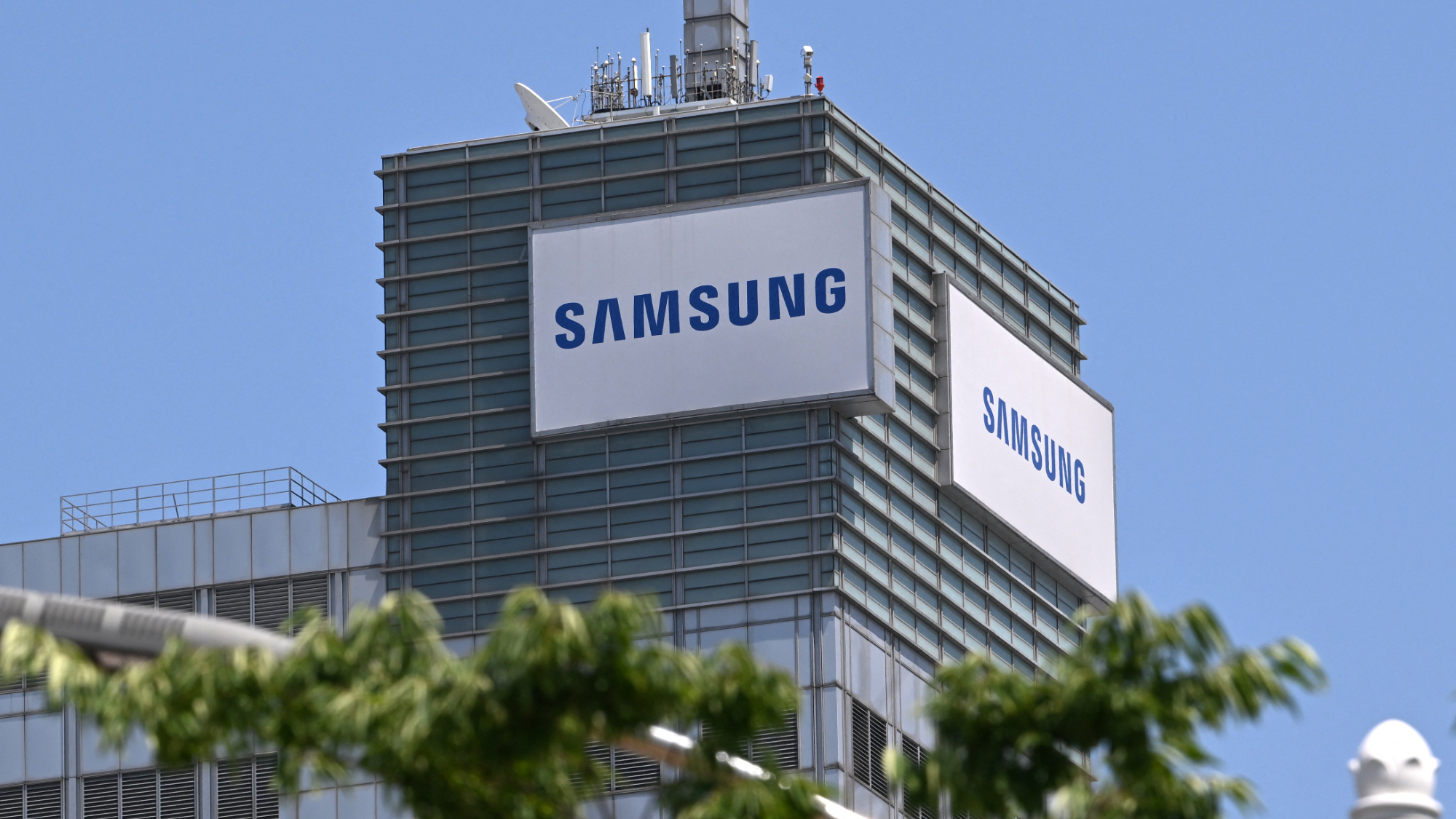
South Korean President Lee Jae Myung on Monday, June 29, announced an 800 trillion won ($520 billion) public-private investment plan alongside Samsung Electronics and SK Hynix to expand the country's chipmaking capacity, a move the government framed as essential to keeping South Korea competitive in the global artificial intelligence race. Lee unveiled the plan in a televised state address at his office in Seoul, flanked by Samsung Electronics Chairman Lee Jae-yong and SK Group Chairman Chey Tae-won, the leaders of the world's two largest memory chipmakers.
"Right now is truly a decisive moment, as the landscape of the global economy is being reshaped," Lee said in televised remarks. "Major countries, including the U.S. and China, are engaged in all-out competition with massive stakes." He added that only through cooperation between the private and public sectors could South Korea hope to triumph. Industry Minister Kim Jung-kwan said the plan would let the country rapidly expand production by sharply shortening the timeline from licensing to construction.
The centerpiece of the partnership is the construction of four production facilities, with Samsung and SK Hynix each building two. According to the government, the new plants will be built in the southwestern part of the country, near the city of Gwangju, a mostly rural area far from the existing semiconductor base south of Seoul, where both companies operate major clusters. Samsung will also build packaging facilities for high-bandwidth memory (HBM) chips in Chungcheong as demand for the advanced components soars.
"HBM, which is indispensable for the training and inference of AI models, requires cutting-edge technology for stacking semiconductor chips," the Samsung chairman said. "We will focus our investment on HBM fabs, which require main-fab-level processes, alongside existing semiconductor back-end fabs in the Chungcheong region, including Cheonan and Onyang."
One detail the government did not provide was the split between public and private money, as the project is a combined public-private commitment rather than a government spending program. While it is not immediately clear how much of the 800 trillion won would come from the state versus the two chipmakers, the disclosed line items are comparatively modest.
Industry Minister Kim Jung-kwan said the government and industry would jointly invest more than 30 trillion won over 15 years across the semiconductor value chain, while President Lee said Gwangju and South Jeolla province would contribute a further 5 trillion to 20 trillion won. Kim put another 81 trillion won toward the Chungcheong packaging hub, though he did not say how much of that is public.
The balance of the headline number is widely expected to be company capital expenditure, with the state's role concentrated in subsidies, faster permitting, and infrastructure. Kim said the government would streamline approvals and bring fab construction forward by up to 12 years, from the mid-2040s to the mid-2030s.
The plan also absorbs and accelerates projects already underway. The government said it would help Samsung and SK Hynix speed up construction of their existing capital-region clusters, with SK Group pulling forward the ramp of its Yongin memory site from 2045 to 2033, part of a stated goal to double the country's memory output within five years. SK Hynix supplies the bulk of the HBM that Nvidia depends on for its AI accelerators, the very strain this expansion is meant to relieve. While semiconductors are the focus of the investment, with the priority being a decisive lead in memory chips, the companies will also work on AI robots, physical AI, and AI data centers.
The investment partnership appears to be the latest piece of a broader strategy. SK Hynix had already committed $15 billion to new semiconductor facilities in February, a figure that now reads as an early piece of the larger national framework. Earlier iterations of the country's cluster plan had pegged long-term investment at around $471 billion, stretching to 2047, so the new figure represents a substantial expansion as AI demand projections have climbed. The fabs are targeted for completion in the mid-2030s.
The announcement caps an extraordinary stretch for both firms. SK Hynix overtook Samsung in June to become South Korea's most valuable listed company for the first time in more than 25 years, lifted by its commanding lead in HBM, while Samsung's chip division alone booked 53.7 trillion won in first-quarter operating profit as AI-driven memory shortages are expected to strain the companies' capacity past 2027.
The scale of the investments also invites inevitable comparison. At roughly $520 billion, South Korea’s plan dwarfs the United States' CHIPS Act, which provided about $52 billion in direct subsidies, by a factor of ten. Although the comparison is imperfect, since the U.S. figure is a government subsidy while the Korean number appears to be mostly private investment that the state is coordinating.
The strategic logic is the same on both sides of the Pacific: secure domestic capacity for the chips that underpin AI, at a moment when the U.S., China, Japan and the EU are all pursuing their own semiconductor industrial strategies. For Seoul, the specific prize is memory, the segment where its two companies already hold a commanding global position, with the goal being to extend that lead rather than merely defend it.

Follow Tom's Hardware on Google News, or add us as a preferred source, to get our latest news, analysis, & reviews in your feeds.





 English (US) ·