
Sony Bravia Theater Trio (HT-A8) review
The Sony Bravia Theater Trio is hard to define, but easy to love. Hard to define because its three-speaker (Trio, geddit?) package doesn’t feel quite like either a soundbar or a home theatre separates system; easy to love because it sounds amazing.
Sony’s own story of how the Trio came to be states that it was borne from frustration in its audio department about the inability of regular soundbar solutions — even high-end ones — to deliver sound with enough power and scale to convincingly partner with really big TVs. It was deemed that rather than creating a mammoth uber-long single soundbar to solve this problem, a much more practical solution would be to create a three-piece centre, left, right speaker package instead.
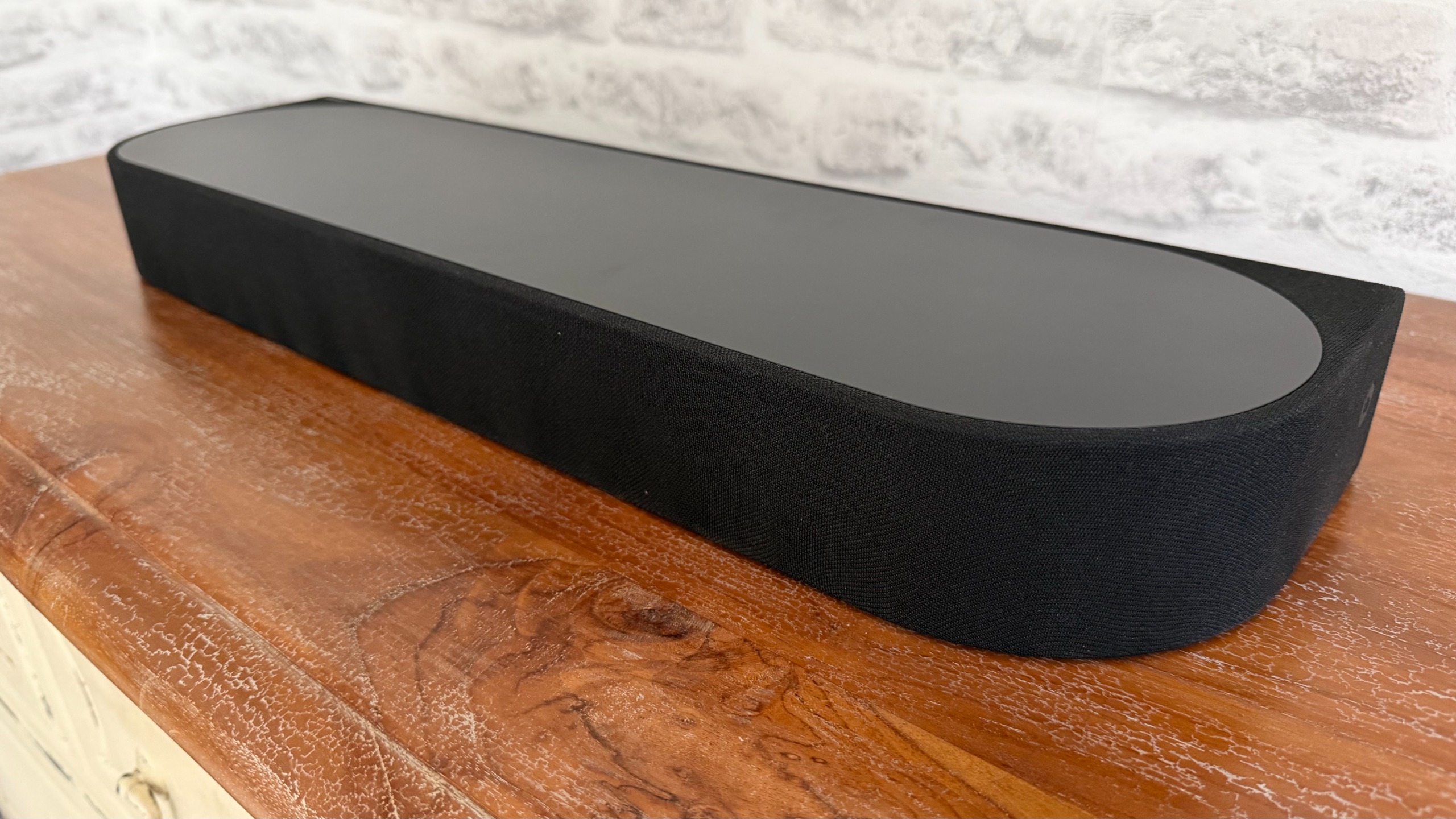
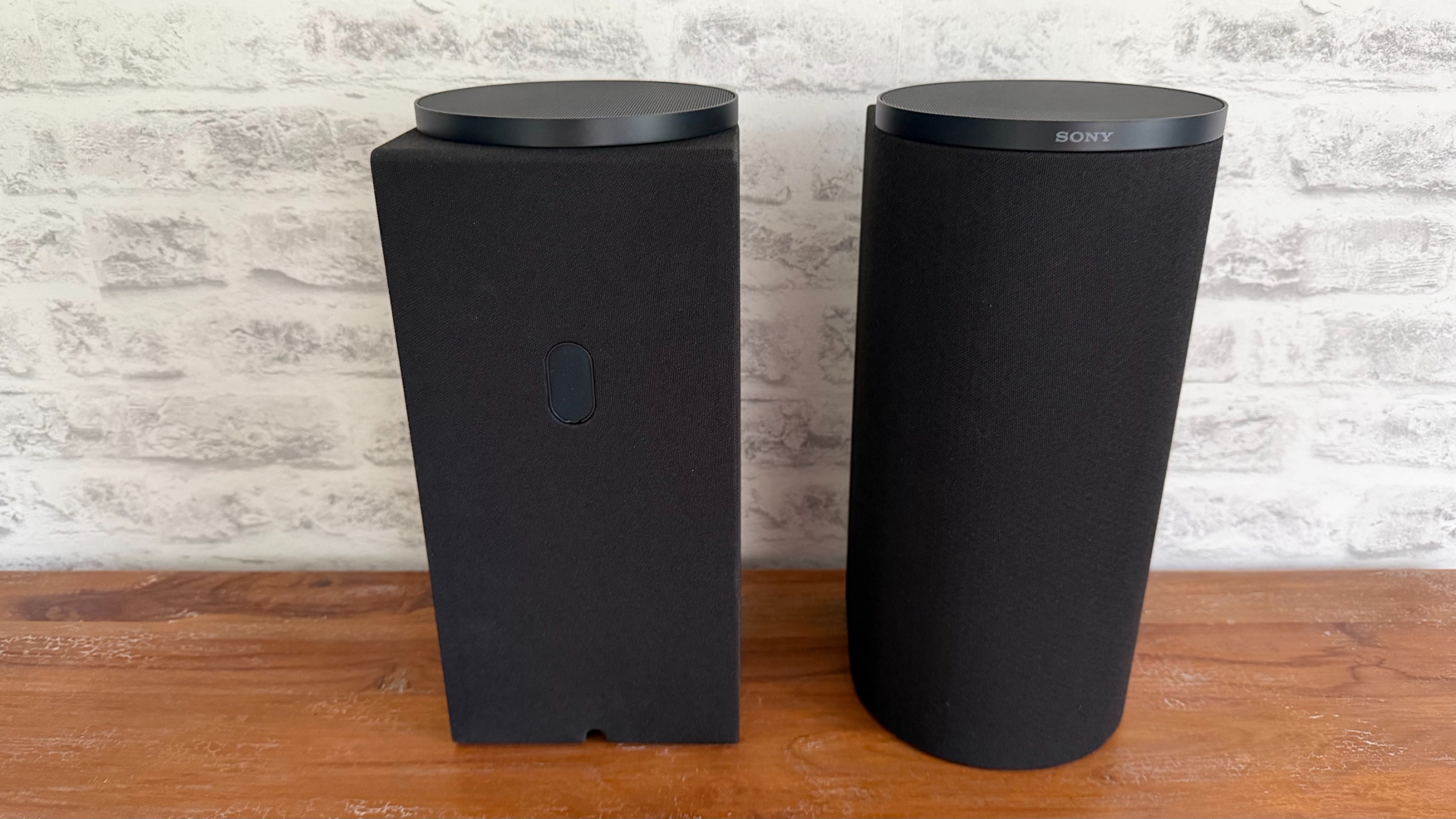
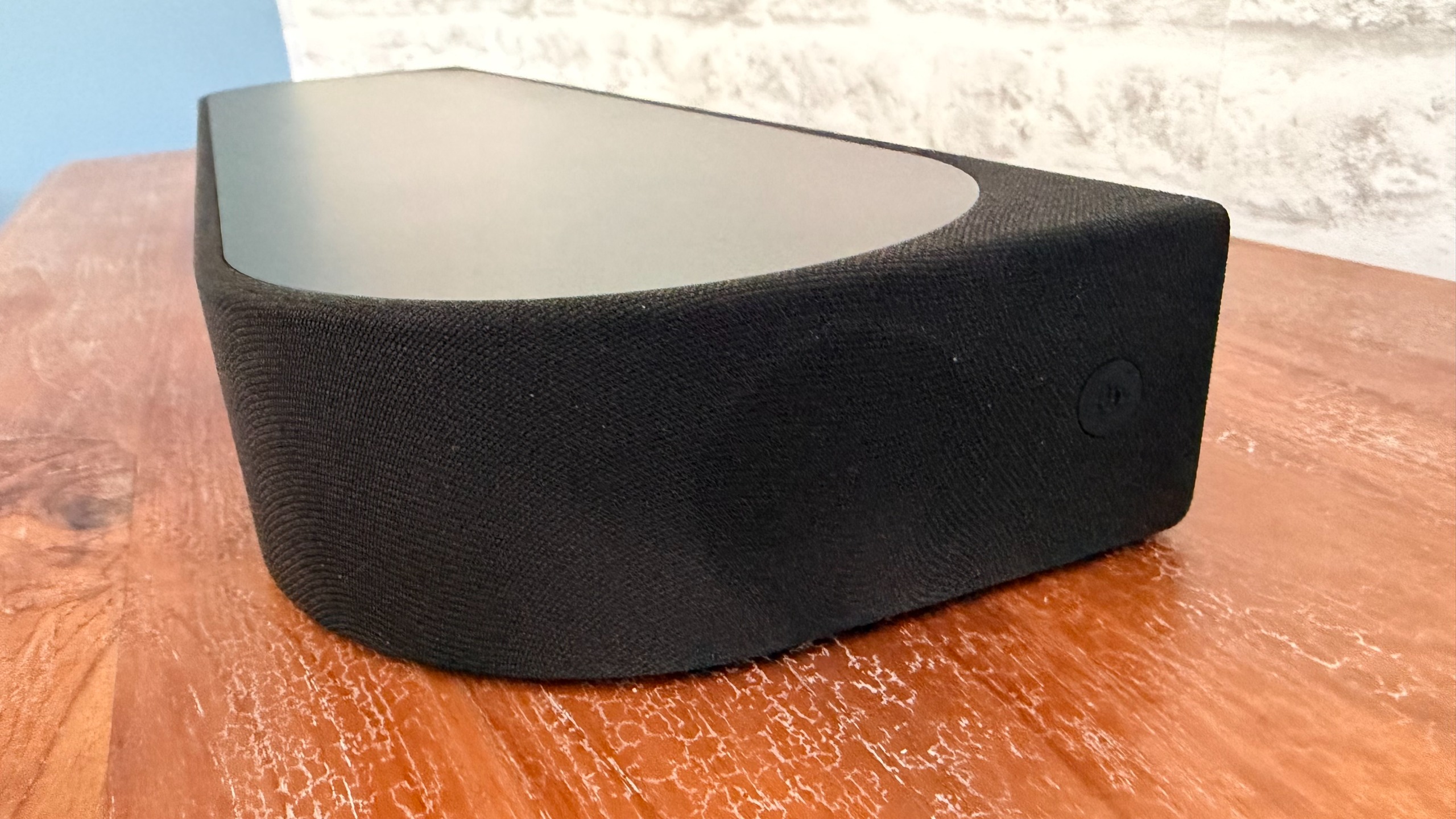
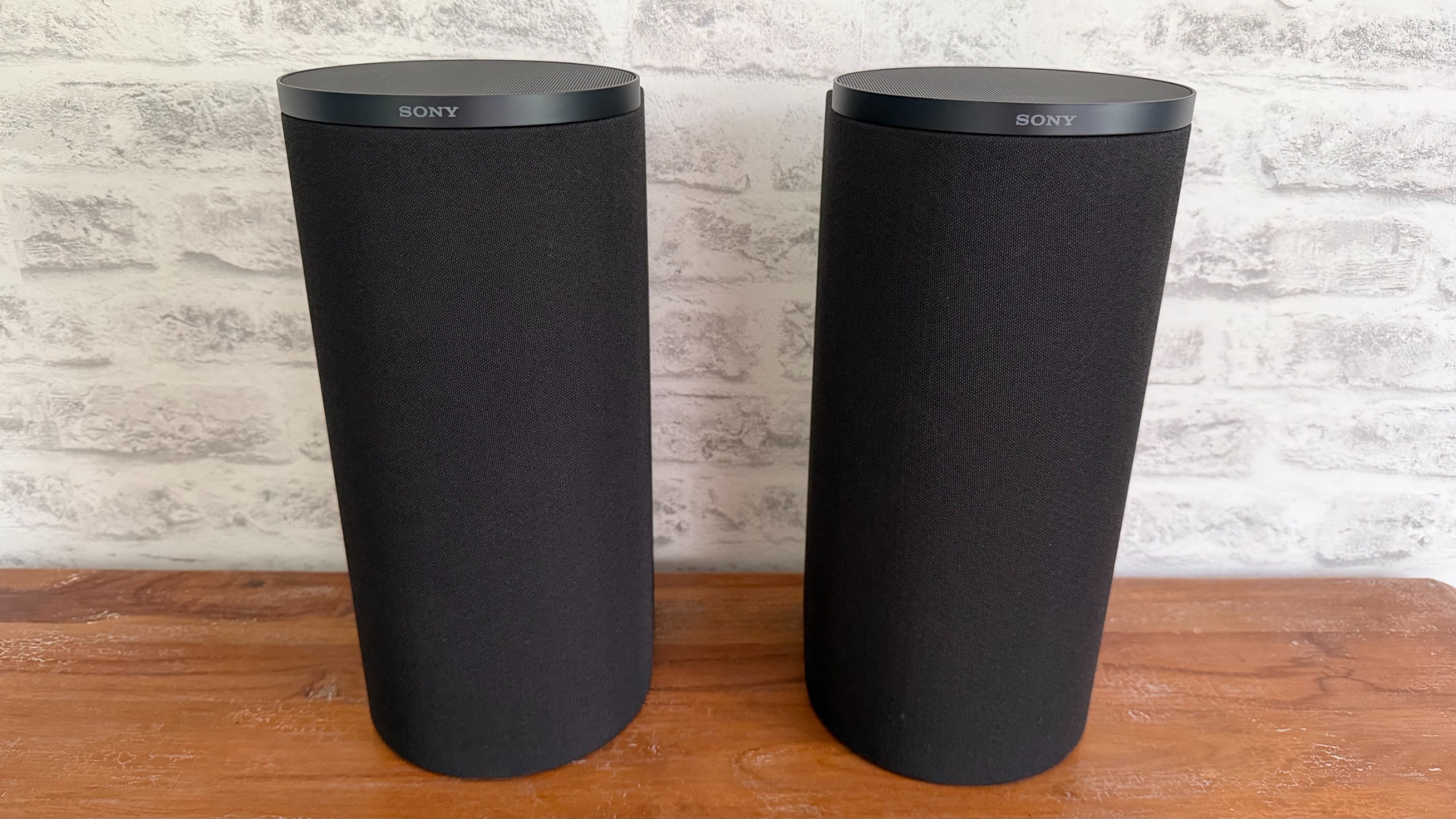
While the left and right speakers of the Trio system are larger and heavier than the sort of satellite speakers usually sold with or as options for regular soundbar systems, the package overall still looks startlingly compact overall for a system designed for king-sized TVs. The center speaker only measures in at 23.19 x 2.52 x 6.5 inches / 589 x 64 x 165mm, in fact. But you can, of course, place the wireless left and right speakers pretty much as far apart as your room allows, to help create a soundstage commensurate in scale with a monster TV.
Latest Videos FromTechRadar
I would quickly add at this point, though, that I personally don’t see the Trio as only worth getting if you have a huge TV. It’s actually so good and, as I’ll explain, so flexible with its sound that it’s worth considering by really any home theater fan who’s able to afford it.
Just throwing a trio of speakers at the big TV audio problem won’t in itself guarantee a satisfying home theater audio solution, of course. Especially when those three speakers only deliver dedicated left, right, centre and up-firing channels, rather than the many more channels that even some single bar soundbars can manage these days. The thing is, though, the Bravia Theater Trio’s channel count isn’t actually restricted to the the handful we’ve just mentioned. The brand’s revolutionary 360 Spatial Sound Mapping system is capable of adding up to 24 ‘virtual’ (created by psychoacoustic processing) extra channels of sound to the system’s ‘physical’ ones.
The 360 Spatial Sound Mapping system’s calculation process for figuring out where to place the sound from these extra virtual speakers uses a supplied, high-quality mic dongle that plugs into your phone to tailor the sound to your room layout. This works so well that you’ll be able to still enjoy a totally coherent, balanced, symmetrical soundstage from your Trio system no matter how awkward your room layout might be.
This room adaptation part of the 360 Spatial Sound Mapping system becomes even more useful if you add a pair of Sony’s new Rear 9 optional surround sound speakers. Even when I deliberately set the the two front and Rear 9 speakers in the most unhelpful positions I could manage, the processing still somehow manages to put me at the heart of a colossal 360-degree soundstage.
I’ve let the Trio’s cleverest trick, though, lead me into discussing the system’s performance before I’ve finished going through every feature it has to offer. So let’s quickly get back to that.
While the Trio’s centre speaker’s long, slim design suits simple placement on a desktop under your TV, the left and right speakers sneak a narrow straight bit into their otherwise cylindrical shape to allow them to be wall mounted if that suits your set up.
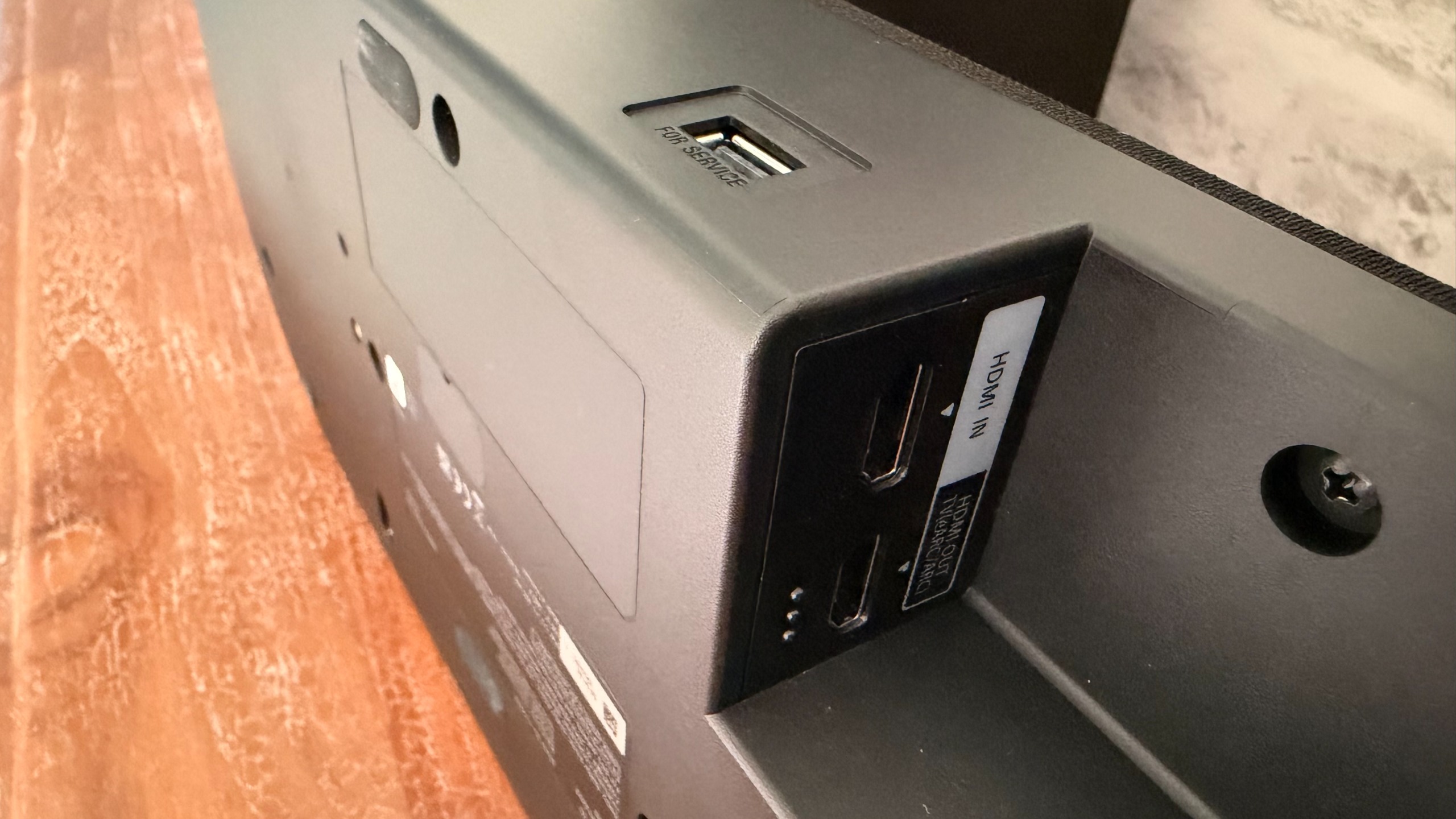
Connectivity is passable. The highlight is an HDMI loop through that supports 4K/120Hz gaming feeds — as you’d hope with a sound system from the brand responsible for the PlayStation 5 — as well as the HDR10, HLG and Dolby Vision HDR formats, but not HDR10+. And the HDMI output also supports the eARC system for taking in sound from your TV.
Unfortunately, the only other port is a USB slot that’s apparently only for software updates. A second HDMI input and an optical digital audio input would have been nice on a £1,999 home cinema system these days perhaps, but the Trio’s support for Wi-Fi and Bluetooth (6.0) alongside the HDMIs will likely deliver everything most modern households will need.
These wireless options support direct streaming from Spotify Connect and Apple Airplay 2. On top of this, the system can also utilize Hi-Res Audio files and carries Sony’s redoubtable DSEE Ultimate AI upscaling system for making compressed audio sound better.
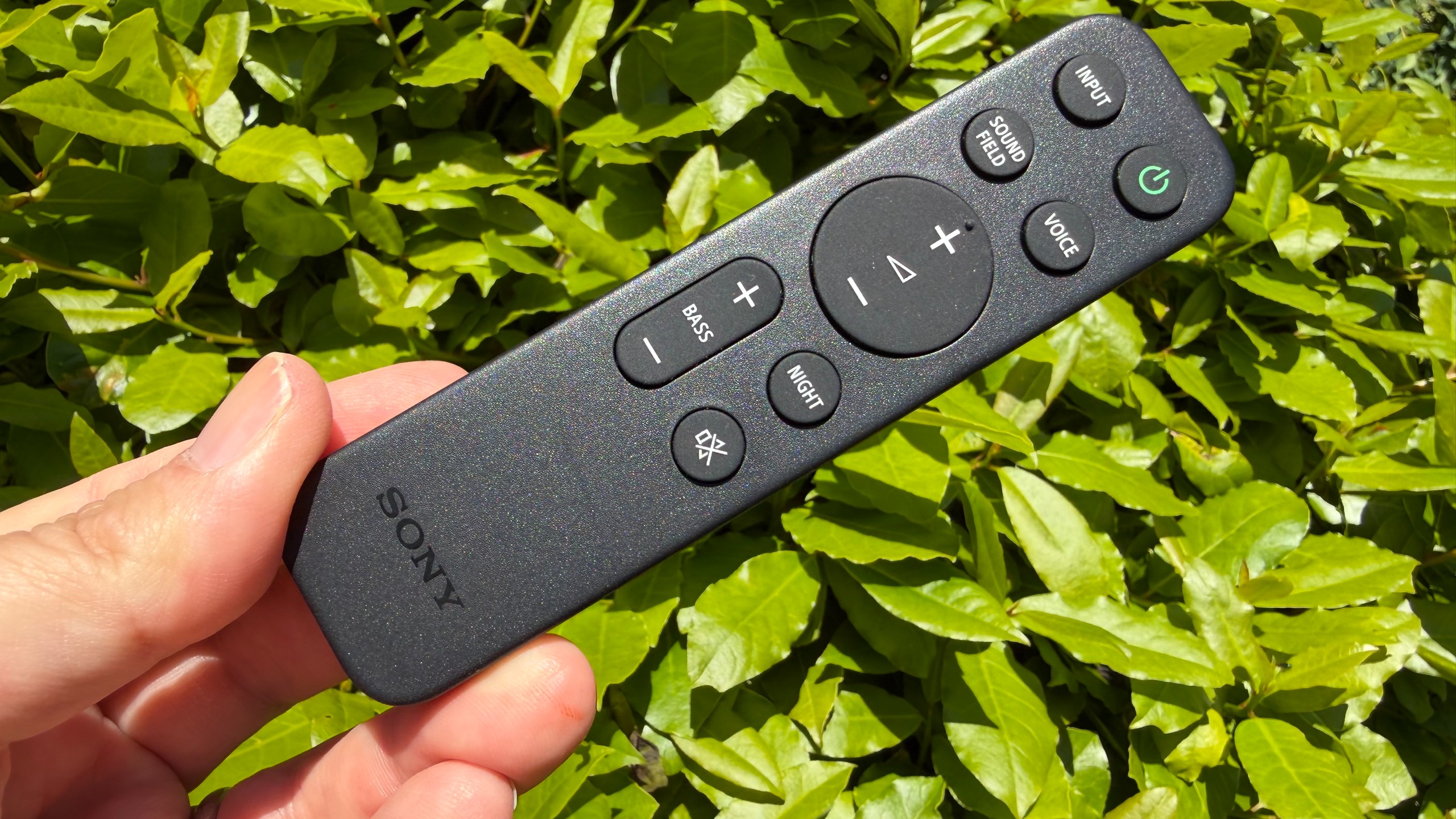
The latest Bravia Connect app for iOS and Android helps you set the system up, as well as providing an attractive and useful visual interface as a back up to the fairly basic remote control the system ships with. And it's particularly handy, given the Trio doesn’t carry an LED display.
Finally in the feature department, the Trio can play both the Dolby Atmos and DTS:X surround sound formats. In fact, it doesn’t just play them; it eats them for breakfast.
Any doubts about the Trio’s $1,999 / £1,999 / AU$2,999 price evaporate in an irresistible bombardment of almost impossibly massive sound staging, levels of power, detail and impact that seem to go far beyond the system’s claimed 405W of confirmed power. It also serves up mesmerizing detailing and precision, and an immaculate tone that has more in common with a premium full separates system than a minimalistic three-speaker package.
The system’s remarkable drivers and even more remarkable 360 Spatial Sound Mapping processing create a soundstage that fills at least the front half of even very large rooms, with the physical existence of the Trio’s three speakers essentially completely disappearing. As well as being capable of creating an epic sense of space for big movie locations, the size of sound the Trio can produce means it's effortlessly able to ‘fill’ the screen area and match the cinematic scale of even the very biggest TVs.
Despite its immense and immersive size, though, the Trio’s sound doesn’t forget the small things in home cinema and music life. It can pull in the boundaries of its sound superbly when a soundtrack wants to portray a tight space, for starters. Also, every detail in a movie sound mix is beautifully rendered, no matter how small, and produced with exactly the correct weight relative to other mix elements.
There’s no hint of harshness or brittleness to any sound the Trio makes, no matter how high pitched or deep it might be. In fact, despite the center speaker’s small size, the system gives the impression of having no ceiling for treble sounds to butt up against and turn harsh, and no low-frequency floor for bass sounds to flatten off against.
The relatively hefty left and right speakers do most of the heavy low-frequency lifting without making deep sounds feel trapped in, hard edged or distorted. They’re reactive enough to serve sudden bass hits with impeccable timing, too, and have enough range in the low frequencies they can produce to stop rumbles becoming overwhelming or coarse.
This excellent bass performance is particularly welcome, given that bass has been a weakness of some of Sony’s current soundbars, and that the system is quite compact. Perhaps an even bigger worry is that Sony sells Sub 8 and Sub 9 external wireless subwoofer upgrades for the package, which always makes me wonder if there’s a weakness in the core system that such an add-on is required to fix.
The Trio can deliver hard, sudden impact sounds with proper venom and propulsion, while the soundstage remains balanced and authoritative even at high volumes, no matter how dense the content might be.
Sound systems that go as big and dynamic with film soundtracks as the Trio can aren’t always able to turn their hands effectively to music. The Trio, though, is at least as engaging with music as it is movies.
Even in native stereo mode, without any of Sony’s remarkable virtual surround processing in play, the trio of speakers deliver excellent stereo separation and vocal placement. Nothing sounds at all strained, no matter what type of music you’re playing or how dense a track gets. It retains its genuinely hi-fi feel, too, at higher volumes than you’ve probably ever heard your favorite albums before. And yet, at the same time, people with neighbors will be pleased to hear that its speakers are sensitive enough to deliver music compellingly even at low volumes, something many soundbars struggle with.
Dolby Atmos music sounds similarly refined. It's detailed without being forensic, but also enjoys a more three-dimensional presentation that includes height elements. And if you’re happy to take off your purist music hat, I’d also recommend you try stereo tracks — or, at least, relatively poppy or ambient stereo tracks — through its 360 Spatial Sound Mapping processing, which gives it a more spacious and surround sound feel. Certainly Sony’s ‘upmixing’ with this effect is much superior to similar modes attempted by most other home audio packages.
It’s a tough ask to find things I don’t love about Sony’s Trio system. But I’m paid to try, so here goes. First, for all its virtual speaker creating talents, it only creates a quite limited sense of sound coming from behind your seating position. This can be solved extremely well by adding Sony’s new Rear 9 extra wireless surround speakers — though, at $749.99 / £699 / $ 1,299 a pair, this upgrade isn’t cheap.
The left/right spread of stereo music strangely narrows slightly when playing music through the 360 Spatial Sound Mapping despite expanding in every other way. And finally — and possibly most frustratingly depending on how big your household is — the area you need to sit in after calibrating the Trio for the optimal 360 Spatial Sound Mapping effect is quite small. Though even outside of this sweet spot, it’s still gloriously easy to appreciate just how good the Trio’s overall sound is.
Sony Bravia Theater Trio (HT-A8) review: Price and release date
- Released: July 2026 (UK and Australia), May 2026 (US)
- $1,999 / £1,999 / AU$2,999
At first glance the Trio’s $1,999 / £1,999 / AU$2,999 price looks substantial for a three-piece speaker package. Samsung gives you a full surround soundbar package, the HW-Q990H, for just $1,499 / £1,499 / AU$1,499, after all. Once you’ve placed the Trio’s speakers wherever you want them to go, though, and run the 360 Spatial Sound Mapping system setup, the system reveals itself to be a pretty much separates-grade performer capable of partnering with a huge screen and even filling a big room.
Hitting almost $2,750 / £2,700 / AU$4,300 if you add the admittedly impressive Rear 9 speakers starts to look a bit of a stretch, but you could always add the rears later as funds allow. The out-of-the-box Trio won’t let you down in the mean time.
Sony Bravia Theater Trio (HT-A8): Specs
Swipe to scroll horizontally
Dimensions |
Main bar: 23.19 x 2.52 x 6.50 inches / 589 x 64 x 165mm; left/right speakers: 6.3 x 13.27 x 6.5 inches / 160 x 337 x 165mm |
Speaker channels |
3.0.2 |
Connections |
One HDMI input (with eARC), one HDMI output (4K/120Hz), USB service port |
Dolby Atmos / DTS:X |
Yes/Yes |
Sub included |
Optional extra |
Rear speakers included |
No |
Should I buy the Sony Bravia Theater Trio (HT-A8)?
Swipe to scroll horizontally
Features |
The system’s three-front-speaker approach enables it to deliver a sound appropriate to really any screen size, even really huge ones. Its processing and audio format support is excellent too. |
4.5 / 5 |
Performance |
Despite the fairly compact size of its three speakers, the Trio package often manages to sound like a premium separates system |
5 / 5 |
Design |
From the surprisingly compact shape of the center speaker to the gorgeously well-built cylindrical stance of the left and rights, the Theater Trio is an elegantly understated addition to your room. |
4.5 / 5 |
Setup & usability |
The speakers all connected with each other automatically during my tests, and provided you plug the provided mic into your phone and run the 360 Spatial Sound Mapping set up procedure, its speakers are extremely flexible when it comes to where you put them. |
4.5 / 5 |
Value |
The Theater Trio package’s price puts it above the vast majority of regular soundbars — but its sound is a cut above any regular soundbar, too |
4 / 5 |
Buy it if...
You have a very big TV
The Trio’s package of separate center, front left and front right speakers was expressly designed to solve the issue where regular soundbars just don’t create a sound stage big enough to match the size of the pictures made by massive TVs (especially those of 85 inches and more).
You want fantastic movie and music sound quality
The Trio throws off the shackles of some of Sony’s current soundbars, using hi-fi grade speaker designs and up to 24 virtual speakers created by Sony’s amazing 360 Spatial Sound Mapping to craft one of the most powerful but also most refined, balanced and immersive soundstages I’ve heard from a one-box speaker package.
You have an awkwardly shaped room
A key part of the Trio’s 360 Spatial Sound Mapping involves adapting the sound of its real and virtual speakers to your room layout — and this process is so flexible that it can deliver a convincing sound stage no matter how awkward your speaker placement might be.
Don't buy it if...
You can’t afford it
There are some very good soundbars around for much less than the Trio’s $1,999 / £1,999 / AU$2,999 asking price - which rises to nearly $2,750 / £2,700 / AU$4,300 if you add the Rear 9 surround speakers. But if you can afford it, the scale and finesse of the Trio’s sound is a cut above those cheaper soundbar alternatives.
The small sweet spot is a problem
The Trio optimizes the sound stage created by its real and virtual speakers around what turns out to be a rather compact sweet spot. So if you have a big household to cater for, you’ll have to accept that not everyone will get the perfect experience — unless you all huddle up.
You want a sound system that can work as a switch box
The Trio’s limited connectivity prevents you from attaching more than one hard-wired source to it at a time.
Sony Bravia Theatre Trio (HT-A8) review: Also consider
Samsung HW-Q990H
If you can’t quite stretch your finances to accommodate the Sony Trio package, Samsung’s HW-Q990H soundbar system delivers a powerful and detailed full surround sound solution for $1,499 / £1,499 / AU$1,499. The Q990H crafts a remarkably full hemisphere of sound for Dolby Atmos and DTS:X soundtracks, but the Trio’s sound is more refined and flexible — and only requires you to house three speakers. Read our full Samsung HW-Q990H review.
Sennheiser Ambeo Max
Sennheiser’s most powerful soundbar delivers a remarkably large sound stage for a single-bar device, courtesy of the fearsome array of ultra-robust and punchy drivers it squeezes into its uncompromising chassis. This helps it get nearer than any other remotely mainstream single-bar soundbar to supporting really big screens like the Trio does. While it used to cost $2,999.95 / £2,199 / AU$3,999, too, it’s now widely available for $1,699.99 / £1,599 / AU$2,999. It still can’t ultimately match the scale of the Trio, though, due to the latter’s separate left and right speakers.
How I tested the Sony Bravia Theatre Trio (HT-A8)
- I used the Sony Trio as my main living room audio system for 11 days.
- Also tested in a second room with a different size and layout, and with a pair of optional Rear 9 surround speakers.
- Tested with 4K Blu-rays, CDs, streamed audio, and games, using all direct HDMI connection, eARC and wireless connection options
I tested the Trio as my main living room audio system for 11 days overall, as well as using it in a second room with a different layout for two further days. I also moved the left and right speakers (and the optional rears) to all sorts of awkward places to test the flexibility of the 360 Spatial Sound Mapping processing.
During the testing period, I fed the Trio system audio content from a wide range of sources, including movie soundtracks from streaming boxes and 4K Blu-ray players over HDMI; music from a CD player and the various music streaming services the system supports; and game soundtracks from an Xbox Series X. Key movies used were Blade Runner 2049, It Chapter One, Civil War, and Sinners.
- First reviewed: October 2026
- Read TechRadar's review guarantee








 English (US) ·