
When I tested the AirPods Max 2, the biggest feedback I got wasn’t about the sound, or the look, or the noise cancellation; it was about the price. I mean, $550 for wireless headphones?!
And you know what? Anyone aghast over the price of AirPods Max is justified. By most people’s standards, $550 is a deal-breaking amount of money. That’s why, when Sony announced its even pricier $650 1000X The Collexion (WH-1000XX) wireless headphones, I was borderline incredulous. That’s more than MacBook Neo pricing!
It’s an absurd ask, but the fact is the WH-1000XX, just like the AirPods Max 2, aren’t for the masses; they’re for anyone with enough money to drop on an extra-special, extra-premium pair of wireless headphones. These aren’t just any old wireless headphones—these are how Sony is celebrating the 10th anniversary of its venerated 1000X line.
Sony fan or not, though, if you’re lucky enough to be a person who has the cash to spare on luxury wireless headphones, then I can tell you that your dollars (however expendable) will be well spent.
Sony 1000X The Collexion
If you can get past the sticker shock, Sony's 1000X The Collexion wireless headphones have amazing sound and ANC.
- Amazing sound
- Great ANC
- Best touch controls on a pair of wireless headphones
- Spatial sound features are a drag
- Upscaling technology didn't make a huge difference to my ears
- No lossless playback with cable via USB-C
- Call quality is
- $650 is an astronomical sum of money for most
Sound is everything
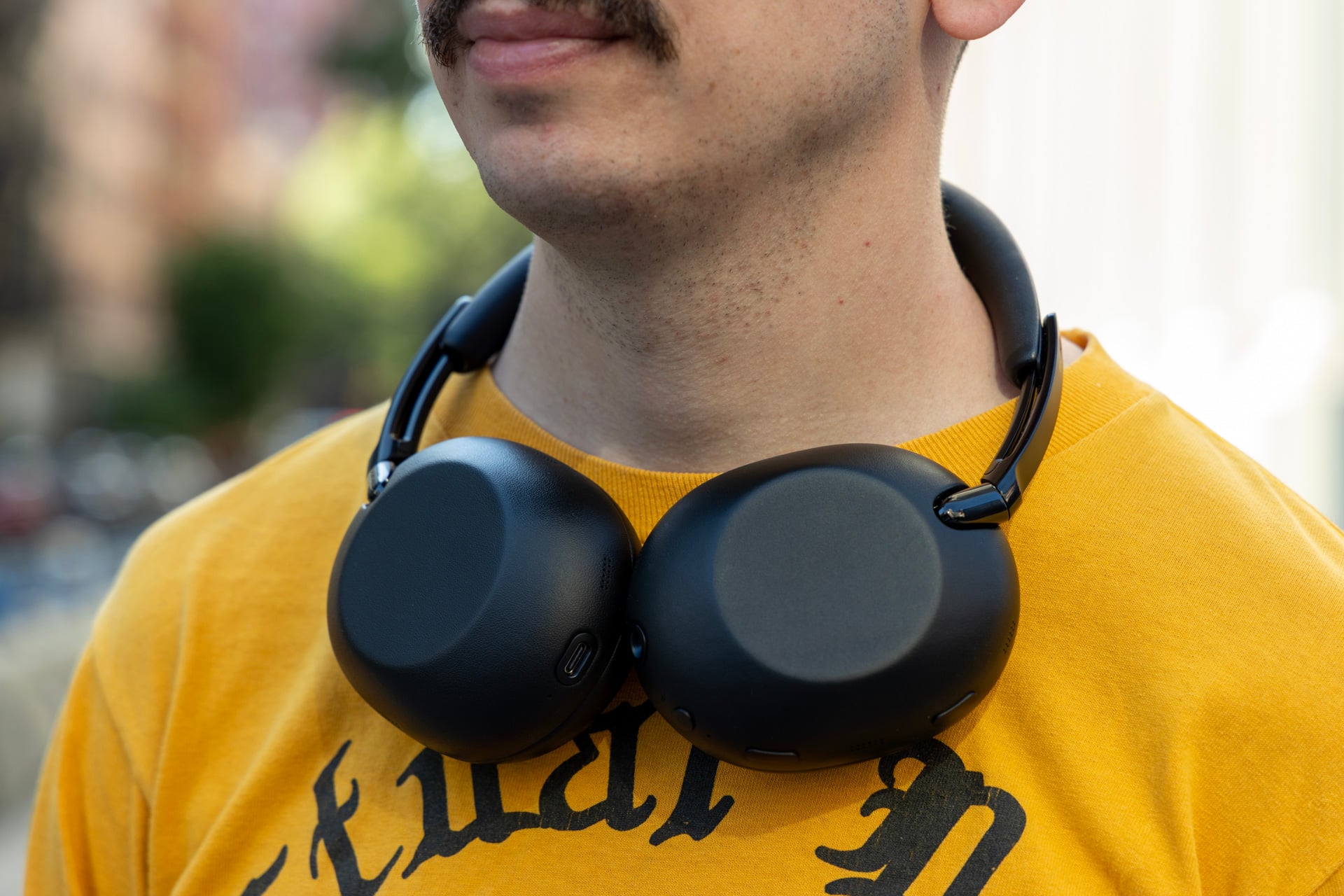
The second thing I thought about the WH-1000XX is the sound better be good. As it turns out, the sound is indeed very good. These wireless headphones are for those who look to Sony for their acumen in making superior-sounding personal audio products, and that reputation is furthered here.
 © Raymond Wong / Gizmodo
The WH-1000XX are dripping with nuance. The soundstage is wide enough for frequencies across the spectrum and crystal clear. One thing I’m struck by when listening to WH-1000XX is how natural things come off—nothing is overprocessed or oversimulated, which is something that can happen with cheaper wireless headphones, especially in the lower-end frequencies where you find bass.
In rock genres with lots of instruments and tracks competing with one another, the WH-1000XX perform spectacularly, separating guitar tracks and vocals and providing a tangible sense of stereo separation in songs like “Any Major Dude Will Tell You” by Steely Dan. These aren’t particularly bass-y wireless headphones, but I’m okay with that, especially because the treble sounds warm and complex.
 © Raymond Wong / Gizmodo
That adeptness in translating sounds across the frequency range applies to any genre that I threw at the WH-1000XX. My favorite Daft Punk tracks had a sense of space and clarity, and toned-down songs in jazz genres sounded perfectly atmospheric and mellow.
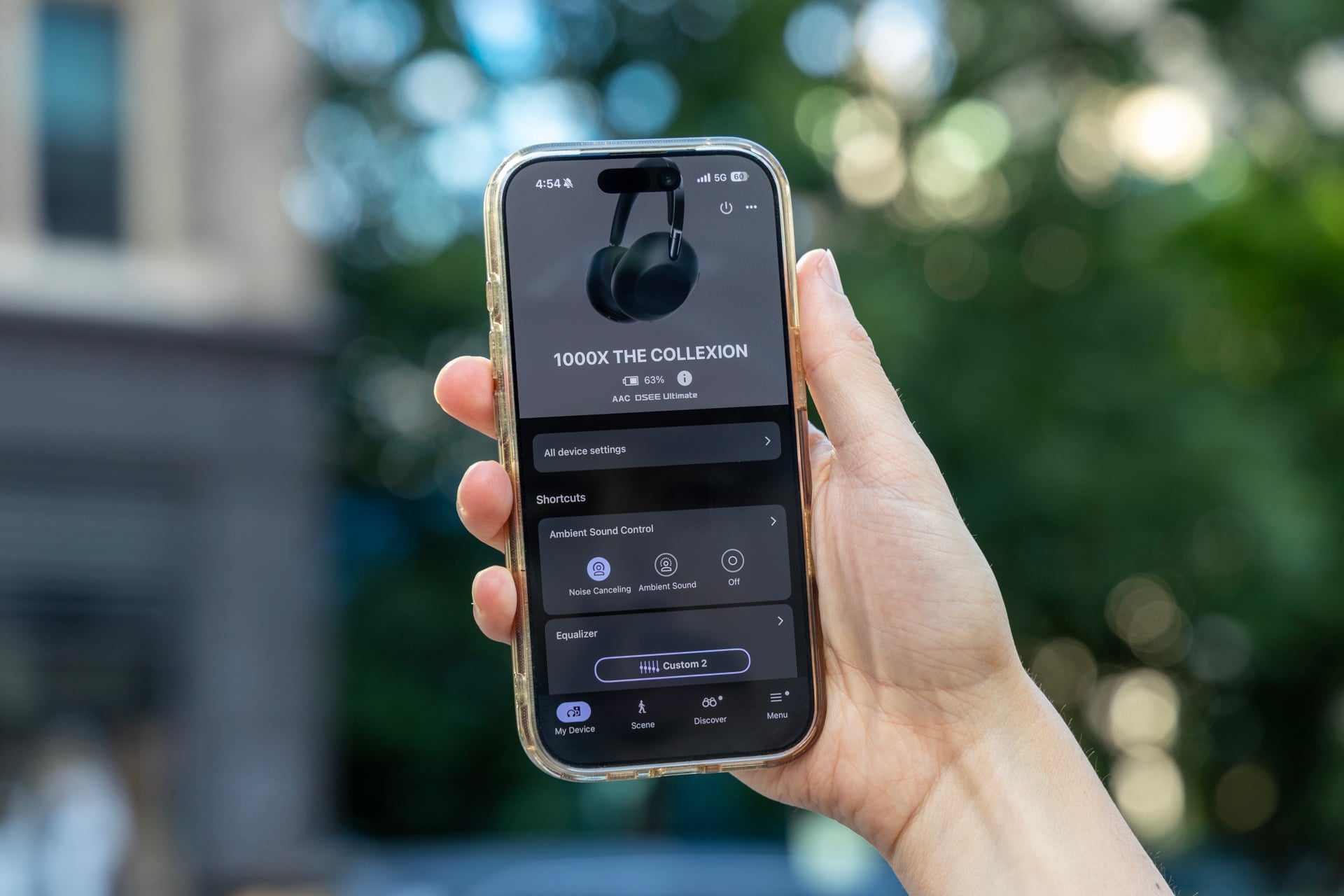
To make the sound pop even more, I would recommend going into the Sony app and pulling open the EQ, where you’ll find Sony’s “Find Your Equalizer” feature. You’ll hear a series of sound profiles and can then select which best suits you, and based on those preferences, Sony creates a custom EQ to your taste. My custom EQ wasn’t vastly different from the default, but it did adjust some of the higher frequencies and made my listening experience just a little bit better.
Trying to translate the sound of a pair of wireless headphones into words is always difficult, but just trust me when I say you’ll believe it when you hear it. Sony’s WH-1000XX are the real deal.
 © Raymond Wong / Gizmodo
A part of that excellent sound is the custom 30mm carbon drivers and the tuning, which Sony says it developed with Grammy award-winning mastering engineers, but also the circuitry, which uses more copper foil to reduce the signal-to-noise ratio. The WH-1000XX are also the first pair of Sony wireless headphones to come with the company’s top-tier upscaling technology, DSEE Ultimate, which uses AI to enhance information lost via compression and regular Bluetooth streaming.
I listened to the WH-1000XX with DSEE Ultimate off and the feature set to “auto,” and I can’t say I noticed a big difference, but that could be due to the fact that I typically stream Spotify at high quality. If you’re mucking around in the annals of crappy, compressed YouTube audio, you might notice more of a difference.
If there’s one area in the sound department that the WH-1000XX don’t excel in, it’s calling. I tested them on a call for several minutes, with and without simulated train noise, and was told that when I spoke, the WH-1000XX picked up quite a bit of background noise to the point that it was distracting. Without background noise, my call audio quality was rated as fine but not superb; the ultimate rating was a 6.5 out of 10.
Still, whatever Sony is doing on the sound front in terms of music playback makes the WH-1000XX stand out in the space overall.
More quiet and comfortable than Bose’s QuietComfort?
Sony’s $460 WH-1000XM6 excel at active noise cancellation (ANC), and the WH-1000XX, while technically not as good in the ANC department by Sony’s own admission, are still some of the best wireless headphones for blocking noise that I’ve tried.
I tested WH-1000XX on the New York City subway and was really happy with how much BS they cut out from my commute. I could still hear a bit of train noise with music playing, but not enough to feel disruptive—I would say ANC blocked about 90% of the train sounds, like screeching and rumbling. I couldn’t hear conversations while listening to music, and if you’re in a medium-loud setting like walking on a busy sidewalk, these cans are more than enough to keep you at peace.
 © Raymond Wong / Gizmodo
Compared to top-tier wireless headphones like Bose’s QuietComfort Ultra Headphones (2nd Gen) and the AirPods Max 2, the WH-1000XX are just as good in the ANC department, despite being only the second-best pair of Sony wireless headphones for blocking out noise. Transparency mode, which uses the built-in microphones to give you audio passthrough and hear your surroundings, does pale in comparison to AirPods Max 2, however. Sony’s transparency just sounds a little bit more artificial and tinny to my ears, even if it’s serviceable.
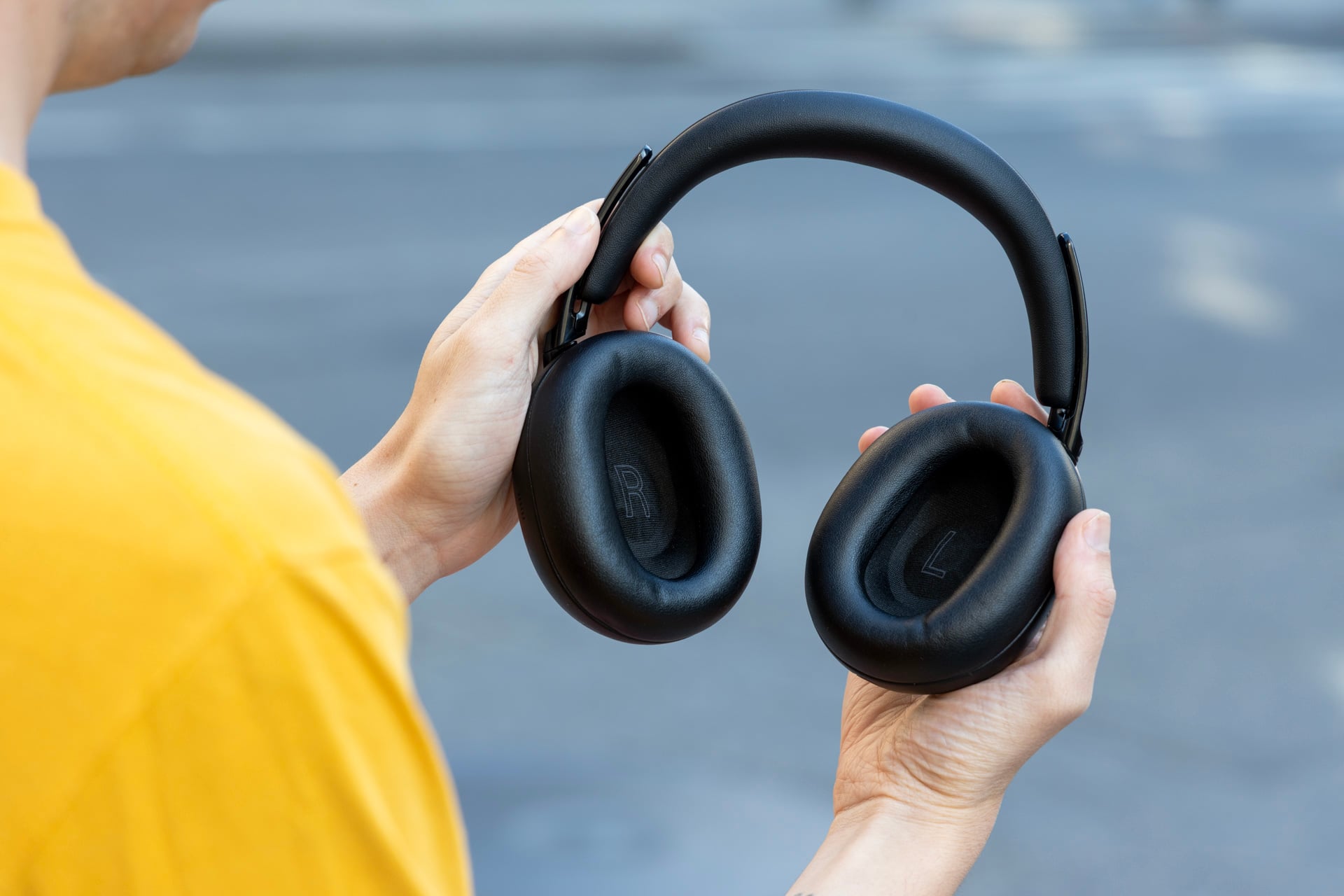
Like the QuietComfort Ultra Headphones (2nd Gen), the WH-1000XX also take comfort very seriously. Sony made the earcups thicker and the headband both wider and thicker. It also made the profile on the WH-1000XX slimmer while also adding more room inside the earcups for your ears—this ensures less contact that’s likely to create discomfort and also affect sound.
 © Raymond Wong / Gizmodo
The result of those adjustments is very good comfort, rivaling Bose and its QuietComfort Ultra Headphones (2nd Gen), if not surpassing them. I wore the WH-1000XX for hours at a time without fatigue and would happily wear them for hours more. What makes the comfort even more gratifying is that the WH-1000XX have a relatively small footprint on your head, meaning, if your head is on the smaller side like mine, you don’t have to worry about looking like a little kid in them, which is more than I could say for the AirPods Max 2.
Must we really spatialize everything?
Though most of Sony’s marketing in the WH-1000XX lives up to expectations, there are some throwaway upgrades for me, and one of them is the new spatial sound modes. This time around, Sony has several “360 Upmix” listening modes for music, games, and cinema, and unfortunately, they share some of the same pitfalls as other AI spatialization modes in that they kind of screw up the EQ of the wireless headphones.
The 360 Upmix for music does add a sense of space, but in my experience, it also makes things sound overly exaggerated, especially any instruments or vocals with reverb. On top of that, it significantly messes with the hierarchy of frequencies in a mix, so enabling the feature might make a song sound completely different from standard or custom EQs—and not always in a good way. There’s a reason why songs are mixed the way they are, and even a bad sound engineer has a method. Can we really say the same for AI?
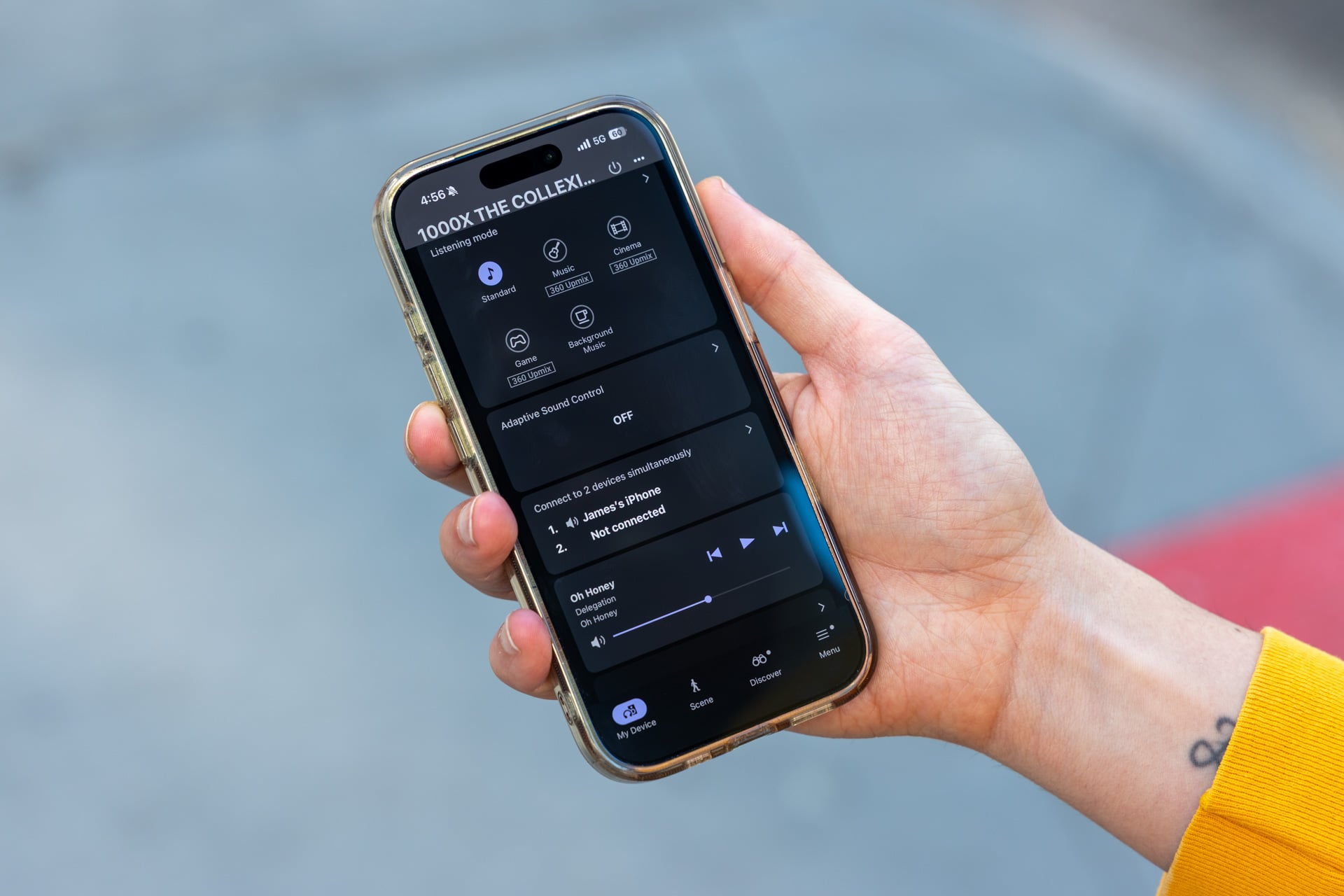 © Raymond Wong / Gizmodo
Don’t get me wrong, I can see how these modes add a “sense of space,” but I can’t see myself wanting to listen to music this way on a regular basis or at all. I don’t hate all spatial sound, but I still think the only real way to enjoy it is in a multi-channel speaker setup and with songs that are tuned by a human for a specific purpose, not crammed into a pair of wireless headphones and algorithmically “upmixed” by AI.
Spatial listening modes might be forgettable, but there are some other features in the WH-1000XX that I think Sony should have given itself more credit for, and one of them is touch controls. I’m not usually a fan of them on wireless headphones or wireless earbuds since I find them more finicky than pressing a button and sometimes uncomfortable to use, but the WH-1000XX have possibly the best touch interface I’ve used in a pair of wireless headphones to date.
 © Raymond Wong / Gizmodo
In the right earcup, there’s a swipe and tap-based touch surface that allows you to adjust volume, skip tracks, play/pause, and activate a voice assistant. There’s nothing novel about what you can do with Sony’s controls, but the execution of the taps and swipes is superb. Not only do they register 99% of the time, but swiping and tapping on the surface of the WH-1000XX feels nice due in part to the vegan leather material. Because the experience is functional and smooth, I found myself coming back to the touch controls far more often than I would with other pairs, which is great because sometimes pulling out your phone sucks—especially on a busy subway commute.
 © Raymond Wong / Gizmodo
Button-wise, Sony keeps things very simple. There’s a button for activating the spatial upmix modes, one for toggling between noise modes, and a power button. There’s also a 3.5mm jack for listening to wired audio and a USB-C for charging, though you cannot listen to lossless audio via USB-C. No complaints here, everything works fine.
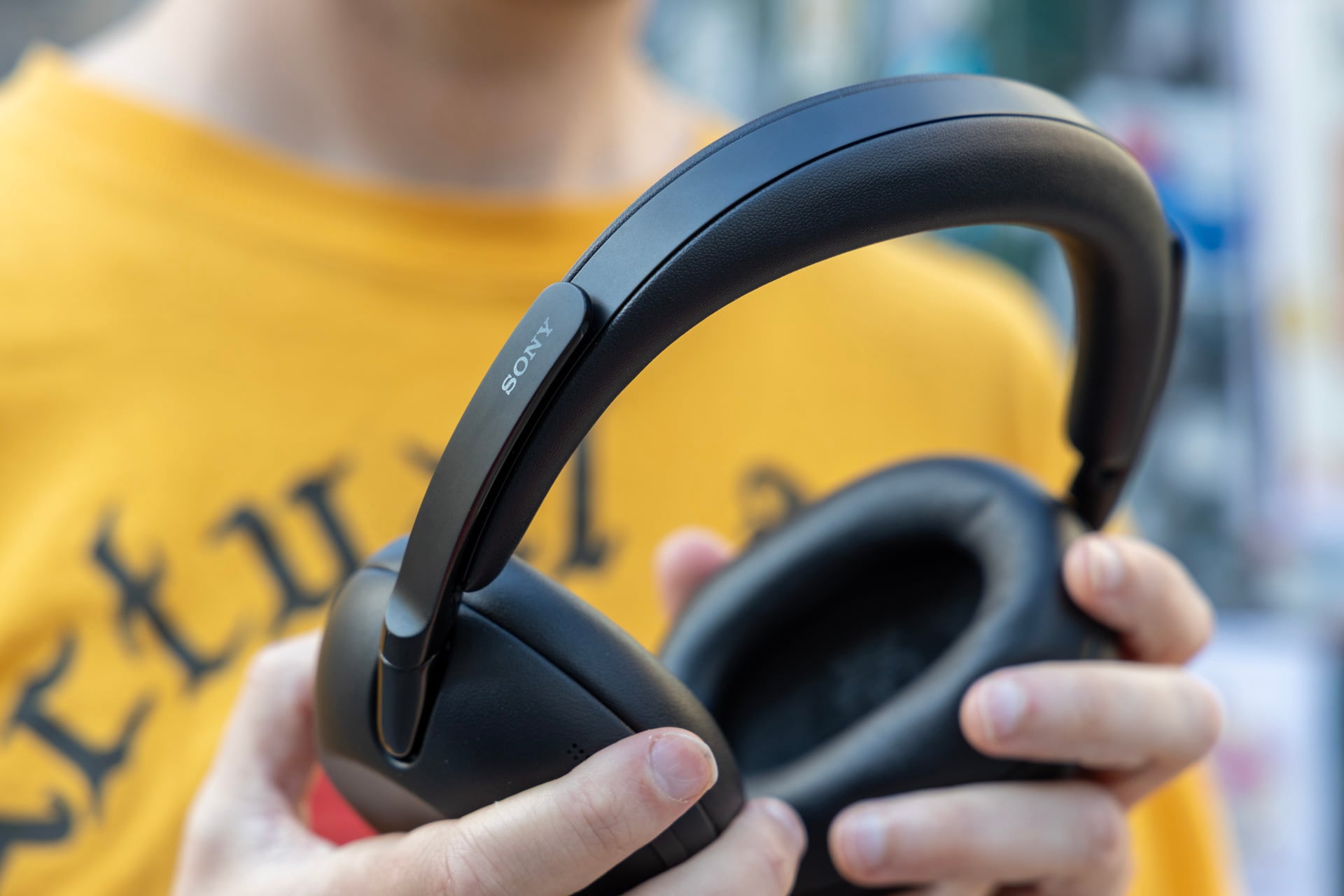
As long as we’re talking about look and feel, I also have to give Sony points for the design of the WH-1000XX. Overall, they’re understated with vegan leather and stainless steel accents, but it’s the slimmer profile that really appeals to me. They’re not at all clunky like other wireless headphones I’ve used, which makes me feel better about wearing them in public. That being said, they do not fold, so if you’re worried about storing them, you’ll either have to be okay with draping them around your neck or use the included hardshell case.
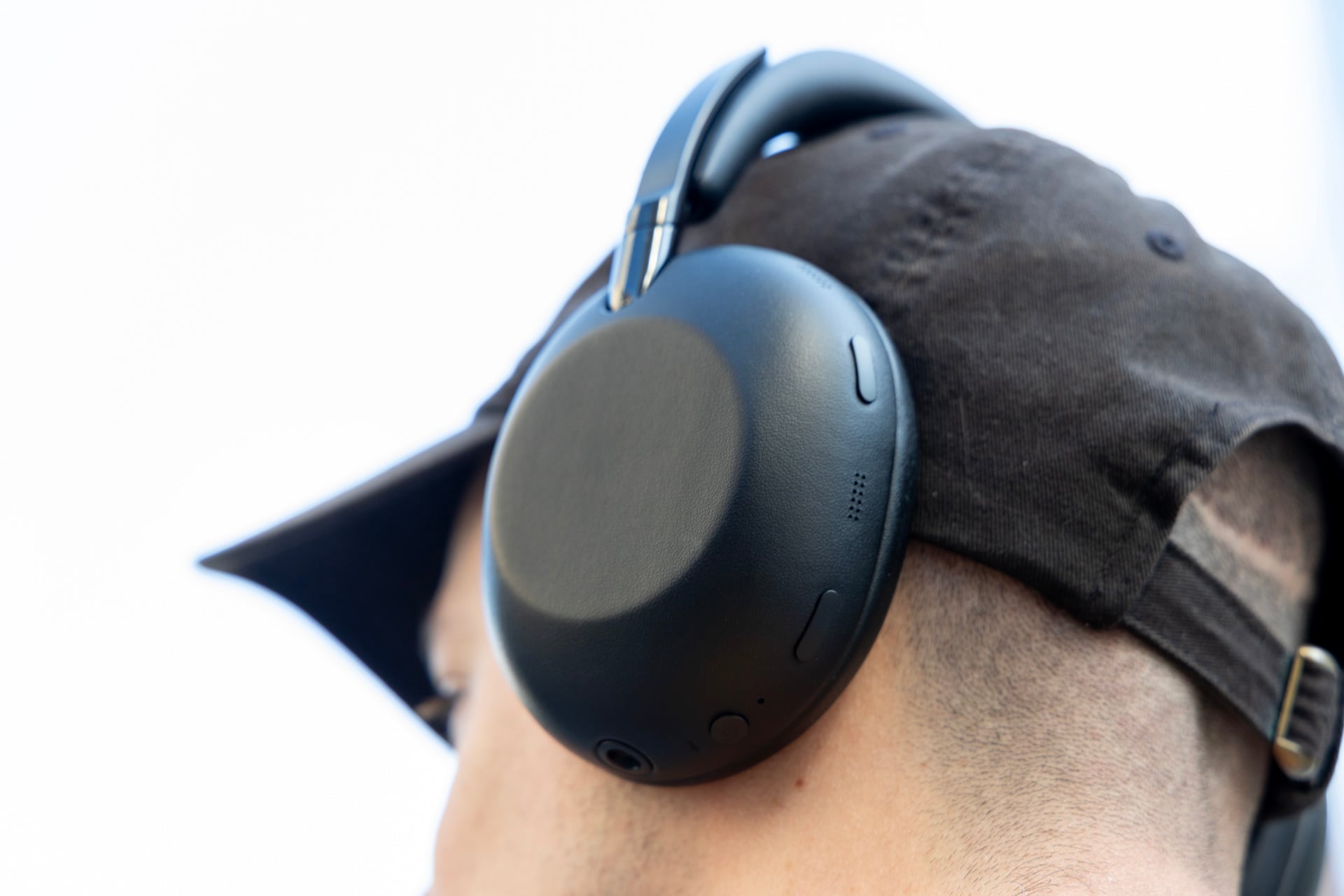 © Raymond Wong / Gizmodo
Battery life is good on the WH-1000XX, but it’s not great. You’ll get 24 hours of listening time with ANC on, according to Sony’s estimates, and my own test mostly tracks with that approximation. Starting at 100% battery, Sony’s WH-1000XX dropped to 97% battery after an hour of listening at 50% volume with ANC on. For comparison, both the WH-1000XM6 and Bose QuietComfort Ultra Headphones (2nd Gen) get 30 hours of battery life with ANC on, and AirPods Max 2 get just 20 hours. That puts the WH-1000X in the middle of those three pairs.
Should you collect The Collexion?
 © Raymond Wong / Gizmodo
Listen, there’s no getting around it—$650 is a ton of money. At the end of the day, both the $550 AirPods Max 2 and $450 Bose QuietComfort Ultra Headphones (2nd Gen) cost less, and whether you can justify the premium for Sony’s 1000X The Collexion (WH-1000XX) depends on your priorities.
I think the WH-1000XX outpaces Bose in sound quality, and I much prefer Sony’s compact design over Apple’s ginormous AirPods Max 2, for example. Categories like comfort and ANC, however, are a much closer call across all three of those pairs, so the value becomes a lot murkier when looking across the spectrum. Sony’s own WH-1000XM6 are also $460, and they’ll offer better ANC and longer battery life compared to the WH-1000XX.
I can’t personally see myself spending $650 on a pair of wireless headphones, but I’m just not in that tax bracket. If I did have that kind of money, I’d consider them for their excellent sound, great ANC, and the overall look, feel, and comfort. The superb touch controls don’t hurt. Ultimately, the WH-1000XX are for diehard Sony fans with enough expendable income over anyone else.






 English (US) ·