
 1 hour ago
3
1 hour ago
3

When a Q&A kicks off with the reply "I am currently in a bad mood," you've got my curiosity. That's not how the usual polite back-and-forth tends to go! And when the reason for that mood turns out to be "because yet again I have been given a book on designing computer games," well, I'm hooked.
Those were the first words out of the mouth of Paul Barnett, then the creative director of MMO Warhammer Online, in the June 2009 UK issue of PC Gamer magazine. "Warhammer Online's Creative Director has become legendary for his comments on orcs, the competition, and his own corporate paymasters," we wrote at the time. Spicy!
While you may not know Barnett's name today, his comments in 2009 foreshadowed many of the games industry's challenges in the 2010s and particularly the 2020s—he spoke critically of games following patterns laid down by other games, calling them "design memes" and warning of the risks of trying to replicate what's already successful and popular:
Article continues below
"If you have enough gravitational force, well, enough people are going to believe you and your idea becomes consensus driven, and that consensus is limiting. It's interesting but from that point it corrupts everything around it. It corrupts the players, the people who bankroll everything… All of a sudden if you have a different idea you can't get funding."
While some bits of the interview feel dated now—Psychonauts is cited as a financial failure even though it would see a sequel many years later, and indie games are brought up as sort of a novel topic rather than the entrenched part of the industry they are today. But otherwise, it all feels nearly as relevant in 2026 as it did in 2009. Just swap in live service games for MMOs, which were in their heyday.
Paul Barnett talks to us about games, business and bad memes (2009)
By Mathew Kumar
Hello Paul.
I am currently in a bad mood because yet again I have been given a book on designing computer games.
You can sit down to learn how to play guitar from a book, you might even become good at it and learn all the notes in the right order, but someone else can come along and blow you away... Why? Because you cannot learn what they know from reading a book. You get ideas and talent from doing, not from reading.
From the archives
This interview was originally published in PC Gamer #201 (UK, June 2009).
You can still subscribe to PC Gamer to get new issues of the magazine (in print!) every month.
Why does this make you angry?
With computer game design, it's getting harder and harder to see the wood from the trees. We have a legion of people trying to write down the 'theory', and while you can wrap an idea up in smart words that doesn't mean it's anything more than one idea; other people, too stupid to think on their own, can follow that and replicate that, but all that means is we're creating design memes.
And these memes are treated as though they are right, as though they are sacred. It's treated as science when in fact it's pseudo-science. Design memes don't get tested before they become part of our designer-thinking DNA; they just become words, buzz phrases that we get used to without thinking; the MSG sprinkled on everything.
Example?
Take for instance the terms 'microtransactions' or 'mid-session games'; this kind of thing is how the dot-com bubble got started. It's why the words 'first-person shooter' are terrible. I've yet to see anyone who has been successful in the games industry suggest any theory other than their own... They justify their way of making games as being the only sensible way, but they're not teaching us how to make games by doing so—they're only pushing their own personal viewpoint.
The problem is that if you do that and you have enough gravitational force, well, enough people are going to believe you and your idea becomes consensus driven, and that consensus is limiting. It's interesting but from that point it corrupts everything around it. It corrupts the players, the people who bankroll everything, the whole thing becomes corrupted. It's why when we see an idea and get told it's clever we endlessly clone it.
And the result of that is…
All of a sudden if you have a different idea you can't get funding; you can't get a pitch meeting, you can't get anyone to work with you. You start having to do that horrible movie thing to fit into their expectations. "It's Half-Life meets Peggle!"
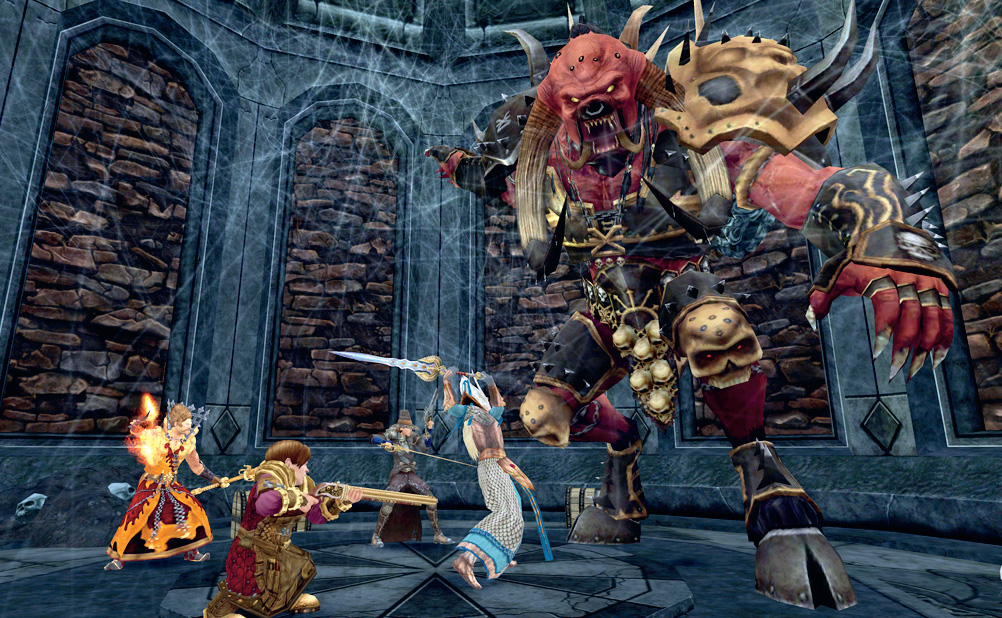
Sounds great actually, but we know what you mean.
Designers, by the nature of design, usually have a god complex; it's you attempting to tell the rest of the world how to do things. That's what 'designers' want to do—to ruin and destroy the beautiful thing that our ideas can be. "This is the size the canvas has to be. This is the kind of paint you have to use." It's nonsense. Jackson Pollock is a better game designer than most of the people who professionally claim to be one.
There is no way to quantify ‘gigglehertz’
Do you like Jackson Pollock?
Any man of the sort who can suddenly turns around and say, "I'm not going to use brushes," well, I don't care if you like them, what I care about is that they went off in their own different direction.
That can't be taught. We have so many young kids who fall in love with computer games and all they want to do is make them, and they get suckered into reading articles, and books and fooled into going onto computer courses that can do nothing for them. They cannot teach you how to do what you want to do.
There's no such thing as a 'fun matrix', there is no way to quantify 'gigglehertz'. They don't exist.
Aren't many of the tasks required for developing videogames inherently mathematical?
Game development is not solely the domain of people who know how to add numbers together.
Computer game design breaks into three areas that I can see. Games as art—where you are attempting to create a piece of art that just happens to be a computer game. Games as design—where the setting of the game is almost irrelevant, something like Portal is like a cathedral and nothing more. And the third area, which is games as a business.
And I don't care what anyone says about how much money and effort they put in and how much money or satisfaction they get out at the end, the job if you treat games as a business is to meet the criteria of the business world.
It's the reason people see games like Psychonauts as failures. It's got the art elements, it's got the design, but as a business game it's a failure.
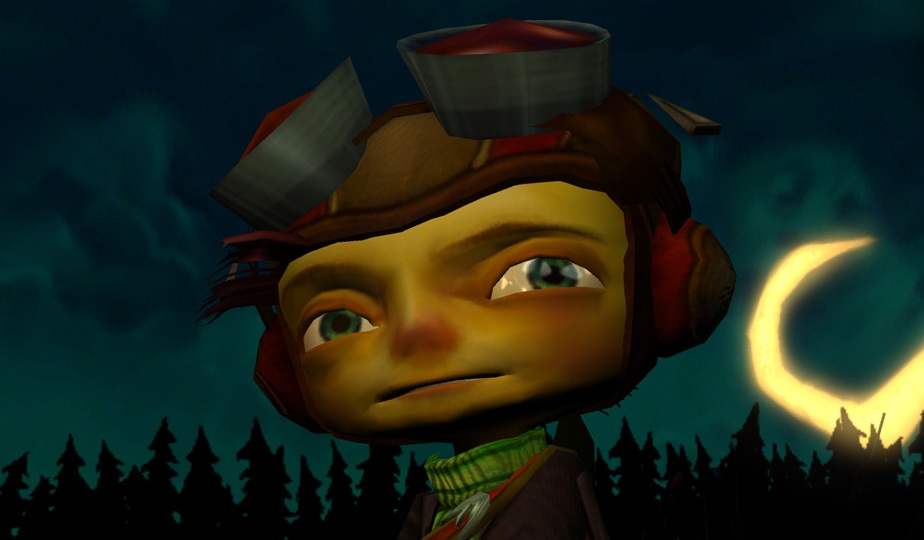
Psychonauts gets a lot of respect, but we don't see a sequel.
Now, the interesting thing is that this concept, of games as a business, is spat upon—"Oh, they're just trying to make money." But you know, the Hannah Montana game might not be much of a work of art or design, but it sells a hell of a lot of units, and that's all it set out to do. A lot of people get to pay their mortgages, they all get to keep working in the industry, but there's a snobbish attitude towards it.
You have to understand that it is a business, a glorious business that can change lives and make you feel great, but only if you are prepared to meet it on that level.
Was Warhammer Online created as 'business' first?
Its job is to give our studio a good long subscription model game that allows us to hire good people and provide a really good game to a lot of people for as long as possible.
It's a dream project in the business of computer games. If you want to do something like it there is an inordinate amount of time and money required into the game before you even launch, or you are anywhere that will make you money.
That's not to say we haven't had that desire to make something interesting and innovative and perhaps even revolutionary, but you have to pick your battles.
Why? You seem like an idealistic kind of guy.
Because it's years of people's lives, and they deserve something out of that. We want to be able to do this not for another five years but for another fifty. Does that mean we were as arty as we could have been? No. Does it mean we were as 'designey' as we could have been? No. We were as business as we could have been, and within that we were as arty and designey as we could get away with.
By doing that we hope to be blessed and will be allowed to make more games, and then we will be able to be a little bit more indulgent. It's a long trip. We're not trying to build something for one moment but for a lifetime, a career.
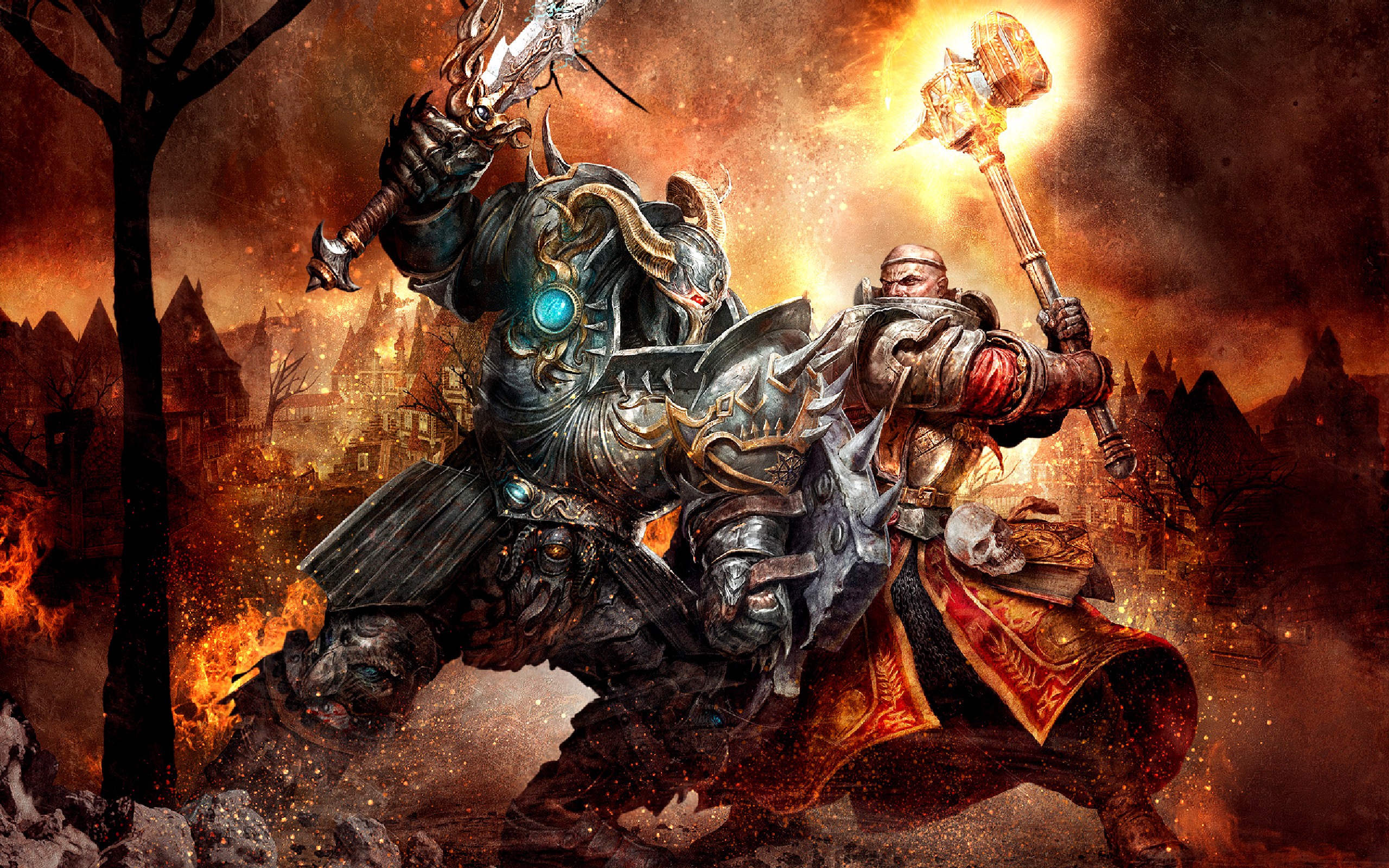
But you respect the concept of 'indie games'.
Currently I get almost all of my joy from indie games. That's not because I think the concept is especially great but because they are at least the fastest form of 'idea to delivery'.
Is the best design inspiration to be found in indie games?
By referencing computer games all the time we close our minds to everything else we could reference, be it the principles behind t-shirt design or a sugar packet. We're obsessively self-referencing. Some of the best designers I can think of are children; they're willing to be wrong, to be weird, to do something different. And the worst I've ever met are those that have been trained to design games.
It's not the ability that you need, though, but the ambition. You should always be happy with three-star ability if you have five-star ambition. Rather smart idiots than stupid geniuses.
So Warhammer Online's team are three-star ability?
What we have is a team where we've pitched something that is like another operating system going up against Windows. No one gave us a prayer and that suits me fine. We have a big team and they all work like dogs. We care, we give a damn, and we haven't lied. It's a worthy thing that I will always look back on and be proud of.





 English (US) ·