
SOAX is a UK company, and a relatively young one at that, considering it was founded in 2020. It started small with only a few people, but as the years passed, it grew to the point that the company’s ethically sourced proxy network comprises more than 191 million IP addresses.
Since our last review, SOAX has undergone a major overhaul, with changes ranging from a new website and dashboard to a better API ecosystem and fresh features. Additionally, the company is now more of a data collection platform (somewhat of a trend in the proxy service industry) built around residential and mobile proxies, rather than operating solely as a proxy IP vendor.
Features
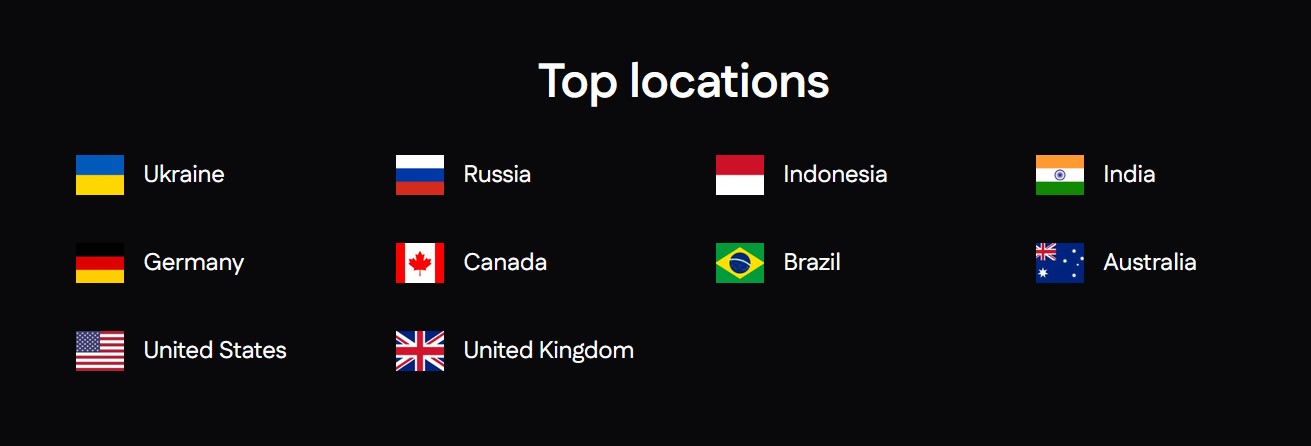
Right from the start, one of the most notable features SOAX has is its sizable proxy pool. The company offers over 155 million residential IPs (all ethically sourced) and proxy servers (including mobile proxies) in more than 195 geolocations. The mobile pool has over 30 million IPs from carriers around the world.
Latest Videos FromTechRadar
Depending on the pricing plan, you can target any of those locations by country, region, city, ISP, ZIP, or ASN (Autonomous System Number).
IP rotation can be customized to match the specific requirements of each task, either refreshing the IP with every request or keeping the same IP over an extended session (up to 60 minutes for mobile proxies). Tweaking further, you can set custom session lengths.
SOAX lets you adjust how often your IP refreshes to fit your data collection needs. You also have the option to set up sticky sessions that keep the same entry point and IP address for each request. This gives you a consistent online presence throughout your session.
The company has a Web Optimizer feature that improves error management and keeps your browsing stable. There’s also the choice to turn on MaxIP, which helps you get the most unique IPs possible for tasks that call for a lot of IP switching.
Apart from proxy services, SOAX also has data scraping solutions that include managed scraping for AI, SERP, video, and e-commerce data.
The vendor promises 99.9% uptime, with support for HTTP(S), SOCKS5, and UDP/QUIC protocols.
Performance
During our previous testing, we ran some checks from the UK, targeting the UK to get the best possible speeds, and the residential proxy results were very similar to SOAX’s, with the TTFB averaging an excellent 787ms. Speeds you’ll see will vary hugely based on your location, your target, and the proxy type, but clearly the SOAX infrastructure can perform very well.
Plans and Pricing
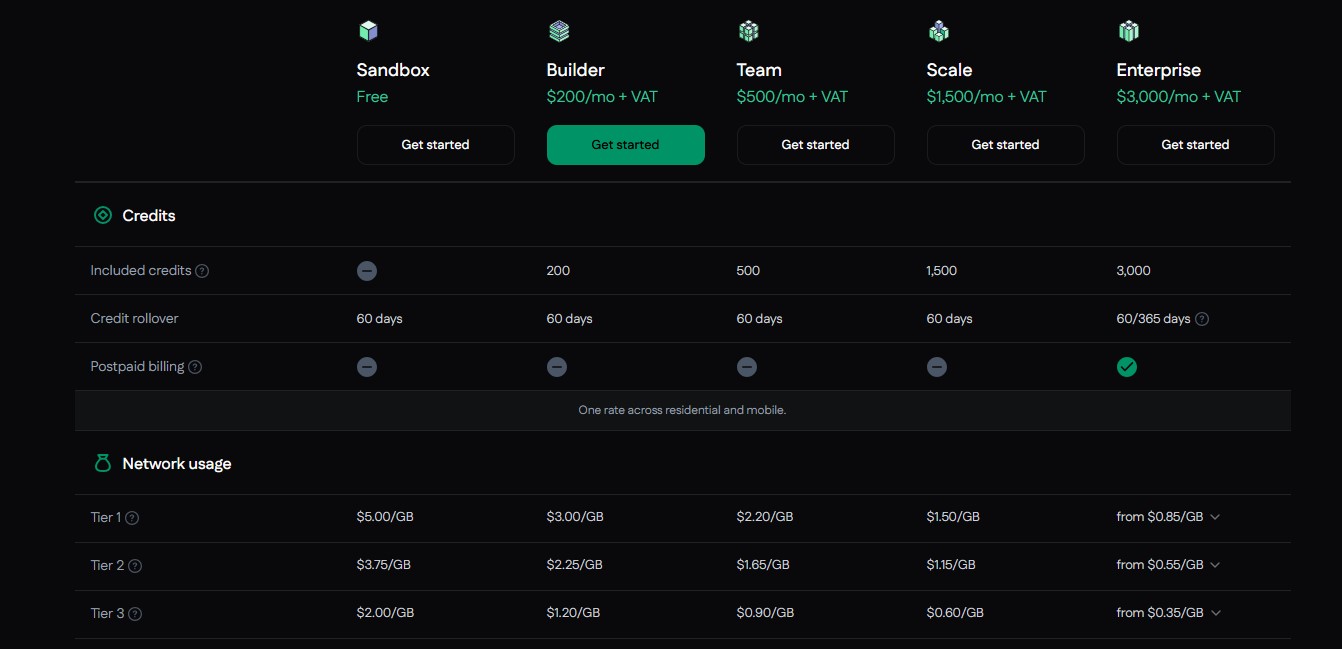
After refreshing its service (website included), SOAX changed how the pricing works as well. The main difference is that the pricing now revolves around credits, which represent prepaid usage units. As a rough estimate, 1 credit equals $1 of usage.
The company also has a free no-commitment plan called Sandbox with basic support. You get no credits here, and there’s no subscription fee, but you can buy top-up credits when you need them, which is a good way to test the service out.
The starter plan is called Builder, and this gets you 200 credits, or in other words, it’s priced at $200 a month (VAT not included).
The actual network usage and pricing depend on geo-locations that are divided into three tiers. For instance, tier 1 includes the US, the UK, Italy, France, Germany, Japan, Australia, and other popular locations. So, if you use tier 1 locations, the pricing is set at $3.00 per GB with the Builder plan.
Using tier 2 (India, Brazil, Turkey, Nigeria, and so on), the pricing drops to $2.25 per GB, while tier 3 locations (mostly small countries and island nations) are priced at $1.20 per GB.
Other paid plans include Team (500 credits), Scale (1500 credits), and Enterprise (3000 credits). The main difference between these is that Enterprise has postpaid billing and dedicated IP pools.
All plans mostly share the same features and get 24/7 support, since there are some differences in higher-end plans. For example, Enterprise gets a premium SLA (all others get standard), dedicated IP pools, and CSM support on top of the 24/7 support. Furthermore, Scale and Enterprise plans get ASN and ZIP targeting.
SOAX also lets you pick a country and set a monthly traffic amount to see exactly how much you’ll pay.
The higher the plan, the cheaper the network usage is. So, tier 1 locations are priced at $2.20 per GB with the Team plan, while usage is priced at $1.50 per GB with the Scale plan.
Also, higher plans get more proxy packages, and going from Builder to Enterprise raises that number from 3 to 10.
Speaking of proxy packages, SOAX explains that those let you organize and control proxy access for different teams, projects, or tasks. Each package comes with its own login details, routing rules, permissions, limits, and usage stats, with every proxy request going through one package.
Signing up
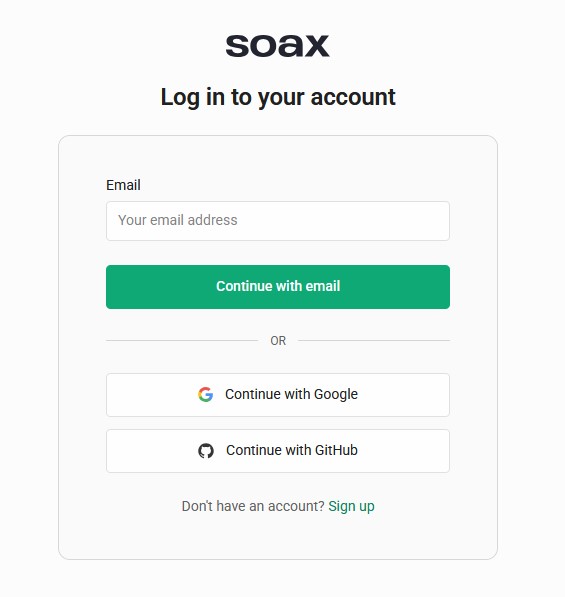
Signing up with SOAX is easy. There are no lengthy identity checks, no need to provide documents just yet (KYC checks don’t happen until you sign up for one of the full paid plans); enter your name and verify your email address (or just sign up with Google), and you’re in.
You’re then prompted to continue with the no-commitment Sandbox plan or upgrade to a paid plan. If you pick the latter, hand over your cash (we were able to pay by card only, but crypto and other options are available once you verify your identity), and the subscription is immediately added to your account.
After that, the website refreshes to the main dashboard screen, a good-looking panel with a whole host of configuration options and status details. There’s a lot to explore, but SOAX does its best to help, offering its ‘get started’ and ‘product’ guides found next to your profile icon.
If, like us, you tend to rush through website onboarding, or sometimes skip it altogether, that’s okay too. The SOAX support chatbot is only a click away, and although it’s not smart enough to solve any complex problems, we found it handy for explaining the ‘where do I find…?’ startup basics. You can get human support this way too, provided you’re not on the Sandbox plan.
The main section of the dashboard is clean without any bloat, clearly showing you how much traffic has been used and how many credits you have left. On the left side, you can find the usage breakdown if you need more traffic details, and the packages section where you can create and manage them.
Getting started with SOAX
Setup complete, it’s back to the dashboard to explore SOAX properly. This all starts with authorization, where you can opt to authenticate with a username and password or via IP whitelisting. We tried both, and in each case had to then specify our preferred IP rotation time, city, state or IP targeting, and assign them to specific ports.
That was enough for our first few tests, but if our needs were more complex, we could add more filters to target different locations or use other IP location schemes.
When you’re done, you can download your proxies in TXT, CSV and HTML formats. A handy Online Proxy Checker allows you to test up to 50 of these, report on their status and response times, and export only the working proxies. (You don’t have to be a SOAX customer to try this, it works with any proxies. Check it out here)
While SOAX offers a lot of proxy configurability and control, it doesn’t have the depth of functionality of the big names. Its proxy API is horribly basic when compared to the likes of Oxylabs, for instance, just a handful of calls to whitelist IPs and get location details. And although Decodo has supporting tools including browser extensions and its X Browser, there’s nothing like that here.
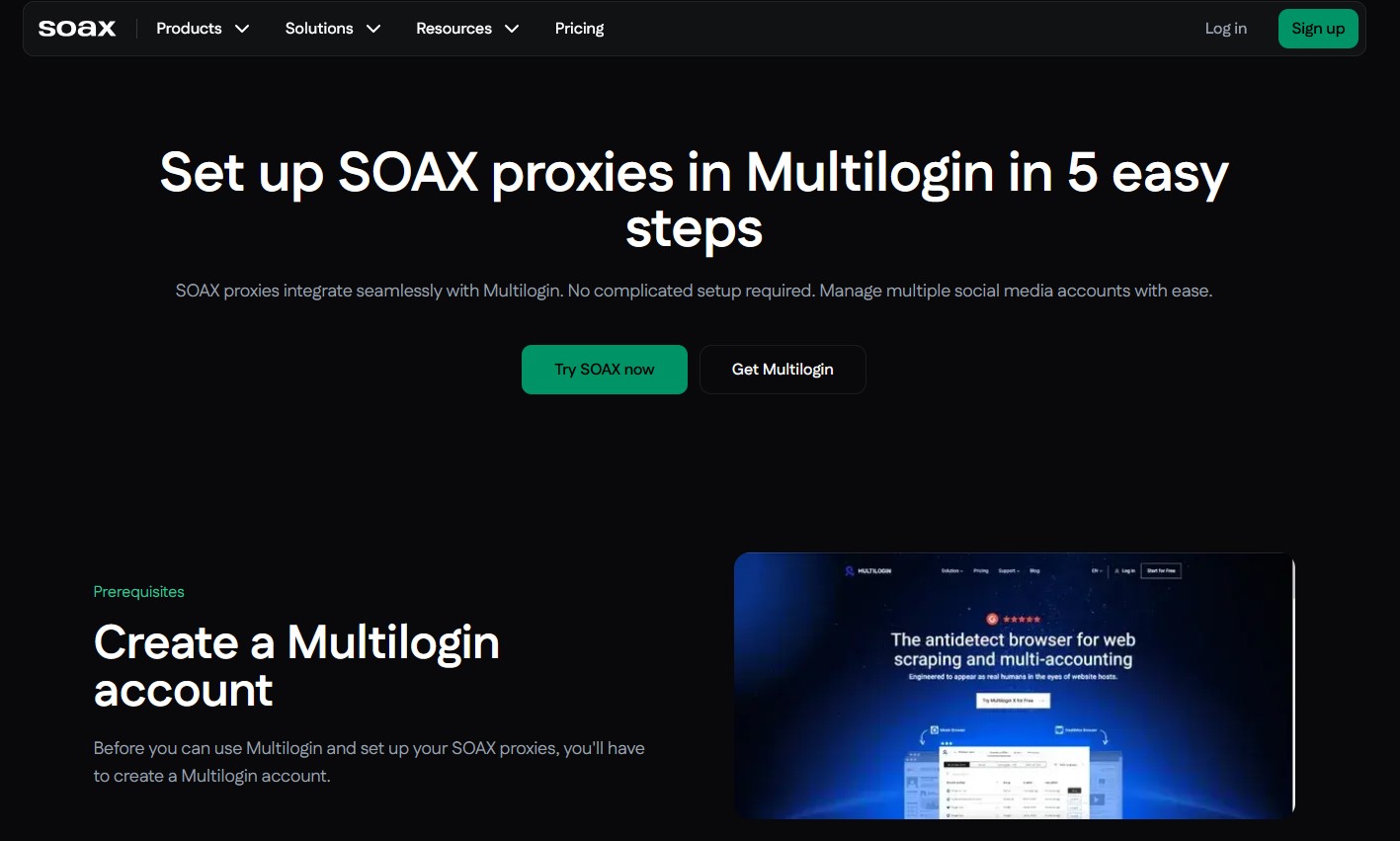
SOAX arguably makes up for this, though, with easy integration for a number of anti-detect browsers. The SOAX Integrations page links to tutorials covering how to get SOAX working with 15 popular tools, including Multilogin, GoLogin, AdsPower, Incognition and more.
Support
SOAX has a dedicated documents page where the company has various guides and explanations on topics relating to the service or just general proxy knowledge. A slightly confusing thing is that the page caters to both regular users and developers, so you may encounter some coding terminology in a few guides.

The service isn’t that confusing to use, but in case you have trouble, you can find a ‘Quickstart’ guide that can get you started in minutes. Additionally, you can find a similar guide on how to use the dashboard, as well as explanations of what certain settings do.
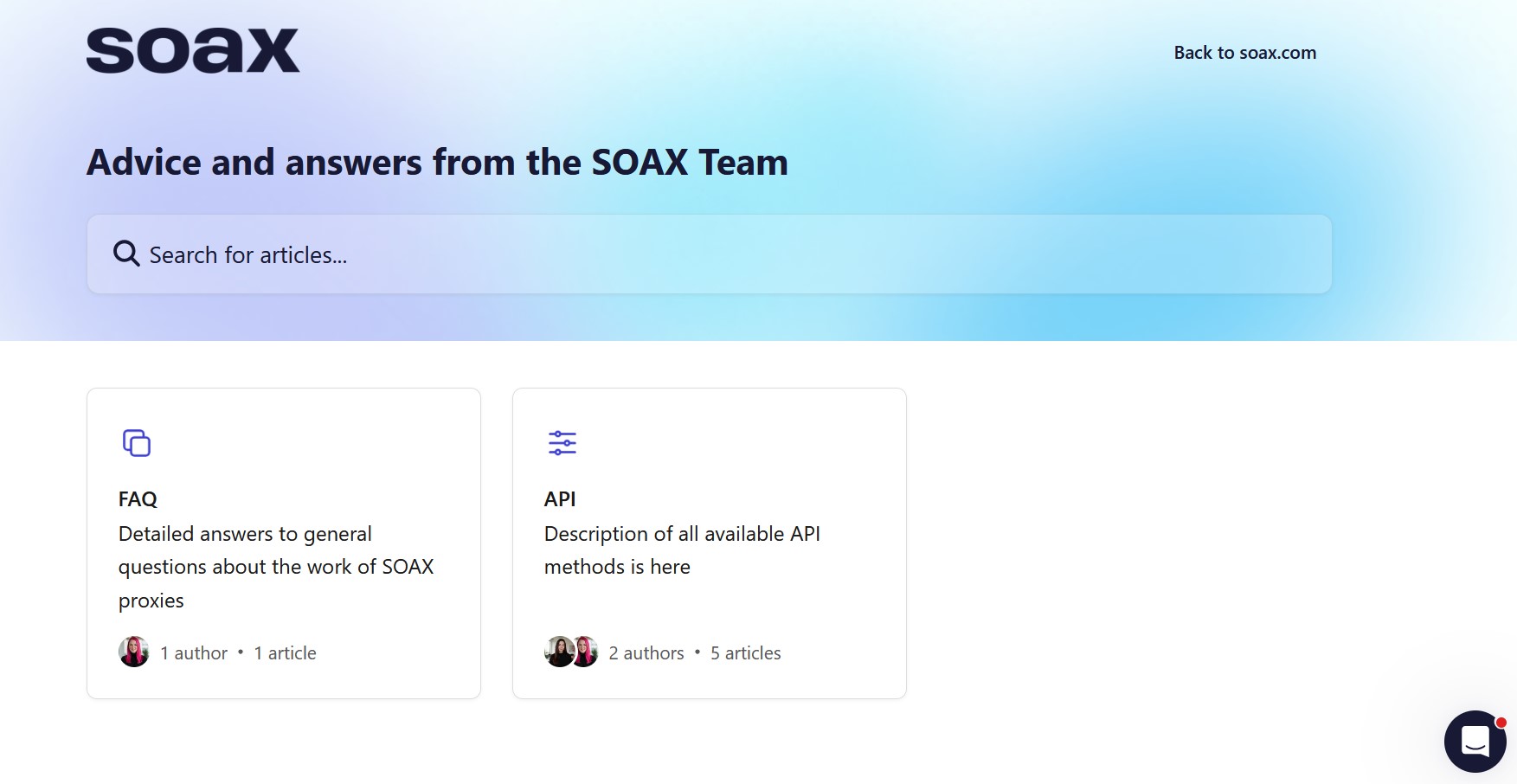
Then, there’s a help center, which is rather hard to find on the website if you’re not logged in, and it’s much easier to get there through Google. That said, you can find several articles here from the SOAX team, but they’re mostly about available API methods.
More importantly, you’ll find the chat box in this section (or in your dashboard when logged in), which you can use to send a message in case you need customer support. An AI agent is there too, available to answer any general queries, or you can request to chat directly with the support team.
Final Verdict
After the overhaul, SOAX still retained the quality proxy service it provided before. You get a huge pool of residential proxies, a good set of features, and an overall good user experience.
There are some downsides, though. The credit-based pricing might not be for everyone’s cup of tea, and compared to some of its competitors, it’s a bit pricier. Also, unless you’re subscription-based, support will be harder to reach, even if the service isn't that complicated to use in the first place.
Still, the company does a good job of presenting what it can do and what some settings mean, which is especially helpful if you’re not that knowledgeable. Plus, there’s a no-commitment pricing option, allowing you to test the service out before you decide to cash out for it.
- We've featured the best VPN services.








 English (US) ·