
 3 hours ago
14
Smart bulbs are clever until someone flips the wall switch.

Visualspace/Getty Images
Smart bulbs are all the rage these days for people who are building up their collection of smart home gadgets. They're relatively cheap and colorful, and you can have them glowing in your lamp within minutes of opening the box. But the ease of setup hides a tradeoff that becomes obvious the moment someone else in the house flips the wall switch out of habit. The bulb goes dark, loses its Wi-Fi connection and refuses to respond to the app or voice assistant until the switch is flipped back on. And after a power outage, many smart bulbs turn back on at full brightness — not ideal during nighttime storms.
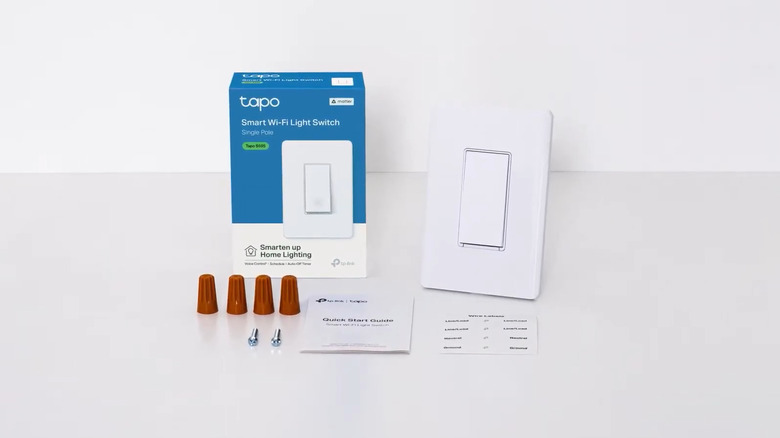
Smart switches, however, solve both of these problems. Rather than making an individual bulb intelligent, smart switches replace the wall switch itself, keeping it wired directly into your home's electrical system. That means anyone, from a houseguest to your grandparents to your toddler, can turn the lights on the way they always have — without downloading an app or learning a new interface. For households with mixed tech comfort levels, that matters more than the fact that you can change the color of the lights. A smart switch just controls power to the light or fixture.
This isn't a case for ditching smart bulbs altogether (because their chameleon character is quite impressive), but if you're deciding where to start your smart home upgrade, smart switches offer a more practical and inclusive foundation.
Why are smart switches more inclusive than smart bulbs?
Screenshot by Gabriela Vatu (Tp-Link Tapo)
The biggest drawback of smart bulbs is the power dependency. Because a smart bulb needs continuous electricity to stay connected to your network, flipping the physical wall switch off disconnects it from Wi-Fi entirely. Automations stop running, voice commands fail and the bulb won't respond again until someone manually restores power at the switch.
A smart bulb also requires an app, a smart speaker or both to unlock its full functionality. That's a fine arrangement if you live alone, but it breaks down fast in a shared household. Kids, aging parents, roommates and guests don't always want to search for an app just to turn on the kitchen light. They just want to press a switch.
Smart switches preserve that traditional, tactile experience, and anyone in the house can control the lighting exactly how they always have. This also makes smart switches a better fit for multi-bulb fixtures, like a hallway chandelier. One switch can manage every bulb on that circuit, rather than requiring each individual bulb to be smart and separately configured.
Beyond day-to-day usability, smart switches tend to hold up better over time. Because they draw their connection from the home's wiring rather than relying on the bulb itself to stay powered and networked, they aren't vulnerable to someone accidentally cutting power at a standard light switch. That translates to more consistent automation and fewer moments of troubleshooting why a scheduled routine didn't run. Before buying, make sure to check whether the switch and your system are compatible, since many models require a neutral wire.
Cost tells a similar story for multi-bulb fixtures. Outfitting a six-light chandelier with individual smart bulbs means buying, pairing and eventually replacing six separate smart devices that can cost anywhere from $5 to $50, depending on brand and whether they change color. A single smart switch controlling the same fixture is a one-time investment that can cost you as little as $11 a piece, if you buy a bundle.
Can you use a smart switch with a smart bulb?
Charles Brutlag/Shutterstock
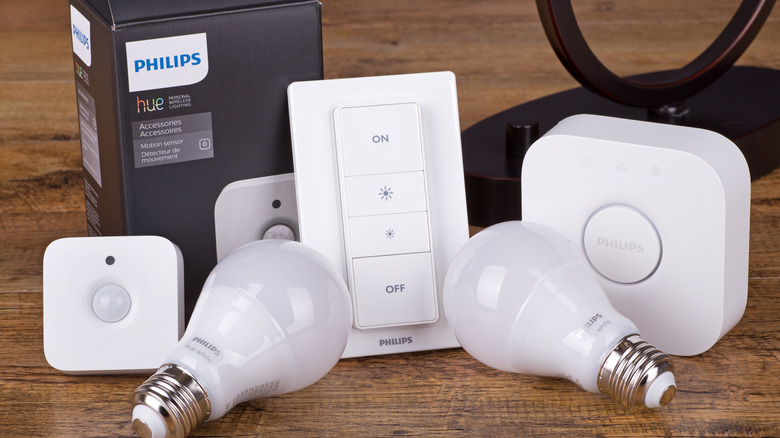
You most certainly can use both a smart switch and a smart bulb (or smart fixture). If a smart switch cuts power to a smart bulb, the bulb loses its smart functionality until power is restored. Basically, the bulb loses the ability to turn on and off by app or voice commands. However, when on, you can still use voice commands and the app to control the color or dim the brightness. Note, however, that smart dimmer switches should not be used to control fixtures with smart bulbs.
Smart switches are the stronger choice for primary overhead lighting in high-traffic and shared spaces like kitchens, hallways, bathrooms and living rooms where multiple people reach for the switch. They can also control more than lighting, as many models are rated for ceiling fans and other wired loads, not just light fixtures. You'll have to check the switch's load rating to match the device before installing, of course.
Smart bulbs make sense in specific spots. Renters, for instance, who can't alter wiring, will make good use of them. Your living room lamp could also use a smart bulb since it's always plugged in anyway. Neither technology makes the other obsolete. The most functional setup usually puts smart switches in the rooms everyone shares and saves smart bulbs for the spaces where their creative lighting effects are worth the extra app-based control.








 English (US) ·