
 Image via Syfy, Everett Collection

Published Oct 25, 2026, 11:24 PM EDT
Michael John Petty is a Senior Author for Collider who spends his days writing, in fellowship with his local church, and enjoying each new day with his wonderful wife and precious daughters. At Collider, he writes features, reviews, recaps, interviews, and breaking news on select occasion. In addition to writing about stories, Michael has told a few of his own, from supernatural thrillers to historical fiction. His Western short story, The Devil's Left Hand, received the Spur Award for "Best Western Short Fiction" in 2025 from the Western Writers of America, of which he is a member. Michael currently resides in North Idaho with his growing family.
Sign in to your Collider account
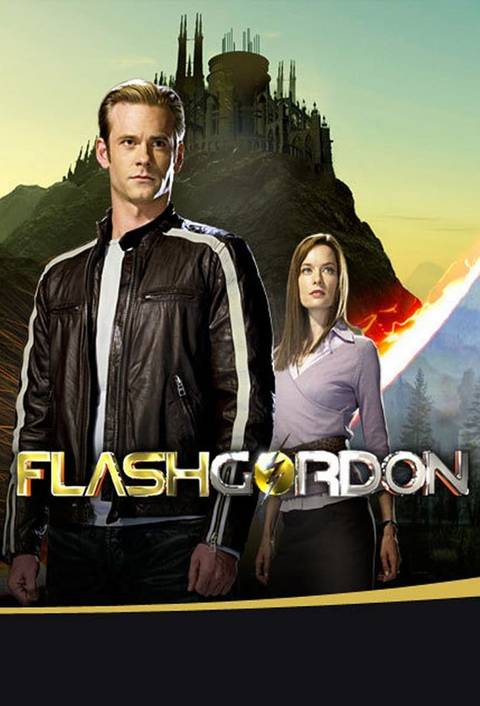
In the early 2000s, there were plenty of one-and-done shows that came and went without much fanfare at all. But there's only one full-season television program that attempted to slow-burn the pulpy science fiction of yesteryear before trickling to an end with hardly any impact. The series in question? SyFy's often maligned take on Flash Gordon. Okay, if you’ve heard anything about this show you’re probably rolling your eyes. However, the Eric Johnson-led reboot isn’t as bad as it seems. Eventually, the series found its voice and became one of the most misunderstood sci-fi shows of the decade.
'Flash Gordon' Struggled at First To Modernize the Sci-Fi Space Opera
Predating even heroes like Batman and Superman, Flash Gordon first appeared in newspaper comic strips in 1934 as an alternative to the sci-fi adventures of the similar Buck Rogers. It wasn't long before film serials adapted the character to the screen, followed eventually by several live-action and animated television adaptations and eventually the famed 1980 space opera film titled, well, Flash Gordon. This isn't a new character, and over the years various adaptations have reworked the mythos time and again. So when the Sci-Fi Channel (known now as SyFy) pledged to revive the classic space opera only a few years after successfully reimagining Battlestar Galactica, science fiction fans and lovers of pulp everywhere were ready.
Often retitled Flash Gordon: A Modern Space Opera upon re-release, the 2007 series was developed by Peter Hume as a contemporary take on the classic comic character, with former Smallville star Eric Johnson cast as the titular Steven "Flash" Gordon. Having lost his father at a young age to a fire, Flash has felt as if there was more to the universe for quite some time. It isn't long, then, before he finds himself caught up in the affairs of another world — an alien planet called Mongo —ruled by the cosmic dictator Ming the Merciless (John Ralston). Joined by ex-assassin Baylin (Karen Cliche), the genius Dr. Hans Zarkov (Jody Racicot), and his ex-girlfriend and the character's longtime romantic interest, Dale Arden (Gina Holden), Flash sets off on a series of cosmic adventures that will change his life forever. If only audiences had felt that way.
Flash Gordon attempted to bring the famed adventure hero into the 21st century but suffered from a poor pilot episode (which is not made better by the extended version) and an even poorer batch of follow-up episodes that failed to capture audiences the way the character easily could have. While camp has always been a part of Flash Gordon since the comic strip days, the series wasn't terribly well written, presented with some unfortunate editing and acting choices while spending entirely too much time dealing with Flash's personal life on Earth. The clearly limited budget likely didn't help either. In an effort to make Flash Gordon "relatable," the 2007 series gave the character real-world problems and diluted the mythic sci-fi icon into something longtime fans initially failed to recognize. In some ways, it was SyFy's answer to shows like Smallville and Merlin, which attempted to show how their respective characters became heroes. Only, it didn't quite work for Flash.
'Flash Gordon' Gets Better With Time, but It Was Too Late for the Sci-Fi Series
 Image via SyFy
The tragedy of Flash Gordon is that, while the show was off to a slow and subpar start initially, the series was actually able to course-correct about 10 episodes in. For the first half of the season, Flash is torn between dealing with alien threats that have made their way through interdimensional rifts to Earth, while also hopping back to Mongo in search of his father, Dr. Lawrence Gordon (Bruce Dawson), who he discovers is alive on the alien world. During this initial batch of episodes, Flash is forced to hide the truth from Dale's fiancé, Detective Joe Wylee (Giles Panton), as well as his best friend, Nick (Panou), who mysteriously vanishes from the show after a while. And that's not to mention the drama with his mother, Norah (Jill Teed), who believes Flash is looking for false hope. Frankly, those early episodes are largely duds, but if you can power through, you won't be sorry.
Flash Gordon launched with an incredibly slow start, but over time, it grew into the modern space opera it always aimed to be. Although the two-part "Alliances" and "Revelations" — which cleverly feature '80s Flash Gordon star Sam J. Jones as the alien Kreb — were certainly a step in the right direction, it was not until "Conspiracy Theory" and "Random Access," a few episodes later, that the show really begins to take off. On some level, those early episodes are necessary to establish the world and some of the characters, including the intricacies of Ming's rule, the frustrations of his daughter Princess Aura (Anna Van Hooft), and the political tensions of Mongo (not to mention Flash's personal connections to the alien world). Nevertheless, many viewers abandoned ship long before those rifts opened.
Some have theorized that Sci-Fi wanted to lull casual TV audiences into watching Flash Gordon through more mundane or pedestrian plotlines involving Flash's time in his hometown of Kendall. By creating a love triangle among him, Dale, and Joe, a quippy best friend in Nick, and adding other casual elements that felt familiar, it would give viewers something tangible to latch onto until they could fully embrace the intricacies of Mongo. The problem was, by the time Flash Gordon began leaning more into those space opera elements, most had already tuned out. It's a shame, too, because as the show goes on, Barin (Steve Bacic) of the Verdan, Vultan (Ty Olsson) of the Dactyls, and Terek (Craig Stanghetta) of the mutated Deviates become major players later on, and allies for Flash in the continual war against Ming.
'Flash Gordon' Was Cancelled After 1 Season
By the end of its first and final season, Flash Gordon began living up to its name, giving Eric Johnson's take on the sci-fi hero the type of material fans were craving from the beginning. Having become a hero on Mongo who helped unite the cantons against their "benevolent father" (who was no longer an Asian stereotype as in the comics but instead a cruel, clean-shaven warlord), Flash was finally beginning to resemble the character. Additionally, the editing and acting had improved, the scripts were tighter, and the world-building was paying off as Flash Gordon pushed itself into full space opera territory, barely spending time on Earth by the end. The problem was, these adjustments were made far too late, and the audience was gone.
Of course, if you want to enjoy the 21st-century adventures of Flash Gordon, it's still a show worth revisiting today. Sure, those initial episodes are a slog to get through, but once you come out the other side, the Sci-Fi Channel original gets better with age. Even better, the ending is still satisfying (well, mostly satisfying), even if it does leave the door open for a second season that would never come. Because of that, Flash Gordon: A Modern Space Opera is worth taking another chance on all these years later, if not just so that you can get to that climactic two-part finale. It's no Star Wars, Stargate, or Dune, but it was a show chock-full of potential that could possibly have become something great if audiences had stuck around.
Flash Gordon is available for streaming on both Peacock and PlutoTV.
Release Date 2007 - 2008-00-00
Directors Paul Shapiro, T.J. Scott, Neill Fearnley, Rick Rosenthal
Writers Peter Hume, Sheryl J. Anderson, Derick Martini, James Thorpe, Scott Murphy, Steven Martini
-

-

-
Paulette Hinz
Ming's Barber
-




 English (US) ·