
 Credit: MovieStillsDB
Smallville creators Al Gough and Miles Millar revisit 25 years of the Superman TV show, its influence on superhero culture, and its potential future.

Published Nov 6, 2026, 9:00 AM EST
Andy Behbakht has worked as an entertainment journalist since 2010, covering all the latest in Hollywood on both the big and small screens, from staying on top of the biggest breaking news, analyzing movies and television shows in Hollywood, to in-depth interviews with actors and storytellers.
Andy's career includes having worked for publications such as FanSided, KSiteTV, TV Fanatic, It's Just Movies, Heroic Hollywood, TV Overmind, and more. Outside of his career as an established reporter, Andy is the host and producer of The Showrunner Whisperer, The Flash Podcast, the editor-in-chief of Multiverse of Color, and the network director of DC TV Podcasts.
"Every story has a beginning."
Those were five simple but pivotal words in the early marketing for Smallville, as The WB brought the journey of DC's most iconic superhero to the small screen. Hollywood may have more comic book adaptations than ever in film and TV; that was not the case back in the early 2000s, as networks and studios were still hesitant about investing in properties based on superheroes.
But for Clark Kent, the last son of Krypton was able to prove that viewers all over the world are invested in following comic book icons. For 218 episodes, Tom Welling starred as a young Man of Steel, long before becoming Superman, allowing weekly installments to explore how he came to terms with his Kryptonian powers and heritage. But as Clark grew into the hero he was destined to be, the DC TV drama also built up Lex Luthor's rise to becoming his greatest nemesis, with many players from the mythology getting their origin stories.
It has been 15 years since the series finale aired on The CW, but 2026 marked the 25th anniversary of when Smallville first premiered on The WB back on October 16, 2001. To celebrate the longest-running superhero show of all time, I spoke with the showrunners Al Gough and Miles Millar for an exclusive interview to revisit the legacy of the Superman series, with the writing partners reflecting on its impact in pop culture.
How Smallville Stands The Test Of Time 25 Years Later
Creating any TV show like Smallville that gets to run for over 200 episodes is a massive accomplishment for many reasons, but with the current streaming era, there are different approaches now to how the world is getting new adventures on their TV screens, especially with the amount of episodes they get per season and the waiting period between the next episodes. As the next generation is discovering The WB project through streaming platforms, the showrunners admitted that it hadn't fully sunk in yet that its legacy continues to expand to this day.
Al Gough: "I don't think so. Miles and I are not people who tend to look back. We keep moving forward. But that said, it's really fantastic when you have these huge milestones to be able to look back and see how much the show means to people and [how] people have grown up with it. And now it's finding a new audience with new generations through streaming [on] Netflix and Hulu here in this country. So it's great."
Miles Millar: "Yeah, we don't really look back, and it's always sort of reminded of the show when we go online and see the TalkVille [Podcast] with Michael and Tom. It's much more present in our lives than it has been. So it's interesting. But we're extremely proud of the show, and it feels like a distant memory, but making it kind of a blur. But we are incredibly proud and excited that new audiences are finding it and discovering it. It's incredible."
The Journey Of Smallville Before The MCU & Arrowverse
 Courtesy: Everett Collection
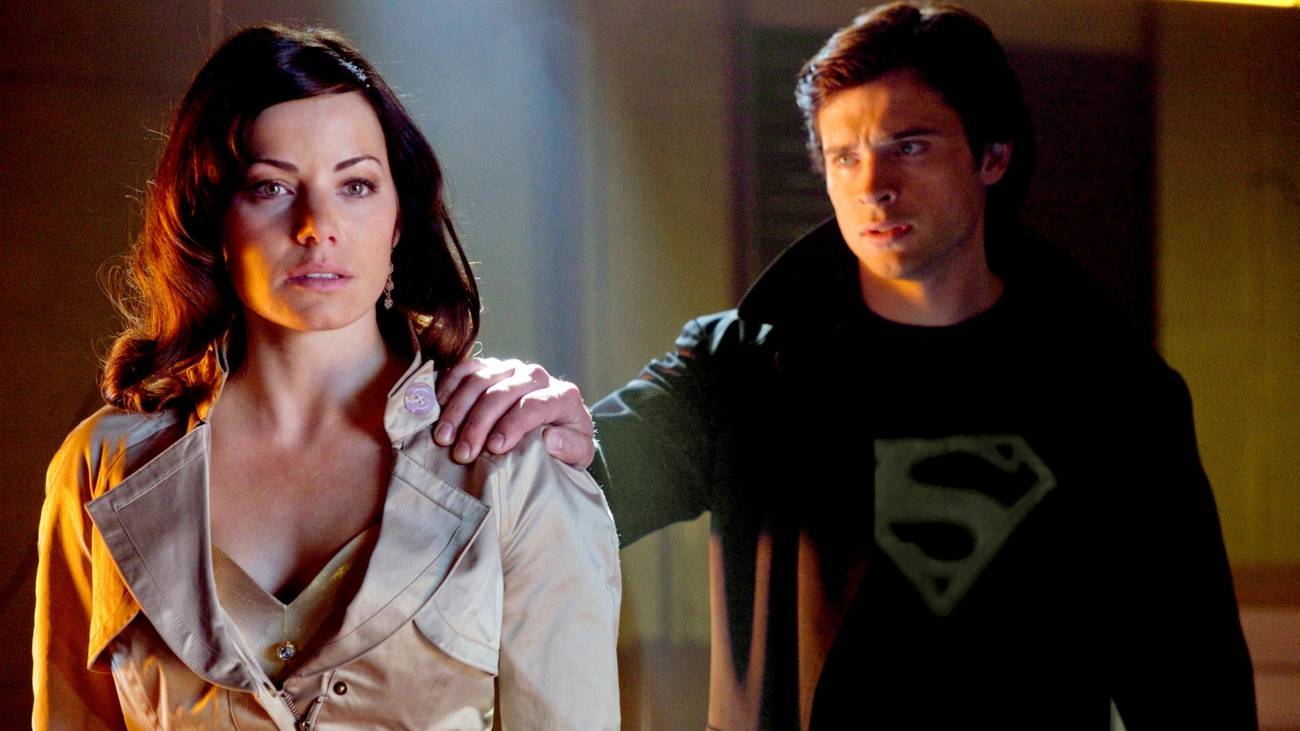
The world has followed the MCU timeline that has existed since 2008, while viewers tuned in weekly for over a decade with the Arrowverse franchise on The CW from 2012 to 2024, as James Gunn's DC Universe is currently building out its Chapter 1: "Gods and Monsters" slate. But when Smallville premiered in 2001, it was rare to have any comic book properties in live-action, especially on television.
For Gough and Millar, it was a blessing in many ways to have Smallville arrive during this period, while honoring the Man of Tomorrow's legendary history, but also bringing their spin to the DC icon.
Al Gough: "No, exactly. I mean, this was pre-Marvel Cinematic Universe, and the last iteration of Superman had been Lois & Clark, and Batman & Robin was the last Batman movie. So superheroes were not... They were definitely in the nadir of pop culture at that time, which in some ways I think was good for us because we were able to do things which we would no way be allowed to do even five-six years later.
Once the genre took hold, and people would get very tied to mythology or you can't do this or you can't do that. Warners gave us a lot of free rein. DC Comics gave us a lot of free rein. We worked with Jenette Kahn, who was running it at the time and who was great. And as we've said many times, we were not comic book readers or comic book fans. We loved Superman, and we loved the Richard Donner movie. And I think what Smallville does is it keeps the spirit of Superman, but we were allowed to change things up, and that was great. So we're really proud and glad that, at the time, people weren't looking close enough to try to come in and tell us what to do."
Miles Millar: "But it was also a hard sell, that's for sure. It wasn't something that people thought was going to be successful. There was great skepticism and really not much interest in the show when they first heard it in terms of the idea of the show. So that was something we had to combat. Again, it's good to be an underdog. The same thing happened with Wednesday. No one was interested in Wednesday.
We tried to sell that numerous times, and we didn't sell the pitch. So in both situations, we believed fully in the show that we'd created, and we were met with skepticism and negativity, but kept going. So that's always like you have to have that sense of belief in what you're doing and what you create to keep going forward. And I think both times we were proven right, but it's sometimes difficult to just made through that initial skepticism."
Throughout these 10 seasons, as we expanded upon Clark's world and also their take on the DC Universe, they have previously talked about what they could and couldn't use from the comics when working with DC, and Warner Bros. Fans would regularly ask at Comic-Con panels when Batman or Wonder Woman would pop up, only to be gently reminded that major players like them were off limits on the small screen.
While Bruce Wayne and Diana Prince may not have gotten the same dues on The CW as other Justice League heroes, the Arrowverse franchise had more liberty during its run, with more spinoffs getting greenlit at the network, leading to annual crossovers. I asked the Smallville bosses if they saw the generation that came after them and the toys that Greg Berlanti's franchise, which began with Arrow, had access to, even though Clark got to connect with many players from the DC lore.
As I addressed that the Arrowverse would not have come to life had it not been for Smallville's major success, Millar shared that same sentiment, while also adding his appreciation for what the next phase of DC TV was able to do.
Miles Millar: "Yeah, I mean, definitely there's no Arrowverse without Smallville. That's pretty clear. Well, it's true, obviously, it is the same crew in Vancouver. It was the sort of grounded, and then they became more cartoonish as they went. But for us, it was actually a point of survival. The fact that we didn't overuse the other characters too soon allowed us to keep going.
We could use the arsenal of characters as we went and then explore them in the way we wanted to and sort of reinvent them that fit the mood of the show, which is more grounded than some of the other shows that came after it. But in terms of what happened with the Arrowverse, it meant nothing to us. It's great. It was just more ways to tell the stories and more ways to entertain people. So it was flattering in terms of what came after the show, definitely. I think we sort of laid the groundwork for what happened afterwards."
Why Tom Welling Was Born To Lead Smallville
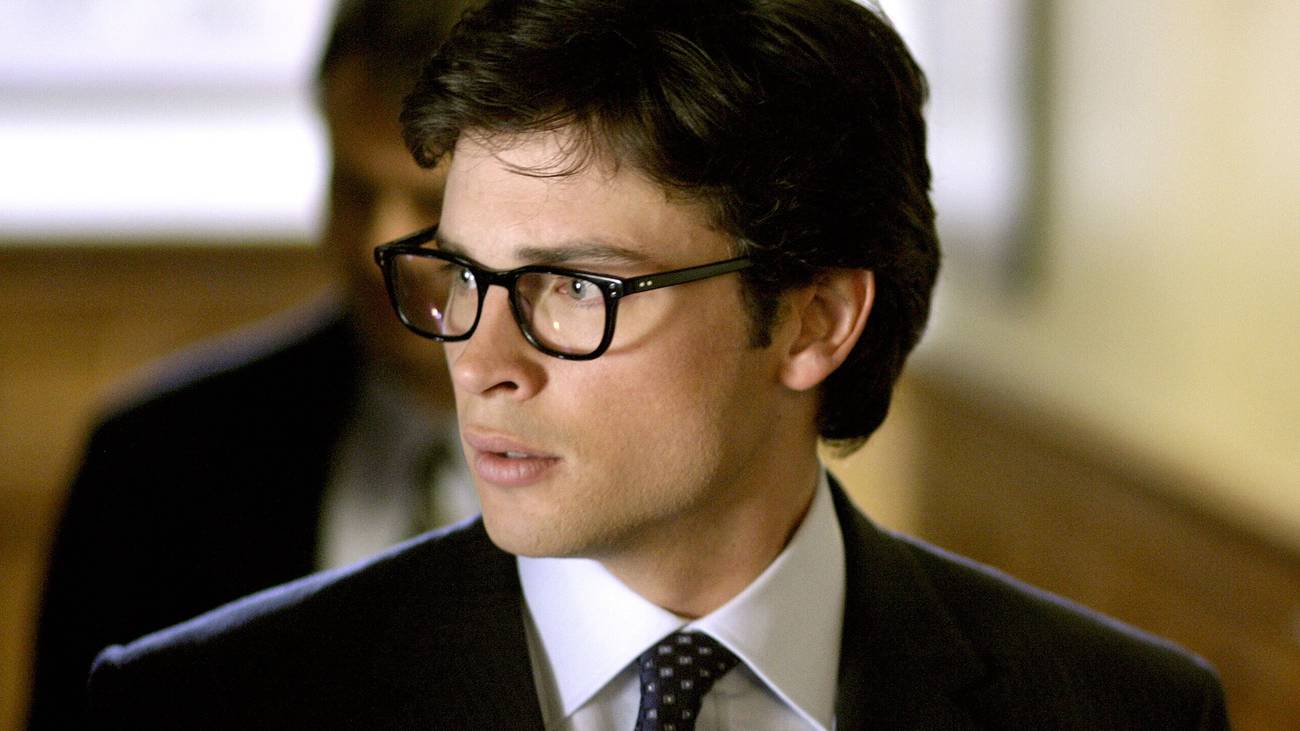
The world has seen numerous talented actors bring Superman to life throughout the decades, and when it came to landing the leading man himself for Smallville, it took a few attempts before they landed Welling, who has shared on the record that it was reading the pilot script that convinced him to sign on. For Gough and Millar, they shared their perspective on landing Welling, while also facing an uphill battle of how to sell the show.
Al Gough: "It's interesting because we saw hundreds of people for that role. It's like with Wednesday, you see hundreds of people from all over the world. And when we saw Tom, and he was skeptical when he heard the pitch, and then once he read the script, he was not skeptical. So I think that was part of it. At the time, the script wasn't out there because we were still casting. There were sides that people could read, but that doesn't really give you a sense of what the entire show is going to be. So once he came in and read it, then he came in and auditioned.
So I think that was the thing. And again, you have to remember, it was a time when the word comic book was not... Comic book was a pejorative. And even the show, when we were testing it, the network was like, "Let's play down the superhero elements of it." And remember we were testing it among teenagers, and there was the tape jammed back in the days when you actually had three-quarter-inch tape, and the boys had to tell the girls they were watching Superman.
The girls had no idea. The boys picked up the Lex Luthor, the Smallville, the Kents, all of that stuff. The girls had no idea. Again, I think, that's one of the strengths of the show was that you could come into it. There was an entry point into the show for everyone because it was a teen drama, and the Superman superhero aspect of it was additive, but it wasn't the reason to watch. I think nowadays you see these shows, everybody's in a costume by minute five, and then apparently they're all meeting 15 million other superheroes by minute 10."
Miles Millar: "But in terms of Tom's skepticism, I kind of get it and understand it, but when he came in, I think he understood what it was. So that was the thing. I think again, he treated it like everybody else did and thought it was one thing when it actually was another."
As I shared that it was my mother who made me aware in 2001 that a show about a young Clark was on its way, Gough chimed in with, "It's funny that you say that because the network, we always called it the Dads and Daughters show. [laughs] The dads love Superman, and the daughters love Tom. So that's kind of how people found their way into the show a lot of times."
The Smallville Extended Universe That Could Have Been

A shared Smallville universe may not have happened, but that doesn't mean they didn't try. As there have been talks over the years about the scrapped Justice League spinoff that was being eyed with Steven S. DeKnight, and potentially even a Supergirl offshoot for Laura Vandervoort's Girl of Steel, the co-creators explained that an interconnected universe was something they had toyed with, especially with the Aquaman pilot.
When asked if there had been conversations about "What if we gave the Smallville treatment to other characters as their own shows?" or if the main goal was to continue focusing on the main series and see what would happen down the line, Gough and Millar toyed with the idea, even of how they had imagined a young Wonder Woman series with a similar approach.
Al Gough: "Well, I think had the Aquaman one gone forward, definitely there would've been some crossover at some point. Characters could have crossed in and out of the shows. But I also think it's important, with all of these shows, is [that] they need to be their own thing. So they need to be their own thing and stand on their own two feet as shows. And then you don't want to build them with the idea like, 'Oh, now we're going to use the crutch of all these other people from the other shows crossing in and out.' So I think you can do that, but they have to be their own thing. And again, had we had the opportunity, we would've built out that show, and then we would've definitely looked at a Diana Prince show because that's something else that we were very interested [in.]
Miles Millar: Yeah, that was the other show, the young Wonder Woman show. We thought that was a really interesting character, really interesting dynamics. It felt like a natural fit for crossovers with Clark and Lois. But it was, just unfortunately, the regime at the time, once the WB became CW, it was just a different [time.]
We were fighting for our survival as a show, so we didn't really have time to think about spinoffs and things like that. It was just a different era with people who didn't want the show to succeed. It was good for us creatively because we just had to fight for it and make sure that we could be as ambitious and take risks with the show. So I think the show was better for it because we were focused on it. We weren't focused on other things. Sometimes shows, if you take the foot off the gas midway through, you only get six seasons or whatever it is. I think it was good for us, but it was unfortunate that we couldn't expand what we wanted to do in terms of the universe of Smallville."
The Aquaman TV Show That Almost Happened

Jason Momoa may have brought Aquaman into the DCEU movie timeline, but the iconic Justice League member's modern incarnation during the 2000s began on Smallville, and the duo behind the hit Superman prequel was also looking to take another icon into their own series. Right before The CW was born after The WB and UPN merger, Justin Hartley landed the role as the Atlantean protagonist.
However, despite its pilot order, The CW opted not to move forward with the series, which led to the first episode becoming available through iTunes and becoming a massive success, as many purchased it on the platform. Hartley would go on to star as Oliver Queen, a.k.a. the Green Arrow, in season 6, before becoming a full-time cast member in seasons 8-10. Millar reflected on the "raw" cut that the world got to see, and the timing of the show not getting picked up.
Miles Millar: "It had problems, but it was the raw pilot. So it's seen a pilot before you get a chance to go in and fix it. Yeah, that was the pilot we didn't get a chance [to fix.] If you'd seen the original Smallville pilot, there are things in that that we changed when you get into production. So that one was definitely... Obviously, we didn't know it at the time, but Justin Hartley became a massive TV star, so he was perfect casting. It was just really bad timing in terms of the UPN and WB merger, and the UPN folks came in and basically cleaned house. Smallville was not the kind of show they wanted, and Aquaman was definitely the first victim of that feud between the two superpowers of the networks.
So it was just really unfortunate timing. Looking back, we should have definitely done that earlier, done a spinoff. We had no warning that there was going to be some sort of merger that happened. So it was just that happens in Hollywood. Regime change is the worst thing for any project, and Aquaman was definitely a victim of that."
As I wondered in terms of continuity, Gough and Millar also addressed how it would have worked if Aquaman had gone forward and served as an extension to Smallville, and been fully canon, despite the fact that Alan Ritchson had already been cast as Arthur in season 5. They elaborated on what went into the casting process for the pilot, while also praising the Reacher lead's stardom after his first superhero role.
Al Gough: "I don't know. I mean, I think it was something where you're looking at the time of who can carry a series. And to be honest, when we put Aquaman in the show, we weren't thinking of a spinoff at that point. It was early days when we were starting to introduce him. We'd introduced, I think, The Flash up until that point, and then Aquaman. And then once we did, we saw a way into it, but then you really want to cast a... And obviously, look, Alan Ritchson's gone on to have an amazing career in this great Jack Reacher, and he's fantastic."
Miles Millar: "I think that was our first instinct, but sometimes in terms of casting, there was definitely, not pressure, but people wanted us to look wider. That was definitely the word. I think Alan had just started acting, and I didn't necessarily think there was a sense that he could lead a show at that point in his career. So that was definitely where we were. It wasn't necessarily our choice, but it's amazing [how] his career has happened, and it's very exciting for him and good."
Why Smallville Season 7 Became Their Final Season As Showrunners
 Credit: MovieStillsDB
Smallville season 7 aired during one of the trickiest years for Hollywood in the mid-2000s, as the Writers Guild of America strike in 2007 had a huge effect across all the networks. However, while ending that season with the biggest cliffhanger of all time, where Lex finally discovered Clark's secret, it was also the end of an era.
Not only had Michael Rosenbaum finished his run after seven years, before returning for the series finale in 2011 to give the dedicated audience a proper conclusion to Lex, but Gough and Miller decided that it was time for them to pursue new adventures, while handing the keys off to long-time writers Kelly Souders and Brian Peterson, as well as Todd Slavkin and Darren Swimmer. When asked if they kept up with seasons 8-10 after stepping down, they explained why they didn't tune in.
Al Gough: "No, no. We didn't watch it at all. And that was a choice. We were like, 'It's going to be its own thing." We trained all those guys from staff writers and story editors, and it was time. At that point, it was right after the writers' strike in 2007, and there were a lot of budget cuts coming to the show. We thought if we're not going to wrap it up and they want to continue, which was great, let's turn it over to [this] team who we trained. But we also were like, 'You know what? We're going to step away,' and they can do their own thing, and we're not going to look back basically."
Miles Millar: "Yeah, it's kind of like you're giving your baby up for adoption, and you don't want to overparent. It's one of those things that we were very confident in the people who were running the show, and for us, it's too much of a mind f--k to deal with that. So we just left, clean break, clean cut, amputation, and move on with pride and love. But it wasn't something that we were [watching] every Thursday night looking, at the episodes to judge them - I think [that] would drive you crazy."
ScreenRant: "I was generally curious if you guys watch it just to entertain yourself because it's not every day that people who start something then get to pass it off to someone else and then view it as just a viewer. Sometimes they remain from start to finish."
Miles Millar: "I think we are too controlling to do that. I think we'd just be too judgy. So I think it's its own thing and that's great. So we had seven seasons, so that was more than enough for us, and we had other things to do, and we were very excited to move on. And I think 10 years of anything is a lot, so seven years was a lot for us. Not something we anticipated either. So we were very, not relieved, but it was definitely the right time for us to move on."
What Would A Smallville Revival Look Like Today
 Credit: MovieStillsDB
For the last few years, an animated Smallville sequel has been in the works from Welling and Rosenbaum, with the intention of having the original showrunners back, with the mission to also have the cast members return to voice their respective characters. As Warner Bros. is doing another merger, this time with Paramount, Gough and Millar have been able to reflect through guest spots on TalkVille Podcast about things they would do differently with the Superman adventure.
When posed with the question of what they would do differently and what they imagine the potential revival to look like, if it happens, there are a number of things that would be handled in a refreshing way.
Al Gough: "I'm not sure, actually. I mean, to be honest, we haven't spent a lot of time thinking about it just because we've been a little busy in another world [Netflix's Wednesday] and Warner Brothers has been going through, as you pointed out, its many machinations. So yeah, we haven't really devoted much of our brain space to it."
Miles Millar: "But that said, I think we'd be very, very interested in doing it. I think it's a very intriguing idea. And I think given it wouldn't be the episode-by-episode, not [a] freak of the week, but it would be much more of a streaming, basically a long movie, which sounds very intriguing in terms of what we've been doing on Wednesday to take that approach to Smallville and see what these characters are 20 years later. I think it's very compelling, and the actors are still so great, and the fan base is there. I think it would be obviously challenging, but really exciting. I think there's definitely an audience for it. It's getting the appetite at Warner Brothers. So that's, I think, always the challenge, but I think we're definitely up for it, and I think it would be great."
The Chances Of Smallville Stars Appearing On Wednesday

While Smallville is one of the most iconic works in their career, the creatives have gone on to tackle numerous types of stories and characters after departing The CW drama. Currently, Gough and Millar are reimagining a different famous mythology, with the Addams family in Jenna Ortega's Wednesday series, which has become a cultural phenomenon for the team.
As they featured various legacy castings in the DC TV property, they are more than open to possibly having someone like Welling and other members of the Smallville cast come on board in future seasons.
Al Gough: "I think it really depends. Both worlds are so specific that it needs to be the right character to do that. Look, we love all those guys, and if the part was right, we would definitely bring them in."
Miles Millar: "I think it's always about the part - [it] has to be specifically right. We wouldn't do it just as a gimmick. I think that's always the thing. It's got to be right and feel authentic to the world of Wednesday. But yeah, we'd love to find opportunities to bring them back. We love working with them, any time we could get together and work with them would be amazing."
As I casually suggested that Welling maybe plays the next headmaster of Nevermore Academy, while Rosenbaum perhaps takes on the role of one of the many, many Addams relatives from the canon. Millar chimed in with "what would be great [is if] he could be Fester's long-lost, I don't know, brother or something because then we could shave his head, which we'd love to do that again. He'd enjoy that!"
What Is In Store For Wednesday Season 3

Wednesday season 3 is on its way, and when I spoke with Millar and Gough, they had just finished filming two weeks ago. They shared where they are with the show's next run of episodes, while also sharing the difference between making this show and something like Smallville.
Al Gough: "Yeah, we just wrapped about two weeks ago, so that's where we are now. We're in post, and that's all we can say."
Miles Millar: "What's amazing in that one, we could do eight episodes of Wednesday in the time we could do 22 of Smallville. And it's just a very different process. And because we're writing everything and [are] on set the whole time, it's a much more, for us, a fully immersive experience. Whereas Smallville was, we were in LA with the writers churning out scripts. We shot every eight days, and this was much more like a very, very long film. But again, there's no Wednesday without Smallville in terms of the things we learned and the craft we learned on that show, and that was our training ground. So we're incredibly grateful in terms of that as showrunners and creators, that experience."
While plot details are still being kept under wraps, Winona Ryder and Ortega will be reunited in the Netflix series when it returns, after working together on Beetlejuice, Beetlejuice, which served as another collaboration between Gough and Miles with their lead star and Tim Burton. As the Stranger Things alum will be playing "Tabitha" in the new season, the showrunners still remained coy about what viewers can expect of her, outside of the fact that she will definitely be engaging with Wednesday.
Al Gough: "We can't. [laughs]"
Miles Millar: "She's obviously on screen with Jenna. Yeah. So she's part of the world, but that's all we can say. I mean, it was great to get her and to see the icons of Tim's career together in the same project - that was exciting for us to see Eva Green and Jenna and Winona. It was just kind of amazing."
The Excitement Of Getting Deeper Into The Addams Mythology Compared To Smallville
The Addams family continues to get fleshed out in the Netflix property, and for the long-time writing partners, it is thrilling to be able to approach these characters. As Eva Green's Ophelia will enter the new season, Millar and Gough gave their thoughts on how this experience has differed from their time making Smallville.
Al Gough: "It's great. And unlike Smallville or Superman, there wasn't a lot of lore with the Addams family. You know what I mean? You have the movies, and you've got the television show, and you have the Charles Addams panels where they didn't even have names. So it's been a lot of fun to build out the Addams family and delve into this world and create the world as we dive into it."
Miles Millar: "Yeah, it's been great. It's different, but it's the same in terms of looking at and just giving these characters and their backstories and the history of the family era our own spin. And so again, it's our legacy from Smallville and being able to have that creativity and freedom to do that. And it's been even more so on Wednesday, because as Al said, there wasn't much lore to go from, so we can make it up. We create our own map."
Could Beetlejuice 3 Happen?

Many have wondered if another Beetlejuice sequel is possible, following the commercial and critical success of the 2024 installment. When the co-writers were asked if there are any chances for one more film, Gough and Millar
Al Gough: "You never say never, but that's really up to Tim. And I think with Catherine [O'Hara's] passing, it's certainly harder. Yeah."
Miles Millar: "No, that's the answer. It's just [harder.]"
Why People Will Always Hold On To Smallville
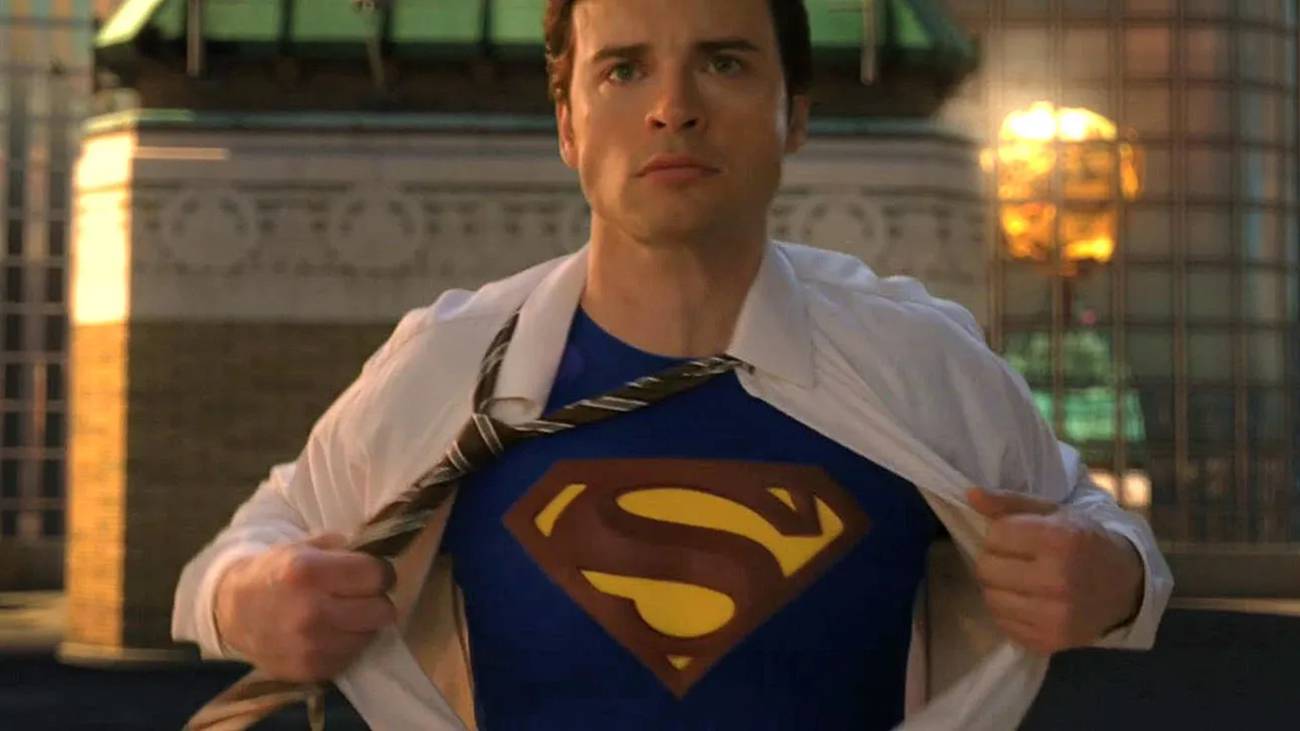
After 25 years, Smallville continues to find new viewers, allowing them to see the longest-running comic book series, as we finished the interview with Gough and Millar giving their take on why audience members all over the world still hold on to this saga, and why it continues to connect with future generations.
Al Gough: "It's a show about family, and I think it's [the] people, you love the Kents, and you want to be in that family. I think that's certainly part of it. I think there is an enduring power to Superman that people love that he's been able to transcend so many eras and so many generations. Weirdly, his powers are so general in some ways that you can graph them on to whatever situation you're in the world from the '50s to the '70s to the '90s to the early 2000s to even now. I think there's something very enduring about Superman, where he can speak to the time that we're in. I do think there's a big, obviously, nostalgia factor for that. It feels like a simpler time as well."
Miles Millar: "I think there's a sort of celebration of decency and integrity and love and these aspirational parents and a kid who was struggling to find his place in the world. So I think it's all these sort of universal themes, and it's a beautiful-looking show, and it has a wish-fulfillment and escapism element. It's a window onto an America that never existed, but has this golden glow to it. So I think all those things make it very enticing and appealing and easy. It's like apple pie. It just feels like it's a great way to spend an evening or afternoon watching these people in this world and escape into it because it's not like the real world, which is pretty horrible right now. I think that's something that really makes the show special and unique."
To catch more of the celebration for Smallville's 25th anniversary, check out ScreenRant's additional exclusive interviews:
- Tom Welling Reflects On The Past, Present & Future For His Superman
- Michael Rosenbaum Looks Back At Lex Luthor's Legacy & Potential Future With James Gunn's DC
Smallville is available to stream on Hulu via Disney+ in the United States and through home media release.

Release Date 2001 - 2011-00-00
Showrunner Alfred Gough, Miles Millar, Brian Peterson, Kelly Souders, Todd Slavkin, Darren Swimmer






 English (US) ·