
 3 weeks ago
23
3 weeks ago
23

Published May 24, 2026, 2:30 PM EDT
'I was outraged because he doesn't wear a mask. He's got a skull for a face!'

A common refrain these days from anyone old enough to remember a time before the Marvel Cinematic Universe, is that movies look way worse than they used to. Without pointing any fingers at one studio or director in particular, it's clear that something has gone wrong — to many discerning eyes they look flatter, duller, and grayer. (Just look at this image comparing the new Spider-Man: Brand New trailer to the comic book cover it's referencing and you'll see what I mean.)
One new and unlikely movie defying the trend? Masters of the Universe. In his take on He-Man, director Travis Knight (Kubo and the Two Strings, Bumblebee) updates the '80s sci-fi fantasy franchise for the 2020s while avoiding the many pitfalls of modern filmmaking. Reviews for the movie are embargoed until June, but because this is part of Polygon's 2026 Summer Preview (loophole!) I can tell you that not only is Masters of the Universe a wild ride, but it looks spectacular. The colors, the action, and the lighting all defy everything we've been trained to expect from modern, muddy blockbusters. Also, despite the whole Jared Leto thing, Skeletor rules.
So when I had a chance to interview Knight, I cut straight to the chase and asked him how he pulled off one of the best-looking summer blockbusters of the decade. Check out our short conversation below, and stay tuned for more from Knight and the cast of Masters of the Universe closer to the film's official release.
Polygon: Visually, Masters of the Universe looks incredible. What's your secret to making a movie look so dynamic and crisp and clean and never gray?
Travis Knight: Part of it is that I'm an animator, so I come at it with that perspective. I was an animator long before I was a director, so I see these worlds in a very visual way. It comes down to how you're looking at the world, the designs, the use of color and light, how you're using the camera, and where the audience is focusing at any given time. I want to make sure that people are looking at the things that they need to look at.
That's one of the things you're always doing in animation. You're always trying to make sure people are looking at the right thing at the right time — how things are moving across the frame, how things are moving between each cut, where you want the audience to be looking, what things are important that they need to focus on. That's just part of how I was trained, but it's very important.
Eternia is a very rich, colorful world. I mean, it's a riot of color. It's polychromatic. It's insane. It's like retina burning in terms of its color. So it was never a question of whether Eternia was going to be colorful, but as you move along in the process, things tend to get watered down. So it's important that you always keep your North Star and you keep the team pushing and go, "OK, no, it needs to look like this. " Because over time, things can start to just become kind of muddied.
I was very fortunate that I had an incredible group of artists with me, and one of the most essential parts was the visual effect — making sure those blended with the practical and the special effects. Those things felt entwined. And in that regard, I had such extraordinary allies in my visual effects supervisors, Tim Burke and David Vickery. They were absolutely amazing in this journey.
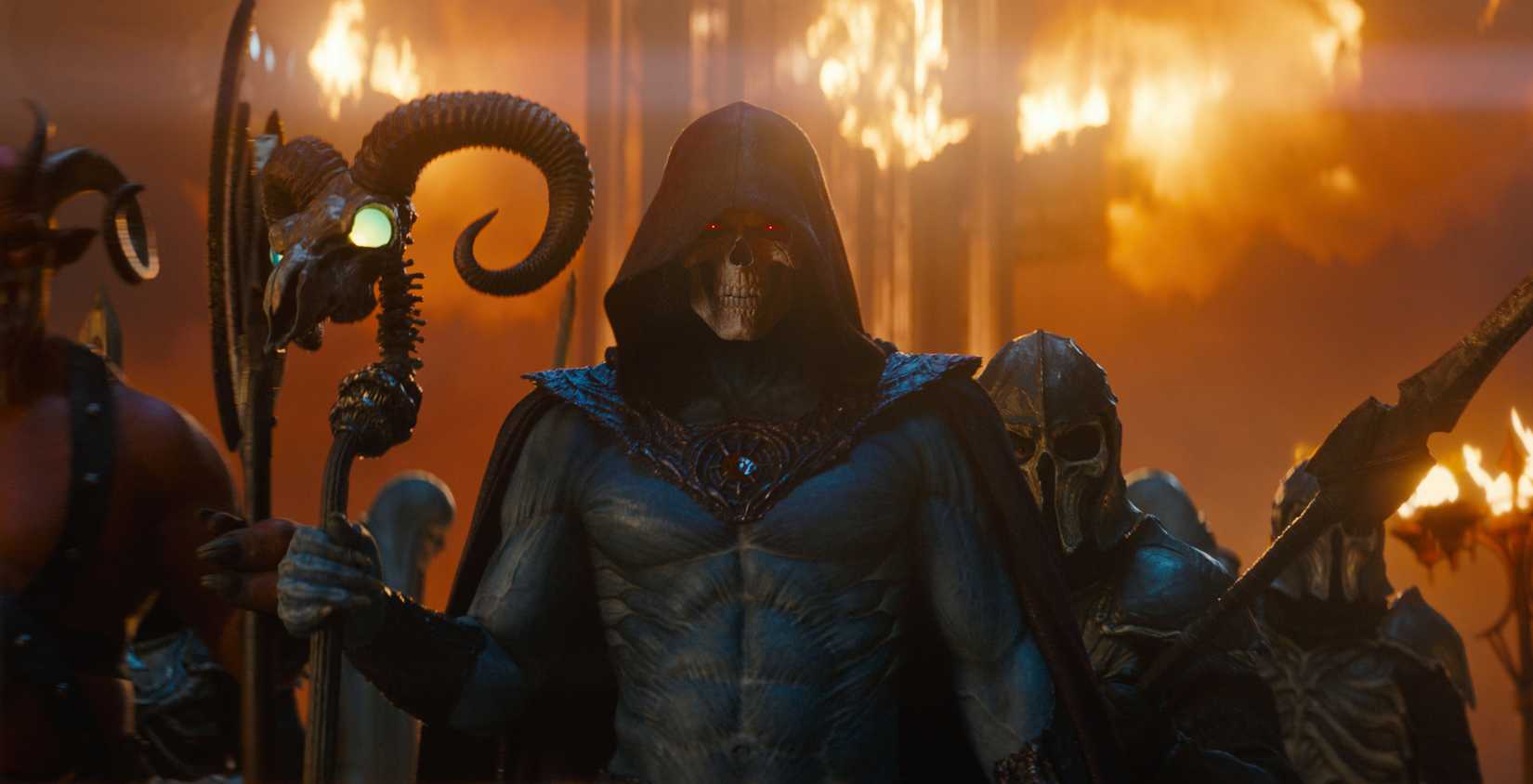
Skeletor, in particular, looks so great, especially in the way you animated his face to feel so lifelike. On a technical level, how did you achieve that?
It was always very clear to me what methodology we needed to do to bring the Skeletor to life. Skeletor has a skull for a face. There were iterations long before I became involved in this project where Skeletor had a gold mask and when I heard that I was outraged because he doesn't wear a mask. He's got a skull for a face! He's a talking emoting skull! So we had to have a skull for a face. That also meant it was going to be CG because you can't flay an actor to play Skeletor.
But we wanted an onscreen performance, not motion capture. We wanted a real person to embody that character. So in the end, it was a combination of CG, an incredible costume, and an extraordinary muscle suit brought to life by our prosthetics master, Barrie Gower, who was just absolutely astonishing. He did so many incredible prosthetic effects on the film.
Jared Leto gave a performance in full costume and in his muscle suit. And then after the fact, we'd go through in visual effects and replace Jared's face with this CG skull.
Masters of the Universe releases in theaters on June 5, 2026.






 English (US) ·