
 3 weeks ago
29
3 weeks ago
29
Last month, Sigma announced that it had established a new rice farming company that will operate in Aizu, the region of Japan where its factory is based. After speaking to Sigma CEO Kazuto Yamaki, the “why” behind this choice is anchored in a deep love of family and community.
If not to state the obvious, Sigma cares a lot about Aizu. Its marketing over the past decade-plus has always made sure to mention its factory there and the people it relies on to make its now-legendary optics. Last year, the introduction of its first dedicated cinema lenses bearing the name “Aizu Primes” was just another example of how much the region means to the company.
With that in mind, it should not come as a surprise that Sigma would want to invest in and care for the region and its people. I spoke with CEO Kazuto Yamaki at the CP+ Show in Yokohama, Japan, last month, and he further explained why this rice initiative was so important to him.
“My father passed away 14 years ago from cancer. I think it was three to four months before he died, he was living in Tokyo, but he really wanted to go to Aizu several times. On the weekends, I took him by car, but at some point, he really insisted that I take him by train,” Yamaki says.
“He did not tell me why he wanted to go by train, but he was seriously looking at the landscape of Aizu through the window of the train. Very seriously. I realized that he wanted to see the landscape. Especially viewed from the local train: the landscape, the hills, and also rice paddies.”
Watching his father in those final days further instilled in Yamaki an appreciation for Aizu.
“Since then, I also really like to see the scenery and landscape from the train. But over these last 10 years, I realized that some rice fields were being abandoned. Japan is a rapidly aging country, and farmers’ kids are not willing to take over the businesses.”
When PetaPixel visited the Sigma Aizu factory last fall, Sigma representatives happened to mention the rice fields and how there were simply not enough people around to make sure they were harvested. It was a foreshadowing of how the company would eventually address the issue.
“I want to preserve the rice fields, so three years ago I became interested in studying agriculture and rice making. I asked for the approval, the permission, from other Sigma executives to do so, and they agreed. They are also concerned about the abandoned rice fields. The paddies are very important for the local environment. First of all, it contains water. So if the field is abandoned, it may result in a flood, and it may also create mudslides. Also in the paddies, there are lots of creatures we want to protect, like small fish and frogs,” Yamaki says.
“And also, once it is abandoned, it invites some unexpected bugs and parasites. Beyond that, if we see an abandoned field, the local people may lose their confidence in the local community, which they are so proud of. So, in order to preserve the landscape, we decided to start rice production.”
Sigma’s investment here isn’t meant to turn a profit. It’s simply meant to address a need and sustain the area. The goals of this operation fit neatly into Sigma’s broader environmental and sustainability initiatives, which champion not only more responsible production practices but also the creation of products that inspire people worldwide.
“It’s not for business,” Yamaki says. “Mainly, we will consume the rice from our rice fields in our cafeterias in the factory and the headquarters. If we make more than enough, I would like to sell to customers, but we are not sure.”
So while it may someday be possible to buy Sigma-branded rice, it’s not the focus, and it’s not a guarantee.
Sigma Sake
Growing rice naturally leads to another conversation: sake. Aizu is already home to a few sake distilleries, which combine the excellent water of the region with local rice. Yamaki, a fan of wine and sake, seemed more than prepared for the next question: would Sigma consider making sake through its new rice business?
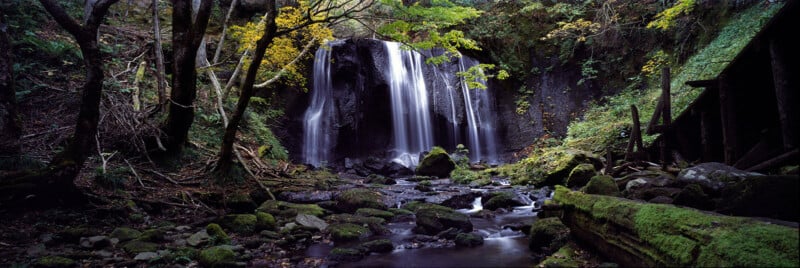 Tatsusawa Fudo Waterfall, Inawashiro (just north of Aizuwakamatsu) in Fukushima, Japan | Kodak Ektachrome in 617 format | Photo by Jaron Schneider
“For sake, we need to grow another type of rice; it’s a different type of rice. So not for this year. I’m quite interested in doing it in the future, though,” Yamaki says, laughing.
Image credits: Unless otherwise noted, images courtesy of Sigma





![New 100% RT Cyber Thriller Unleashes 10-Minute Sneak Peek [Exclusive]](https://static0.colliderimages.com/wordpress/wp-content/uploads/2026/01/wardriver-sasha-calle-dane-dehaan.jpg?w=1600&h=900&fit=crop)
 English (US) ·