
 Image via TIFF
Published Sep 18, 2026, 6:00 AM EDT
Sign in to your Collider account
Summary
- Collider's Perri Nemiroff chats with Sebastian Stan and Cristian Mungiu for Fjord at TIFF 2026.
- The pair discuss how the film presents a neutral stance to a timely issue, opening up a dialogue for audiences.
- Stan also talks about reuniting with A Different Man co-star Renate Reinsve and how The Apprentice led to his role in Matt Reeves The Batman Part II.
Fjord is the Palme d’Or Award-winning drama coming soon from Neon and writer-director Cristian Mungiu (Graduation). It stars Academy Award-nominated leads Renate Reinsve (Sentimental Value) and Sebastian Stan (The Apprentice), and screened at this year’s Toronto International Film Festival, where it captured audiences with its thought-provoking, objective point of view. While there, Mungiu and Stan stopped by the Collider Media Studio, presented by Campari and The Cayman Islands, to chat with Perri Nemiroff about the inspiration and the making of their tense drama.
In Fjord, Reinsve and Stan play Lisbet and Mihai Gheorghiu, a Christian couple who recently moved from Romania to a rural Norwegian town with their five children. Here, the kids become close with their neighbors, the Halbergs, but their rigid religious upbringing creates tension among their peers and within the community. Tensions begin to boil over when a teacher discovers a mysterious bruise on one of the Gheorghius’ children, sparking allegations of abuse and controversy.
During their conversation, Mungiu and Stan discuss how Fjord emphasizes the importance of respecting both sides of a conflict, and Stan talks about exploring the universal question of parenthood through his role in the film. Stan also talks about reuniting with Reinsve, his A Different Man co-star, and how they continued to build on their working shorthand. Stan also discusses how his Oscar-nominated role in The Apprentice led to him working with Matt Reeves on The Batman sequel. Don't miss the full interview in the video above, with a transcript provided below.
'Fjord' Explores a Cultural Conflict From a Neutral Standpoint
Cristian Mungiu hopes to spark important conversations.
 Image via Photagonist
PERRI NEMIROFF: Just in case any of our viewers are not aware of what your movie is, to start us off, can you tell us a little bit about what the film is about?
CRISTIAN MUNGIU: Without spoiling it too much, it's this story about a mixed couple, a Romanian husband and a Norwegian wife, who decide to relocate from Romania to Norway together with their five children. They belong to a cult, and they are very religious, traditional people. They are well received there. They start becoming friends with the neighboring family, and everything goes fine until, at some point, at school the teachers discover some bruises on the body of the young girl. From that point on, they started suspecting that this family might be too aggressive in their form of education.
This is the starting point, if you want. But finally, through this story happening there, the story is just a starting point of a conversation which should be bigger about these differences between a very conservative way of understanding life and a more liberal and progressive way of understanding education. This is why it's set in Norway, because Norway is perceived as the pole of liberalism. It was interesting for us to check out what happens when, for once, the conservatives are in the minority in a country which is mostly progressive.
I always love digging into the evolution of a project and I know that you've been working on this one for the last 10 years, so it was making me wonder, how did you picture this film turning out 10 years ago when you first started it, and how does that compare to the finished film that everyone is going to see here at TIFF, and also when it releases in October?
MUNGIU: Actually, 10 years ago there was this real case, and I used to work as a journalist, and I take a lot of inspiration from what I read in the press. I have these folders with a lot of clips, so I started following this case, and little by little I noticed that most of the cases happening in Scandinavia with these kinds of families of migrants coming from all over the place — Asia, Northern Africa, Eastern Europe — were showing a conflict of values, and this conflict of values is present today in most of the Western societies. So I decided that through this film, I can speak about how modern society is radicalized and split in two, and about this need to be more tolerant and to get back to some sort of conversation with people not sharing the same values as you.
What I did later on was I went to Norway to investigate this case and other cases in detail, then I wrote a short synopsis. I called Sebastian to ask him if he was willing, finally, to work together because we were looking for a topic to work together on for a long time. Then I checked the screenplay in Norway. I got back there, I talked to lawyers, I talked to NGO people, I talked to the child protection, just to make sure that what we say is very realistic, very valid.
At the same time, because you said that it's a different film, we decided not to take sides. We decided to be non-judgmental and to make the film from this neutral perspective of a moderator who allows these two different sides to just share their values and their arguments. It’s for the audience to compare all this with their own situation and their own values in this very divided society of today.
 Image via Photagonist
We're going to come back to some of that in a minute. Sebastian, first I want to ask you about signing on for this. I know you two have been talking about working on something together for a good while, but another thing I've been thinking about a lot, especially because we just brought up Fantastic Fest where I covered A Different Man, the variety in your work is absolutely staggering to me. When this story, this role, first came your way, what was something about it that made you think to yourself, “I would have something to gain from that as an actor who's always looking to evolve my craft and challenge myself in new ways?”
SEBASTIAN STAN: Well, I think, as you know, it's a director's medium, and I've felt that I can only be at my best when I'm opposite somebody, a great director, who can help me get somewhere I haven't gotten to before. So, there are really two things here. One is just really wanting to work with Cristian and really loving his films for many, many years and feeling that it would just be a different experience — the way he shoots his films, the level of detail, the thought-out processes, the ambiguity, the questions he's asking.
And then you go, “Where am I in my life that maybe some of this I can understand, or some of this can help me understand something?” I'm 44 now. I have a kid now. I was thinking about having kids when this movie came my way, and now, as we're starting to talk about it, I was at a place in my life where I was, and I am currently asking: What is the best way to raise a child? And I'm asking from a place of trying to understand. I'm not coming at it with, “Oh, I know.” I have my own experiences of what my mom, my parents, handed me, culturally, historically, right? And I'm just trying to understand. Because I look at the world, it's very different, and I think there's an interest, a curiosity, that I feel towards wanting to be a good parent.
So, I think that made me understand how important this movie is in the sense that, yes, it's talking about these divisions that we’re all experiencing, but that at the core, it's really asking a very universal question that I think a lot of people, if they can put aside their prejudices and projections on whoever else is opposite from their own beliefs, they can understand that question, you know? So that was important.
'Fjord's Director Explains Why He Wanted to Avoid Taking Sides
"The conversation starts when you doubt a little bit."
 Image via Photagonist
I'll jump to this point because you both just brought it up, the idea of making a movie that doesn't take one side over the other. Can you tell me a little bit about respecting both sides, but also knowing that, in the end, you've made something that feels satisfying and whole for moviegoers?
MUNGIU: First of all, not all movies are alike, and I think that it’s good to preserve this diversity. I don't have anything against cinema as entertainment, but at the same time, cinema has this capacity of generating conversations about what happens next to us. I like whenever these kind of films that we do, which are very thoughtful, I like when you see them for the first time, they look as any thrilling film with a lot of tension, but then you need to think about something.
Our perspective from the beginning was that we're going to just not be judgmental to the characters, and there's a purpose about this, because this way everybody can watch the film. There are too many films produced today to defend a position, an ideological position of one of these two groups, but they address only to the people in their bubble, so they don't generate any kind of conversation. I think that this neutral perspective in which you present the arguments of each other’s side makes people, first of all, listen to a point of view that they don't want to listen to in general, think over, and maybe they can understand that this is the first step into engaging in conversation.
You have to stop believing that you are right already. This is not a conversation. If you start talking to somebody knowing that you are right, and the other one does the same, you belong to the same group of fundamentalist people thinking they hold the truth. The conversation starts when you doubt a little bit, and this is what we wanted to encourage people to do after watching this film.
The film has been making the festival rounds. It's going to get out to an even larger audience soon, but people are already seeing it and interacting with it, so is there any particular reaction to the movie that surprised you, or made you realize something in the film was more powerful than you ever thought it could be on set?
STAN: I think what's interesting in terms of the reactions is how relevant the movie is, because the bigger the reaction someone's having, the quicker and more triggered the reaction is, the more it makes me feel like that person perhaps needs to see the movie. But I don't say that in a critical way. I think we're welcoming reactions. There's something refreshing, finally, to be honest, to stand here with a movie that is making people feel something. It's not telling people what to feel, but it's making people feel. It's about an experience.
Then hopefully, then, it's about the willingness to go, “Well, why am I feeling that? Why am I thinking that? Why am I looking at that person in that way?” So, it's very subtle what's happening in the movie. I have faith that people are still moviegoers who are engaged, and they want to be engaged. They don't want to be spoon-fed everything. So, I'm excited from that end.
Sebastian Stan and Renate Reinsve Reunite After 'A Different Man'
"Renate is like a light, to be honest, in the room. When she walks in, it just brightens everything."
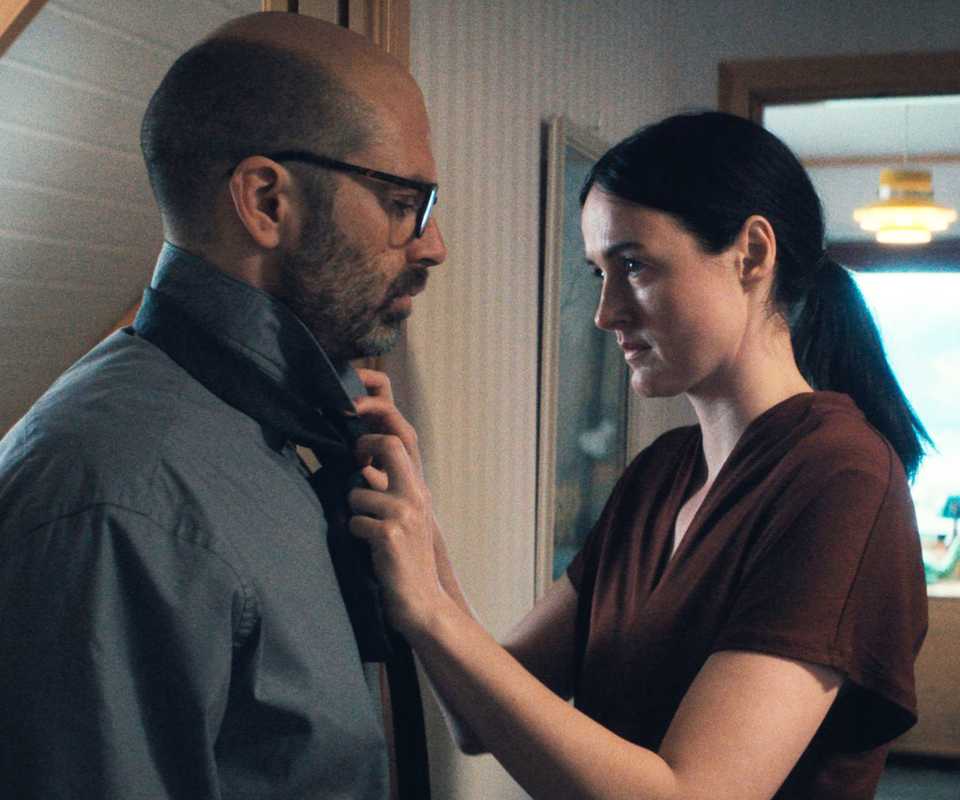
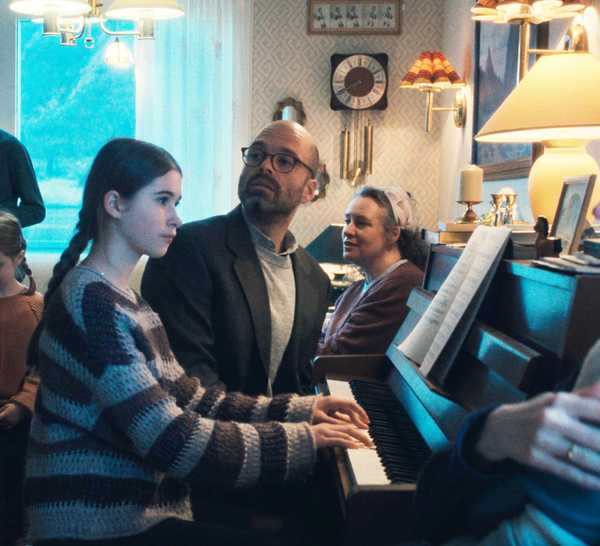
I can't let this conversation end without asking you about reuniting with Renate [Reinsve], who I think the absolute world of. And I think it's just the coolest thing that you two have gone on to make two completely different movies together. Can you tell me something about working on A Different Man together that came in handy on this project, but then also something you saw her do on this set that made even you stop and go, “Oh my god, I knew you were good, but that was something else?”
STAN: Well, again, we had a very shorthand of familiarity, and there's always trust, but Renate is like a light, to be honest, in the room. When she walks in, it just brightens everything because her energy is so from a place of receiving, so she's open to whatever is going on. And I think it was good to have that partnership to kind of both help us. Like sometimes Cristian would want certain things, and we would look at each other and go, “Okay, are you understanding? We're understanding. We're all on the same page.”
But he called. I think he was the one that was like, “I'm thinking of calling this actress, Renate Reinsve.” I was like, “Do it! Now. Immediately. Get her.”
MUNGIU: And he gave me the film to watch, because I knew that they played together, but I hadn’t seen this, and I thought, “This is a very good thing, because they will already have a kind of relationship that you need to have of trust before working with somebody.” I cast Renate and Sebastian before this wonderful year that they were having. I mean, this was sheer luck. Now everybody tells me, “You speculated this moment.” I’m like, “No, this was before.”
They work in somehow different ways, but on the sets, we always managed to look for the truthfulness of the moment and not to play the direction of the film, not to be judgmental with the characters, just to look for simple things and make sure it's the most honest way of sharing that moment for the audience, and as much as possible, with a lot of tension and thrills. Because I like it when a film like this can show that you can have arthouse being very entertaining. It's just that it's not using very fast cutting and a lot of music to generate these feelings; it uses the sheer talent of the actors.
Everything we do in the film, every other scene and the style is just one shot for every other situation. So it's complicated for the actors, but it allows them to develop feelings, and a lot of them pass on to the other side of the screen to spectators.
We saw a lot of emotions, and we saw that people were very gripped by what was happening on screen, and this is very good as a first layer. If later on they think about what the film tells them, it's even better.
Sebastian Stan Reveals How He Joined Matt Reeves' Batman Sequel
Stan also reveals he's ready to return to horror at Fantastic Fest.
 Image via Warner Bros.
It looks like I’ve got to start winding down with you. Sebastian, know what I’ve got to do. I’ve got to ask about an upcoming project, and I want to tie it back to the point that I brought up before, because I just love whatever project-choosing compass that you're using, and the fact that you signed on to the new Batman movie gives me all the faith in it in the world. As someone who has made so many Marvel movies, what is something about your character or that story that makes you think, “I would still have more to gain from the superhero genre if I sign up for that?”
STAN: Well, you know what's interesting is all these directors, they watch each other, believe it or not, even if they're doing different sizes and stuff. Matt Reeves, he knows Cristian, and he knew Ali Abbasi. He was a big fan of The Apprentice, and that's how that conversation started. I mean, not in a million years did I think that doing that movie was going to lead to me having a conversation with that director.
So, these worlds consistently collide, and I think the thing about these movies is those movies need these movies. And these movies, to some extent, need those. It's an ecosystem that they all have to thrive in. It's all for the better of getting people to the theater, which we have to do everything for. But again, if all I can say about the movie is that it's just to say there's real thought behind that movie, and Matt certainly has thought about it for three, four years.
Absolutely. We need both types of movies supporting this industry, but also I have to imagine it's so creatively fulfilling for you to get to make so many different types of things, so many different types of ways.
STAN: You're only as good as the company you keep. That's just very, very true. Honestly. I've been watching The Last Dance, the Michael Jordan thing again, and it's like somebody said on there, “You can score 60 points every night; you need to have the right team to get to the next level.” So it's not a you; it's about everybody that you're with.
To keep this thread going, give me something that still remains on your acting bucket list. Anything you want!
STAN: Oh, God, I don't know. That's a heavy question. I don't know. There are a lot of things, but I haven't gotten there. I told you I want to go back to Fantastic Fest. I want to do a real horror situation in some way, so I need to figure out a way to do it that kind of still speaks in the same world of my stuff.
MUNGIU: I have a different position for him because I was talking to Renate, and she knows that I'm doing a comedy now, and she said, “Oh, I absolutely want to do comedy.” So we were thinking about Sebastian. This is something that he hasn't done before. I think it's a very good idea.
STAN: You direct a comedy?
MUNGIU: Yes, I would do it. You know I have a lot of sense of humor on the set.
STAN: You come from comedy.
MUNGIU: Yeah, I come from comedy. I started by making comedy, so it's good every now and then to revisit this kind of genre. So, I hope to bring back Sebastian to the big world in a very fruitful comedy.
Fjord will open in theaters from Neon on October 9.

Release Date August 9, 2026
Runtime 146 minutes
Director Cristian Mungiu
Writers Cristian Mungiu
Producers Tudor Reu, Cristian Mungiu, Andrea Berentsen Ottmar
Cast
-

-

Renate Reinsve
Lisbet Gheorghiu







 English (US) ·