
 15 hours ago
4
15 hours ago
4
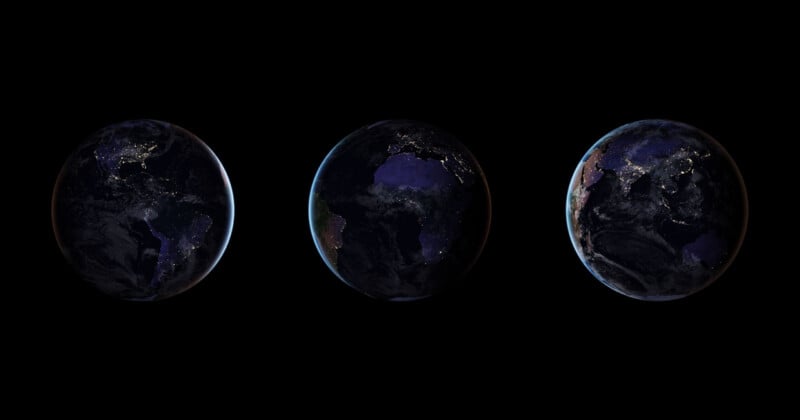
Light pollution is a significant, increasing problem, and it doesn’t just affect astrophotographers. Scientists using satellite imagery of Earth from 2014 through 2022 have found that human activity and artificial lights increased light pollution by 16 percent in just eight years.
The new study, “Satellite imagery reveals increasing volatility in human night-time activity,” was published this week in Nature. On the one hand, increased nighttime lighting on Earth reflects growing modernization, which generally means higher standards of living for more people. However, increased light pollution from artificial sources impacts the sleep quality of humans and non-human animals alike, massively disrupts wildlife such as birds and marine animals, and affects natural ecosystems. For photographers, light pollution also ruins opportunities for astrophotography.
There are organizations committed to preserving dark skies and reducing light pollution. Still, the situation nonetheless continues to worsen year after year, at least when viewed in terms of global light pollution.
The study’s lead author, Zhe Zhu, tells Space that despite an overall increase in Earth’s brightness at night, the areas where lights are dimmer are growing. This is due in part to meaningful energy-saving efforts, but also, tragically, to global conflict and natural disasters.
“We found that the Earth is not gradually brightening, it is flickering,” Zhu, an associate professor of remote sensing at the University of Connecticut, explains. “The brightening is mostly driven by developing countries like India, China and parts of Africa. But we also see the areas of dimming increasing every year. Some of that is due to sudden events like wars and natural disasters, but we also see a huge area of dimming in Europe, where they put policies in place. The U.S. is still mostly increasing.”
The study is fascinating because it shows how artificial light use at night over time can identify notable events and broader regional trends. The researchers identified the rollout of COVID pandemic restrictions using satellite images of Earth at night and also tracked upticks in conflict and war.
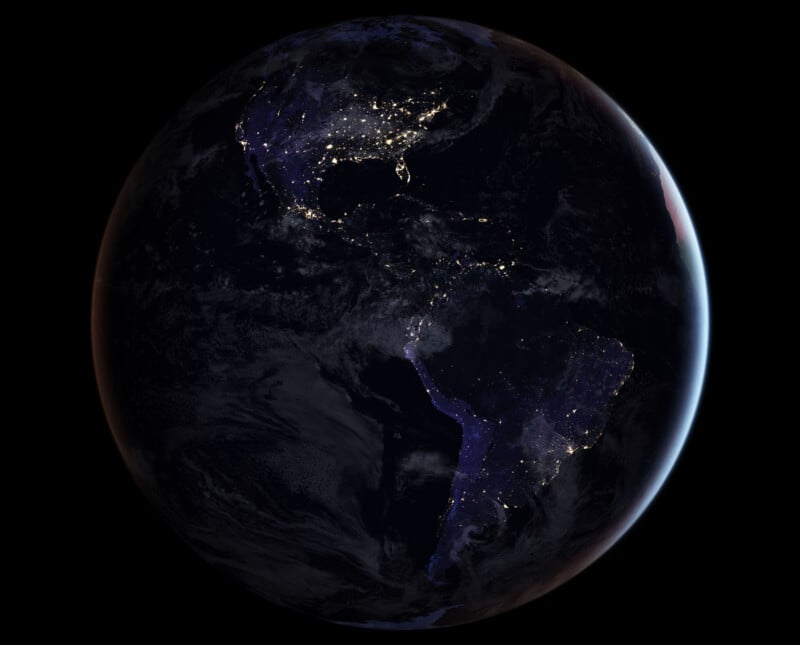 Credit: NASA Black Marble
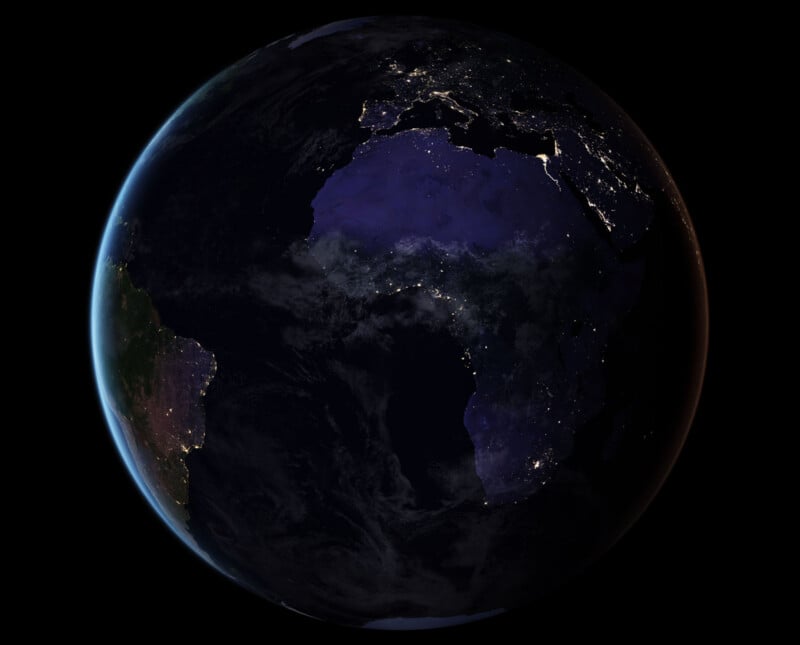 Credit: NASA Black Marble
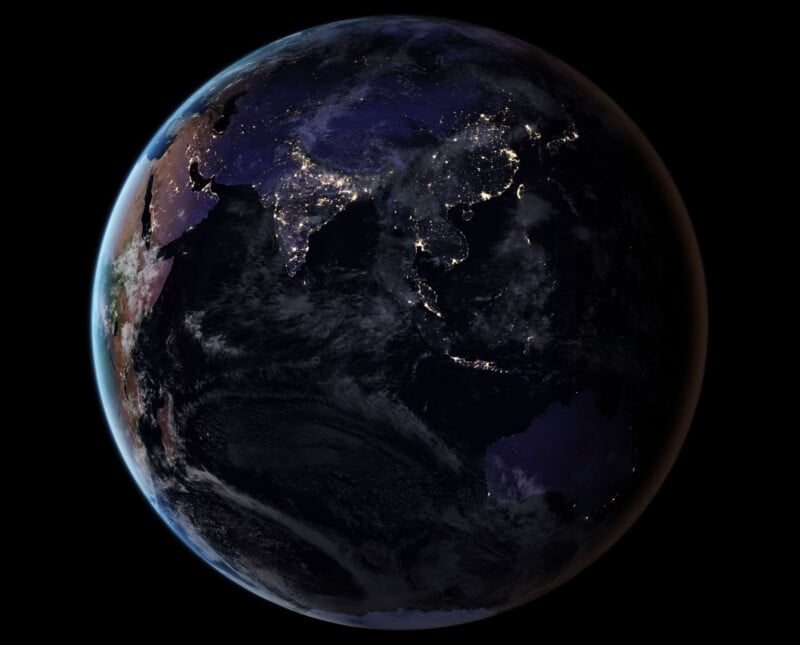 Credit: NASA Black Marble
However, as the researchers acknowledge, their study has a limitation. The team used NASA’s Black Marble satellite data, which uses the Visible Infrared Imaging Radiometer Suite (VIIRS). This instrument is very good at filtering out certain unwanted light, like moonlight and auroras, but it is not very sensitive to the light emitted by many LED lights, which are prevalent across Earth.
A 2023 study PetaPixel previously covered looked more at LEDs across Earth, and determined that light pollution might be increasing at a rate of about 10 percent annually, rather than the lower number the new study arrived at.
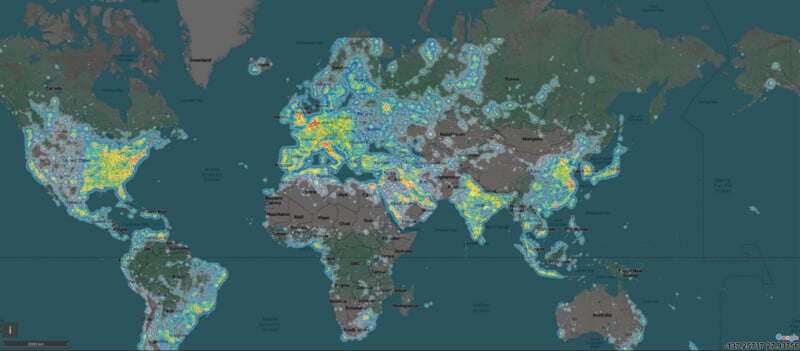 Global light pollution levels in 2015 | Credit: www.lightpollutionmap.info
 Global light pollution levels in 2025. Notice the decrease in France, where the country has worked hard to reduce light pollution in recent years. Meanwhile, across much of Asia, light pollution has increased significantly in the past decade. | Credit: www.lightpollutionmap.info
That 2023 study relied on on-the-ground observer reports rather than satellite images. So in some cases, satellite imagery shows that an area has gotten darker due to limitations in wavelength detection, even though a person there might say it is much brighter at night.
Across both studies, while there are regional ebbs and flows, the trend has been more and brighter lighter year after year. This is bad news for astrophotographers, who have also been dealing with an unprecedented uptick in satellites in recent years. Night sky photography has never been so challenging, and it’s generally getting more difficult all the time.
Image credits: Header photo created using images from NASA’s Black Marble program. Research and an additional figure from ‘Satellite imagery reveals increasing volatility in human night-time activity,’ written by Tian Li, Zhuosen Wang, Christopher C. M. Kyba, Miguel O. Román, Karen C. Seto, Yun Yang, Shi Qiu, Theres Kuester, Michail Fragkias, Xiang Chen, Thomas H. Meyer, Chadwick D. Rittenhouse, Xiaonan Tai, Mari Cullerton, Falu Hong, Ashley Grinstead, Kexin Song, Ji Won Suh, Xiucheng Yang, Virginia L. Kalb, Chengbin Deng & Zhe Zhu, published this week in Nature.







 English (US) ·