
 2 hours ago
5
2 hours ago
5
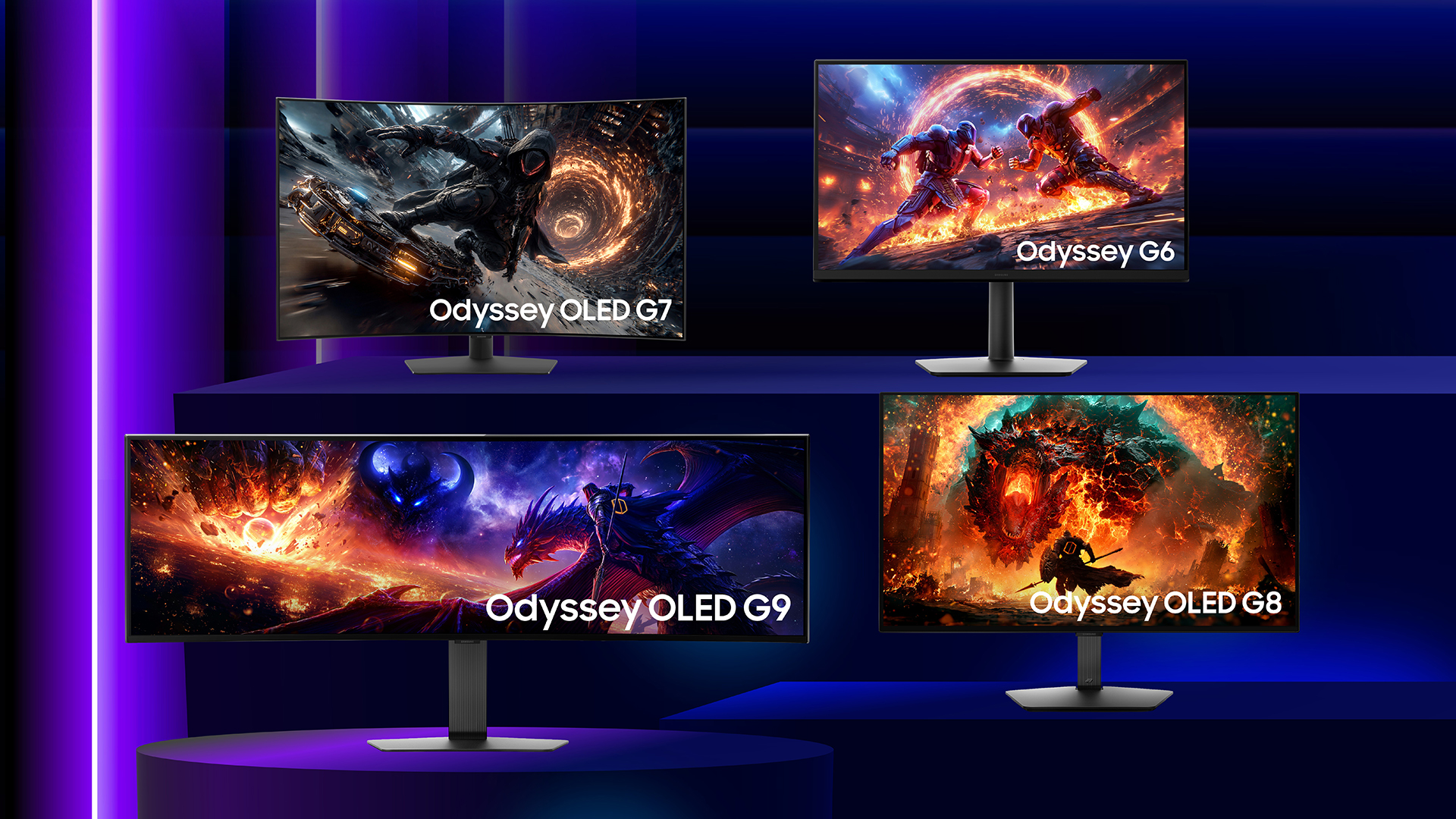
Remember back at CES when Samsung showed off a huge suite of Odyssey gaming monitors? The vast majority of those screens are now shipping, but arguably the most interesting monitor among them, the Odyssey G6 (G60H), still hasn't launched. Back at CES, Samsung was touting a 1,040-Hz refresh rate for that screen; now at Gamescom 2026, Samsung has shared the finalized specification, which is a nice and round 1,100 Hz. That's right; this monitor refreshes vertically at 1.1 KHz.
It's a fascinating display because aside from that specification, it's actually a bit of a pedestrian gaming monitor. You've got a 27" Fast IPS LCD in 2560×1440 (QHD) resolution, and at its native sharpness, it tops out at "only" 600 Hz. Surely that should satisfy anyone, but if you really feel the need for speed, you can drop the resolution to one-quarter of native, bringing you to 1280×720 (HD), and then refresh the panel at 1.1 KHz. That means each frame is displayed for less than one millisecond.
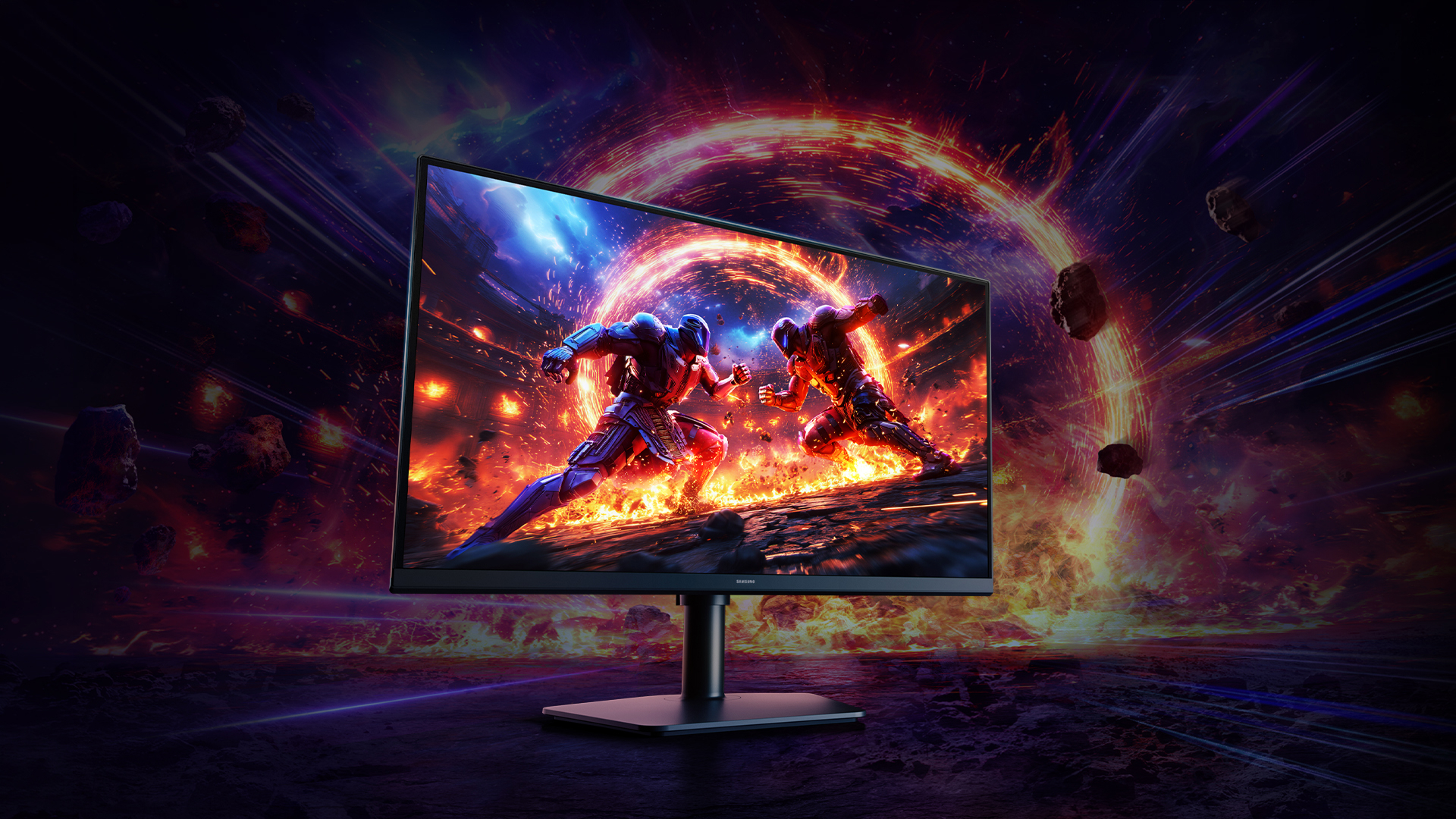
With its Fast IPS LCD panel and one millisecond response time, this new monitor will have its work cut out keeping up with those claimed performance figures. It's surely still going to be incredibly sharp and clear in motion (assuming your system can put out the requisite 1,100 frames per second), but it does seem like an OLED would have been the more appropriate technology for this feature.
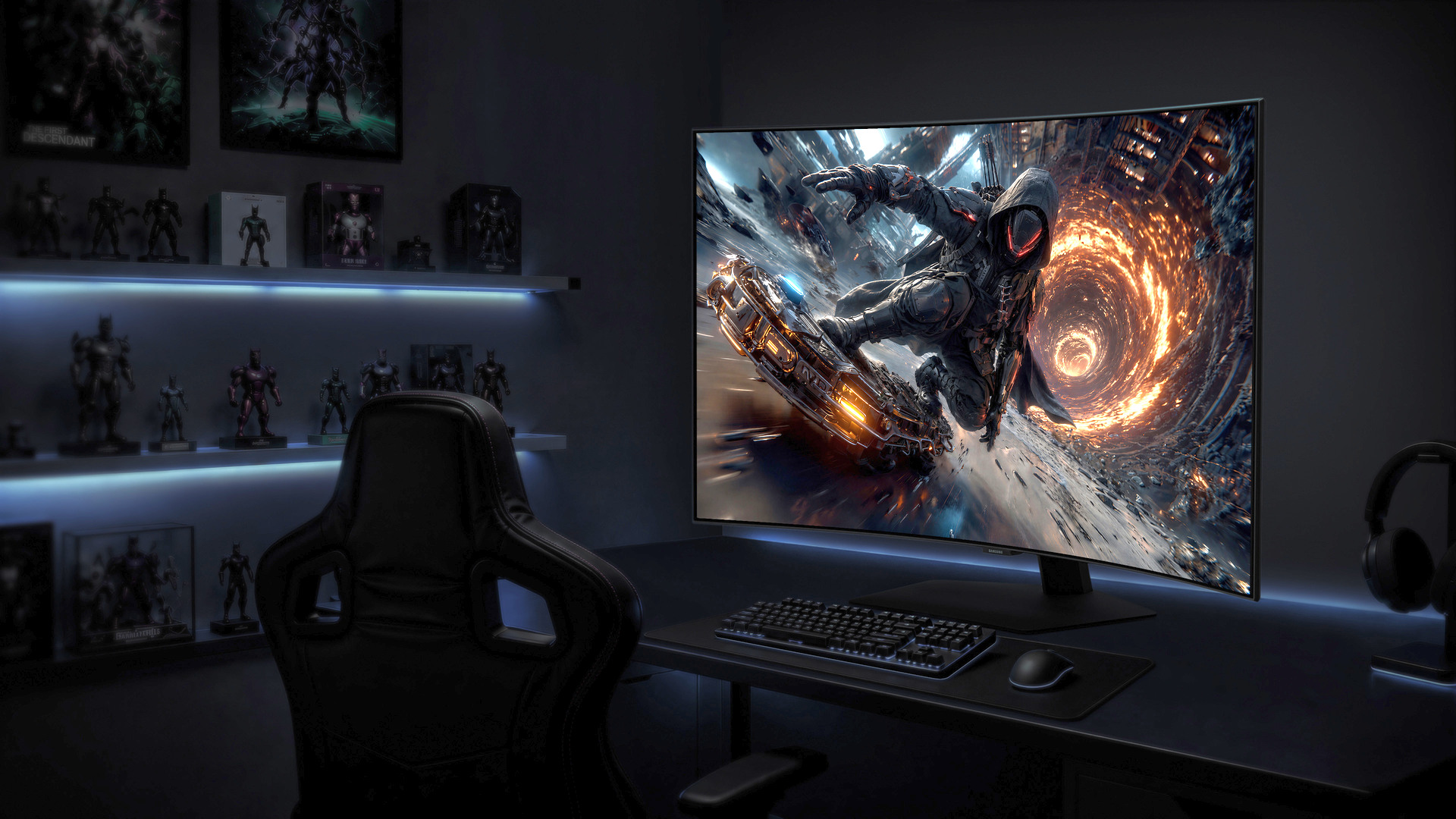
Indeed, the rest of the displays that Samsung is showing off at Gamescom 2026, comprising its next-generation Odyssey family, are all OLEDs. Starting from the OLED G7 (G75SJ), we have what Samsung says is "the world's first 42-inch 16:9 curved OLED gaming monitor," which might be true. A 42-inch screen area is absolutely massive, and as you'd expect, to keep DPI up to reasonable levels, it's 3840×2160 (4K UHD) resolution.
The Odyssey OLED G7 G75SJ has a 1000R curvature, which is quite tight for a display of this size. It also has a 165-Hz refresh rate and a rated 0.03-ms response time, although it's an OLED, so you already knew that. Samsung doesn't really share any other specifications for this screen, but the firm does say that this monitor includes "Glare Free technology" to help reduce reflections for "clearer daytime play." That's very helpful on an SDR OLED because the peak brightness of this display is probably low enough that it becomes hard to see in daylight.
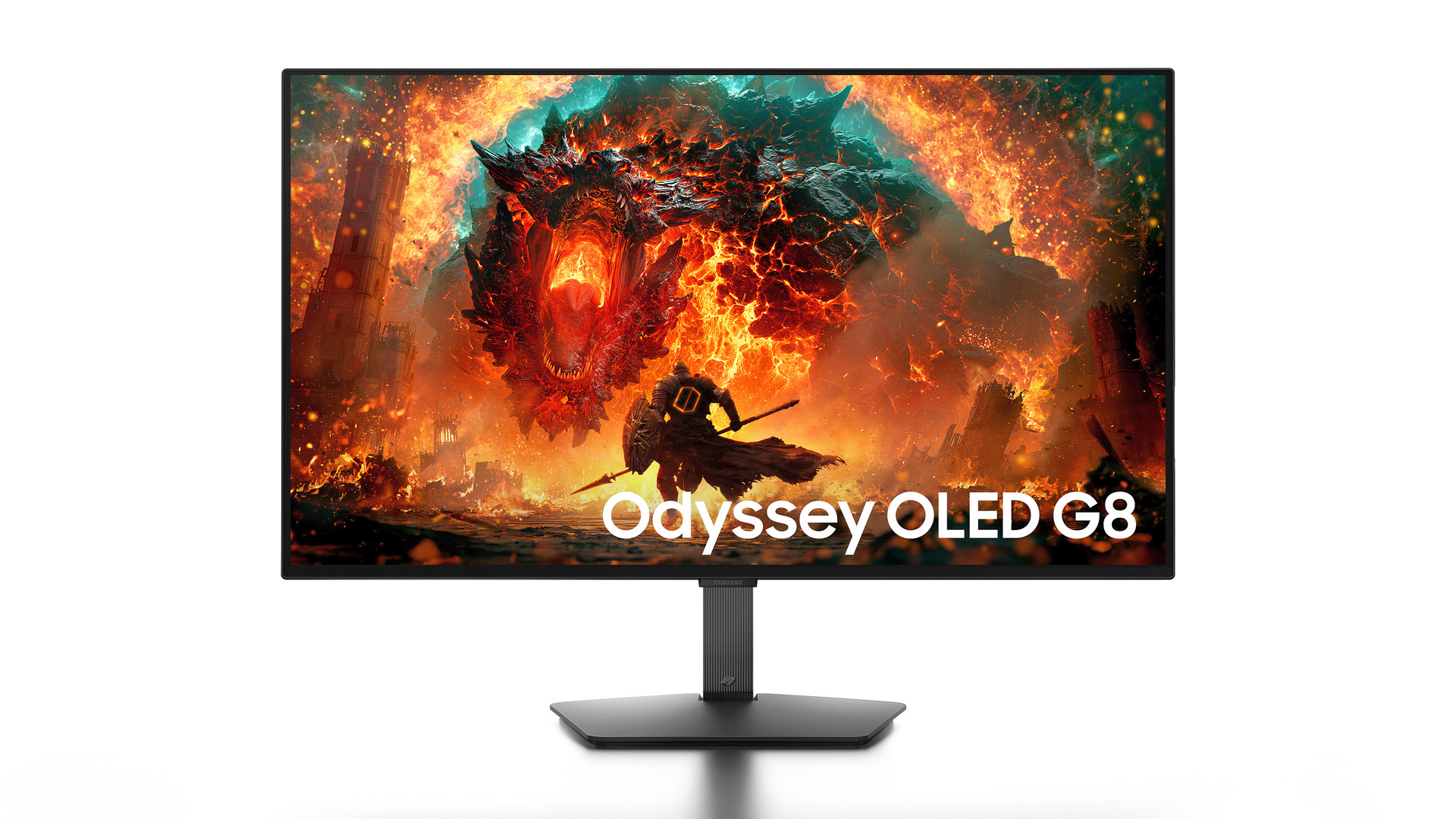
The next step up from the G7 is the Odyssey OLED G8 (G80SJ). This beautiful beast sports a 32-inch 3840×2160 (4K UHD) QD-OLED panel that tops out at 360 Hz and features "triple mode" support, meaning that you can drop the resolution to QHD for a 520-Hz refresh rate, or all the way down to 1920×1080 (FHD) for a blistering 680 Hz refresh rate. That's not as fast as the 720-Hz OLED that ASUS announced, but it's also a higher resolution, as that screen has to drop to 720p HD to hit 720 Hz.
The Odyssey OLED G8 (G80SJ) has a few other tricks up its sleeve, too. It supports FreeSync Premium Pro (and is G-SYNC Compatible as a result), and it is spec'd for VESA DisplayHDR TrueBlack 600, which should result in a pretty decent HDR experience, especially in darkened rooms. Notably, its USB Type-C port supports up to 98W of power delivery, meaning it can very rapidly charge whatever device you connect to it.
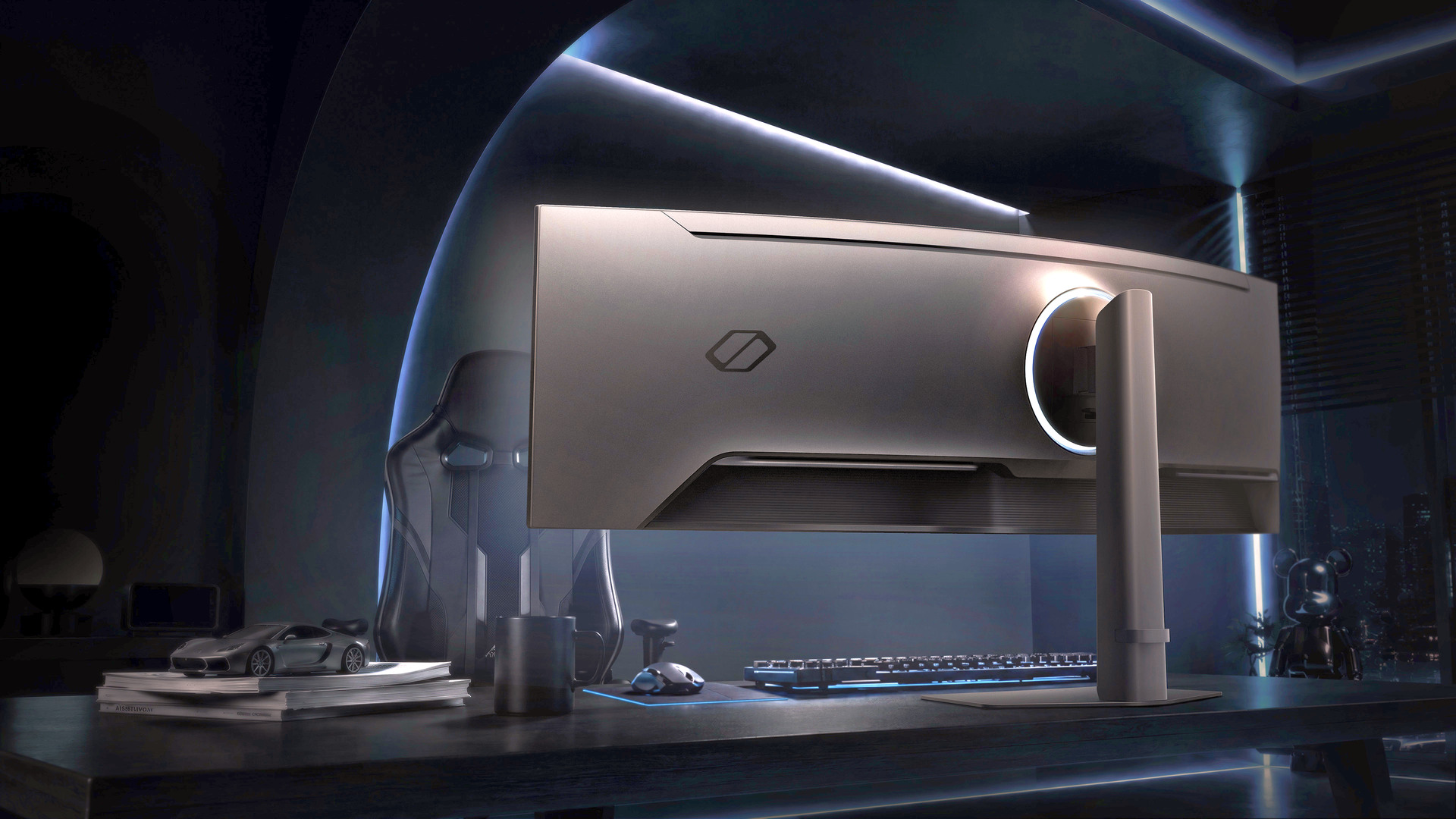
Finally, the star of the show, the Odyssey OLED G9 (G95SJ), is a 49-inch "DQHD" gaming monitor. DQHD is "Double Quad High Definition", and if you can do arithmetic, you already know that the resolution of this 32:9 monitor is 5120×1440. The super-ultrawide uses a fifth-gen (latest) OLED with "Penta Tandem" technology, meaning that it has a five-layer panel structure that Samsung says lasts twice as long as older OLEDs. It also uses an RGB stripe subpixel layout that should mostly eliminate the text fringing which plagues older-gen OLED monitors.
You've already heard me whinging about the brightness of OLEDs; that won't be a problem on the Odyssey OLED G9 because this thing apparently supports a peak brightness of 1,300 nits. That's admittedly only on a 3% window at 4K resolution, but it's a high enough value that it should mean HDR highlights are nice and vibrant on this screen, although Samsung curiously doesn't list a DisplayHDR cert for this one. Other critical specs include the 360-Hz refresh rate, dual mode support (meaning 720Hz at 2560×720), and the usual 0.03ms response time rating.
Unfortunately, there's no pricing or specific availability for any of these displays. Samsung says that the 1,100-Hz Odyssey G6 will be available globally in "the second half of 2026", which basically means "any day now." Meanwhile, the other displays are explicitly noted as 2027 monitors, where "availability will vary by market," and pricing is anybody's guess in today's tech market.

Follow Tom's Hardware on Google News, or add us as a preferred source, to get our latest news, analysis, & reviews in your feeds.








 English (US) ·