
 3 weeks ago
36
3 weeks ago
36
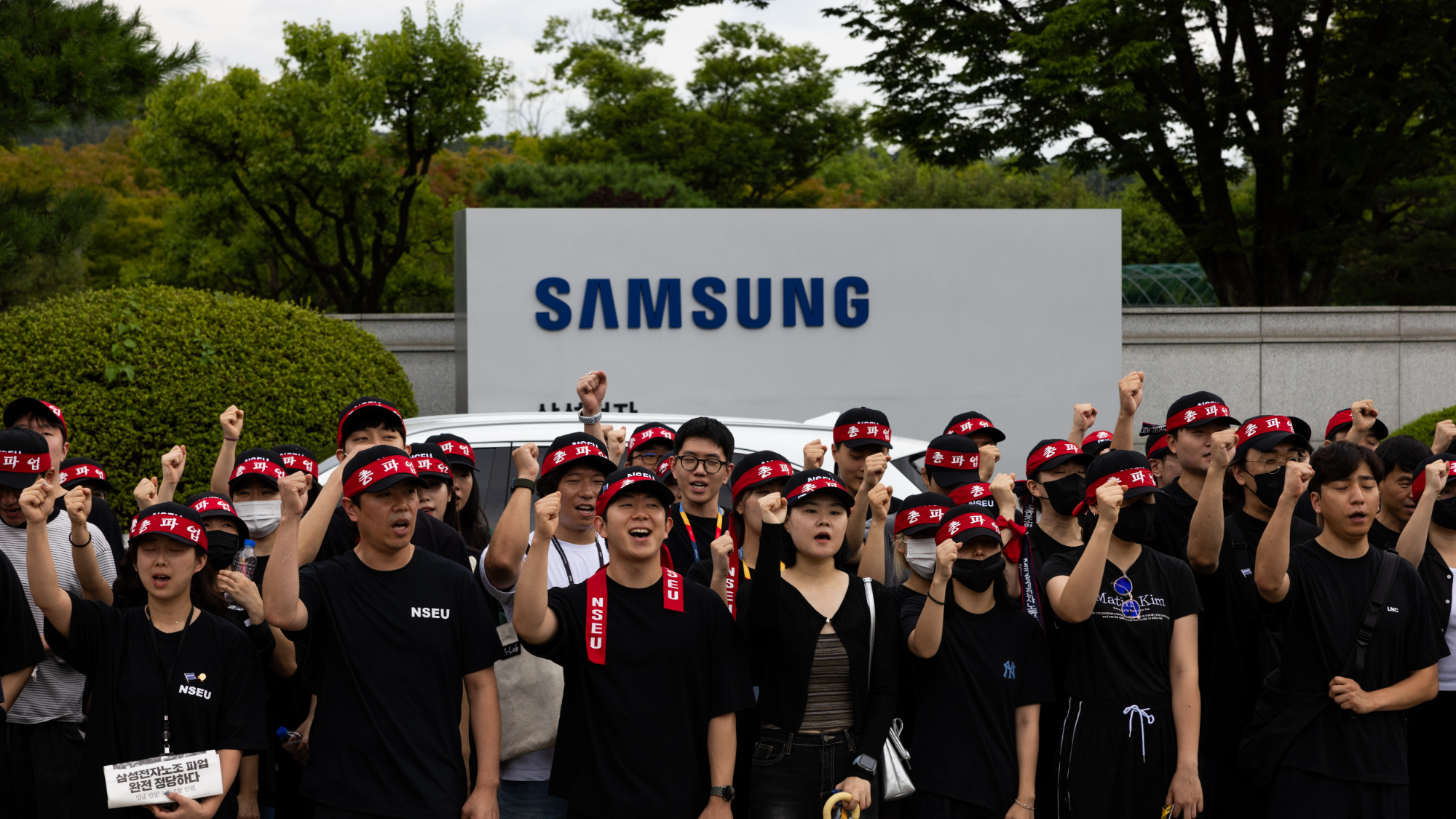
Samsung and its largest labor coalition are sitting down for government-mediated negotiations over the next two days, the Korea Herald reported, with just 10 days remaining before a planned general strike that threatens to shut down the world's biggest memory chip operation for more than two weeks.
Go deeper with TH Premium: Chipmaking
South Korean Labor Minister Kim Young-hoon welcomed the resumption of talks on X, writing that "the solution may already be close," but as of 3 p.m. local time, no deal had reportedly been reached. The union has warned that the strike could create a shortfall of some $20.4 billion, according to reporting by Digitimes.
JPMorgan analysts warned earlier this month that Samsung's annual operating profit could fall by 7% to 12% if management accepts the union's core demands. They estimate that allocating 10% to 15% of operating profit as performance bonuses and raising base salaries by 5% would generate KRW 21 trillion to KRW 39 trillion ($14.3 billion to $26.5 billion) in additional labor costs above current projections. A separate production-disruption scenario put the potential sales hit from the 18-day walkout at around KRW 4 trillion.
The stakes have grown considerably since Samsung's first-ever strike in 2024, when the union had about 32,000 members and only around 15% of them participated. A one-day strike in April offered a glimpse of what a full stoppage could look like: Samsung's memory fab output fell 18% on the affected night shift, and its contract foundry output dropped 58%.
In essence, the ongoing dispute centers around the union’s demand that Samsung uncap performance payouts and set them at 15% of operating profit. Market analysts project Samsung's 2026 operating profit at roughly KRW 300 trillion, which would translate to per-employee bonuses approaching KRW 600 million ($408,000) in the semiconductor division under the union's formula. Management has offered what it describes as industry-leading compensation but has refused to permanently remove the cap, and workers have rejected a counteroffer of a $340,000 one-time bonus. A recent report that SK hynix workers can expect guaranteed bonuses of $477,000 this year and almost $900,000 next year has also brought worker compensation into sharp focus.
The negotiations are further strained by fractures within Samsung's own workforce, with about 80% of the Super Enterprise Union's Samsung branch coming from the Device Solutions semiconductor division, per Digitimes, and its bargaining priorities reflect that, with the union focusing its negotiations with management on bonus demands for that division.
Meanwhile, workers in Samsung's DX division, which covers smartphones, TVs, and home appliances, have pushed for companywide profit-sharing to be included in the talks. More than 2,500 members recently left Samsung's largest union, objecting to what they viewed as memory-focused demands that offered little to employees outside the chip business.
Union head Choi Seung-ho told the Korea Herald last month that roughly 200 Samsung engineers had left for rival SK hynix over the preceding four months, calling the departures evidence that Samsung's compensation structure is failing to retain critical talent during the AI memory boom.

Follow Tom's Hardware on Google News, or add us as a preferred source, to get our latest news, analysis, & reviews in your feeds.








 English (US) ·