
 3 weeks ago
31
3 weeks ago
31
Samsung didn’t have to change much this year because its hardware is just that good.
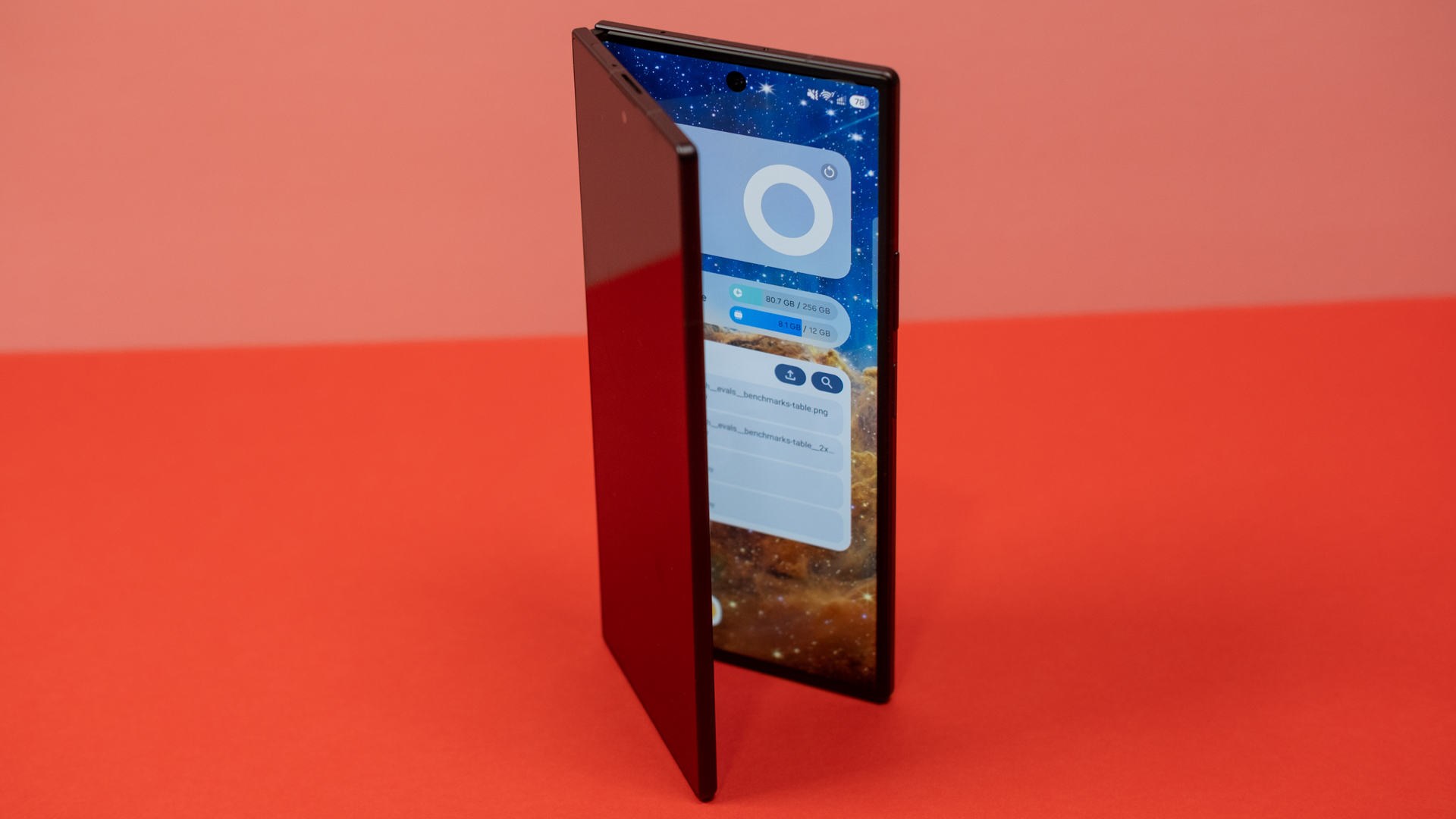
Samsung stuck with a familiar design in 2026. Credit: Ryan Whitwam
Samsung stuck with a familiar design in 2026. Credit: Ryan Whitwam
Samsung has largely defined the foldable phone category, but it’s no longer alone in releasing flexible devices. Google, Motorola, and a raft of Chinese OEMs have their own take on this form factor. Is the new Galaxy Z Fold 8 Ultra really “ultra” enough to remain on top?
This phone doesn’t have the wide frame of the new Z Fold 8, instead matching the approximate size and shape of the company’s last few tablet-style foldables. The Z Fold 8 Ultra is not a big leap, but it continues Samsung’s pattern of iterative foldable improvements. At this point, there’s very little left to improve. The compromises of going with a foldable over a regular flat phone have largely been erased with the Z Fold 8 Ultra. Well, except for the price.
Flatter and a little better
Foldables used to be real pocket-busters, almost like carrying two phones glued together. Samsung has successively shaved a few millimeters off every year, taking a leap last year with the Z Fold 7. The Z Fold 8 Ultra is even a bit slimmer than that phone, but the difference is basically imperceptible. It still has the same buttons in the same places, including a fingerprint sensor in the power button.
| SoC | Snapdragon 8 Elite Gen 5 for Galaxy |
| Memory | 12GB, 16GB |
| Storage | 256GB, 512GB, 1TB |
| Display | Main: 8.0″ QXGA+ Dynamic AMOLED 2X (2504 x 2256) 422ppi, 120Hz; Cover: 6.5″ FHD+ Dynamic AMOLED 2X (1080 x 2520) 422ppi, 120Hz |
| Cameras | Rear: 200MP Wide (F1.7, OIS), 50MP Ultra Wide (F1.9), 10MP Tele (3x Optical, F2.4, OIS); Main/Cover Selfie: 10MP (F2.2) |
| Software | Android 17 / One UI 9 |
| Battery | 5,000 mAh, up to 63% charge in ~30 min with 45W Adapter, 20W Wireless Charging |
| Connectivity | 5G, LTE, Wi-Fi 7, Bluetooth v6.0, SIM+eSIM |
| Measurements | Unfolded: 158.4 × 143.2 × 4.1 mm Folded: 158.4 × 72.8 × 8.9 mm, 215g |
| Colors | Violet Shadow, Graphite, Cream, Green Shadow (online) |
The 2026 Samsung flagship foldable is barely thicker than the average flat phone when folded, which is impressive considering the powerful hardware inside. The two halves come together with no gap, and the hinge feels smooth and springy. The phone almost seems to “leap” into the unfolded configuration when you pry it open, and it ends up flatter than the Galaxy Z Fold 7, which didn’t quite reach 180 degrees. It’s structurally solid in this state, even though it’s barely 4 mm thick. It feels like a small tablet, not a phone that folds in half, but somehow, it is. You can fold it back up, and it fits in your pocket like any regular phone. It’s a very cool piece of hardware.
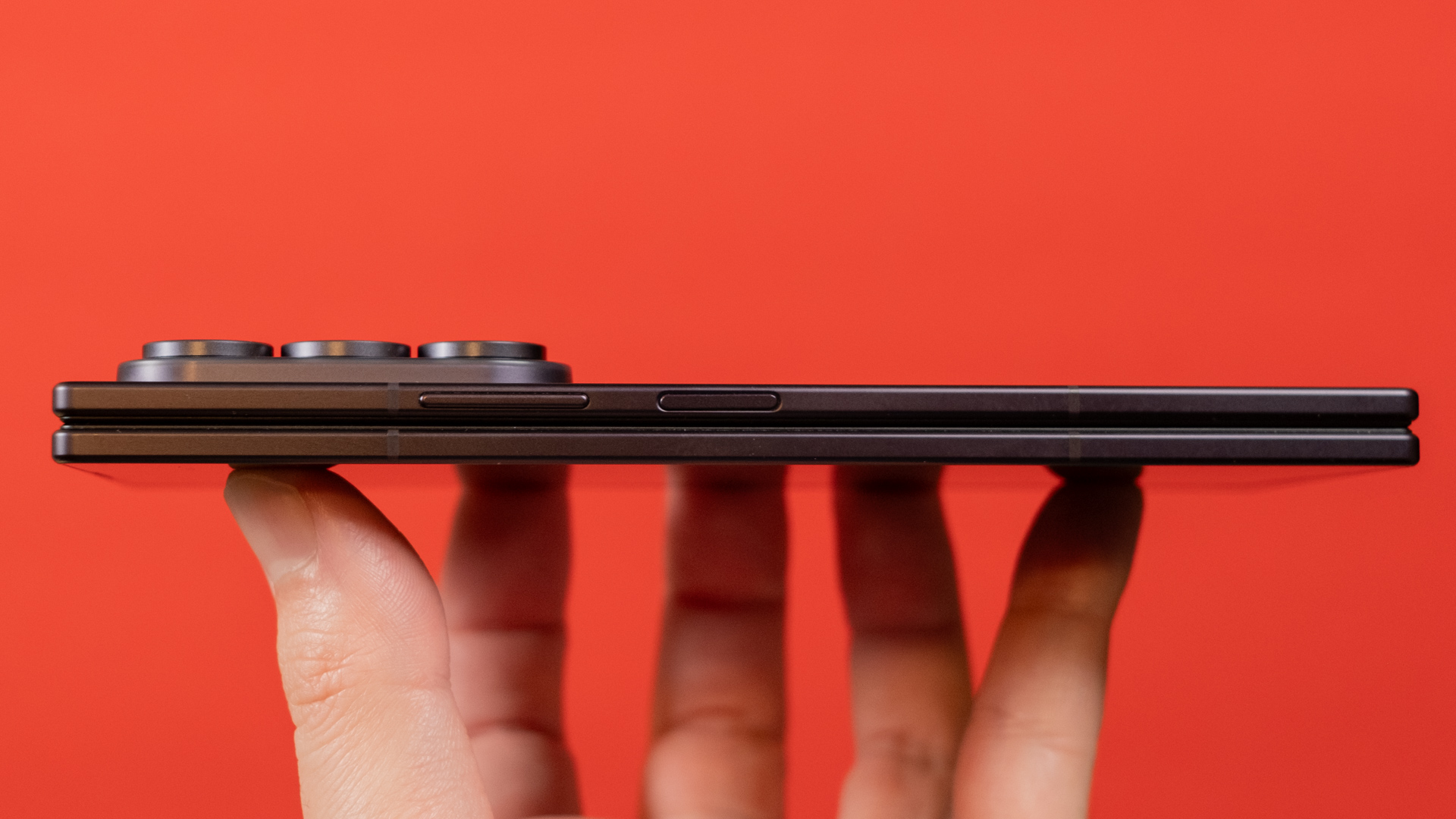
The Z Fold 8 Ultra is about the same thickness as a non-folding phone.
Credit: Ryan Whitwam
The Z Fold 8 Ultra is about the same thickness as a non-folding phone. Credit: Ryan Whitwam
The 6.5-inch 1080p cover OLED is about the same size and shape as any non-foldable smartphone on the market today. It has the latest Gorilla Glass Ceramic coating, and it’s plenty bright for outdoor use. The real star of the show is the 8-inch internal foldable screen. Its resolution is 2256 x 2504, a bit higher than last year’s phone, and its peak brightness has increased to 3000 nits.
Even very bright foldable screens can be hard to read in bright light because the plastic top layer is so reflective. Samsung has addressed that somewhat with the Z Fold 8 Ultra with its new anti-reflective layer. Reflections aren’t gone, but like the treated glass on Samsung’s flat Ultra phones, the intensity of reflections is much reduced. This makes the big internal screen more legible outdoors.
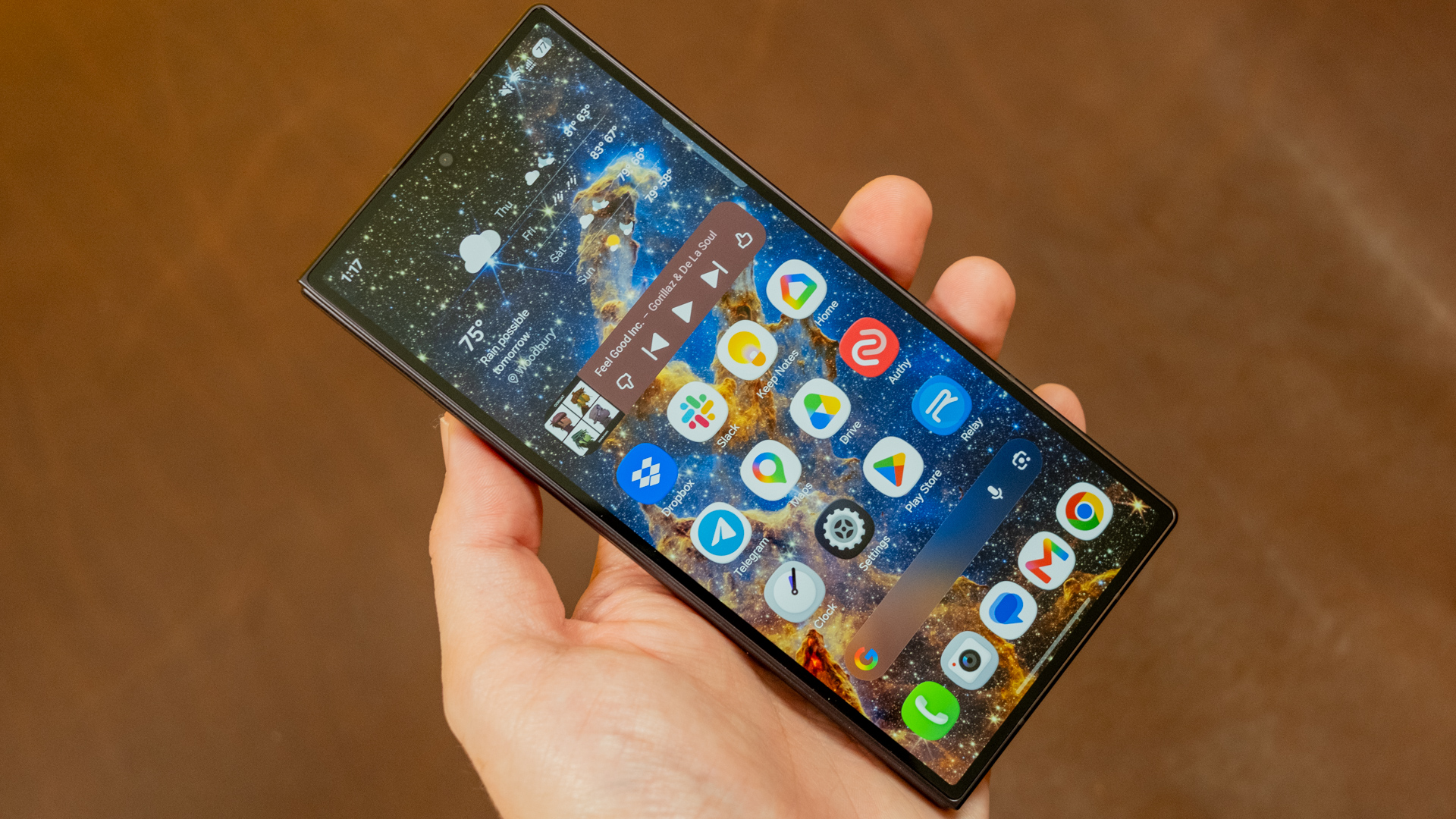
It’s like a regular phone when closed.
Credit: Ryan Whitwam
It’s like a regular phone when closed. Credit: Ryan Whitwam
The other screen update tackles the classic foldable crease. Early on, foldable screens had a veritable chasm running down the middle. That has been minimized to varying degrees, with some phones showing almost no crease at all. Samsung is now in that group with the Z Fold 8 Ultra thanks to its “Titanium Flex” technology. This metallic layer apparently supports the OLED better, eliminating the crease. If you look from the right angle in the right lighting, you may be able to see a bit of distortion, but you can’t really feel it while using the screen.
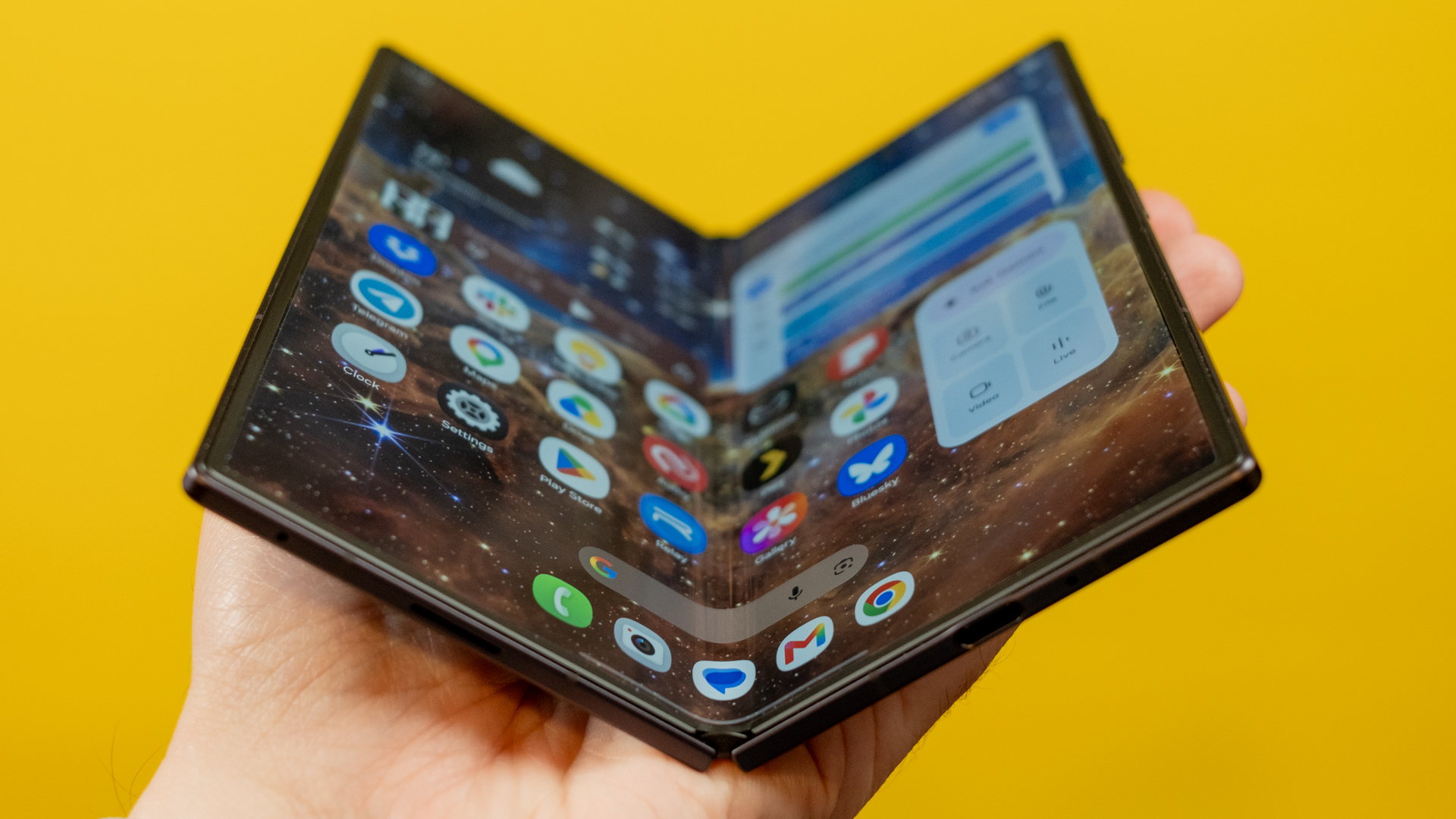
Samsung’s foldable hinge feels very solid.
Credit: Ryan Whitwam
Samsung’s foldable hinge feels very solid. Credit: Ryan Whitwam
The only truly clunky aspect of the phone’s design is the camera module. Because the internals are so tightly packed, the camera hardware pokes way out past the rear glass. It stands out in the wrong way and can get snagged on your pocket when you try to put the phone away. The three modules are lined up in the corner in usual Samsung fashion, which makes the phone a wobbly mess when you set it down.
Just call it One AI
Samsung’s One UI is a known quantity at this point. It comes loaded with some duplicative apps and junk you may not want, like Facebook and LinkedIn. The interface can be a little cluttered, and there are features buried in the settings that you’ll probably never touch. But Samsung doesn’t change much year-to-year, so if you’ve used a Samsung phone in the past few years, the learning curve will be minimal.
Samsung makes a big deal out of multitasking on its foldables, offering robust window management that goes beyond what you get from Google or Motorola. It’s a snap to move apps around, break them out into floating windows, and save configurations. You can also have three apps running live in split-screen on the Fold, whereas most other foldables limit you to two.
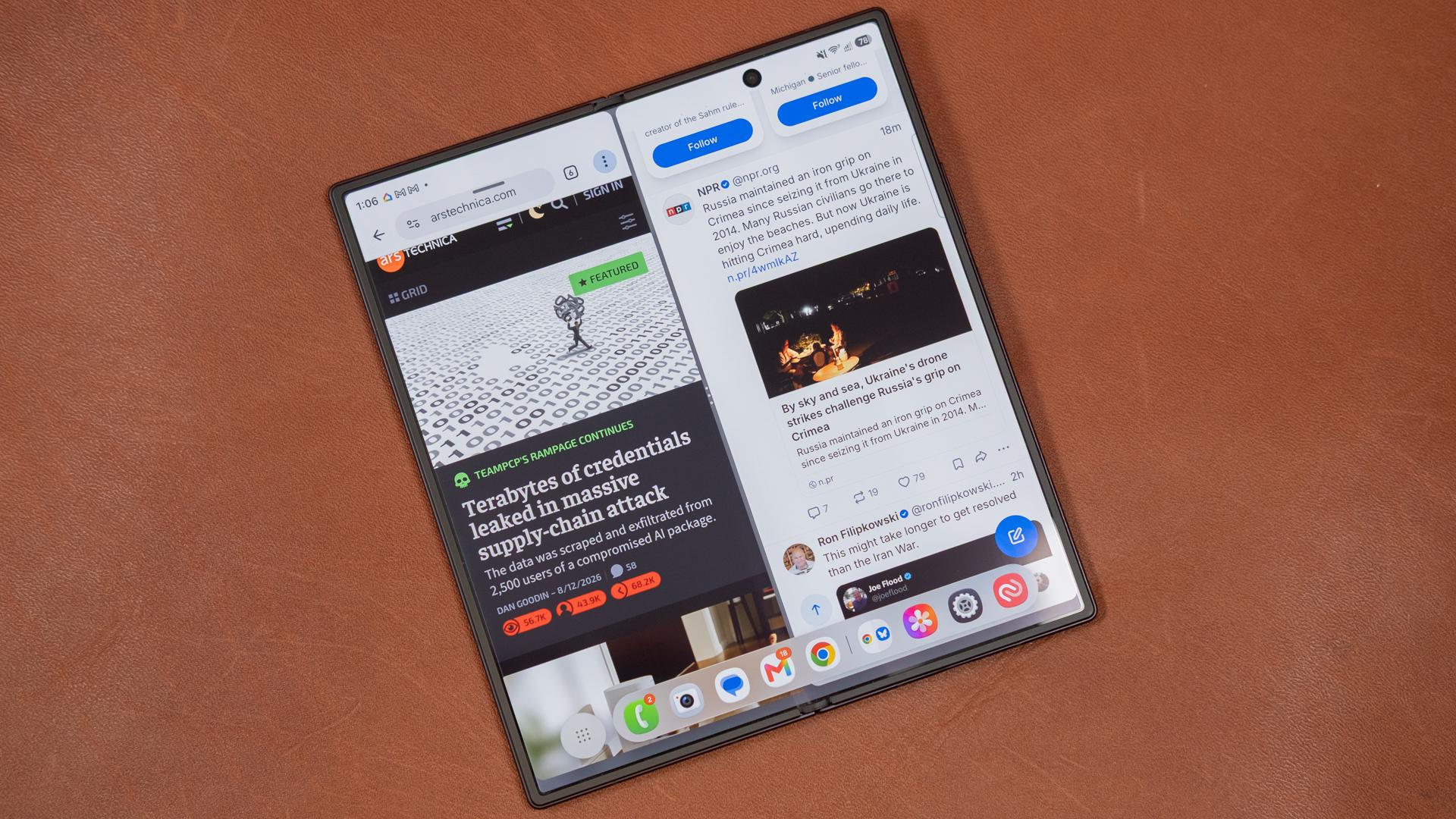
Samsung’s multitasking is still great.
Credit: Ryan Whitwam
Samsung’s multitasking is still great. Credit: Ryan Whitwam
Android itself has more foldable optimizations than it once did, and Samsung has taken full advantage of that. For example, the taskbar on the Z Fold 8 Ultra is easy to bring up while using the phone, and you can pin it to the screen. It also shows more recent apps than the standard Google version of this feature.
And then there’s the AI. Samsung has been all-in on Galaxy AI for the last couple of years, and it’s expanded that feature set even further with the 2026 foldables. Samsung does at least still offer the option to run its AI features solely through on-device processing. This keeps your data from going to the cloud but limits the AI features that are available.
Samsung is again pushing its Now Brief feature, and it’s one of the most perplexing AI features I’ve seen on a phone. It’s all over the device—the home screen comes with a widget, it appears on the lock screen, and it sends you notifications. But it still does almost nothing. The pitch is that Samsung uses on-device AI to ingest your data and produce actionable suggestions. More often than not, all you get are links to anxiety-inducing news stories, your calendar, the weather, and maybe some videos. I feel like I’m living in the “c’mon do something” meme every time I open Now Brief.
Samsung’s Now Nudge feature offers proactive suggestions powered by on-device AI. For example, you may see a suggestion to add an event to your calendar based on a text conversation. In general, this feature seems better at completing tasks correctly, but it still doesn’t show up very often. It is, however, nice that nudges now open apps in split-screen instead of taking you away from the content you’re viewing.
Samsung also gets even deeper Gemini AI integration with this release. Gemini Notebook (formerly NotebookLM) is preloaded, and it’s optimized for drag-and-drop and split-screen usage. That’s cool if you are a fan of Google’s AI research tool, which is admittedly one of the better things the company has done with LLMs.
More questionable is the expanded support for app automations, which debuted earlier this year on the Galaxy S26 series. The idea is that you can ask Gemini to complete a task for you, and it will use the appropriate app to get it done in the background. The list of supported apps has expanded to more than 40, including DoorDash, Temu, Airbnb, Delta, and Best Buy.
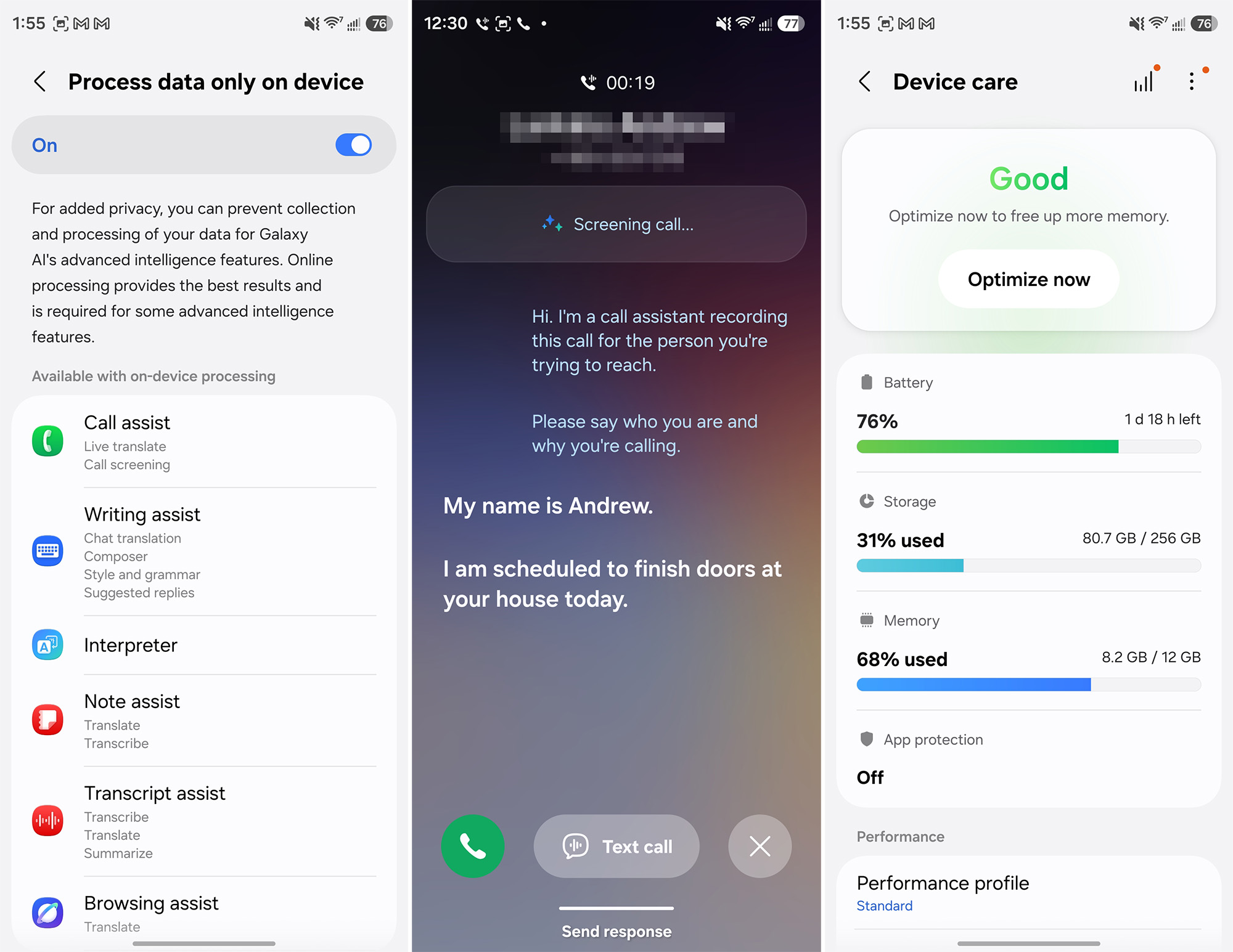
One UI can feel a little claustrophobic, but Samsung gets some things very right.
Credit: Ryan Whitwam
One UI can feel a little claustrophobic, but Samsung gets some things very right. Credit: Ryan Whitwam
Unsurprisingly, having Gemini operate even simple apps is very slow and fraught with errors. It gets there most of the time, but it’s nowhere near good enough that I’d trust the results without a thorough double-check. And at that point, why not just do it myself?
It’s not all AI retreads, though. Samsung has added something genuinely fantastic to its Galaxy AI portfolio, but it’s not the kind of AI it wants everyone talking about. As of the last version of One UI (and continuing in the version on the Fold), Samsung’s phone app does Google-style call screening. This is one of the biggest selling points for Pixel phones in this age of endless phone spam, and Samsung is finally on board.
As on Pixel phones, you have the option of directing a robot to answer a suspicious call. It transcribes what the caller says, giving you the option of answering or getting more information before picking up. This alone almost makes up for the issues I have with One UI.
Flagship performance
Like the Galaxy S26 Ultra, Samsung’s new flagship foldable runs on a version of the Qualcomm Snapdragon 8 Elite Gen 5 optimized specifically for its devices. This is functionally the fastest mobile processor in the world, featuring eight high-speed Oryon CPU cores and an Adreno GPU that can rival some laptop chips.
You won’t find yourself waiting on the Z Fold 8 to get things done (unless you ask Gemini to use an app). It’s a snappy experience, even when running multiple apps side by side. Games also run flawlessly on this device, as long as you don’t mind a toasty phone.
In benchmarks, the Galaxy Z Fold 8 Ultra scores very near the top of all current phones (see below). While the chip is identical to the one in the S26 Ultra, it doesn’t quite match that phone’s scores. This is most likely due to thermal constraints in the foldable.
Heat is a problem in all smartphones—the benchmark scores you see bandied about are all based on full performance for short periods. When you stress a device for more than a minute or two, such as when you play a high-end game, performance will drop dramatically. In the past, some Samsung phones have throttled by more than half when heating up. The Z Fold 8 Ultra isn’t that bad, but you can expect to lose about 30 to 40 percent of that peak speed. However, that still leaves the Z Fold 8 with higher overall performance compared to, for example, a Google Pixel.
Samsung’s new foldable still comes with 12GB of RAM in the base model. You can upgrade to 16GB with more storage, but the phone is already very expensive. Overall, apps remain in memory long enough, and I haven’t noticed issues with multitasking. Still, at this price, 16GB of RAM would make more sense. Perhaps if we were not in the midst of the great AI RAM shortage, Samsung would have stepped up to 16GB.
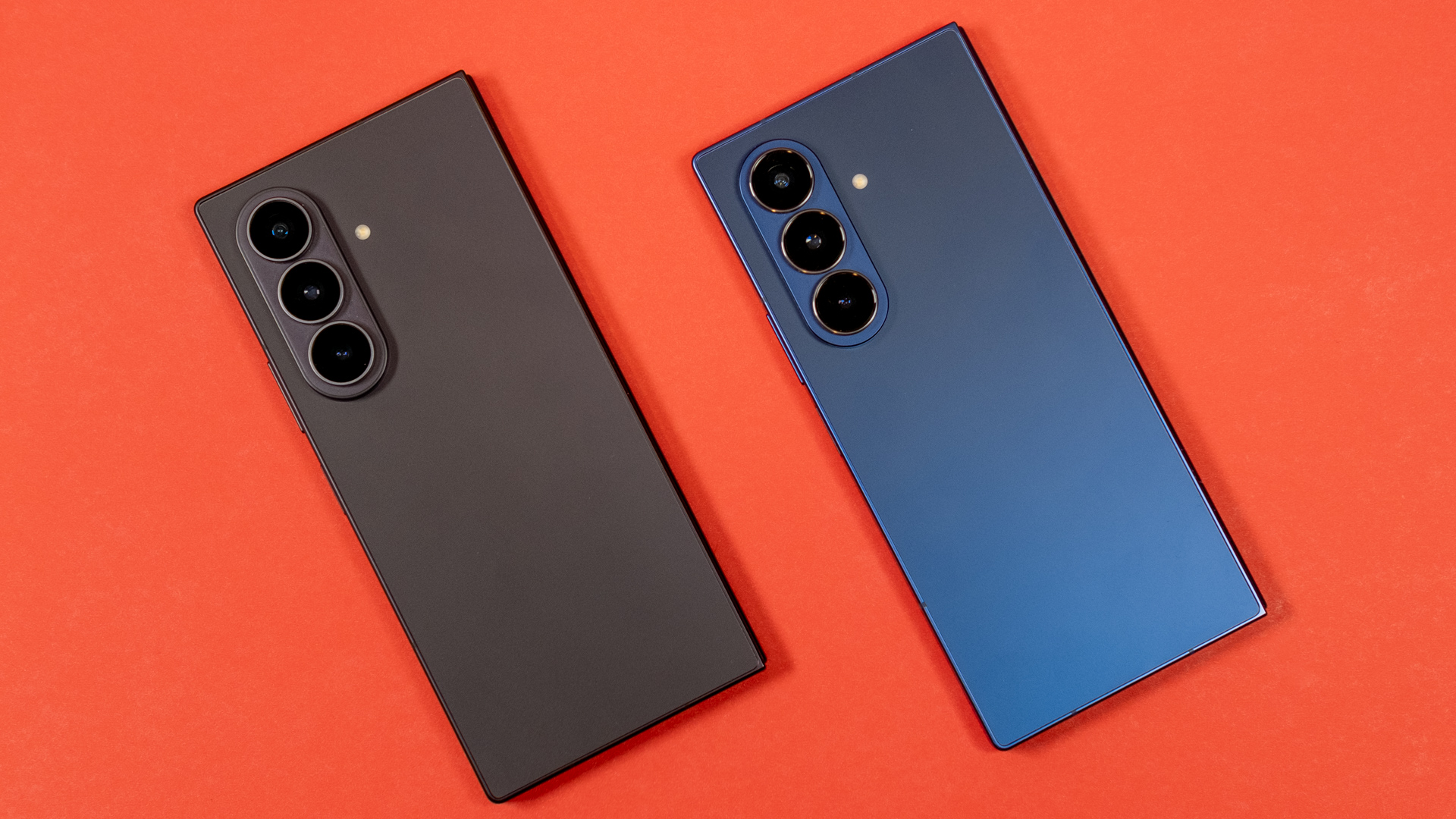
The Z Fold 8 Ultra (left) is basically indistinguishable from the Z Fold 7 (right).
Credit: Ryan Whitwam
The Z Fold 8 Ultra (left) is basically indistinguishable from the Z Fold 7 (right). Credit: Ryan Whitwam
There aren’t many hardware improvements in this year’s Fold, but the battery and charging did get some attention. Having finally gone the silicon-carbon route, Samsung has increased the capacity of the traditional lithium polymer cells to 5,000 mAh (up from 4,400 mAh last year). That’s on par with most non-folding flagship phones. It’s not a night-and-day difference in longevity, and you can still drain it quickly by using only the big internal display, but you don’t have to worry about whether the Z Fold 8 Ultra will make it to bedtime most days.
If the Z Fold 8 Ultra doesn’t quite make it all the way to bedtime, you won’t be terribly inconvenienced. Samsung has boosted the charging from the measly 25 W peak speed of past foldables to a much more reasonable 45 W. That’s nothing compared to what you get with certain Chinese smartphones, but it’s much more livable. Samsung says you can go from empty to 67 percent in about 30 minutes with a compatible USB-PD charger.
Ultra cameras
One of the main selling points of the Z Fold 8 Ultra over the Z Fold 8 is the camera setup. While the wide-body foldable only has two rear cameras (both 50 MP), the Z Fold 8 Ultra has an upgraded triple setup with a 200 MP primary, a 10 MP 3x telephoto, and a new 50 MP ultrawide.
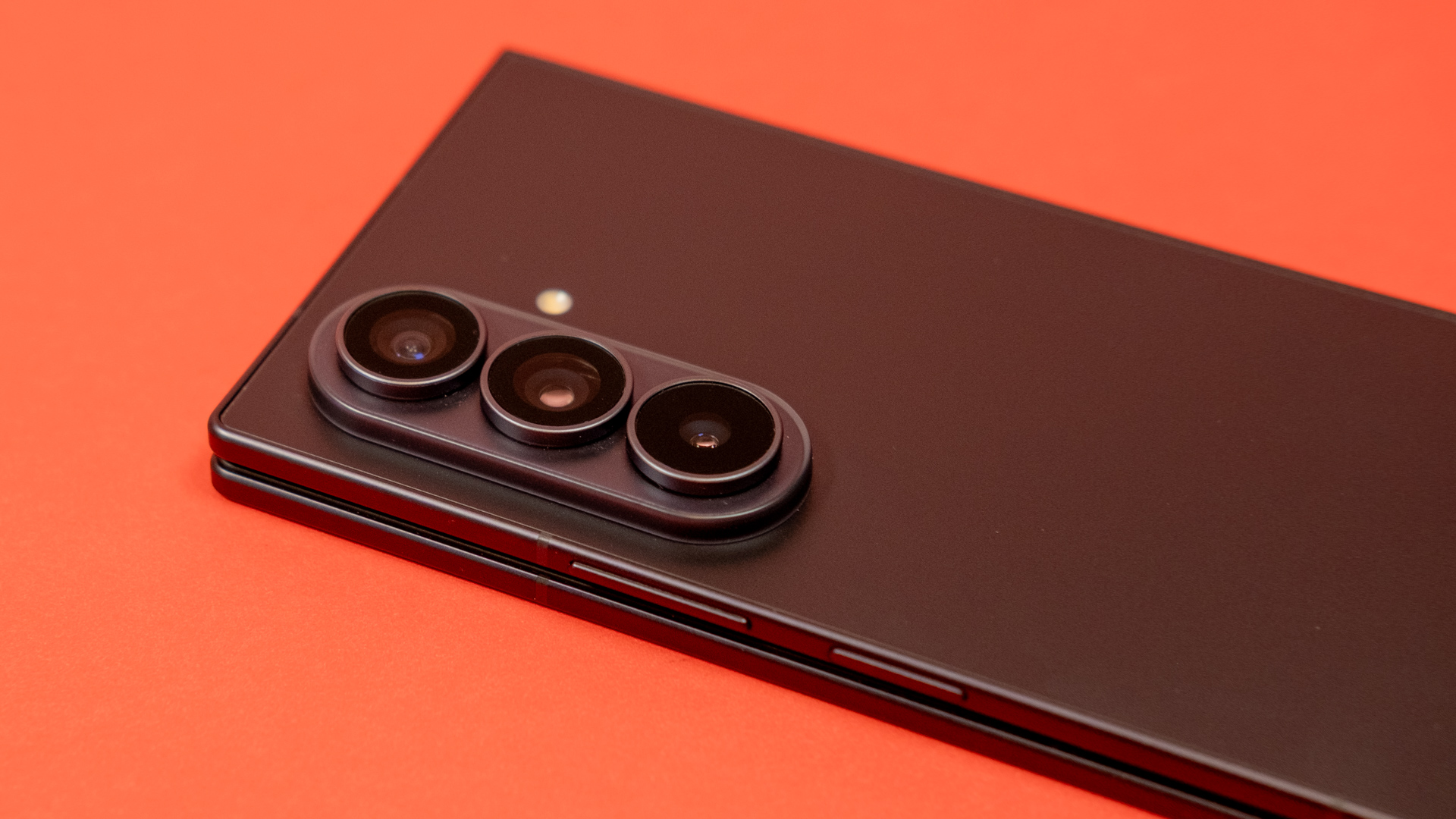
The cameras dominate the back.
Credit: Ryan Whitwam
The cameras dominate the back. Credit: Ryan Whitwam
The 200 MP camera is the same as last year’s foldable, and the sensor is identical to what’s in the Galaxy S26 Ultra. However, the aperture is narrower (less light collection) due to the constraints introduced by foldables. Photos are binned to 12 MP, showing good dynamic range and brightness, although Google does have Samsung beat there. They still have that distinctive vibrant and sometimes too contrasty look we associate with Samsung cameras.
Capture speed has always been a challenge for Samsung phones, which seem to lean toward being brighter, even at the expense of some blur. Things are better than they once were with the Z Fold 8 Ultra, but you should take a few snaps of any subject that is moving around to make sure you get one that’s crisp. Luckily, Samsung’s burst mode is quick and reliable.
Main camera, bright outdoor light. Ryan Whitwam
You don’t get a telephoto camera with Samsung’s wider foldable, but this sensor increasingly feels like an afterthought for the Ultra. It’s still just 10 MP, and the sensor is tiny at 1/3.94 inches. it will get you a bit closer to your subject, but the results often look overprocessed. That’s doubly true if you zoom beyond 3x and count on Samsung’s processing to clean up the image.
The new 50 MP ultrawide does offer a nice upgrade over last year’s Fold, though. The field of view is wide enough that it offers a different perspective than the main camera but not so wide that the edges look distorted. The boosted resolution speeds up captures in low light and results in slightly better detail with the expected pumped-up Samsung colors. This sensor is also used for macro shots on the Z Fold 8 Ultra, and the detail you get close up is noticeably better than the last Fold.
While the still photos may have some foibles, Samsung’s video recording on the Z Fold 8 with the main sensor is a step up from almost any other phone. It can handle up to 8K resolution at 30 fps, and the enhanced stabilization available at lower resolutions is great for recording on the move. Video is crisp across the board, with great range and colors.
The foldable niche
In some ways, it’s amazing that a device like this exists. It’s hardly any more bulky than a traditional smartphone, but it’s a tablet that fits in your pocket. There’s almost no crease in the screen, and the hinge is rock-solid. Heck, you can even drop it in a pool, and it will keep ticking (IP48). The cameras, battery life, and performance aren’t as compromised as they were with past foldables, either.
The slow pace of change in mobile technology has prompted many of us to become a bit jaded, but if foldables of this caliber were somehow remarkably cheaper, they would be in everyone’s pocket. But that’s the problem—they’re not cheaper. In fact, all computing devices are getting more expensive.
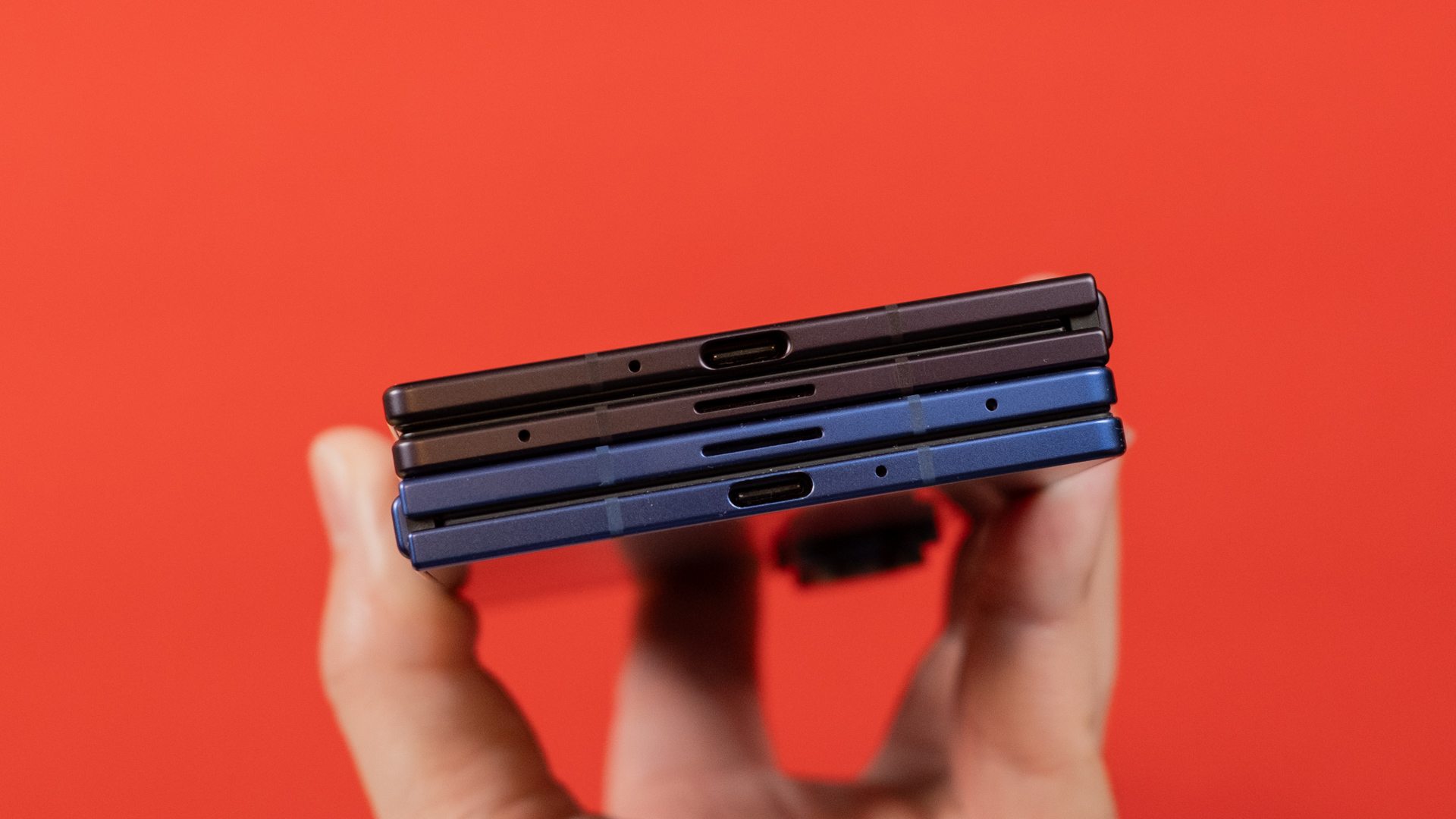
The Z Fold 8 Ultra (top) is a fraction of a millimeter thinner than the Z Fold 7 (bottom), but you’d never know.
Credit: Ryan Whitwam
The Z Fold 8 Ultra (top) is a fraction of a millimeter thinner than the Z Fold 7 (bottom), but you’d never know. Credit: Ryan Whitwam
The $100 price bump is quickly becoming a 2026 tradition, but that’s a bigger chunk of the price when you’re talking about a flat phone that used to cost $800 or $900. At $2,100, the Z Fold 8 Ultra is only a little more expensive than last year’s version. If you were willing to spend $2,000 on a foldable, $2,100 is not a big leap.
The dream of foldable mass adoption may be slipping away, but that doesn’t mean these devices don’t have a place. If you do most of your computing on a phone and could benefit from the added screen real estate, the Galaxy Z Fold 8 Ultra is a killer device. It won’t weigh down your pocket, and it lets you easily multitask and use apps with tablet-style interfaces. You’ll pay handsomely for that ability, but enough people are willing to do so that Samsung’s 2026 foldables are seeing record sales—though they still trail flat phones by a wide margin.
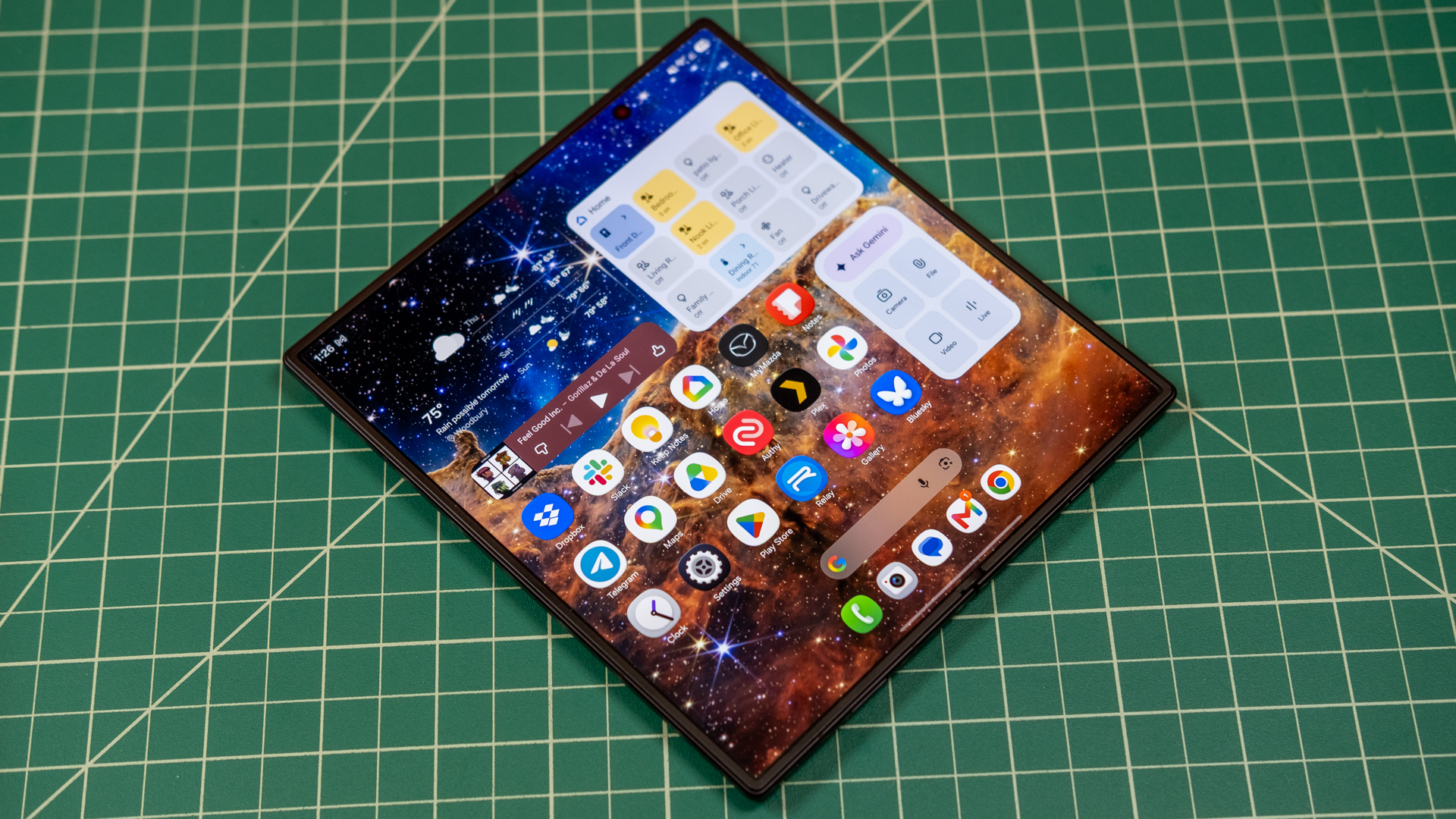
It’s a tablet that fits in your pocket.
Credit: Ryan Whitwam
It’s a tablet that fits in your pocket. Credit: Ryan Whitwam
For people who would consider spending two grand on a phone, this is a good option. But it’s not so much better than the Z Fold 7 that you need to rush out and get the new model. For Z Fold 6 owners who like the experience, though, this is a worthy upgrade.
The good
- Excellent multitasking features
- Compact and light for a foldable
- Fast performance
- Brighter, flatter foldable screen
- Upgraded ultrawide camera
- Faster charging and slightly better battery life
The bad
- A huge focus on AI you may not want
- Weak telephoto camera
- Camera module sticks out a mile
The ugly
- Getting even more expensive

Ryan Whitwam is a senior technology reporter at Ars Technica, covering the ways Google, AI, and mobile technology continue to change the world. Over his 20-year career, he's written for Android Police, ExtremeTech, Wirecutter, NY Times, and more. He has reviewed more phones than most people will ever own. You can follow him on Bluesky, where you will see photos of his dozens of mechanical keyboards.





 English (US) ·