


Published Sep 18, 2026, 12:00 PM EDT
Gabrielle Moss has been writing about pop culture for over a decade, for publications including The New Yorker, GQ.com, Slate, Bustle, New York Magazine, and many more. Her book,
"Paperback Crush: The Totally Radical History of '80s and '90s Teen Fiction," was released in 2018, and she was featured in the 2023 documentary "Judy Blume Forever."
Sign in to your Collider account
Editor's note: The below review contains a brief discussion of sexual assault.
Though Lizzie Borden is one of the most famous (accused) criminals in American history, no one seems to find her especially frightening. It's difficult to imagine any other murderer getting their own cute action figure, or a Clue-style board game based on their supposed crimes. The building where Jeffrey Dahmer killed was infamously razed to the ground and remains an empty lot to this day; the building where Borden supposedly gave her fatal "40 whacks" to her father and stepmother, Andrew and Abby Borden, is now a bed-and-breakfast where you can book a ghost tour or a "Victorian tea party." Borden might read more as a creepy piece of Americana than a vicious killer because her alleged crimes occurred so far in the past. It might be because she's a woman, because she murdered unpleasant relatives rather than innocent strangers, or because there's ambiguity around her guilt — was she just an oddball who got blamed for the crimes because she struggled to fit in, or did she actually get away with murder?
Monster: The Lizzie Borden Story, the newest volume of Ryan Murphy's Netflix series dedicated to the lives of infamous American killers, introduces a new theory: we don't feel scared by Borden because she was justified. Across the show's eight episodes, The Lizzie Borden Story suggests that Borden (Ella Beatty), a gentle nature lover who's just as abused by Victorian social norms as she is by her brutish parents, had no path to survival except putting an axe into Andrew (Charlie Hunnam) and Abby (Rebecca Hall)'s skulls. Veering wildly from feminist theorizing to romantic melodrama to raw discourse on cycles of abuse, The Lizzie Borden Story is a campy, frustrating, and occasionally extremely moving show about what happens when people get pushed to their breaking point, and what it really means to be "innocent."
What is 'Monster: The Lizzie Borden Story' About?
Lizzie Borden is no one's idea of a murderer. In fact, at the show's start, everyone else around her seems far more likely to be the one to take someone's head off with an ax: her father, Andrew, is a wealthy, cruel, drunk, and misogynistic casket-maker who has no qualms about chopping the feet off a dead body to make it fit into one of his coffins; her stepmother, Abby, is a violently abusive narcissist who sees no issue in slaughtering Lizzie's beloved pet doves because they coo too loudly. Guileless and socially awkward, Lizzie spends her days alternating between delighting in plants and animals and being humiliated by humans, until a new servant, Bridget, arrives at her home.
Played by Phantom Thread star Vicky Krieps, Bridget is a worldly feminist with a hairdo that makes her look more like someone who plays bass in Phoebe Bridgers' backing band than a Victorian housemaid — a point later underlined when her cleaning is soundtracked by The Runaways' "Cherry Bomb." Bridget, who has lived in Europe and reads broadly, teaches provincial Lizzie about the science behind her painful menstrual periods, as well as Victorian sex toys, and eventually, the story of the infamous "blood countess" Elizabeth Bathory (played in flashback by Krieps in a Lisbeth Salander wig). Lizzie and Bridget fall for one another, and after both are repeatedly subjected to brutal and careless acts by Andrew, Abby, and others, they decide that the Bordens have to go. Though they get giddy with bloodlust during their planning, the reality of murdering Andrew and Abby is unexpected for both of them. Bridget finds that actual murder is different from her "blood countess" fantasies; and in killing her father and stepmother, Lizzie seems to finally come into her own.
Weaving in and out of the narrative is Aileen Wuornos (Sarah Paulson), America's other most famous female murderer. Nearly 100 years after Borden, we watch Wuornos also hit her limit, murdering a client after suffering a violent sexual assault. Wuornos is depicted as a Lizzie fangirl who road-trips with her girlfriend to visit the Borden bed-and-breakfast; she sees her as a patron saint of survivors who turn the tables on their abusers. "This is how women have had it the whole time," Wuornos declares while reading a book about Borden, in one of the show's many way-too-on-the-nose moments.
We know how both Borden and Wuornos' stories end, of course — Borden would be acquitted, inherit her father's fortune, and spend the rest of her life as an outcast in her hometown of Fall River, Massachusetts, while Wuornos was executed by the state of Florida in 2002. But the show asks us to stay with each woman to the end, to see how they handle their respective fates, and what they each mean about the way society judges women.
'Monster: The Lizzie Borden Story' Doesn't Quite Know What It Believes
Thematically, The Lizzie Borden Story is a mess. The show's weakest moments are when it tries to make a political argument for revenge murder as a kind of feminist project; Wuornos's multiple adoring monologues about Borden and Bridget's similarly adoring monologues about Bathory feel almost embarrassing to watch, especially when the show attempts to soften Bathory (who was accused of murdering teenage peasant girls in Renaissance-era Hungary) by giving her a tragic backstory that isn't backed up by historical record. The show's periodic pushes to make Borden an uncomplicated feminist icon feel genuinely laughable.
This tendency also pops up in the fact that the show treats Borden as almost a Cinderella-esque character. There's no darkness within her, no part that enjoys the violence of committing murder or the mass media attention that followed. She's simply a sweetheart who would have happily spent her days romping among the cherry trees and caring for her pets, if only her family and society hadn't been dead set on abusing her. It also does a similar clean-up job on Wuornos, viewing her as rough-around-the-edges but ultimately just doing what she had to in order to survive. Considering that a hallmark of previous seasons of Monster was a multi-faceted probing of characters who definitely were not sweethearts, the show's approach to its heroines' inner lives can feel simplistic. And in the classic tradition of many previous Murphy outings, the series ends with a strange, muddled episode that time-jumps forward and introduces new themes at the last second — in this case, true crime, the pain of infamy, forgiveness, women's suffrage (!), and a reunion between Lizzie and Bridget, decades after the crime, that never achieves the emotional heft that it should.
But in the moments when The Lizzie Borden Story is just an emotional tale about women grappling with lives that seemingly require them to do terrible things to survive, it shines. Beatty's performance gently telegraphs Borden's innate dignity, in addition to her pain; when she finally speaks her piece about the lifetime of abuse she experienced at Abby's hands, it's almost impossible not to be moved. And her love story with Bridget is engaging and affecting; Krieps creates a strong and genuine emotional underpinning for an anachronistic character who could have easily appeared silly.
When Paulson's Wuornos isn't delivering a history lecture, she owns some of the show's most emotionally brutal moments. An imagined confession to Borden about the abuse she survived in her own childhood moved me to tears, as did a conversation Wuornos has with a supporter shortly before being put to death. One of the show's strangest moments, in which Borden, Bridget, and Wuornos all dance together to the '80s queer anthem "Smalltown Boy" by Bronski Beat, sounds like it absolutely shouldn't work, but is actually a prime example of what The Lizzie Borden Story gets right — when it rips off its intellectual packaging and just dives into the raw human experiences of pain, sadness, and longing for something better than what you were given, it is a joy to watch.
Also a joy to watch: Rebecca Hall, giving her campy, wicked stepmother best as Abby Borden. If anyone here gets the complex, layered treatment that Monster usually gives their subjects, it's Abby; we both understand the lifetime of suffering that transformed her into a beast, and hate her for the person she's become anyway. Hall is an actress of tremendous range, but The Lizzie Borden Story makes the case for her playing more villains. Abby is vile, yet a thrill to watch every second she's on-screen. The over-the-top stage actress Nance O'Neill (Jessica Barden) is also a delight, even though it's not always exactly clear why she's there. A subplot in which she inserts herself into Borden's life doesn't necessarily make much sense, but that doesn't make it any less entertaining — which might also sum up the best parts of The Lizzie Borden Story, too.
'The Lizzie Borden Story' Wants To Be Simpler Than It Is
 Image via Netflix
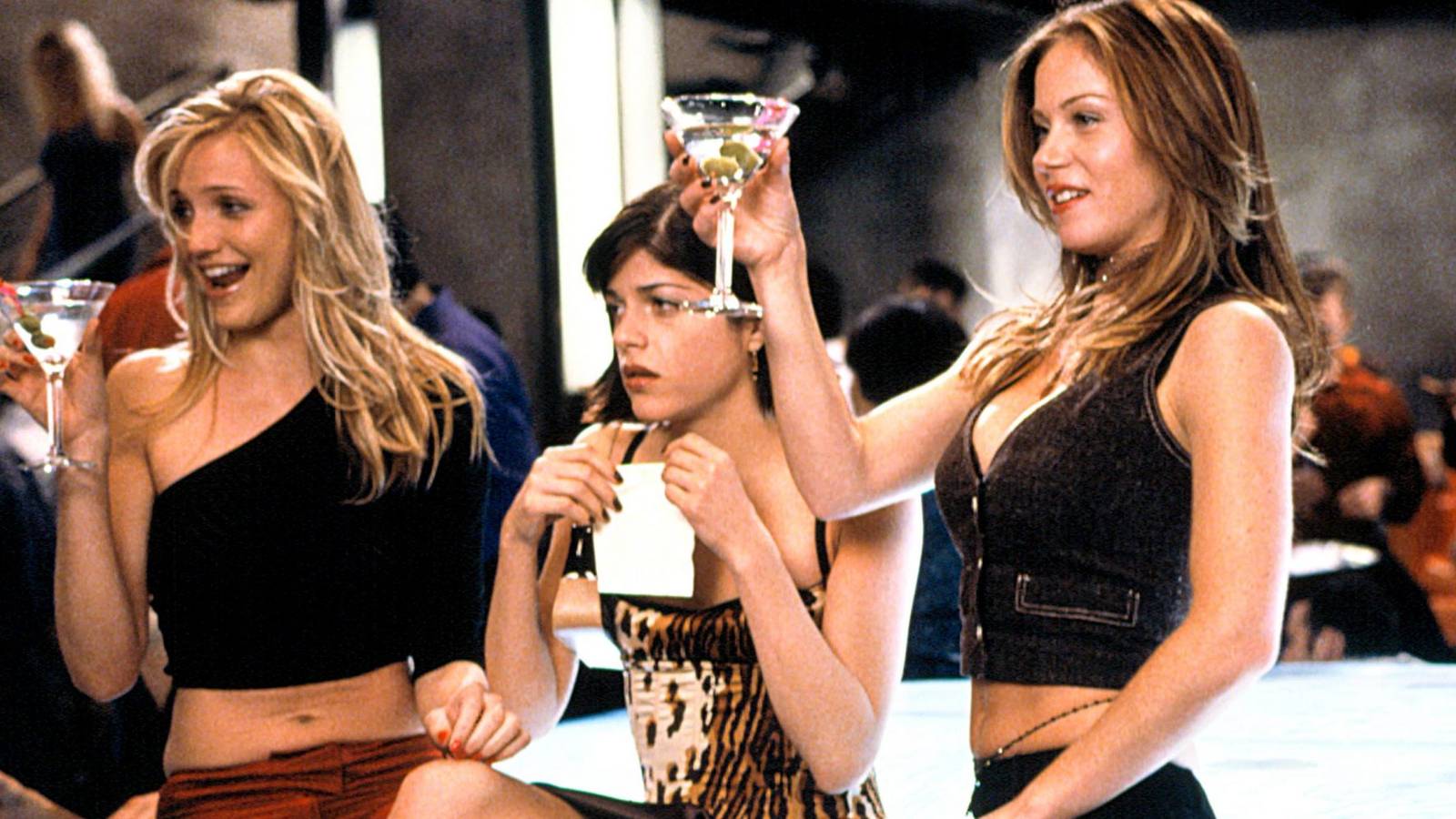
The Lizzie Borden Story is just the latest in a recent deluge of Borden-related media, including Christina Ricci's high-camp 2014 Lifetime movie Lizzie Borden Took an Ax, which was followed by a 2015 series, and Chloe Sevigny's 2018 Lizzie, which treated the story as something of a grim erotic thriller. It will also be followed later this fall by Victorian Psycho, an over-the-top Lizzie Borden-influenced horror thriller about a governess who's more Norman Bates than Mary Poppins. It makes sense that so many people would consider Borden's story fertile creative ground —it's packed full of issues related to sexism, class, and whether there's such a thing as a justified crime. But in insisting on Borden's overwhelming goodness, The Lizzie Borden Story engages in a much milder form of the sexism it spends its runtime railing against.
In a certain way, The Lizzie Borden Story is cut from the same cloth as the recent (and superior) Hulu series Furious, which also investigates how society turns a blind eye to women's abuse, and what happens when women who have no access to traditional avenues of justice "snap." But Furious is unafraid to make its female characters complicated and difficult, to ask viewers to take them as people who are both good and bad. The Lizzie Borden Story, on the other hand, seems to think we can only feel sympathy for Borden if we also believe that she is essentially a saint who had one very bad day.
Despite its many enjoyable moments, it's tough to not imagine what The Lizzie Borden Story could have been if the team had been ready to show Borden as a more flawed, ambiguous individual. While it wishes it were a complex Thelma & Louise-style statement about women, abuse, and revenge, it doesn't trust the audience enough and instead gives us a cross between a lecture and a fairy tale.
Monster: The Lizzie Borden Story is now streaming on Netflix.

Monster: The Lizzie Borden Story
Ryan Murphy's muddled Monster: The Lizzie Borden Story turns America's most infamous ax murderess into a saint.
Release Date September 17, 2026
Network Netflix
Directors Max Winkler, Sarah Adina Smith
Cast
-

Vicky Krieps
Bridget Sullivan
-
Ella Beatty
Lizzie Borden
Pros & Cons
- The performances are uniformly high-quality, with Ella Beatty and Rebecca Hall as particular standouts.
- When it gives itself over to emotional storytelling, the show shines.
- The show isn't too interested in examining Borden's dark side, or asking if what she did was wrong.
- Half-baked messaging about women and murder repeatedly brings the narrative to a halt.






 English (US) ·