
 3 hours ago
4
3 hours ago
4
Relativity Space announced plans to build a second rocket factory near Cape Canaveral, Florida.
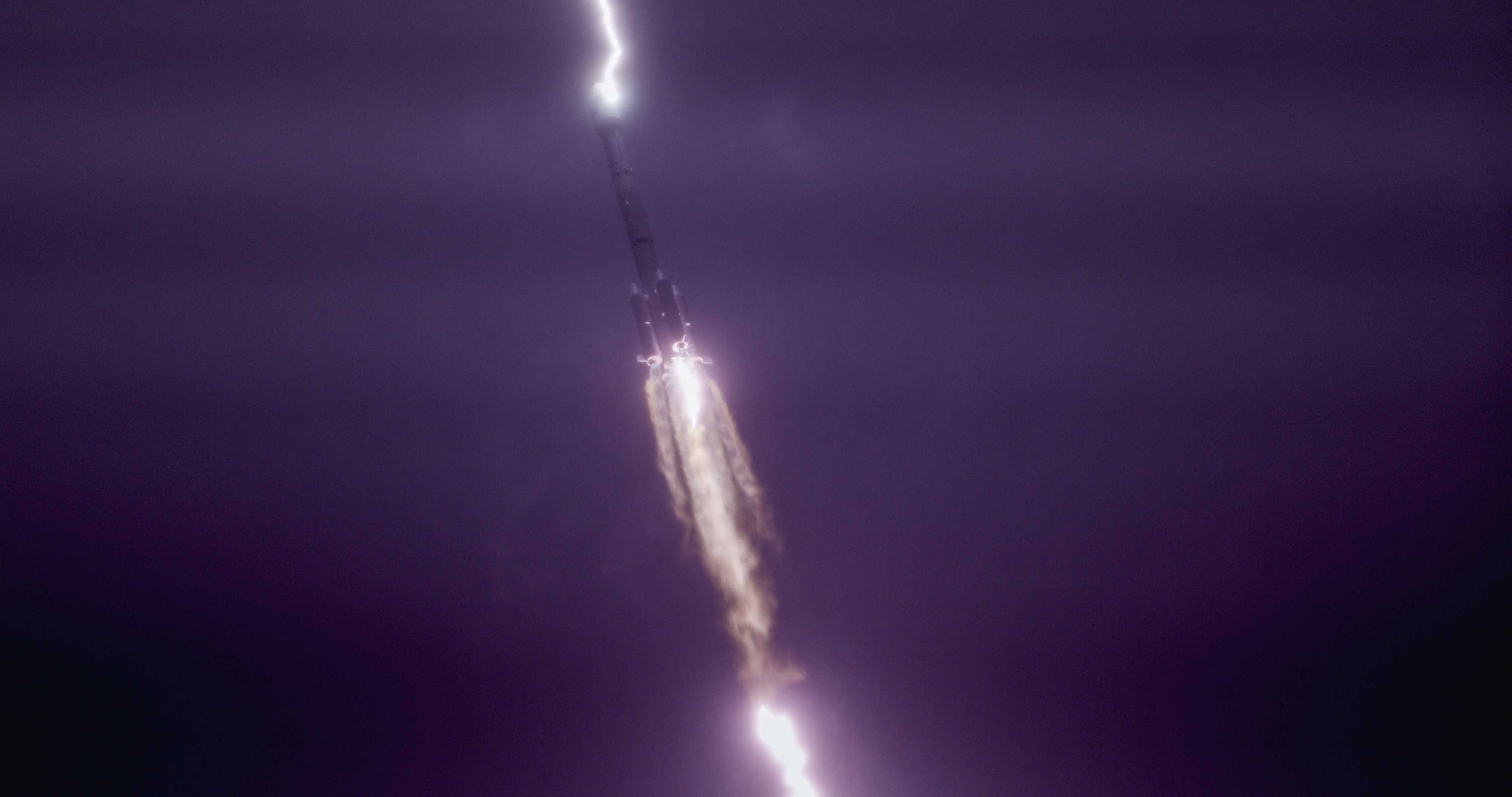
A Long March 3B rocket carrying the Tianlian II-06 satellite was struck by lightning shortly after lifting off from the Xichang Satellite Launch Center at 8:00 pm local time on July 23, 2026. Credit: Zhou Quan/VCG via Getty Images
A Long March 3B rocket carrying the Tianlian II-06 satellite was struck by lightning shortly after lifting off from the Xichang Satellite Launch Center at 8:00 pm local time on July 23, 2026. Credit: Zhou Quan/VCG via Getty Images
Welcome to Edition 9.04 of the Rocket Report! We’ve had to wait an extra week for SpaceX to get its 13th Starship test flight off the ground. A last-second abort on July 16 led engineers to roll the booster back to its hangar in South Texas to swap out engines. Starship is now back on the launch pad. Liftoff is set for Friday evening. A flawless launch and reentry will put SpaceX on the cusp of an orbital flight later this year. Ars will have a comprehensive recap story after the completion of the test flight.
As always, we welcome reader submissions. If you don’t want to miss an issue, please subscribe using the box below (the form will not appear on AMP-enabled versions of the site). Each report will include information on small-, medium-, and heavy-lift rockets, as well as a quick look ahead at the next three launches on the calendar.

India’s first private rocket reaches orbit. Indian space officials celebrated the debut flight of Skyroot Aerospace’s Vikram-1 rocket, India’s first fully commercial satellite launcher, as a “grand success” Saturday after an on-target climb into a 280-mile-high orbit following liftoff from an island spaceport in the Bay of Bengal, Ars reports. The Vikram-1 lifted off from India’s primary spaceport on Sriharikota Island around midday local time. The launch was delayed more than a half-hour to resolve a last-minute technical problem. The countdown resumed, culminating in the command to ignite Vikram-1’s solid-fueled first stage booster to propel the rocket off the launch pad.
Right on the money… Vikram-1 is modest in size compared to India’s larger workhorse rockets. Skyroot’s rocket stands about 72 feet (22 meters) tall, with the capability to place payloads of up to 770 pounds (350 kilograms) into low-Earth orbit. This makes Vikram-1 somewhat larger than the Electron launch vehicle developed by Rocket Lab, the world’s most successful dedicated small satellite launcher. The flight on Saturday went off without any major problems. Three solid-fueled rocket motors fired in succession to reach space, then a small liquid-fueled fourth stage ignited and accelerated to orbital velocity, some 17,000 mph. The rocket reached an orbit approximately 280 miles (450 kilometers) high at an inclination of 60 degrees to the equator, quite close to preflight predictions. (submitted by Astroman)
The easiest way to keep up with Eric Berger’s and Stephen Clark’s reporting on all things space is to sign up for our newsletter. We’ll collect their stories and deliver them straight to your inbox.
US seeks ideas on offshore launch. The Interior Department wants the public to weigh in on one idea for what to do with hundreds of inactive offshore oil platforms, The Washington Post reports. Could they be turned into launch pads for rockets to space? The department’s Bureau of Ocean Energy Management issued a request for public comment earlier this month, “intended to inform BOEM’s understanding of technical, environmental, operational, legal, regulatory, and interagency considerations,” without proposing any specific policy action. The government is looking for ideas on how to ease congestion at the nation’s spaceports while also developing additional launch sites to make the country’s space transport infrastructure more resilient to potential attack.
Not a crazy idea... “It’s actually not as crazy of an idea as you might think,” said George Nield, a consultant and former Federal Aviation Administration official who oversaw commercial space transportation. “We’re running out of space and places to be able to fly from.” Rockets have launched from a converted oil platform before. The most successful offshore launch venture was Sea Launch, which used a modified oil-drilling rig as the departure point for 36 satellite launches from 1999 through 2014.
Lockheed interested in RDREs. Venus Aerospace and Lockheed Martin have entered a collaboration agreement for the evaluation of Houston-based Venus’s rotating detonation rocket engine (RDRE) technology, Aviation Week & Space Technology reports. The companies hope to achieve “precision fire” capabilities with efficiencies that translate into longer flight ranges and higher speeds. Lockheed Martin is the Pentagon’s largest contractor, responsible for supplying the military with thousands of tactical and strategic missiles. Venus Aerospace’s RDRE tech works by generating thrust as a wave of detonation travels around a circular channel, sustained by the injection of fuel and oxidizer to produce a supersonic shockwave. The company completed a low-altitude flight test of the RDRE last year.
Improved efficiency... The agreement with Venus Aerospace “enables Lockheed Martin to evaluate RDRE technology within the context of operational military requirements to transition the advanced propulsion concept from a subsystem demonstration environment into practical missile applications,” Lockheed Martin said in a statement. The RDRE architecture has the potential to improve propulsion efficiency while reducing complexity. There’s a lot of work to do to scale Venus’s engine from an experimental prototype to a combat-ready missile platform.

Will Amur ever fly? Nearly six years have passed since the state-backed Russian space corporation, Roscosmos, unveiled plans to develop a reusable rocket called “Amur-LNG.” Clearly designed in response to SpaceX’s Falcon 9 rocket, Amur was intended to have a reusable first stage, methane-powered engines, and the capability to deliver 10.5 metric tons to low-Earth orbit in reusable mode. At the time, Russian space officials said they planned to debut the rocket in 2026, so basically right about now. The latest update from Roscosmos suggests the Amur rocket won’t begin flight tests until 2031, Ars reports.
Year for year... To summarize, when the Amur rocket was announced in 2020, its flight date was scheduled for 2026. Some six years later, its projected launch date has moved five years into the future. The only reasonable conclusion is that Russia’s answer to the Falcon 9 rocket will not arrive any time soon, and it is unlikely to do so until at least two decades after SpaceX first landed an orbital rocket.
Space Force to buy more launches. It seems as though $5.6 billion wasn’t enough. That was the news from the US Space Force on Friday, July 17, when military officials announced they were tripling the maximum value of one of the service’s National Security Space Launch contracts to $17 billion, Ars reports. The expansion of the Space Force’s National Security Space Launch (NSSL) Phase 3 contract comes as the Pentagon signals rising demand for military satellite launches. The NSSL program is set up to allow Space Systems Command, which oversees the Space Force’s launch program, to select from a pool of launch providers for individual missions to deliver the military’s satellites to orbit.
Appetizing… The $17 billion portion covers just one part of the NSSL Phase 3 program. This segment, known as Lane 1, covers a subset of the Space Force’s more risk-tolerant missions. Lane 2 includes more expensive strategic satellites and carries a maximum value of $13.7 billion, a number sufficient to cover an estimated 54 launches projected for procurement through 2029. In April, Space Systems Command said it had identified 25 additional Lane 2 missions on top of the 54 included in the original contract just one year before. Now, the Space Force is tripling the maximum value for the Lane 1 contract. With last week’s announcement, the combined maximum value of Lane 1 and Lane 2 has reached more than $30 billion, and the number is likely to climb again. (submitted by biokleen)
Robotic servicing mission launches from Cape Canaveral. A spacecraft fitted with two flexible robotic arms is on the way to geosynchronous orbit after launching earlier this week on a SpaceX Falcon 9 rocket, kicking off a planned decade-long mission to open new frontiers in satellite servicing, Ars reports. The Mission Robotic Vehicle, owned and built by Northrop Grumman, rocketed into orbit from Cape Canaveral Space Force Station in Florida on Tuesday. Three small propulsion pods, each functioning as standalone spacecraft, accompanied the MRV aboard the Falcon 9 rocket.
First of its kind… The Mission Robotic Vehicle is arguably the most advanced servicing satellite ever launched. It’s certainly the most sophisticated orbiting servicer we know anything about. Developed in a public-private partnership between Northrop Grumman and DARPA, the MRV uses its two robotic arms to install the propulsion pods onto other satellites in geosynchronous orbit and extend their lives.
Relativity announces new plans for Florida. Relativity Space plans to expand its operations at Cape Canaveral and add thousands of high-paying new jobs by the end of 2034, Florida Today reports. The company plans to expand test and launch support infrastructure across NASA’s Kennedy Space Center and Cape Canaveral Space Force Station, according to Space Florida, an economic development agency chartered to attract aerospace business to the state. Relativity’s plans for Florida include the construction of an additional factory for the company’s Terran R rocket, which will launch from a pad already under construction at Cape Canaveral. Relativity’s current factory is in Long Beach, California.
Always be scaling… “Expanding our capacity in Florida enables our ability to scale the Terran R program to support commercial, scientific, and national security missions,” said Eric Schmidt, Relativity’s executive chairman and CEO, in a statement. Officials have not announced an exact location for the Relativity rocket factory, but the company is reportedly eyeing a site in Titusville, just west of Kennedy Space Center. Relativity’s Terran R rocket, with a reusable first stage booster, remains officially scheduled for a first flight by the end of the year. That is not likely to happen.
Chinese rocket overcomes lightning strike. China launched one of its most successful rockets Thursday, sending a Long March 3B launcher to orbit with a Tianlian data relay support to link Mission Control with the country’s Tiangong space station. The Long March 3B is a dependable rocket, with nearly 120 flights since entering service in 1996. But the rocket was tested on Thursday when a bolt of lightning struck the vehicle shortly after liftoff from the Xichang Satellite Launch Center in southwestern China. The rocket continued the climb into space without incident.
An occasional occurrence… It’s not every day that lightning hits a rocket during launch, but it has happened before. Most famously, lightning struck the launch of the Apollo 12 mission to the Moon in 1969, but the crew and the spacecraft persevered to complete their mission. All missions weren’t so lucky. An Atlas-Centaur was destroyed by lightning during a launch from Cape Canaveral in 1987. There was no one onboard, but the incident resulted in the loss of a naval communications satellite. More recently, a Russian Soyuz rocket survived a lightning strike during a 2019 launch and delivered its payload to orbit.

SpaceX scrubs Starship launch attempt. SpaceX called off a test flight of its powerful Starship rocket and Super Heavy booster as the countdown clock reached zero on July 16 at the company’s spaceport in South Texas, Ars reports. Computers cut off the automated countdown sequence after some of the booster’s 33 Raptor engines didn’t light. SpaceX officials decided to move the booster off the launch pad and back to a nearby assembly building at Starbase, Texas, to swap two of its engines. The rocket returned to the launch pad this week.
Next try Friday… Bad weather at Starbase forced SpaceX to forego a launch attempt on Thursday. The next opportunity to launch Starship will come Friday evening during a 90-minute launch window opening at 5:45 pm CDT (6:45 pm EDT; 22:45 UTC). This will be the 13th full-scale test flight of Starship and its Super Heavy booster. SpaceX aims to fly the ship halfway around the world to a controlled splashdown in the Indian Ocean. One new test objective with this launch is the deployment of 20 Starlink V3 satellites in space, the first time SpaceX has placed real spacecraft on a Starship test flight. The satellites will fly on a suborbital trajectory and burn up in the atmosphere during reentry.
Artemis III is getting more real. Stacking of the Space Launch System rocket for the Artemis III mission is underway at Kennedy Space Center in Florida, NASA reports. The months-long stacking sequence began with the placement of the lower segments of the rocket’s solid-fueled boosters on the Mobile Launcher inside the Vehicle Assembly Building (VAB). Ground teams will stack the five-segment boosters in the coming weeks, then lower the core stage between the boosters. That will be followed by the installation of a “spacer” structure on top of the core stage to connect it with the Orion spacecraft, which will carry a crew of four astronauts to low-Earth orbit to rendezvous with prototypes of commercial Moon landers developed by SpaceX and Blue Origin.
Core stage status… Workers are completing the integration of the SLS core stage itself elsewhere in the VAB. The main structure of the core stage arrived at Kennedy in April from a factory in New Orleans. Since then, ground teams have connected the engine section to the bottom of the core stage. The next step will be the installation of the core stage’s four RS-25 main engines. NASA officials would like to complete the initial stacking of the SLS rocket for Artemis III, without the Orion spacecraft, in time to begin fueling tests at the launch pad by the end of the year.
Next three launches
July 24: Starship | Flight 13 | Starbase, Texas | 22:45 UTC
July 25: Falcon 9 | Starlink 17-51 | Vandenberg Space Force Base, California | 14:00 UTC
July 29: Falcon 9 | Starlink 17-52 | Vandenberg Space Force Base, California | 02:00 UTC


Stephen Clark is a space reporter at Ars Technica, covering private space companies and the world’s space agencies. Stephen writes about the nexus of technology, science, policy, and business on and off the planet.








 English (US) ·