
 3 weeks ago
40
3 weeks ago
40
“The customer got comfortable with a high reliability and a low price.”
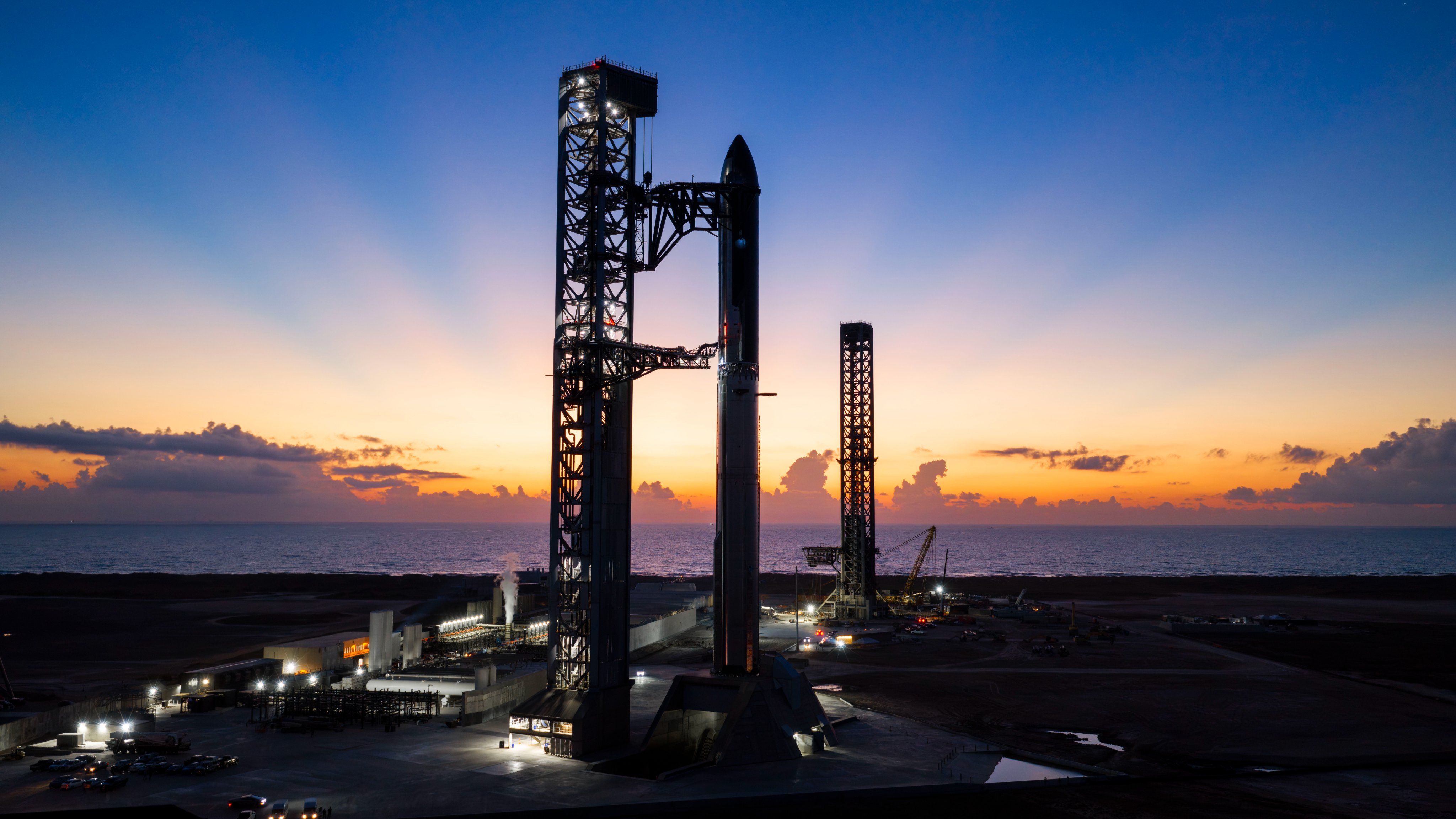
SpaceX has stacked the Starship vehicle in advance of Flight 14. Credit: SpaceX
SpaceX has stacked the Starship vehicle in advance of Flight 14. Credit: SpaceX
Welcome to Edition 9.12 of the Rocket Report! The big story in the global launch industry remains SpaceX’s plans to wind down Falcon 9 operations for commercial launches, possibly within the next two or three years. That has created a scramble among satellite operators and some positioning among up-and-coming launch providers. Notably, in this week’s newsletter, there’s a story about how Firefly expects launch to become more expensive, and that customers got too used to rapid, reliable launch with the Falcon 9. I’m not sure that philosophy will work out long term.
As always, we welcome reader submissions, and if you don’t want to miss an issue, please subscribe using the box below (the form will not appear on AMP-enabled versions of the site). Each report will include information on small-, medium-, and heavy-lift rockets as well as a quick look ahead at the next three launches on the calendar.

The best-named rocket in the world is sadly delayed. French launch startup HyPrSpace announced that it has pushed the inaugural flight of its Baguette One suborbital rocket to 2027, European Spaceflight reports. The 10-meter Baguette One rocket is a single-stage vehicle is capable of carrying up to 300 kg. It is powered by the company’s hybrid propulsion system, which combines liquid oxygen with solid polyethylene fuel.
An appetizing launch … Originally the company had been targeting 2026 for the suborbital rocket’s debut. In moving the target to 2027, however, the company revealed that the vehicle’s launch site will be the French Directorate General of Armaments location at Biscarrosse in southwestern France. “Seeing Baguette One lift off from French soil, after years of development and testing, will be a historic moment for HyPrSpace and its teams,” said HyPrSpace CEO Nicolas Billecocq.
Astra targeting “early” 2027 for return to flight. In a lengthy interview with The Debrief, Astra chief executive Chris Kemp said the company is targeting early 2027 for the launch of the Rocket 4.0 vehicle. The rocket, 18.9 meters tall, aims to eventually deliver up to 1 metric ton to low-Earth orbit. Kemp said Astra is aiming to make hundreds of rockets per year.
New rocket, same Kemp … “We chose not to do what a lot of other companies are doing,” Kemp said. “We’re not making a reusable rocket. We’re not making a very expensive engine cycle where the engines are very, very expensive. We’re trying to build a soda can.” And how good will Rocket 4.0 be? “I think this is going to be the most reliable, most affordable rocket ever produced in the history of the world,” Kemp said.
Keep up with the latest in space exploration and rocket launches.
Down Under launch site may be nixed. A launch site under development in southern Australia, near Adelaide, may not go forward, the Australian Broadcast Corporation reports. The Native Vegetation Council denied variations to the heritage agreement at Whalers Way, where Southern Launch hopes to build a space facility. Southern Launch’s bid to create the Whalers Way Orbital Launch Complex has been met with ongoing opposition from conservation groups, including the local Eyre Peninsula Environmental Protection Alliance.
Endangered species … One reason for this is that the proposed site is a recognized conservation area for native vegetation and fauna. Rebecca Boulton from Birdlife Australia welcomed the upholding of the heritage agreement in place at the site since 1987, a habitat she said was home to two endangered bird species. “A couple of species down there at Whalers Way are part of our recovery team, so the mallee whipbird is one of the species that we work with, and the Eyre Peninsula is the stronghold for that species,” she said. (submitted by SubWoofer2)

Serious concerns about space debris. Over the last decade, the European Space Agency has produced an annual report that provides a transparent overview of global space activities and assesses the quality of efforts to preserve the sustainability of spaceflight. In its most recently released Space Environment Report, published earlier this month, there are some striking—and concerning—changes. For example, the European report has dramatically increased its projections of future satellites in this year’s report after reassessing the current trajectory of large constellations, Ars reports.
Sustainability concerns … Based on the growing number of launches, the European scientists modeled a number of different scenarios. Assuming that satellite launches continue to increase—by far the most likely trend—even if operators continue to follow best practices in terms of disposing of older satellites and avoiding collisions, the orbital environment will still become significantly more cluttered. In its technically precise language, the European Space Agency is essentially saying we’re on a road that could ultimately lead to something like the Kessler syndrome. Also worth noting: The projections in ESA’s 2026 report do not include the new category of orbital data centers.
Ariane 6 has a turbopump issue. Europe’s Ariane 6 heavy-lift rocket, in the middle of an important ramp in launch rate to its initial target of nine to ten launches per year, will be unable to reach its goal of eight missions this year, according to Space Intel Report. An issue with the rocket’s turbopumps was discovered during ground testing in August, but repairs may be possible on site at the Guiana Space Center.
Not great for Amazon … After the report, the European Space Agency acknowledged the issue, saying it would need to “adjust” this year’s launch manifest. This will delay launches of European spacecraft as well as commercial customers such as the Amazon Leo constellation, which had been counting on Ariane 6 because its other major launch vehicles, New Glenn and Vulcan, are also experiencing technical issues.
Era of cheap launch is over? Several rocket company CEOs, speaking at World Space Business Week in Paris, made some interesting comments in the wake of SpaceX planning to wind down its Falcon 9 program. Most striking were those from Firefly Aerospace Vice President of Strategy Michael Creech. “The customer got comfortable with a high reliability and a low price, that frankly did not support the launch market,” Creech said during a panel discussion, Via Satellite reports.
A new normal … Creech said the industry will “reset” over the next six months to two years. “You’re seeing launchers move away to developing solutions with better revenue. This tells you this subsidized cost-per-kilo model wasn’t supporting launch companies, which led to the current-day crisis of a supply shortage,” he added. “Hopefully the new normal will be a growth environment for launch technologies and not another race to the bottom on price.” Although there is a crunch in launch now, there are enough emerging providers that Ars believes price will definitely be a major factor in launch choice in the coming years.
Beijing-based Chinese startup raises big money. Space Epoch finalized a B++ financing round, bringing its total Series B capital raised over the past six months to more than 2.3 billion yuan ($343 million), Satnews reports. The funding will directly support the qualification and assembly of Space Epoch’s flagship launch vehicle, the medium-lift Yuanxingzhe-1 rocket.
An impressive start … Yuanxingzhe-1 is rated to deliver up to 13.8 metric tons of payload into low Earth orbit in a fully expendable configuration, while supporting propulsive vertical landing recovery operations for the first-stage booster. In May 2025, the company successfully completed a vertical landing during a suborbital test at sea with the Yuanxingzhe-1 vehicle. An orbital test flight of the rocket could come before the end of this year.

How did SpaceX streamline the Raptor engine? The Construction Physics newsletter recently dove into the publicly available material on SpaceX’s Raptor engine to explore how the company simplified the design of the machine from the initial Raptor 1 version to the Raptor 3 version. The result is an excellent read on some of the things SpaceX engineers did in their pursuit of an engine to power the super heavy lift, rapidly reusable Starship rocket. Importantly, the article also notes that the Raptor 3 remains a work in progress.
Simpler, but not simple … “While this streamlining has made the Raptor engine simpler in the sense that various individual parts have been eliminated, it was still an enormously complex task to get it to work, and there’s a huge amount of internal complexity added to the Raptor 3 that these pictures don’t show,” the newsletter states. “And the problems haven’t been completely ironed out: the first launch attempt of Starship’s flight test 13 was aborted automatically by the vehicle’s flight software at T-0 (right before liftoff) this past July when several Raptor 3 engines failed to start.”
Starship stacked for next orbital flight. SpaceX assembled a Starship-Super Heavy rocket on the launch pad at Starbase in South Texas early Wednesday as it awaited approval for the vehicle’s first orbital flight, Spaceflight Now reports. Liftoff of Starship Flight 14 could come as soon as Monday, Sept. 28, but first SpaceX needs to receive regulatory approval from the Federal Aviation Administration.
A dawn launch … The rocket’s Starship upper stage, designated Ship 41 or S41, began its journey from production site about three miles west of the pad at around 7:45 p.m. CDT (0045 UTC) Tuesday night. Nearly 5.5 hours later, the 52-meter-tall (171 feet) ship was lifted by the launch tower’s chopsticks and carefully placed atop Super Heavy booster B21. Assuming approval from the FAA, SpaceX could launch Flight 14 as soon as 7:15 am CDT (1215 UTC) on September 28 on a nearly 10-hour mission that will see the deployment of 26 next-generation Version 3 Starlink satellites.
Next three launches
September 26: Electron | Owlright, Owlright, Owlright | Māhia Peninsula, New Zealand | 00:15 UTC
September 26: Falcon 9 | USSF-385 | Vandenberg Space Force Base, Calif. | 11:56 UTC
September 28: Starship | Flight 14 | Starbase, Texas | 12:15 UTC


Eric Berger is the senior space editor at Ars Technica, covering everything from astronomy to private space to NASA policy, and author of two books: Liftoff, about the rise of SpaceX; and Reentry, on the development of the Falcon 9 rocket and Dragon. A certified meteorologist, Eric lives in Houston.








 English (US) ·