
 7 hours ago
4
7 hours ago
4
Snakebots lend a figurative helping hand
US robotics researchers flew to Venezuela with snakebots after getting a call.
Search and rescue team members hold Carnegie Mellon University's snake robot while standing in the debris of a collapsed building in Venezuela. Credit: Carnegie Mellon University
Robots slithered like snakes into the rubble of collapsed buildings to search for trapped survivors in the aftermath of Venezuela’s double earthquake disaster.
The so-called snake robots represented a unique technological aid for international search and rescue efforts following two earthquakes that struck Venezuela on June 24, killing more than 5,000 people and leaving behind 16,740 injured. Rescuers from around the world used trained dogs, seismic and acoustic listening devices, video cameras on sticks, or thermal imaging cameras to search for signs of survivors—but the snakebots equipped with a video camera could squeeze through tight spaces to search deep within fallen building debris.
“The reason why snake robots are useful is they can get into tightly packed volumes that machinery and people otherwise cannot, and that’s important in search and rescue because we were able to extend the visual reach of the rescue workers in a safe way,” Howie Choset, head of the Biorobotics Lab at Carnegie Mellon University in Pittsburgh, told Ars. “In a sense, you’re doing minimally invasive surgery on a structure with a snake robot.”
Each 4-foot-long snakebot is modular in design with individual body segments that can be swapped out and easily replaced or upgraded. A human operator directs the robot using a video game controller and a control case laptop tethered to the robot, but software algorithms allow the robot to autonomously coordinate the body segments for the appropriate body movements when being directed to travel from point A to B.
Choset and his colleagues have spent nearly two decades developing different versions of the snake robots that can explore archaeological sites, swim underwater and even assist with minimally invasive surgery. But they first put the snake robot to the test in search and rescue scenarios following an earthquake that struck Mexico City on September 19, 2017, when they helped search a collapsed apartment building.
An unexpected journey
That first snake robot deployment caught the attention of Beatriz Gonzalez, a native Venezuelan living in Atlanta, when she asked the AI chatbot Grok for ways to help search and rescue operations in Venezuela following the earthquakes, according to The Tribune-Review. Grok referred her to a Carnegie Mellon University article about the 2017 operation in Mexico City.
Gonzalez called Choset’s lab. The robotics researchers were eager to help and eventually confirmed they would go while onstage preparing to demonstrate their robots during a concert celebrating America’s 250th anniversary at Pittsburgh’s Point State Park on June 27. “We were on between Third Eye Blind and Nelly the rapper,” Choset said.
That decision led to frenzied overnight packing and work to prepare the robots for the work that lay ahead. The researchers had to replace head-mounted cameras on several robots to ensure they were working properly, and they packed extra batteries for the control case that also serves as the robot’s power supply. Within 24 hours, they were flying to Miami with three snake robots in tow on their way to Venezuela.
The stopover in Miami on June 28 took slightly longer than expected because the team scrambled to find a private jet owner willing to take them to Venezuela. A few jet owners backed out because of restrictions imposed by the Venezuelan government. But Gonzalez assisted the team by using her connections, and they eventually got a flight.
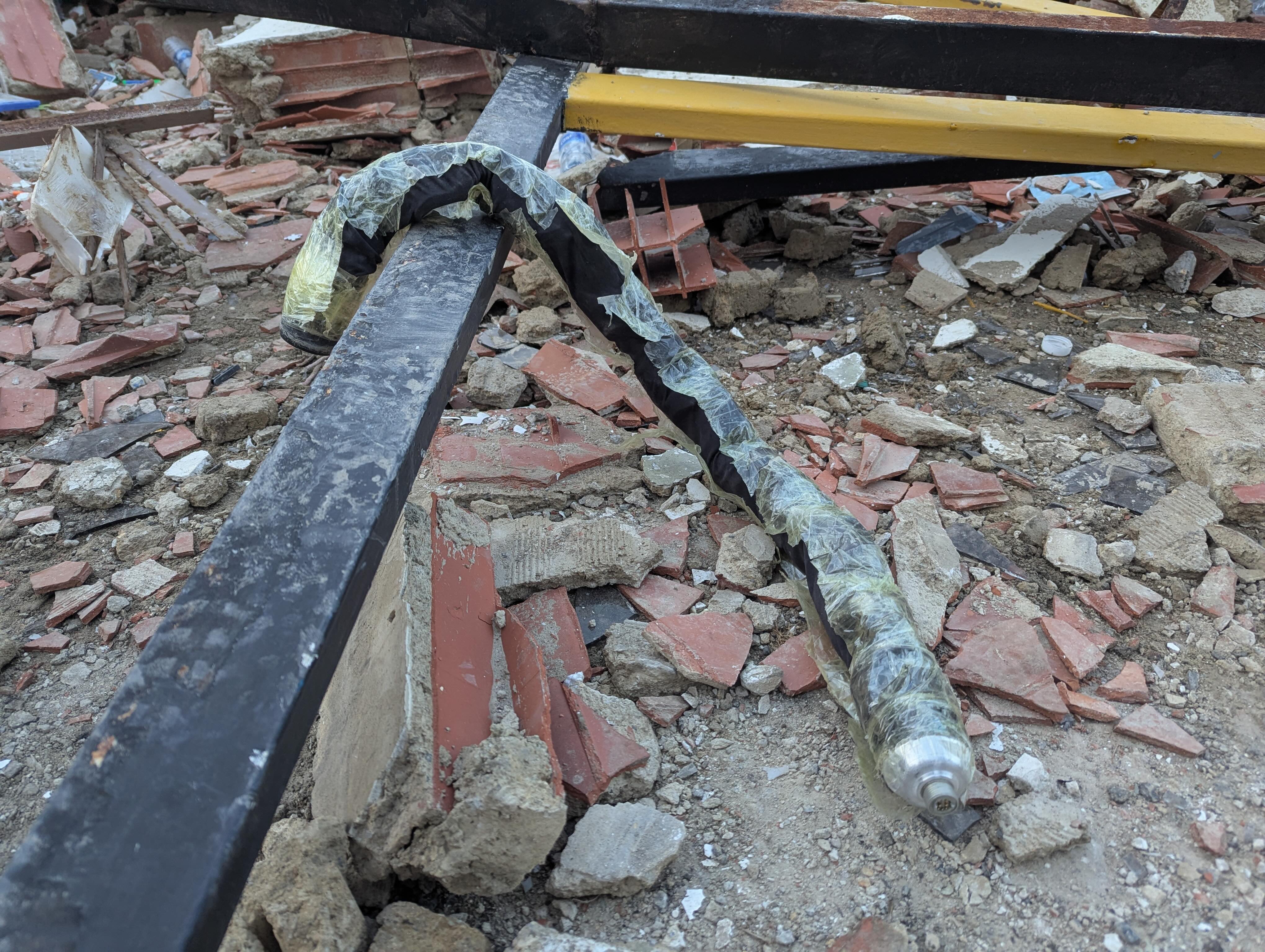
The snake robot climbing over building debris following two earthquakes that struck Venezuela on June 24, 2026.
Credit: Carnegie Mellon University
The snake robot climbing over building debris following two earthquakes that struck Venezuela on June 24, 2026. Credit: Carnegie Mellon University
The search for survivors
Once the plane landed in Venezuela on June 30, the team was greeted by US Marines before being handed over to the Venezuelan Red Cross to make their way to the hard-hit city of La Guaira in the northern part of the country. The researchers joined international teams from many different countries in searching several sites of collapsed buildings over the course of three days from June 30 to July 3.
In one case, a Jordanian rescue team with a dog had concluded that a collapsed apartment building had no survivors, whereas a Colombian team’s infrared cameras seemed to indicate the possible presence of a survivor. The Carnegie Mellon team deployed a snakebot into a small hole, while a Venezuelan father hovered nearby to see if the team could find his little boy beneath the rubble.
The snake robot went in about 15 to 20 feet without finding anybody. But the man whose son was missing still expressed his thanks to the robotics researchers for trying. “The people in Venezuela were beyond gracious,” Choset told Ars.
Choset also recalled local Venezuelans continually supplying the team with hot meals, along with handing them sports drinks and even a pound cake while they were assisting with search efforts.
“They were very caring, and they’re showing this kind of love, this kind of affection for us while they’re suffering a burden that no human should ever have to suffer,” Choset said.
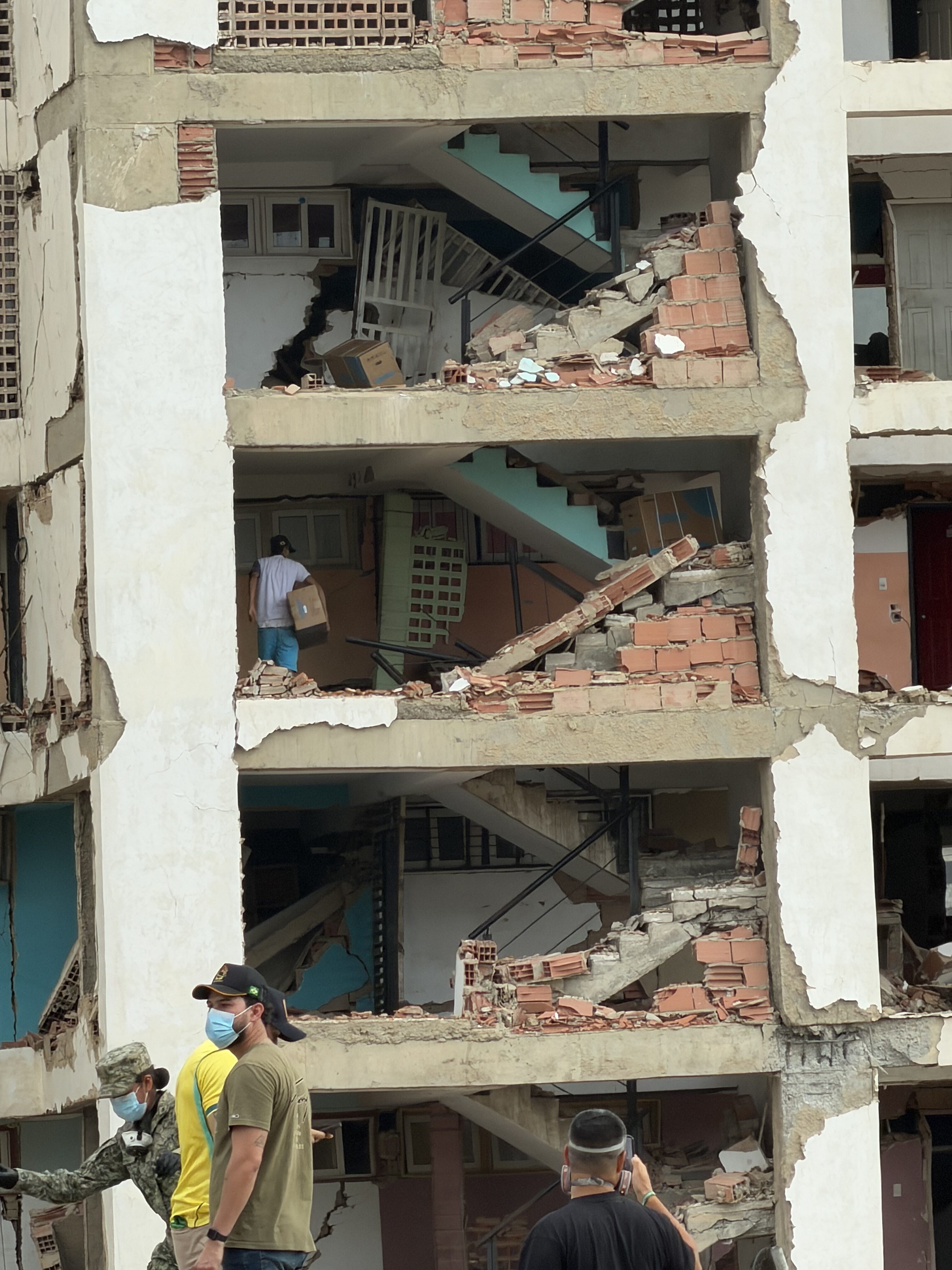
The open face of a damaged building in the aftermath of two earthquakes that struck Venezuela on June 24, 2026.
Credit: Howie Choset
The open face of a damaged building in the aftermath of two earthquakes that struck Venezuela on June 24, 2026. Credit: Howie Choset
The United Nations has requested nearly $300 million to help more than 1.3 million people affected by the earthquake, and the World Bank has put the cost of earthquake damage to buildings at $19.6 billion.
Incidentally, the Trump administration has collected more than $13 billion in revenues from Venezuelan oil exports and sales, according to calculations by the Financial Times. The United States seized control of Venezuela’s oil revenues after capturing President Nicolás Maduro in a military raid in January and securing the cooperation of vice president Delcy Rodríguez.
That oil revenue could presumably help to rebuild Venezuela. But sluggish economic recovery in the country raises questions about whether all the oil money has been made available for Venezuela’s use, according to the Financial Times. The Trump administration has not clarified how it’s handling the funds despite questions from US lawmakers.
The return and plans for the future
The snakebot team eventually had to return to the United States without finding a survivor. But nearly 6,500 people were rescued with the help of search and rescue teams from all over the world.
By coincidence, Choset ended up having a lengthy conversation with a woman whose husband, a security guard, was buried for eight days in the collapsed basement of a shopping center. He described himself as overjoyed when he later learned that the woman’s husband had been pulled out alive.
“She had two kids, and the age difference was the same as my two boys, so it hit home for me there,” Choset told Ars.
The Carnegie Mellon researchers have several ideas for how to improve the snake robot for possible future deployments. One of their priorities is to attach light-based sensors that can help perform 3D point cloud mapping of a snakebot’s environment—giving the robot operator and search and rescue teams a better sense of how to steer the robot beneath collapsed buildings.
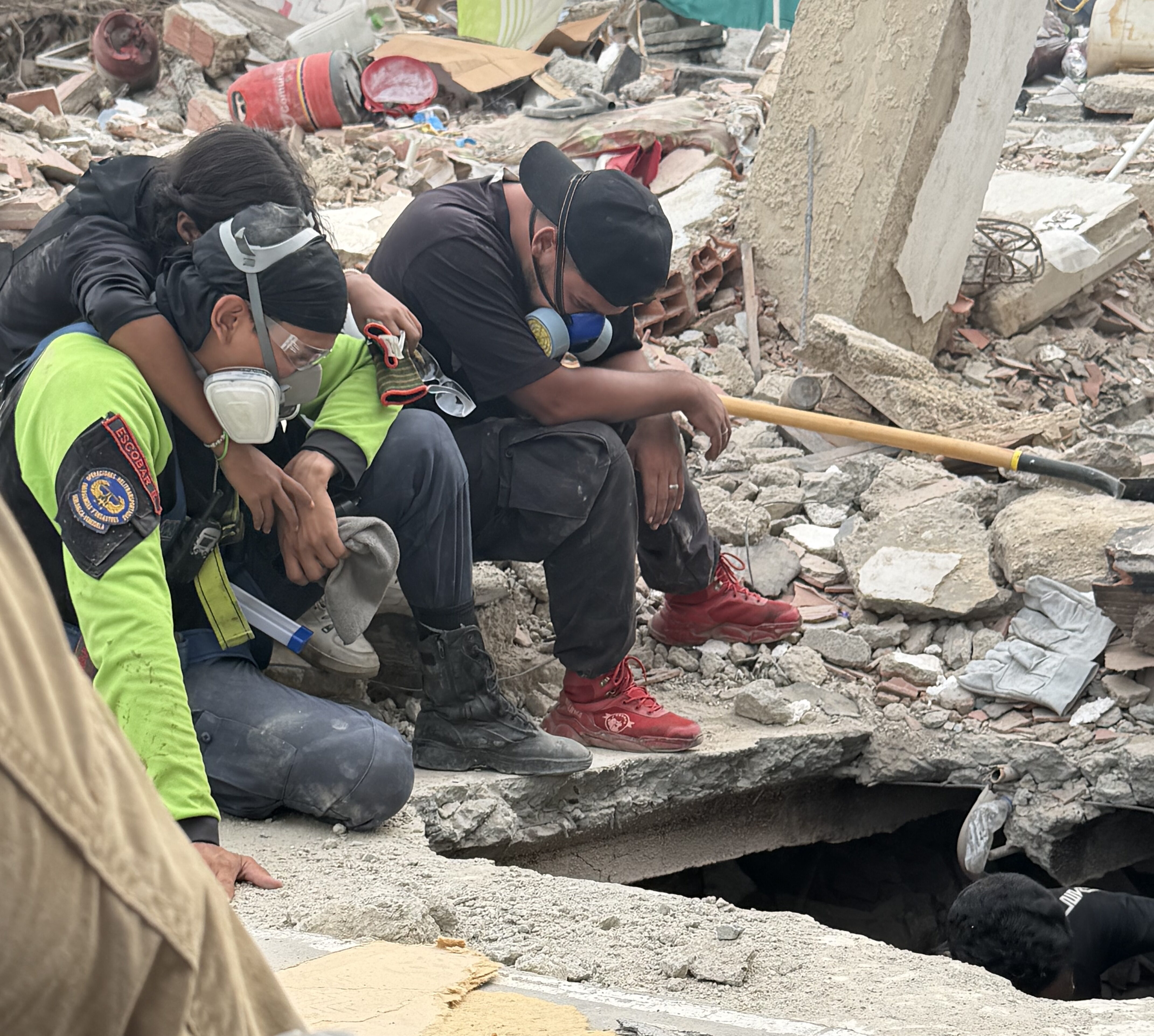
Mexican search and rescue workers from the Los Topos volunteer group react to finding four deceased people in collapsed building debris in Venezuela, following two earthquakes that struck on June 24.
Credit: Howie Choset
Mexican search and rescue workers from the Los Topos volunteer group react to finding four deceased people in collapsed building debris in Venezuela, following two earthquakes that struck on June 24. Credit: Howie Choset
Following their return, the team members also wrote up notes about their experiences to compile a to-do list for any unexpected journeys in the future. “The big thing is what to pack and how to pack,” Choset said.
The snake robots are still very much research prototypes rather than operational tools for search and rescue. But Choset credited his team’s prior experiences and training on search and rescue scenarios using the snakebots, which included cycles of breaking and fixing the robots to improve them. He also highlighted his lab’s philosophy of taking the time and energy to build robust robots capable of working reliably beyond a few research demonstrations.
“My students and staff took the attitude of, ‘Let’s make sure these are robust systems as much as possible,’” Choset said. “So that when we’re doing our research, we’re not constantly fighting with the robot to get things to work.”

Jeremy Hsu is a reporter exploring a wide range of topics across deep tech and AI. He has previously written for New Scientist, Scientific American, IEEE Spectrum, Wired, Undark Magazine and MIT Tech Review, among many other publications, about topics such as deepfakes, data centers, drones, battery tech, robotics, and GPS jamming. He also has a Master of Arts in Journalism from NYU, and a bachelor's degree from University of Pennsylvania in History and Sociology of Science, with a minor in English.






 English (US) ·