
 3 weeks ago
49
3 weeks ago
49

Published Jul 15, 2026, 6:00 AM EDT
And it's currently free to stream
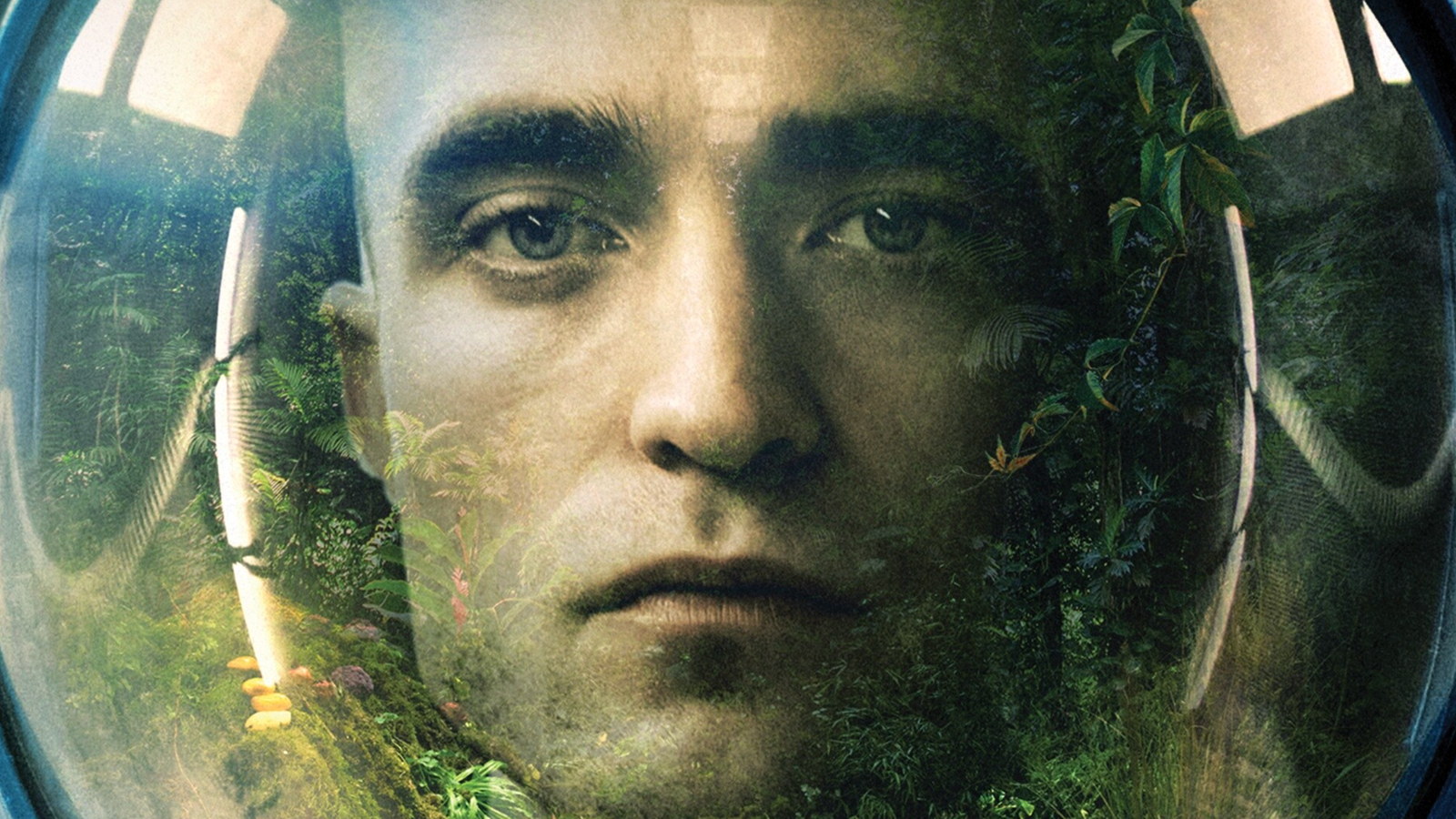 Image: A24
The first significant depiction of a black hole in film was in The Black Hole (1979), where two spacecraft react differently to the phenomenon after reaching the event horizon. This early portrayal wasn’t big on scientific accuracy, much like 2009’s Star Trek, which uses black holes to build tension and resolve its central conflict through time-travel shenanigans.
Then there’s Christopher Nolan’s Interstellar (2014), which makes excellent use of the black hole Gargantua to raise the stakes and drive the story forward with a great deal of scientific accuracy. Nolan’s depiction of Gargantua remained one of the very best in all of science fiction for years. Then came an A24 movie starring Robert Pattinson, which started streaming on Tubi on July 1 and does an even more impressive job.
Director Claire Denis (Beau Travail, Trouble Every Day) tells the odd, non-linear story of High Life (2018) in the most disorienting way imaginable. The space mission at the center of the film isn’t filled with gifted scientists trying to save a dying Earth. Instead, a group of death-row convicts are sent on a dangerous mission to extract energy from a black hole with the hollow promise of a reduced sentence.
The ship’s resident scientist, Dibs (Juliette Binoche), treats these criminals like disposable guinea pigs, subjecting them to dehumanizing experiments while trying to create life through artificial insemination in space. The story jumps between timelines to focus on Monte (Pattinson), who spends his time alone inside the shabby spacecraft while taking care of a child named Willow (Scarlett Lindsay). As Denis hones in on their everyday lives, we’re left to piece together the timeline in a film that explores mortality and redemption through the lens of an unconventional space drama.
 Image: A24
The process of extracting matter from a black hole isn’t something Denis made up for the film. The Penrose process is a very real scientific theory positing that energy can be extracted from a rotating black hole. The idea is that a rotating black hole drags spacetime around with it, creating a region outside the event horizon called the ergosphere. If an object enters this region and splits in just the right way, one piece can fall into the black hole while the other escapes with more energy than the original object had, effectively extracting some of the black hole's rotational energy.
In High Life, the black hole becomes a one-way destination for the convicts, without any hope of escape. The extreme nature of the space mission makes it clear that the circumstances back on Earth are dire, although the exact details are never spelled out. Over time, the literal cosmic void of the black hole feels more claustrophobic because of the stark isolation felt by those on this mission, who are forced to survive like disposable pawns on a cramped spaceship.
As most of the inmates are victims of Dibs’ experiments, their loss of autonomy is directly tied to a lack of personal purpose. While it is impossible to know what lies within or beyond a black hole — as its event horizon almost certainly leads to death — it can also be seen as a miraculous leap of faith into the great unknown.
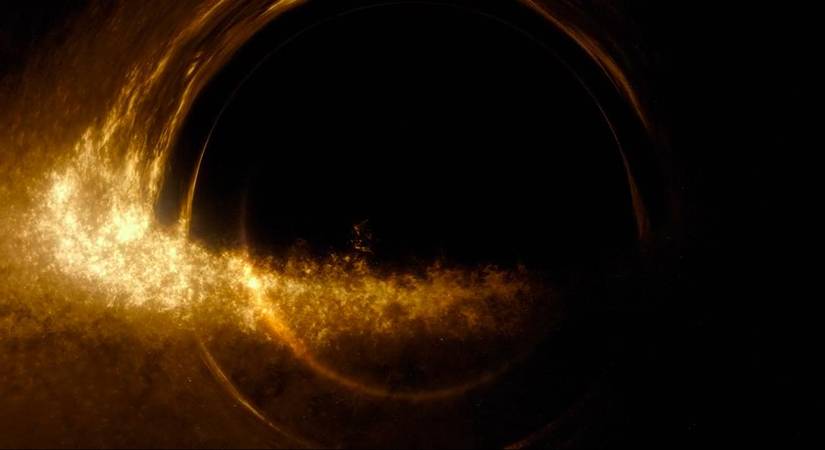 The black hole in High LifeImage: A24
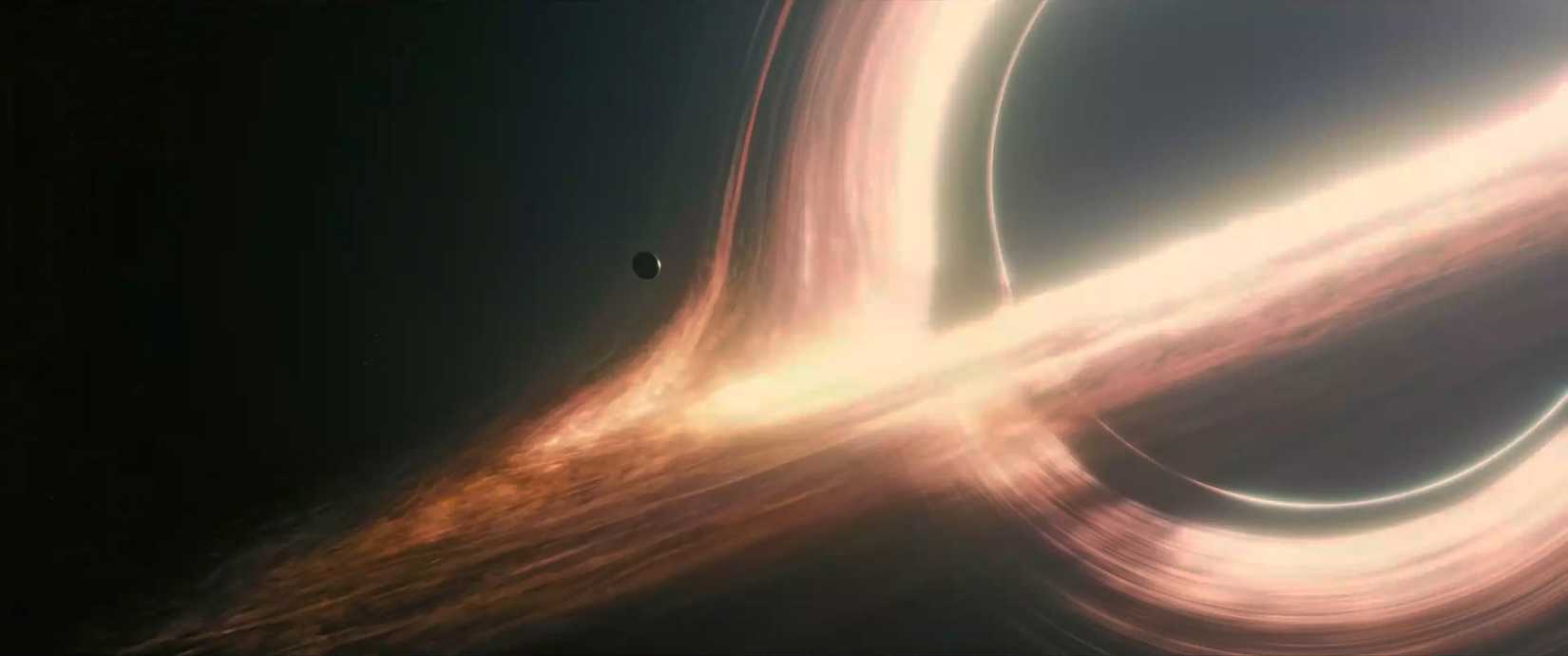 The black hole in InterstellarImage: Warner Bros.
In contrast, Interstellar uses Gargantua as a gateway to endless possibilities, both good and bad. It causes extreme time dilation due to its greater gravitational pull and houses potentially habitable exoplanets around it. Inside the black hole, Cooper (Matthew McConaughey) is able to perceive and navigate time, allowing him to transmit the information required for Murphy (Jessica Chastain) to save humanity. Nolan’s film frames love as a tangible force that can change the fabric of reality, since Cooper’s love for his daughter is the anchor he needs to communicate with her through time. To the rest of the universe, the true nature of black holes remains a mystery, albeit one that’s heavily romanticized.
High Life’s refusal to romanticize black holes and the Penrose process is among its many strengths. Denis portrays the black hole like “a crocodile’s eye,” a vertical slit pupil that absorbs so much light it looks like a void. That design matched up with the first-ever real-life photo of a black hole taken one year after the film’s release in 2019. “It was so strange, really. The black hole, it looks like ours,” Denis told Hyperallergic, while stressing that all credit goes to Olafur Eliasson, the special effects artist who worked on the film’s black hole.
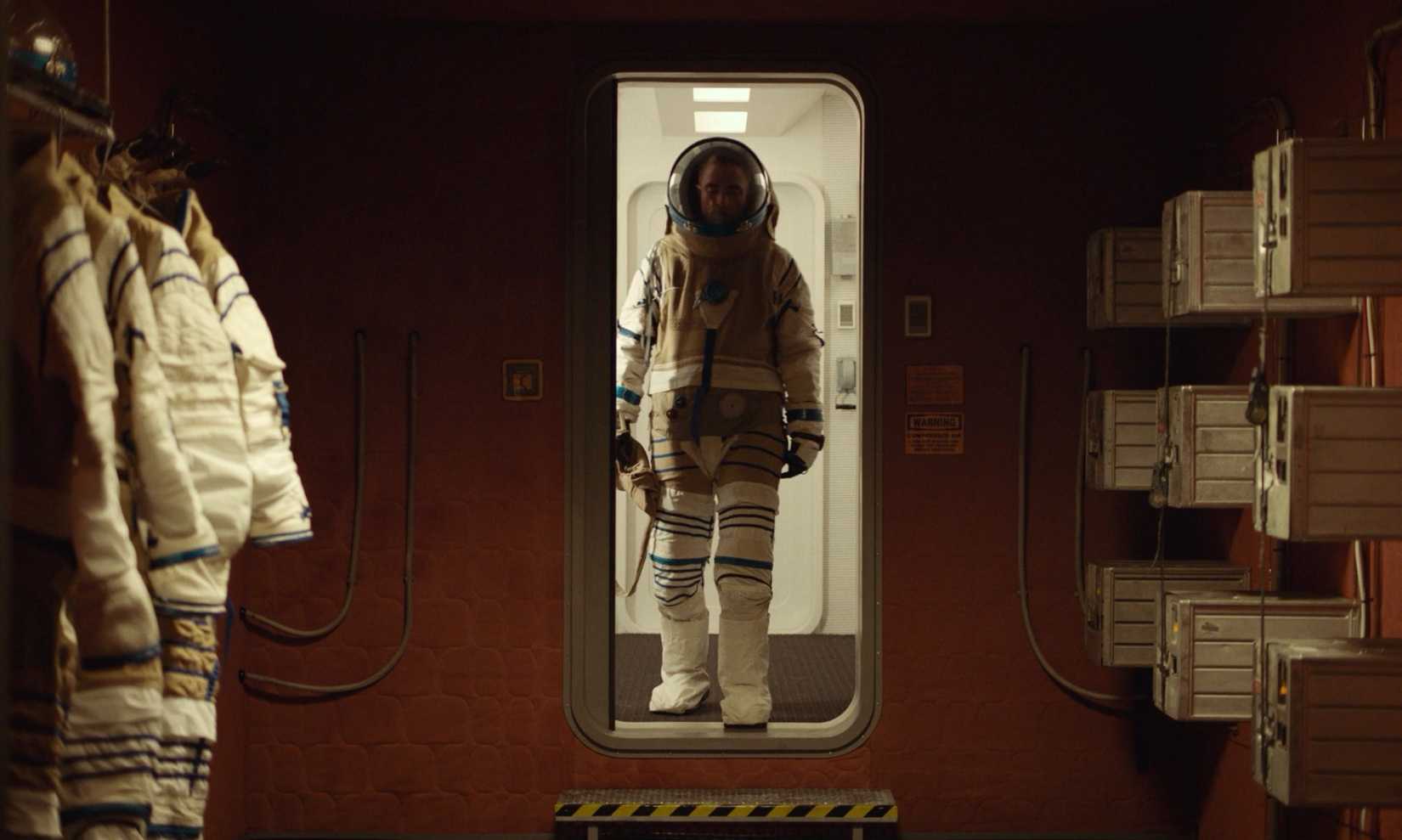 Image: A24
Apart from being accidentally true-to-reality, the black hole in High Life feels more existential — and more plausibly connected to its characters. High Life grounds its black hole in its character fates rather than the spectacle of it all. Where Interstellar invites awe, Denis uses the same cosmic phenomenon to reinforce the emotional isolation (and later on, tender hope) of the people aboard the ship. That smaller, more intimate perspective gives the black hole a different kind of power.
While the black hole can essentially tear anyone in its vicinity to ribbons, it might also provide an escape from the pain of being forever stuck in a prison-like space vessel. This might not be as firmly life-affirming as Interstellar, but this sliver of hope feels disarmingly precious in a film as bleak and disturbing as High Life.
Despite having markedly different approaches to black holes and what they might represent, both Interstellar and High Life bring intriguing perspectives to space sci-fi and its many tropes. High Life is undoubtedly the more overlooked entry here, deserving more eyeballs for its heady, bittersweet exploration of humanity on its last legs.
High Life is streaming for free on Tubi.






 English (US) ·