
 3 weeks ago
53
3 weeks ago
53
Also: Spooky action at the LHC, Ice Age psychoactive use, yeast for building homes on Mars, and more.
Credit: Greg Stewart, SLAC National Accelerator Laboratory
It’s a regrettable reality that there is never enough time to cover all the interesting scientific stories we come across. So every month, we highlight a handful of the best stories that nearly slipped through the cracks. September’s list includes a tantalizing hint of the elusive dark matter at the LUX-ZEPLIN detector; entangled Z bosons at the Large Hadron Collider; possible use of psychoactive substances in the Late Pleistocene; and an intriguing technical description of a telescope attributed to Galileo.
A hint of dark matter?
Physicists believe dark matter makes up roughly 85 percent of matter in our universe, with the strongest (but not only) candidate being so-called weakly interacting massive particles (WIMPs). But directly detecting WIMPs, or other alternative hypothetical dark matter particles, has eluded physicists for decades. We might have our first glimpse, however, courtesy of the LUX-ZEPLIN detector buried deep in a gold mine in South Dakota. Those potentially exciting results were presented in a scientific talk at the 2026 TeV Particle Astrophysics conference in Japan, with a preprint available on the arXiv. (It has been submitted to Physical Review Letters for peer review.)
The announcement came with strong caveats: the signal is just a hint, well below the threshold needed to confirm discovery, and might just be a statistical fluke. Anyone who regularly follows dark matter news knows that past tantalizing anomalies evaporated as more data came in. But the LUX-ZEPLIN team was unable to account for this event and decided to report their result to the broader physics community. They are still collecting data, as is the XENONnT at the Gran Sasso National Laboratory in Italy. And China’s PandaX detector is currently being built.
If it turns out to be a WIMP that struck a xenon nucleus, it’s not what physicists would predict. The event had a higher nuclear recoil energy than expected, which means the detector should have also picked up several lower-energy WIMPs; it did not. That has theoreticians scrambling to come up with alternative models. Perhaps the interaction rate increases with collision energy. Or perhaps WIMPs have an internal structure, like an atom, and only interact if hit hard enough. Or its coupling to ordinary matter could depend on its momentum.
arXiv, 2026. DOI: 10.48550/arXiv.2609.02823 (About DOIs).
Spooky action at the LHC
Credit:
© 2009-2026 CERN
Credit:
© 2009-2026 CERN

Cornell University physicist N. David Mermin once described quantum entanglement as “the closest thing we have to magic,” since it means that disturbances in one part of the universe can instantly affect distant other parts of the universe, somehow bypassing the cosmic speed-of-light limit. Albert Einstein memorably dubbed it “spooky action at a distance.” Today, entanglement is the foundation for quantum computing and next-generation sensors, among other applications.
Maintaining quantum entanglement is usually a delicate process; any interference can cause entangled particles to decohere quickly. Despite this, in 2023, physicists found evidence of entanglement between pairs of top quarks produced at the Large Hadron Collider’s ATLAS experiment, raising the possibility that large colliders could be used as an investigative tool to study spooky action at a distance. Now ATLAS physicists have observed entanglement in pairs of Z bosons, according to a paper published in the journal Physical Review Letters.
Z bosons are produced when a Higgs boson decays and are themselves extremely short-lived particles, decaying into pairs of electrons and muons. The ATLAS detector precisely tracks those decay patterns. The physicists used that data to reconstruct the angles at which electrons and muons were emitted to infer the spins of the original Z bosons that preceded them. The authors claim that this is the highest-energy example of entanglement observed to date
Physical Review Letters, 2026. DOI: Physical Review Letters.
Is yeast the key to 3D-printing Martian homes?
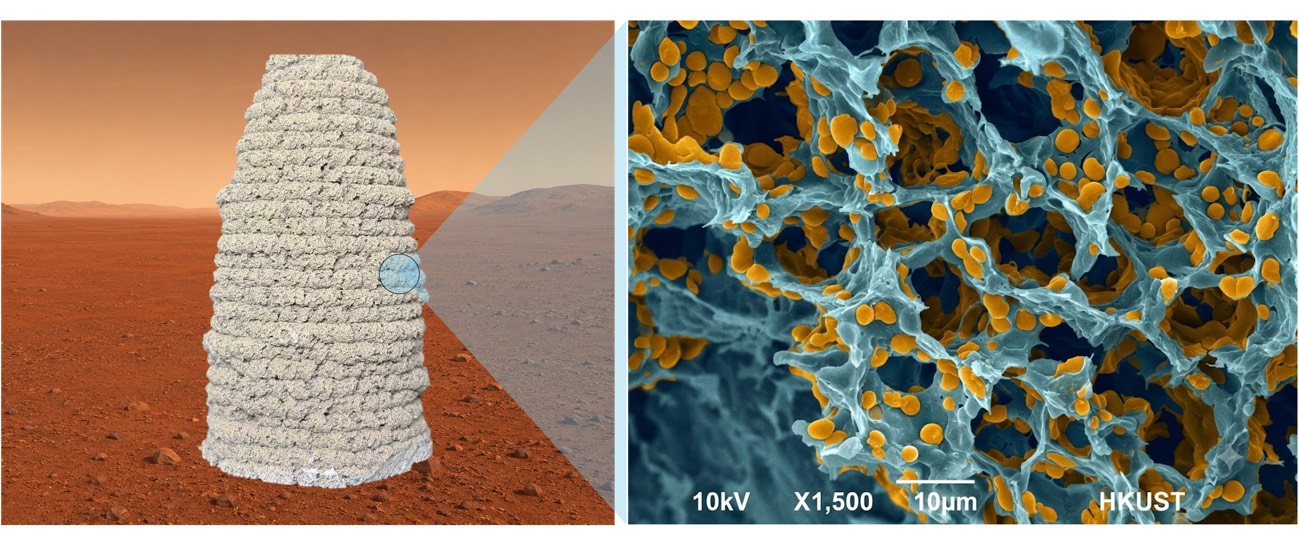
Dreams of colonizing Mars face many significant obstacles given the harsh conditions (for humans) on the red planet—including housing. Transporting anything from Earth to Mars is costly, and building materials are especially so. That’s why Hong Kong engineers devised a recipe to combine Martian rocks with terrestrial gelatin and yeast, which then hardens into a durable “living” building material on par with cheap concrete, according to a paper published in the journal Chem Circularity.
Co-author Jishen Qiu of The Hong Kong University of Science and Technology drew inspiration from the hardening of freeze-dried fruits, noting that the Martian environment has extremely low temperatures and pressures akin to freeze-drying. The team experimented with various mixtures of sand and glue, the latter made from gelatin and yeast. But it’s a special yeast coated with sticky proteins similar to those mussels use to adhere to rocky surfaces. The gelatin provides scaffolding for the cells to grow, and the sand provides the structure and mass. Qiu et al. tested their concoction in simulated Martian conditions, 3D-printing small domes the size of wine corks.
They found that the mixture freeze-dries after exiting the nozzle, leaving a light, porous foam with a compressive strength of 10 to 12 megapascals. Per the authors, that is strong enough to build a one- or two-story structure on Earth, where gravity is three times stronger than on Mars, so it should be possible to use their material to make much higher structures on the red planet. It’s less energy-intensive than heating and melting Martian rocks or moon dust into bricks, another approach that’s been proposed. And yeast recovered from dismantled structures could be easily recycled to build new ones.
Chem Circularity, 2026. DOI: 10.1016/j.checir.2026.100120.
Ice Age people took psychoactives
Credit:
Fakhri
Credit:
Fakhri
There is ample evidence that humans in many cultures throughout history used various hallucinogenic substances in religious ceremonies or shamanic rituals, at least since the Neolithic period and the advent of farming and fermented alcoholic drinks (like barley beer). That includes not just ancient Egypt but also ancient Greek, Vedic, Maya, Inca, and Aztec cultures. For instance, in 2024, archaeologists found that an ancient Egyptian vase in the shape of the deity Bes showed traces of chemical plant compounds known to produce hallucinations. And in 2022, archaeologists uncovered evidence that an ancient Peruvian people laced the beer served at their feasts with hallucinogens.
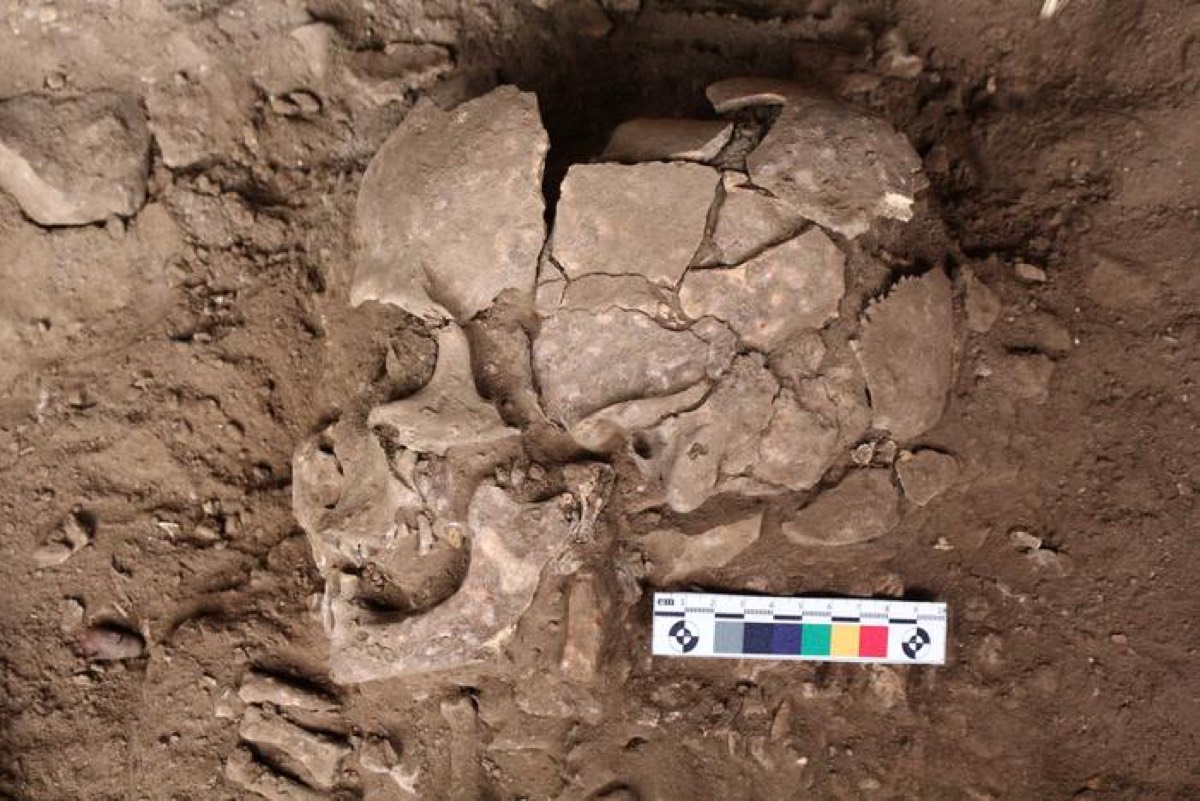
Now Griffith University archaeologists have discovered that humans might have been using mind-altering subsances—by sucking and chewing on betel nuts—as early as the Late Pleistocene period some 25,000 years ago, according to a paper published in Science Advances. Betel nut consumption is common in India and the South Pacific, usually by mixing the seed with slaked lime (which releases the psychoactive compounds) and a few other ingredients to make a “quid,” then chewing it. The effects include mild euphoria and high alertness.
The Griffith team discovered two rare early human forager skeletons from the Indonesian island of Sulawesi, concluding that one dated to 25,000 to 16,000 years ago and the other to 7,600–6,300 years ago. Both skeletons had deep rounded grooves in their teeth, apparently caused by constantly sucking on whole betel nuts. By soaking betel nuts in artificial saliva, the authors concluded that this would release enough arecoline to alter brain function, although the psychoactive effects would be milder.
The authors posit that people from that period sucked on betel nuts to relieve tooth pain, given that these populations are known to have had bad teeth and arecoline is a natural analgesic. But the seeds are abrasive and, over time, wore down the foragers’ teeth so much that inner pulp chambers were exposed. “So while this habit may have been a remedy for toothache, years of prolonged nut-sucking eventually caused much worse dental health problems, creating a cycle of continued habitual use,” said co-author Adam Brumm.
Science Advances, 2026. DOI: 10.1126/sciadv.aei1901.
New insight into Galileo’s telescopes
Historians generally agree that a German-born eyeglass manufacturer in the Netherlands, Hans Lippershey, invented the first bona fide telescope in the 1590s. Similar instruments made by other inventors soon popped up, and by 1609, people could buy “spyglasses” in local shops in Paris. Within a few months, the phenomenon had spread to Italy and caught the attention of Galileo Galilei, who fashioned his own telescopes to make ground-breaking astronomical observations that helped the Copernican model of the solar system supplant the Ptolemaic worldview that had dominated for centuries.
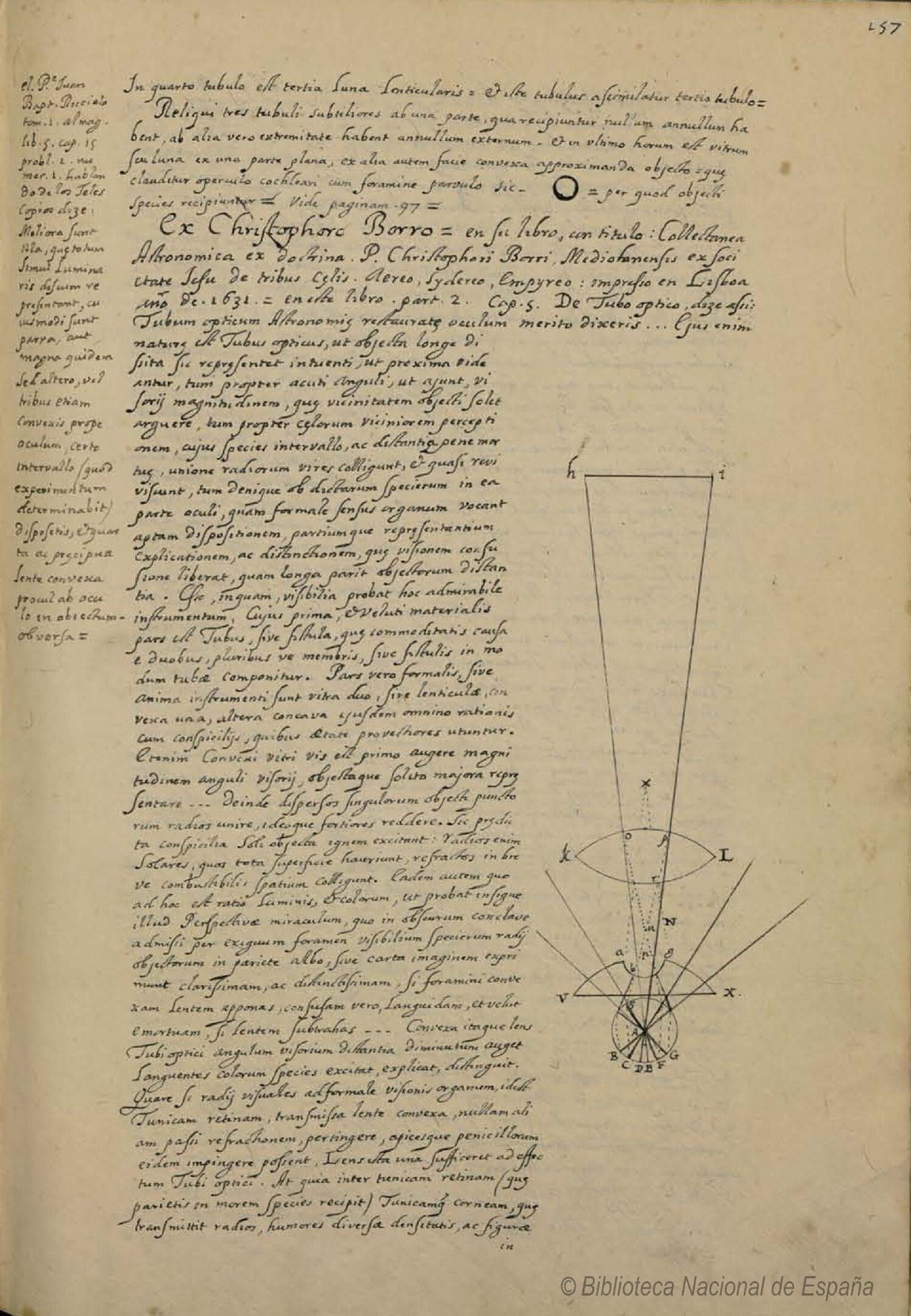
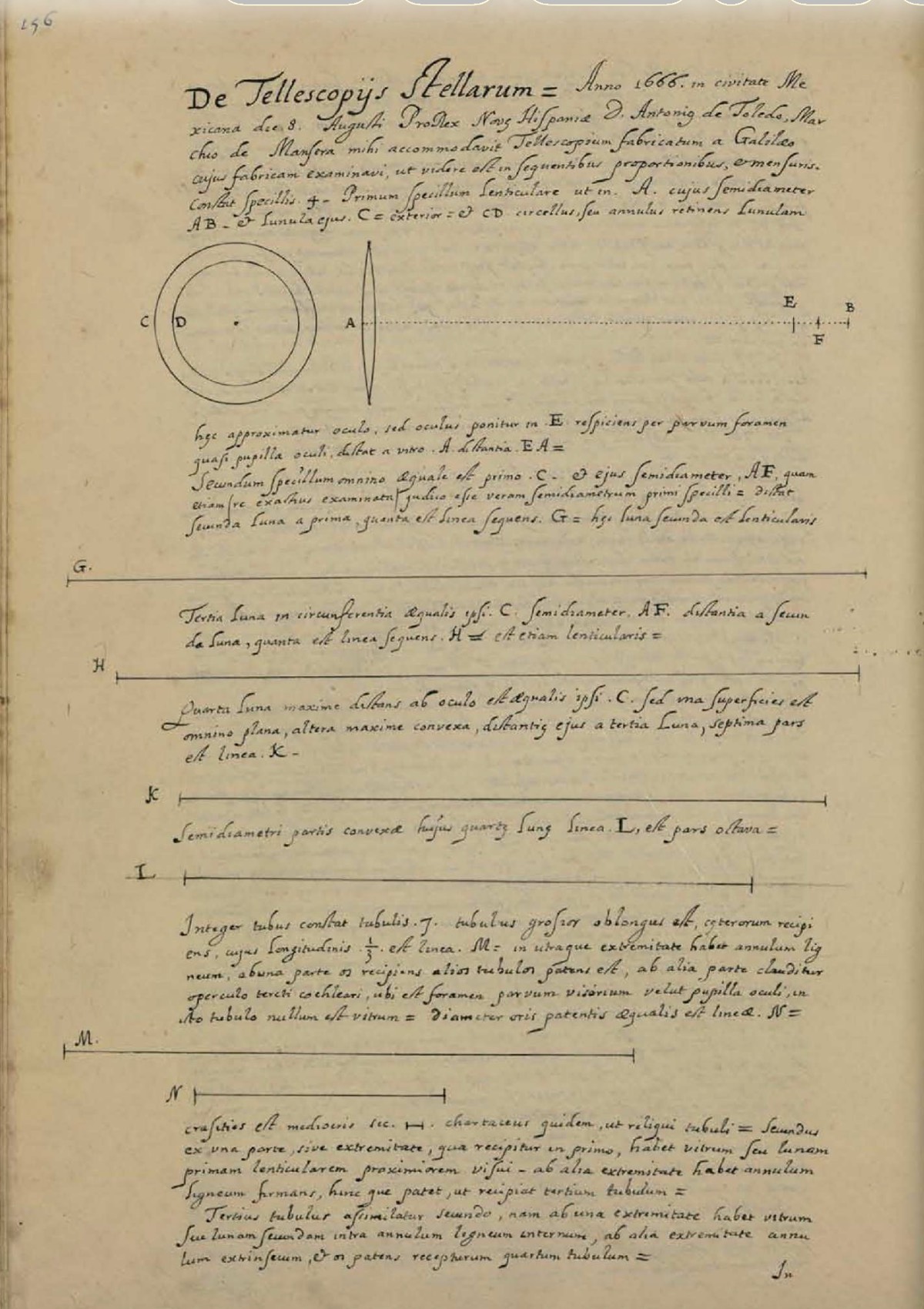
Galileo swore never to sell any of his telescopes, and he didn’t document any technical analyses of his instruments either; only eight such telescopes survive; none can unequivocally be attributed to the astronomer. But a historian at the University of Limerick in Ireland has uncovered a previously unknown 17th century description of a four-lens telescope attributed to Galileo in a 1666 manuscript written by a Spanish Dominican friar, detailing his findings in a paper published in the journal Annals of Science.
The text in question is De Tellescopiis Stellarum, by Friar Ignacio Muñoz. Author Jose Maria Moreno Madrid was perusing the treatise when he came across the friar’s analysis of the telescope, complete with diagrams and drawings of the instrument. The analysis was specifically requested by the viceroy of New Spain as a test of the friar’s scientific expertise. Muñoz proposed improvements to the Spanish fleet to King Philip IV in hopes of ending his exile to Portuguese India. Muñoz noted in his manuscript that the telescope belonged to the king and was made by Galileo.
According to Madrid, Galileo had presented Philip IV and his wife with one large and two smaller telescopes to curry favor while working on the problem of longitude. So Muñoz’s description could be referring to one of those three telescopes. The first four-lens telescopes appeared around 1643, but if Madrid’s analysis is correct, this would mean the innovation occurred much earlier, in 1630 at the latest, and could be attributed to Galileo. And Muñoz’s 1666 description would be “the most detailed technical analysis of a telescope provenly made” by the Renaissance astronomer.
Annals of Science, 2026. DOI: 10.1080/00033790.2026.2661195.
19th century “cosmoramas” as virtual home tours
Credit:
Public domain
Credit:
Public domain
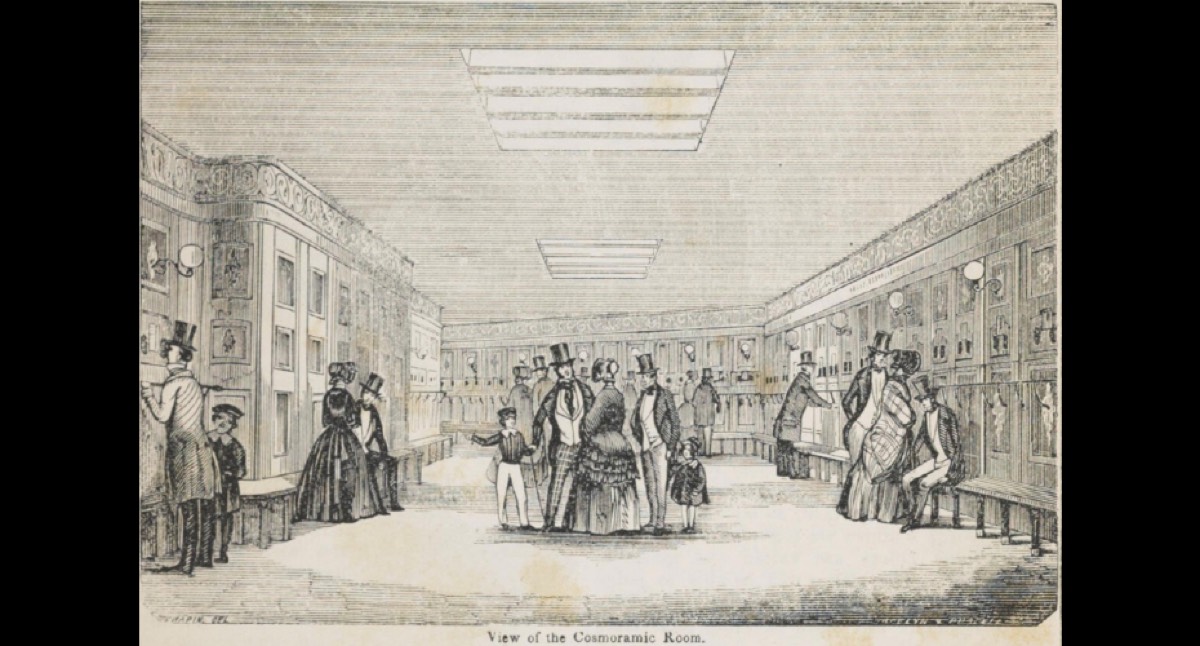
Peep shows, aka raree shows, were wildly popular in 17th and 18th century Europe as a form of immersive entertainment by traveling showmen. Pictures or objects were mounted inside a box or wooden cabinet and viewed through a small hole or magnifying glass, creating the illusion of depth perception, sometimes illuminated with candles to create special lighting effects. By the 19th century, peep shows had evolved into cosmoramas, collected in galleries housed in urban bazaars across Britain and Ireland. The cosmoramas weren’t just used for entertainment, but also as a real estate marketing tool, according to a paper published in the journal Early Popular Visual Culture.
John Plunkett, a historian at the University of Exeter, was researching the history of cosmoramas and similar visual technology in the UK and Ireland as part of a broader European project. While poring over advertisements and articles in newspaper archives from the 1820s onward, in order to map the emerging use of cosmoramas around the world, he stumbled on a London auctioneer and surveyor, Brooks and Hedger, who were using cosmoramas in the 1830s to market various estate properties for sale, offering views of homes and grounds including “aerial perspectives.”
Their offices were on Old Bond Street, close to the Cosmorama Rooms of Regent Street, so clearly the firm was capitalizing on the current fad. Per Plunkett, producing cosmoramas would have been a costly investment for the firm, requiring an artist to visit each property and create paintings or drawings from different angles, so this strategy was likely reserved for estates and luxury properties. The practice seems to have been abandoned by 1860, but Plunkett likened it to the virtual tours or walkthroughs employed by online real estate listing services like Redfin, Zillow, or Rightmove in the UK.
Popular Visual Culture, 2026. DOI: 10.1080/17460654.2026.2700727 .

Jennifer is a senior writer at Ars Technica with a particular focus on where science meets culture, covering everything from physics and related interdisciplinary topics to her favorite films and TV series. Jennifer lives in Baltimore with her spouse, physicist Sean M. Carroll, and their two cats, Ariel and Caliban.








 English (US) ·