
Serving tech enthusiasts for over 25 years. TechSpot means tech analysis and advice you can trust.
TL;DR: Rabbit is moving beyond the R1, the small orange AI device that drew attention at CES 2024 but struggled to deliver on many of its early promises. The company this week introduced OS3, an agentic software platform that can work across desktop computers and mobile messaging services.
Rabbit OS3 connects to Windows, Mac, and Linux computers through a local agent installed on the machine. The platform can interact with desktop programs, files, and web pages. Rabbit says it can also write and debug code through its Direct Large Action Model, or DLAM, technology.
It is available through a browser, Telegram, and iMessage, and it can also run on the R1. Rabbit is no longer manufacturing the device, however, and is shifting its focus to software that works with hardware people already own.
Users can connect as many as five computers to one OS3 account. The system is designed to determine which machine should handle a request. For example, someone could send a message from a phone asking OS3 to update a spreadsheet stored on a home or office computer.
Rabbit is positioning the service as a single, ongoing workspace rather than a collection of separate chat windows. Jesse Lyu, Rabbit's founder and CEO, called it a "brain dump" interface in an interview with Wired, where users enter a task and the system pulls together the tools and AI models needed to complete it.
The service uses a bring-your-own-key model. Rabbit does not charge a monthly subscription fee for OS3, but users must provide their own API keys from companies such as OpenAI or Anthropic. They can also connect local open-source models.
The platform can install third-party agent skills from a public URL, according to Rabbit. That approach fits with the company's broader effort to make its software less dependent on its own models and services.
Lyu said the company has spent the past year and a half improving the R1 instead of rushing to build a successor. He said Rabbit has released about 50 updates during that period and has opened the device to third-party agents, including OpenClaw and Hermes AI.
"Today, if you look at our R1 device, it's completely different from day one," Lyu says. "We're more open; the device is yours, you decide what to do with the device."
The R1 was introduced as a dedicated AI assistant that could carry out tasks in services such as Uber and DoorDash. It received substantial attention before launch, but reviews found that its agent features often did not work as expected.
Lyu said the device was still a business success for Rabbit. He said the company has shipped more than 100,000 R1 units worldwide, recorded return rates below 5%, and achieved gross margins of about 45% to 50% on the hardware.
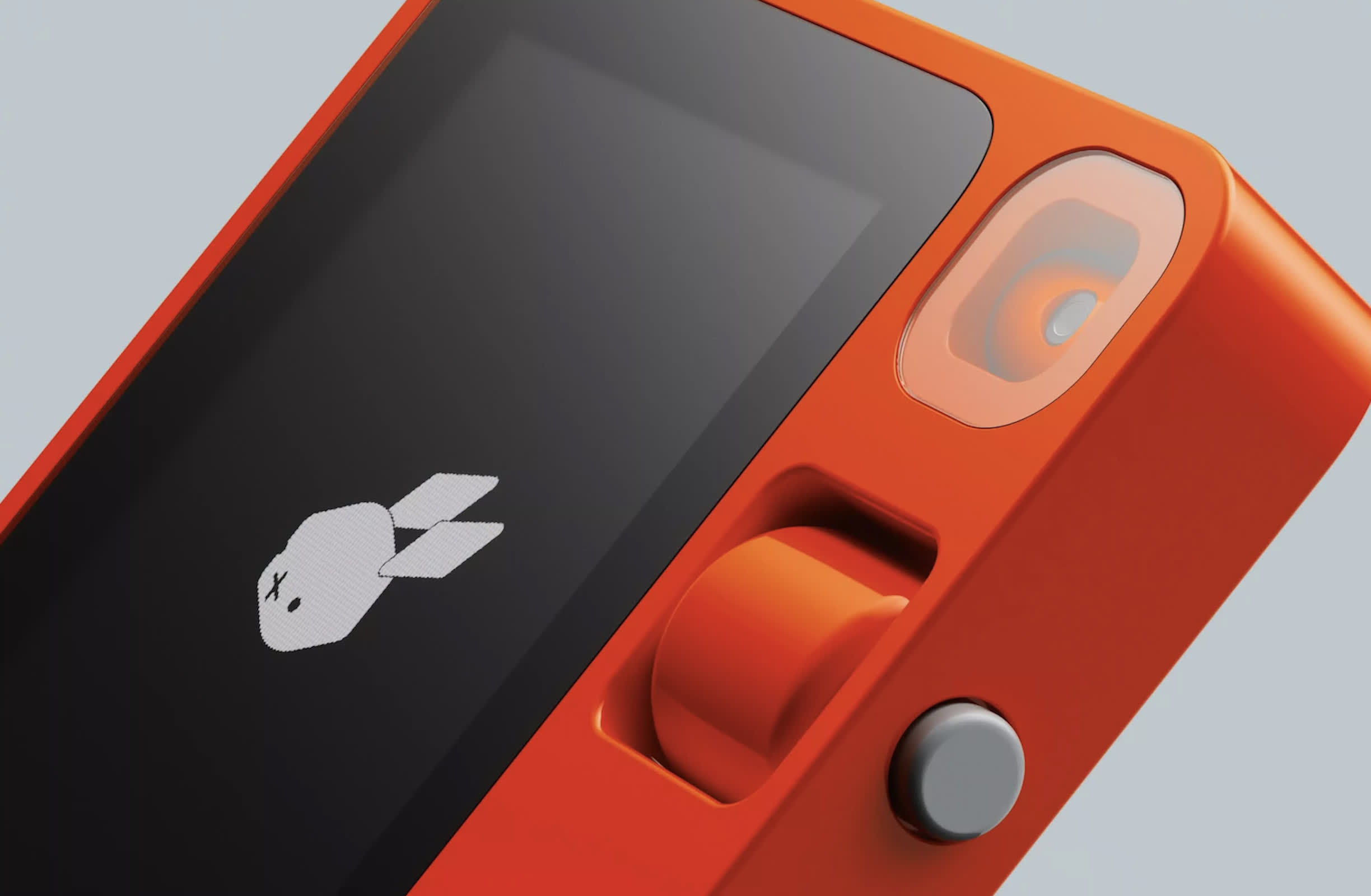
"Internally, from an engineering perspective – we didn't make the wrong bet," Lyu says. "I think the challenge is really being extremely limited in resources, team-wise and money-wise, compared to other AI studios that raised billions of dollars."
Lyu said Rabbit has raised about $60 million and employs 15 people. The company ran into financial pressure last year after a planned launch in India was blocked by regulations. Some employees later went on strike, saying they had not been paid for months. Lyu said Rabbit subsequently raised additional funds and is now in stable condition.
"There are no issues with the company's health," he says.
Rabbit is still selling the R1 while supplies last, but it has no plans for an R2, according to Lyu. Its next hardware product is expected within months and will be a Cyberdeck aimed at "vibe coding." The device will run OS3.
Rabbit says OS3 does not store, copy, or sell data from local files. Files remain on the user's computer, the company says, although conversation histories and memory logs are stored on Rabbit's servers. When a task requires AI-model reasoning, the related prompts are routed through Rabbit's systems to the user's chosen model provider.
Lyu said he has used the platform for routine work, including moving sales data from a weekly Excel report into a master spreadsheet. He also said he had OS3 represent him in a Slack conversation with an engineer while he was unavailable. The agent identified itself as acting for Lyu and used files from his computer to respond to questions.
OS3 is now available to the public. For Rabbit, it is a chance to test whether its original idea works better as software than as a standalone gadget.







 English (US) ·