
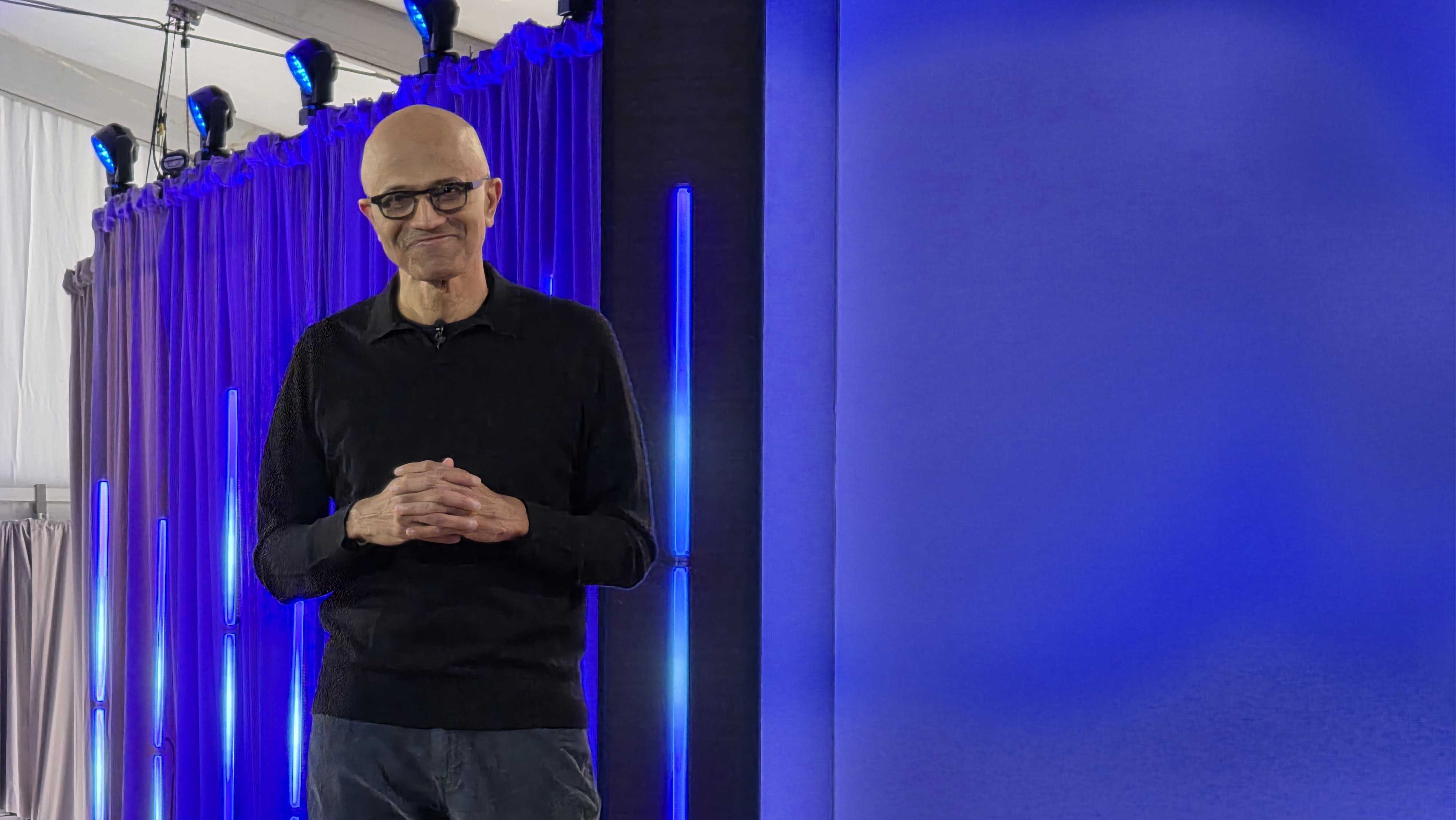
Tech companies, including those in Silicon Valley and others outside of the set like Microsoft, have been through various guises through the years. Plenty of the old tech giants, like IBM and Toshiba, continue to enjoy success in the 21st century due to a chameleon-like quality that keeps them innovating and bringing in new revenue streams.
Evolve or die
The Microsoft CEO Satya Nadella wrote these words in his first email to company employees when he took the reins from Steve Ballmer.
Quote of the day
This article is part of TechRadar Pro's QOTD project to provide an insight into the minds of the brightest and most recognized figures in the technology industry today and in years gone by. Read the full series here.
In this opening salvo, he set out his vision that the next decade of computing would be dominated by the proliferation of devices and the rise of more accessible "intelligence" – hinting at the rise of AI in some form.
The company that he was to lead would embark on a strategy that would "harness the power of software" and deliver this through a network of connected devices for every organization and individual. The innovation that he referenced largely came in the form of a move away from a desktop-oriented mindset and one that was more embracing of the cloud.
Pivoting for AI
As the decade since this email wore on, Microsoft stayed true to that mantra. And, in the last few years, Nadella led the company through another significant shift in light of the rise of AI.
When ChatGPT burst onto the scene, Microsoft rushed to forge ties with the company and has aggressively added AI into its core products and services – from Bing to Windows.
While Azure continues to scale at a tremendous pace, surpassing $100 billion in revenue, the company has seen a mixed picture on the AI front. That's not due to a lack of demand, but to a shortage of physical space and energy to power these services and to expand capabilities in model training, deployment, and usage.






 English (US) ·