
 3 weeks ago
34
3 weeks ago
34
Key Takeaways
- U.S. spot Bitcoin ETFs experienced approximately $5 billion in capital outflows throughout Q2 2026
- June alone accounted for $4 billion of total Bitcoin ETF withdrawals
- Private credit sector confronted $15.6 billion in withdrawal demands during the same period
- Ten out of sixteen business development companies exceeded their standard 5% quarterly redemption thresholds
- Despite a recent pause in Bitcoin ETF selling pressure, institutional appetite remains subdued
- Current Bitcoin market dynamics show futures demand marginally positive while spot demand stays in negative territory
The period from April through June 2026 proved extraordinarily challenging for cryptocurrency exchange-traded funds and alternative credit vehicles alike. American-listed spot Bitcoin ETFs witnessed investor withdrawals approaching $5 billion across the quarter, with the month of June representing $4 billion of that total. BlackRock’s cryptocurrency fund experienced particularly notable redemptions.
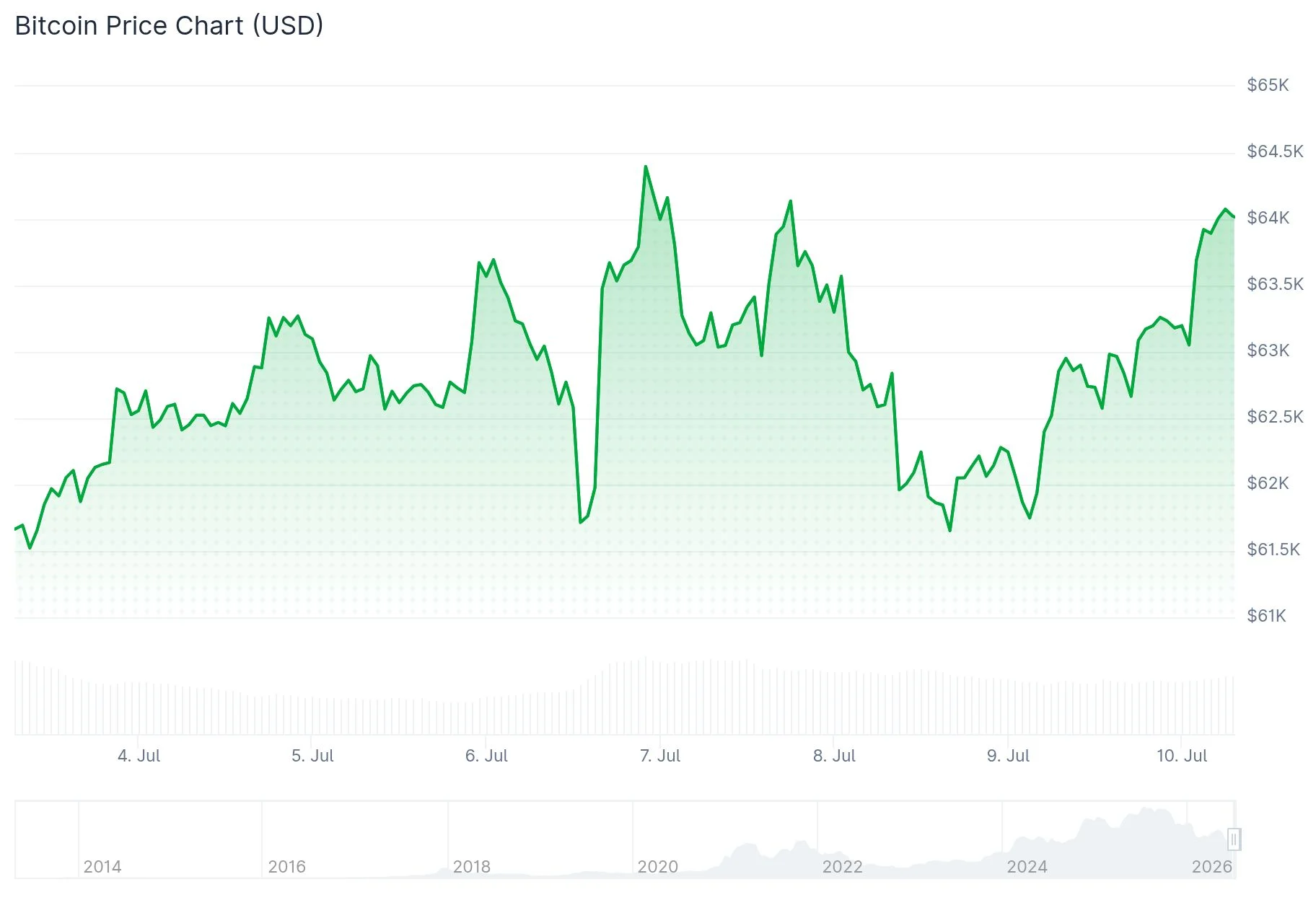
Investor capital gravitated toward artificial intelligence equities and high-profile market events such as SpaceX’s anticipated public offering. Bitcoin’s price declined approximately 14% during the quarter, dipping beneath the $60,000 threshold and marking its third consecutive quarterly decline.
 Bitcoin (BTC) Price
However, turbulence within private credit markets proved even more severe. The $2 trillion private credit industry faced withdrawal requests totaling $15.6 billion throughout Q2. The vast majority of funds proved unable to satisfy these redemption demands in full.
Business development companies typically enforce quarterly redemption limitations of 5%. According to Fitch’s analysis, requests surpassed this threshold at ten among sixteen tracked entities. Mean redemption requests climbed to 10.3% of outstanding shares, representing an increase from the prior quarter’s 9.7%. One particular fund confronted requests reaching 38.1%.
Capital inflows to these investment vehicles contracted by roughly 56% on average. The majority concluded the quarter with net capital outflows approximating 3% relative to their previous quarter’s net asset valuations.
Fitch’s outlook suggests elevated withdrawal activity will persist. Unfulfilled Q2 redemption requests will cascade into subsequent quarters, maintaining sustained pressure on fund liquidity.
Bitcoin ETF Redemptions Pause, Though Underlying Strength Questionable
Regarding Bitcoin ETF activity, conditions have shown tentative signs of stabilization. A continuous ten-trading-day period of net withdrawals aggregating $2.7 billion concluded recently. Following this, ETFs registered cumulative net deposits exceeding $500 million over three consecutive sessions, although Wednesday delivered renewed net outflows of $84.9 million.
Swissblock, a cryptocurrency investment advisory, characterized the recent period as representing “the most overwhelming ETF distribution wave of this bear market has ended.” Nevertheless, the organization emphasized that institutional commitment remains incomplete.
CryptoQuant’s analytical data indicates that aggregate Bitcoin demand, despite showing improvement, continues exhibiting divergence between physical and derivative markets. Futures market demand has rotated marginally positive. Physical spot demand persists in negative territory.
Market observers emphasize that durable price advances historically require synchronized increases in both spot and derivatives demand. This convergence has yet to materialize.
Additional Risk Indicators Compound Market Concerns
QCP Capital, operating from Singapore, highlighted several supplementary warning signals. America’s Strategic Petroleum Reserve has contracted to levels not witnessed since 1983. Strategy executed its inaugural Bitcoin liquidation to finance shareholder distributions. Private credit redemption constraints have been triggered across numerous investment vehicles.
QCP characterized the situation concisely: “The buffers are wearing thin.”
Collectively, evidence emerging from cryptocurrency ETF flows, alternative credit redemption patterns, and strategic energy reserve depletion suggests a cautious outlook for risk-sensitive assets as 2026’s second half commences.









 English (US) ·