
 4 hours ago
17
4 hours ago
17
The Entertainment Software Association has told a California Senate committee that private and community servers are illegal and amount to piracy, which would be news to anyone who has downloaded Minecraft's server files from the official website. The ESA gave its opinion while opposing AB 1921, the state’s “Stop Killing Games”-backed preservation bill, with ESA vice president of state government affairs Jennifer Gibbons making the claim about software that publishers provide themselves, since Mojang offers a Minecraft server for free download on its own site. The bill then failed the committee by four votes to three with four abstentions, though it was granted reconsideration.
Minecraft private servers are illegal, according to the ESA. - YouTube
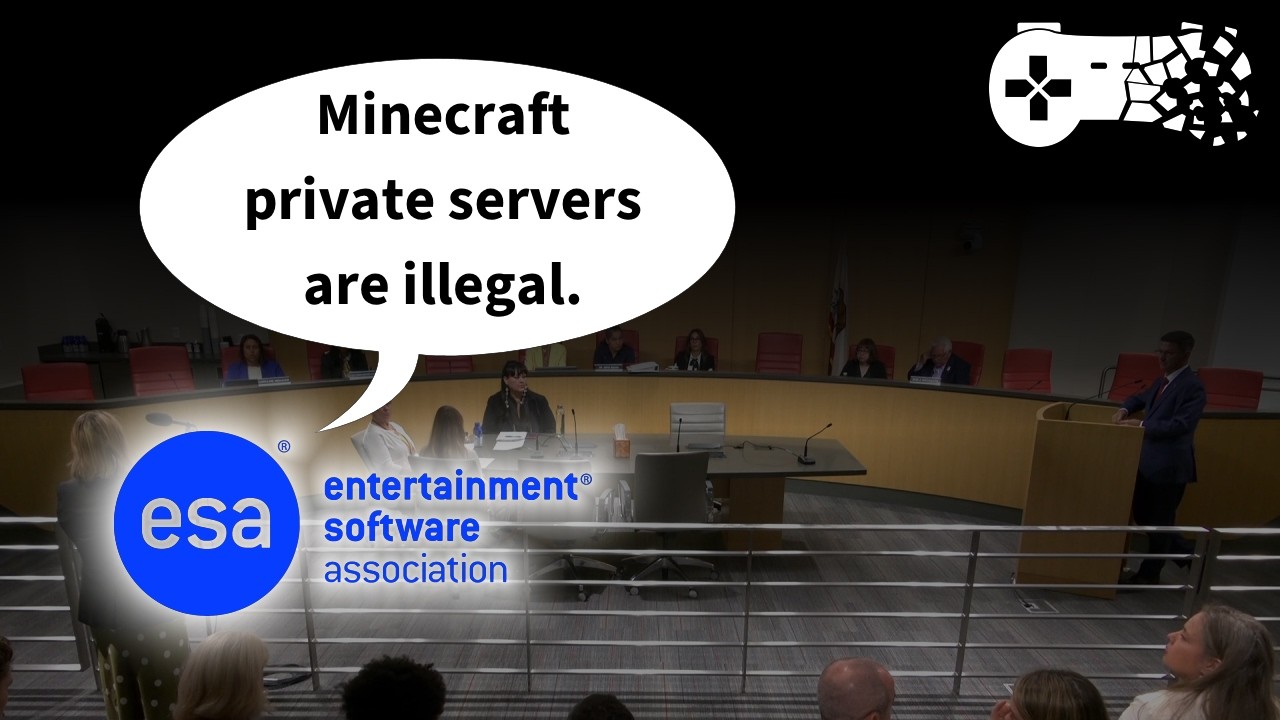
AB 1921, the Protect Our Games Act, would require publishers of server-dependent games to give players 60 days’ notice before shutting one down, then provide a playable version, a patch, or a refund. Assemblymember Chris Ward, who authored the bill, raised community servers during the hearing as one way to keep games running after support ends. The California Assembly passed it 43 to 16 in May before it moved to the Senate. Gibbons said the ESA considers such servers “piracy,” and argued that community servers are not affiliated with the publisher and don’t uphold the same trust and safety standards.
Mojang publishes a dedicated Minecraft server as a Java file and documents how to run it, while Valve distributes SteamCMD and dedicated-server tools for hundreds of titles, letting players run their own match servers on their own systems. Running a server for a game you’ve bought obviously sits inside what those publishers permit, and for Minecraft, it’s Mojang’s own recommended setup for free multiplayer.
Minecraft isn't the exception here. Palworld, Valheim, ARK: Survival Ascended, and Counter-Strike 2 all ship official dedicated-server software that runs on a spare PC or a rented VPS. The line the ESA steps over is a technical one, since running a publisher's own server binary is a licensed activity, not the unauthorized copy its piracy comparison implies.
Gibbons cited the U.S. Trade Representative’s Notorious Markets reports as precedent for the piracy claim, which have named private servers as infringement hubs. Those entries, such as Warmane and Firestorm in the 2018 report, were World of Warcraft servers that let players skirt past Blizzard's subscription, which is an entirely different scenario from running a free-to-play multiplayer server on a game that’s already been paid for.
Those WoW servers exist only because Blizzard never released its own, leaving operators to rebuild the backend from scratch through reverse engineering, which is what drew those copyright claims. AB 1921 compels nothing of the sort; its remedies let a publisher comply by releasing official server tools — exactly what Mojang already does with Minecraft — and a company distributing its own server software obviously can't be infringing its own IP.
Responding to comments made by Ward that private servers help to keep games alive, Gibbons said, “They’re illegal. They are not in any way affiliated with Microsoft. Microsoft, for Minecraft, has gotten a lot of criticism because of those community servers not employing the same safety standards that Microsoft does on their Minecraft servers.”
Gibbons also referenced two pending lawsuits against private servers, but didn’t name them, nor did the ESA identify the cases in its written statement, which said private servers infringe publishers’ IP rights and that they reserve the right to act against them.
AB 1921 builds on California's earlier AB 2426, which requires sellers to disclose that digital purchases are licenses rather than owned copies. Back in April, a brief 30-day DRM check-in left some PlayStation buyers facing lost access to games that they had paid for due to this.

Follow Tom's Hardware on Google News, or add us as a preferred source, to get our latest news, analysis, & reviews in your feeds.



 English (US) ·