
 2 hours ago
7
2 hours ago
7
There was this wonderful energy around Marathon a few weeks ago. Not unusual for a brand-new release, sure, but altogether different than the usual hype-laden first impressions. No, this had the unmistakable feeling of a treasure hunt, a community-wide push to unlock something tangible: the Cryo Archive map. All they had to do was solve one measly alternate reality game (ARG). How hard could it be?
Bungie, you'd hope, would know by now. Taking a gander back in time a decade or so presents a history of such experiences. Halo 2's "I Love Bees", personally speaking, was the first time I heard about what an ARG was. But hidden messages in trailers, leading to websites that appeared mysteriously hacked, seem today like a distant uncle to what Marathon players had to crack.
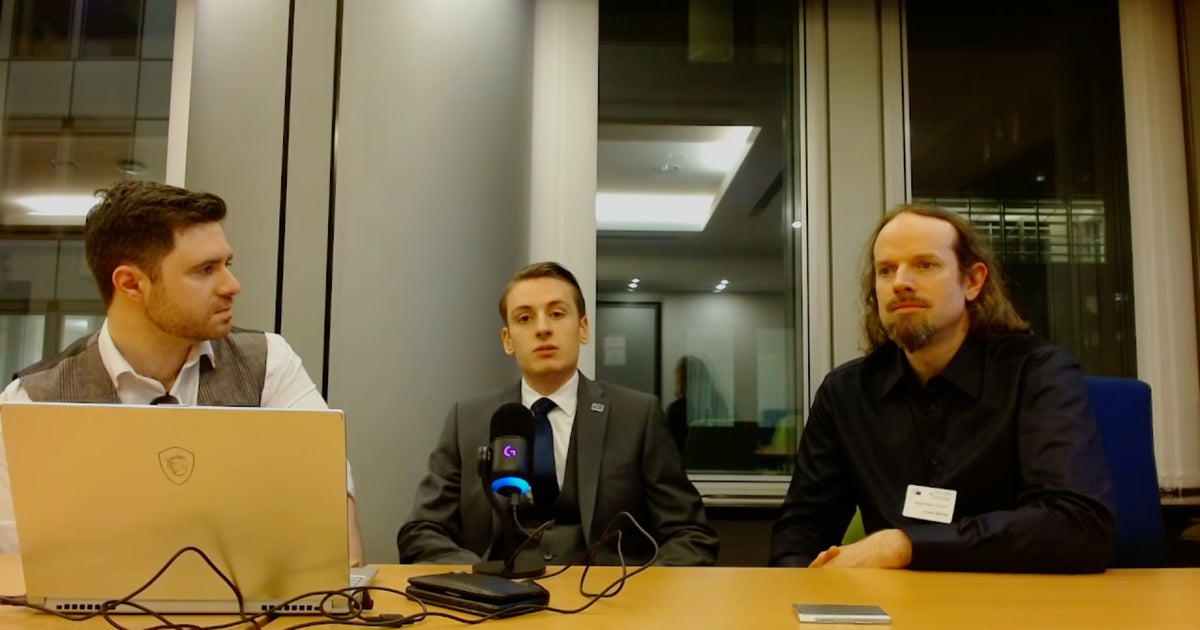
What might be a little more surprising, however, is exactly how this kind of ARG comes together: Bungie doesn't do it all itself. Instead, behind the scenes, the studio employed the help of a marketing company, Kurppa Hosk, which worked both on Marathon's Cryo Archive ARG and smaller projects prior to it. And so to find out how this all works, I spoke to both sides of the collective effort. From Bungie, principle marketing manager Nick Clifford and principle producer Emanuel Rosu. And from Kurppa Hosk, senior product manager Anton Ronsjö and creative director and senior copywriter Paul Martinsson.
The story of the Cryo Archive ARG starts years earlier, with Bungie and Kurrpa Hosk's partnership around Marathon starting back in 2021. With the reveal of Marathon, both parties initially worked together to create hidden websites within the game's first trailer, which brought those investigative few to secret websites based on in-game factions. Scattered breadcrumbs brought these keen minds to a hidden X account (which later would become the official Marathon account) and clues to a real world graffiti piece in Venice Beach, California. As the game's release and eventual rollout of Cryo Archive neared, Kurppa Hosk pitched another ARG in line with Bungie's history of outer-game experiences, one that would up the ante a little for first-wave players.
"It was critical for me to honour the legacy of ARGs, and through the lens of community collaboration, getting them involved, and expanding the game world," said Clifford. A relative newcomer to Bungie, he explained a selection of smaller projects helped "get their feet wet". This includes Marathon Discord contracts, and driving a camera through the Bungie offices to celebrate the initial reveal.
"As we talked about the Cryo Archive release, we wanted the community to be invested in the Marathon ship, because it's the Marathon ship. It needed to be a seminal moment when people get access. So we knew we couldn't just turn it on," Clifford explained.
So, what was the goal with this ARG? What were the goals with those days scouring through the game - searching for terminals and clues scattered within the game and throughout? There was certainly a lot of excitement around it at the time, with content creators and regular Joes spreading the word about the latest big moments from the frontlines. According to Bungie and Kurppa Hosk, it went a little further than that.
As Ronsjö puts it: "When it comes to ARGs, what makes them fun and interactive, we talk about immersive experiences, but also creating an extension. Both in terms of the game, and the lore - the story. Building that world - that's really what ARGs are. A game within the game.
"When we talk about these puzzles as immersive experiences connected to the universe, sometimes they're in the game itself, or on Discord, or on a bespoke website we create. Wherever players are, that's where we're trying to be. So each puzzle is designed with those platforms in mind, requiring coordination between a bunch of players, or translating data to ascii, to hex, and binary. Or even running around in game, finding an object and its exact bearing. Connecting all that was really fun. Giving teasers was what made it great, you leave players afterwards with a story that's impossible to summarise, that your friends don't quite get when you try to tell them about it, but which they can tell is exciting." Or, in a single sentence, the creation of: "you have to be there moments," says Ronsjö.
Martinsson said that expanding upon the story is "the point of these ARGs", as was creating a "sense of achievement" for those who take part. The challenge, according to those I spoke to, was making sure this included those dedicated ARG hunters, as well as people playing the game normally without such goals in mind.
"It was critical for us to have the ARG inside of the game as well. What we don't want is making players feel like they have to stop playing to take part - it should be one cohesive experience," Clifford said. "That's why from the jump you had to find terminals within the game, leading to websites which unlocked trailers and sneak peaks of the map. We wanted it to feel cohesive as opposed to two separate experiences."
By threading the ARG between the game and outer-game experiences, Rosu says the "magic" came from organic onboarding to the cause. "The terminals found during the run pushed people to look up what was going on, or finding other players shouting keywords the community had come up with to signal they were friendly. It helps the ARG reach the audience who wouldn't usually be involved with the internet side of these sorts of things."
What's interesting is the ARG which players eventually saw was largely the same as initial plans made by Kurppa Hosk and Bungie. When asked whether there were any puzzles that didn't make the cut, Clifford said: "We are notoriously bad when it comes to the cutting room floor."
There was stress too, of course. Cryo Archive released during the weekend, a great boon for the tragically employed, but this wasn't always a sure thing. Clifford confirmed the legitimacy of the unlock process - that little assistance was provided to push the ARG along to hit this ideal window - and said there was no guarantee this big end game experience would become accessible at a reasonable time - for players and the developers alike.
There were doubters, of course. Those who felt the conclusion of the Cryo Archive ARG happening just before the weekend was a bit too convenient. I confess I too believed this to be, at the very least, partially true during the ARG as things really started to pick up the pace near the end. When I asked whether Bungie or Kurppa Hosk did anything other than drop cryptic clues to assist the community - if they ever put their finger on the scales - Clifford denied it outright.
"We could take each of these parts of the ARG and figure out roughly how long it would take players to solve the whole thing, and what the fastest pace they could move would be. We did have conversations internally which were like, 'well shucks, what if they unlock Cryo Archive at 1AM? That'll be challenging for us,'" Clifford said. "We also talked about the possibility of then unlocking the map after the weekend, which would be inconvenient as all those people who play games on the weekend could miss their chance to experience it. So there was a bit of that magic to it. We didn't control when it came out, but we tried to be thoughtful about how we constructed it so there was plenty to pace through."
"Players always get through them faster than we think," said Clifford. "We punctuated this ARG with 'tentpole moments' and unlocks. Different parts of the ARG were named after parts of the Cryo Archive, and we wanted each of those sections to have their own reward." These rewards, be them unlocked dialogue from Durandal (voice by Ben Starr) or new trailers showcasing parts of the Cryo Archive map, acted as kindling for climactic celebration among keen fans.
The pace was surprising though, even with such plans. As Ronsjö explained, certain stages of the ARG were "impossible to predict". An example: "The first step, with the terminals - that was easier and they unlocked that part in good time. But then the password to access the ARG website… It was always there, in front of them. But it took like a day! Then they realised they had it all along, which I feel makes a fun feeling for the community."
"A lot of times they were quicker too, like cracking the 19-page manual they somehow managed to get through way faster than expected. Tying it all to the ship, so it all feels like the same product. Because that's what an ARG it is - a product. So making it feel cohesive and in-line with the game is important."
What was key though, according to those I spoke to, was that these rewards did not come easy. Each step in the ARG brought its own distinct challenges: collective effort to achieve in-game milestones, puzzles and passwords to decipher. During my own time lurking among those ARG hunters, I witnessed dozens of hours spent theorycrafting, chasing red-herrings, and general head scratching. Still, the overall speed of the community surprised both Bungie and Kurppa Hosk.
"They are difficult by design, because we want the players to feel as though they've accomplished something together," explained Martinsson. "We figured some of the puzzles would be easier, but they took much longer! So we had to be flexible as well, to see what pace the community actually solves them. We could have one idea, and they'd go a totally different direction sometimes."
Clifford portrayed Bungie's hand in trying to get this difficulty right, describing the Goldilocks zone between unremarkably easy and frustratingly hard as "the secret sauce". Seeing the in-game terminal stage of the ARG in-action internally, Clifford described it as "magic", as was trying to spoof hundreds of players tackling each step before the ARG actually went live. However, to him, it was the finale that captures the full merit of ARGs: It was just difficult enough so players would be getting close to winning it, but not quite there. And that provided motivation for players to keep pushing through it."
"They are difficult by design, because we want the players to feel as though they've accomplished something together."This, as you might have guessed, required an active hand from Bungie, paying attention to the pace of ARG progression throughout its lifespan. "We had our best laid plans," said Rosu. "It required us to continuously adjust our plan within the game. We'd be constantly talking to our live opps team, trying to nail down when stages would be completed."
None of this, of course, would work without these hubs for ARG discussion. Organic community leaders urging gaggles of otherwise isolated players to come together and strive for a goal, beyond sitting at an extraction point with a shotgun or staring at multi-coloured lobsters off Dire Marsh's shores. As Ronsjö put it: "They are the engine to drive this. Without an engaged base of people playing through this, it wouldn't work. The collective completes it."
Coming back to the purpose behind all this, Clifford's reasoning echoes one of the things that makes Marathon itself so continuously interesting, in its meta-commentary. "It's about bringing the game world to life, blurring the lines between the game and reality," he says.
Martinsson put it similarly. "It's marketing, but it doesn't feel like marketing. That's because you create participants, you feel like you're part of the story," he says. It might ultimately be designed at least in part to simply help sell the game, or spread word of mouth, but there's something to be said for doing it in a way that feeds back into what Marathon is trying to do, as a game all about blurred lines between player and product, system and participant. In Martisson's words, "these ARGs can expand the canvas."






 English (US) ·