
When Hideo Kojima rather suddenly left Konami in 2016 and, soon after, opened his own studio, the move sent shockwaves throughout the industry. Today, Kojima Productions has established itself as a AAA development studio within Japan known most of all for 3D-scanning celebrities and developing the Death Stranding franchise, which will soon move beyond gaming as it’s adapted into anime and a live-action film. Looking forward, the studio also plans to expand its range with Physint and OD: Knock in partnership with Xbox.
It’s one of the more fascinating stories from the last decade of the Japanese games industry, not just for how Kojima Productions came to be but for how it’s sustained itself as a studio. Kojima has leaned on his name recognition to turn the studio into a brand unto itself, and the director keeps himself and the studio in the spotlight through an array of film work, social media posts, radio shows, cameos in TV dramas, and more.
In the upmarket area of Azabudai in central Tokyo, with the historic Tokyo Tower landmark in view, an exhibition looking back on the past decade of the studio has opened for a limited time. Not just chronicling the public history of the studio, the event also featured new information and unseen concept art for Death Stranding, alongside details about the company’s in-development Xbox titles. After visiting the exhibition during its opening days earlier this week, here are ten things we learned about the studio and its array of upcoming titles.
Physint Will Take Place Within A “New Cold War”
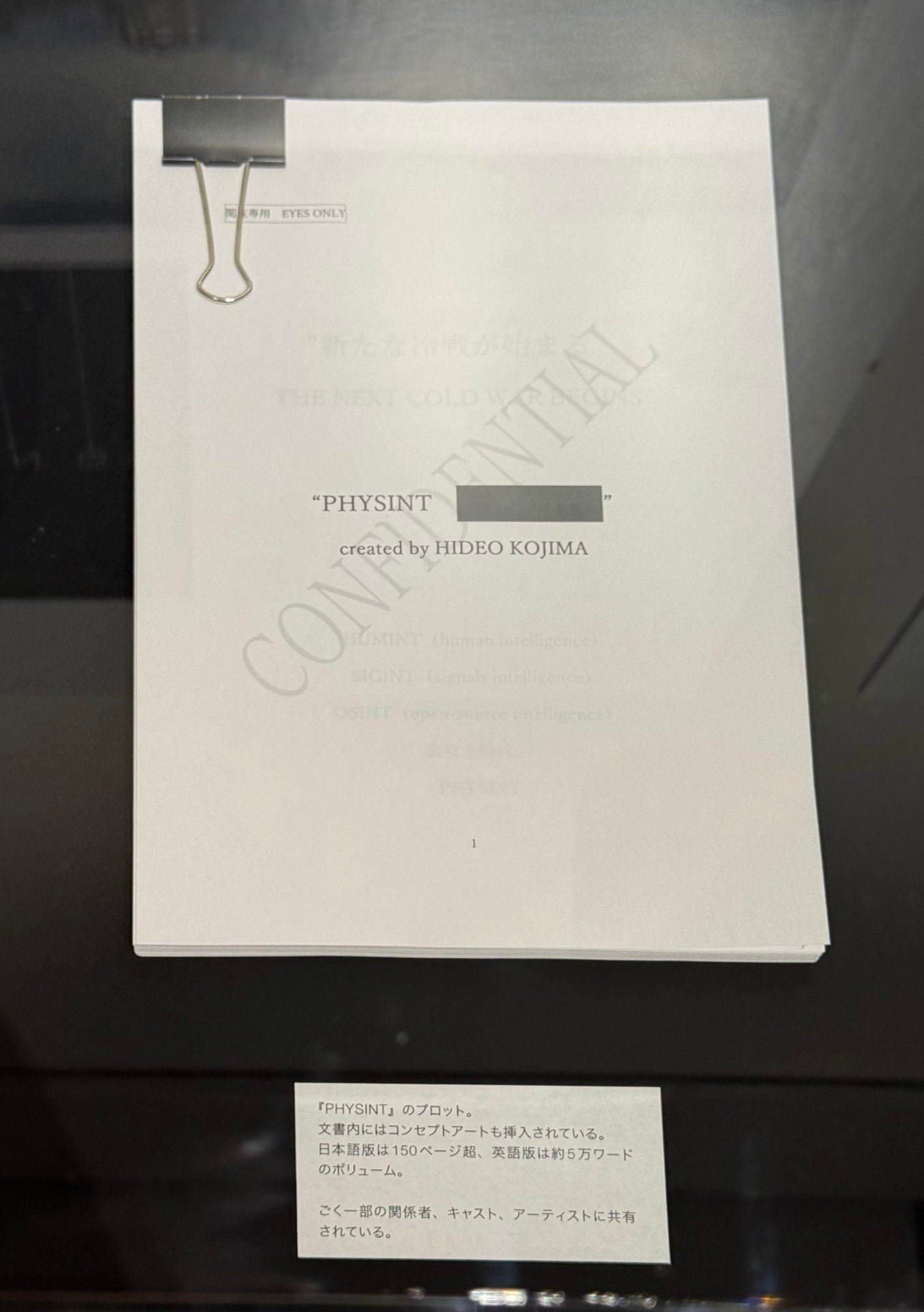
When this exhibition was first announced, Kojima Productions promised not just a look back at the past 10 years of the studio, but a look forward at its in-development work on Physint and OD: Knock as well. That said, actual new information about Physint was light, perhaps as a result of the game’s turbulent summer which saw publishing shift from Sony to Xbox. All we could gather about work on that game came from some key concepts visible on a display copy of the game’s script.
Though behind glass, the hefty document made a few significant bits of information about Physint visible, providing our first hint about the setting of this new game. Notably, this game will take place within what the script calls “The Next Cold War.” This war is defined by three philosophies: HUMINT (“human intelligence”), SIGINT (“signals intelligence,” whatever that may entail, perhaps involving communication in some way), and OSINT (“open-source intelligence”). From this, it seems likely that the term PHYSINT refers to something along the lines of physical intelligence, but that’s still unconfirmed.
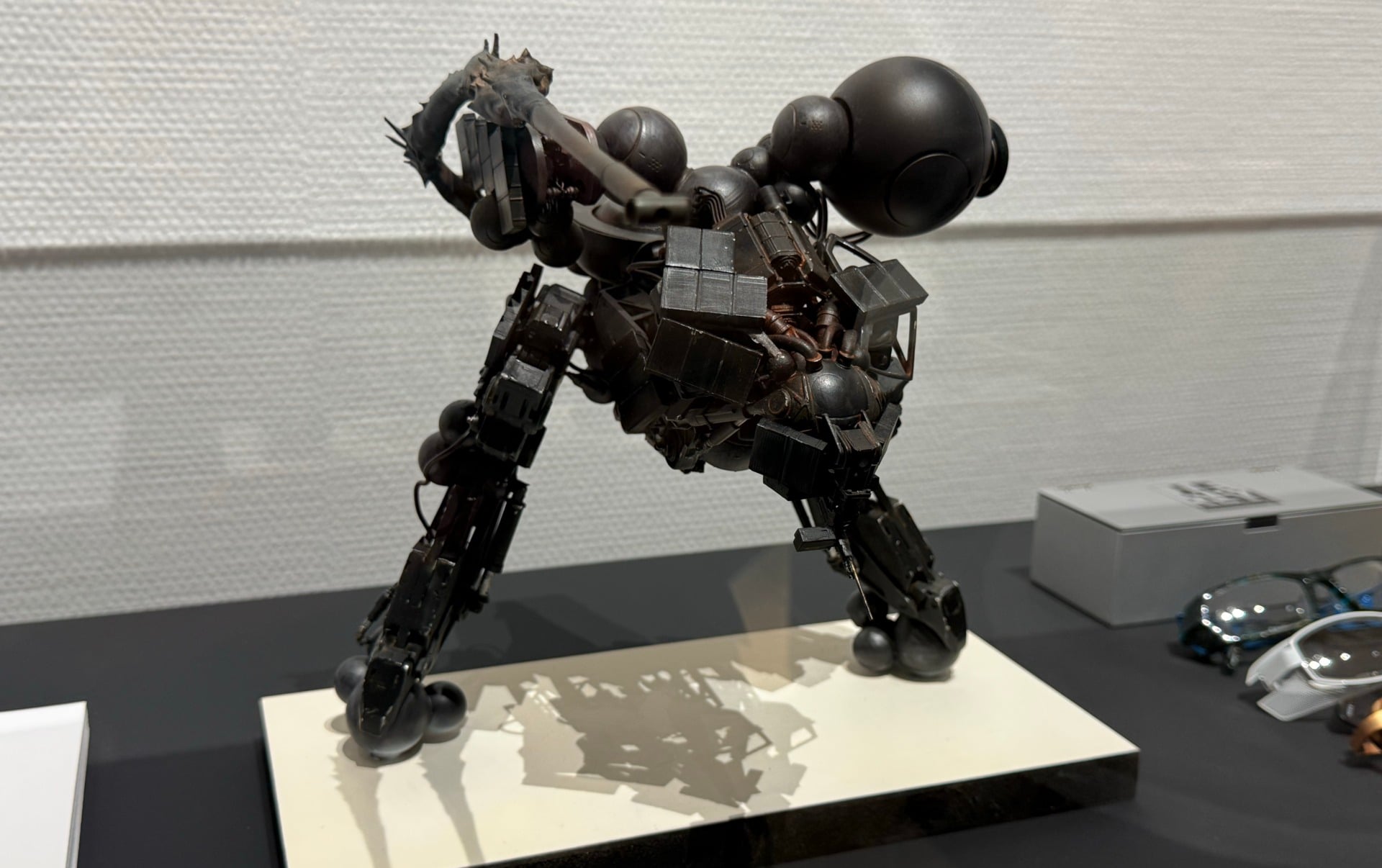
On the script’s cover, it appears that there’s a word that comes after Physint and has been redacted, suggesting we don’t yet know the game’s full, final title. We also saw some models of things that appear in-game, including a few mechs that look suspiciously like Metal Gear. Considering Kojima referred to the title as being in the same vein as his earlier stealth series, that’s not entirely unsurprising.
The Kojima Productions Logo Underwent Many Iterations
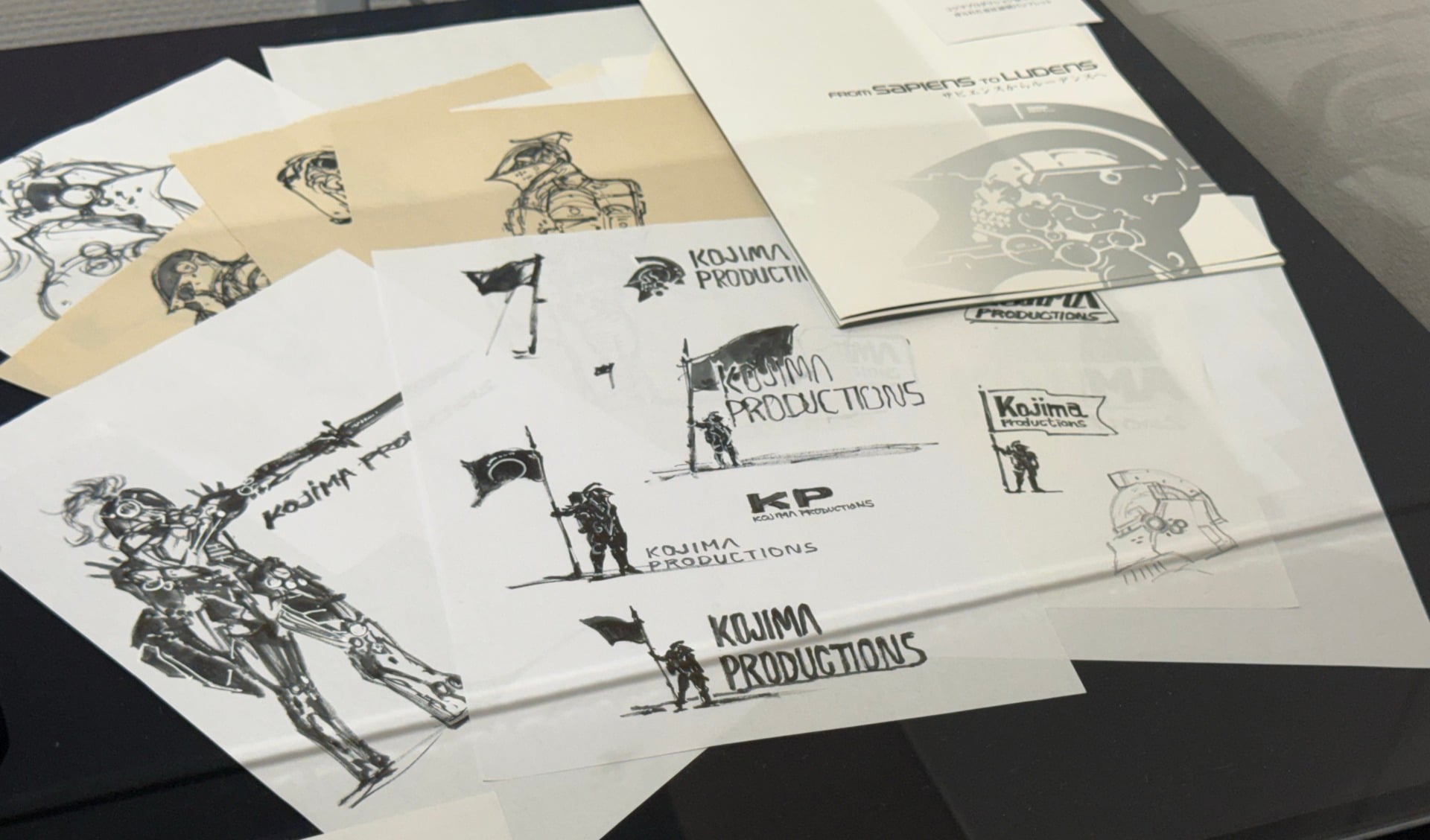
Kojima Productions has become more than a studio: it’s a brand. The merchandise featuring the studio’s logo and spacesuit-wearing Lumens character is proof of this. It appears that having a striking logo was a consideration from early on, as we got a rare look into the design process for the logo and mascot at the show. Notably, while the current logo features a skull inside a spacesuit and emphasizes the head of the character, many of the early designs featured the full character waving a flag. Another shows a knighted character that looks somewhat like Raiden from the Metal Gear series.
Early Death Stranding Prototype Showcases The Evolution Of In-Game Traversal
コジマプロダクション10周年記念展覧会の会場では、『デス・ストランディング』(デススト)のプロトタイプの映像展示も! その動画の一部を公開。
展覧会のリポートは以下の記事をチェック。https://t.co/59REcvXkZz pic.twitter.com/BFMISv9ZiE
— ファミ通.com (@famitsu) October 30, 2026
While most of the exhibit allowed visitors to freely snap photos of all the concept art and design documents on display, photography was restricted on a short video containing footage of the original prototype for Death Stranding. Luckily, at least part of this video has been shared by Famitsu.
Even in this early state, the game looks rather close to the final release. It seems the concept of running around a sparse, mountainous setting was decided, and we can see rough gameplay of a generic character model picking up cargo and moving around the environment. Another piece of footage shown, taken from further along in development, gives an early glimpse of how BTs were implemented in the game. They’re shown acting for more aggressively than they do in the final game, suggesting the emphasis on combat was somewhat toned down before release.
We Got To See Tons Of Early Concept Art And Planning Documents For Death Stranding
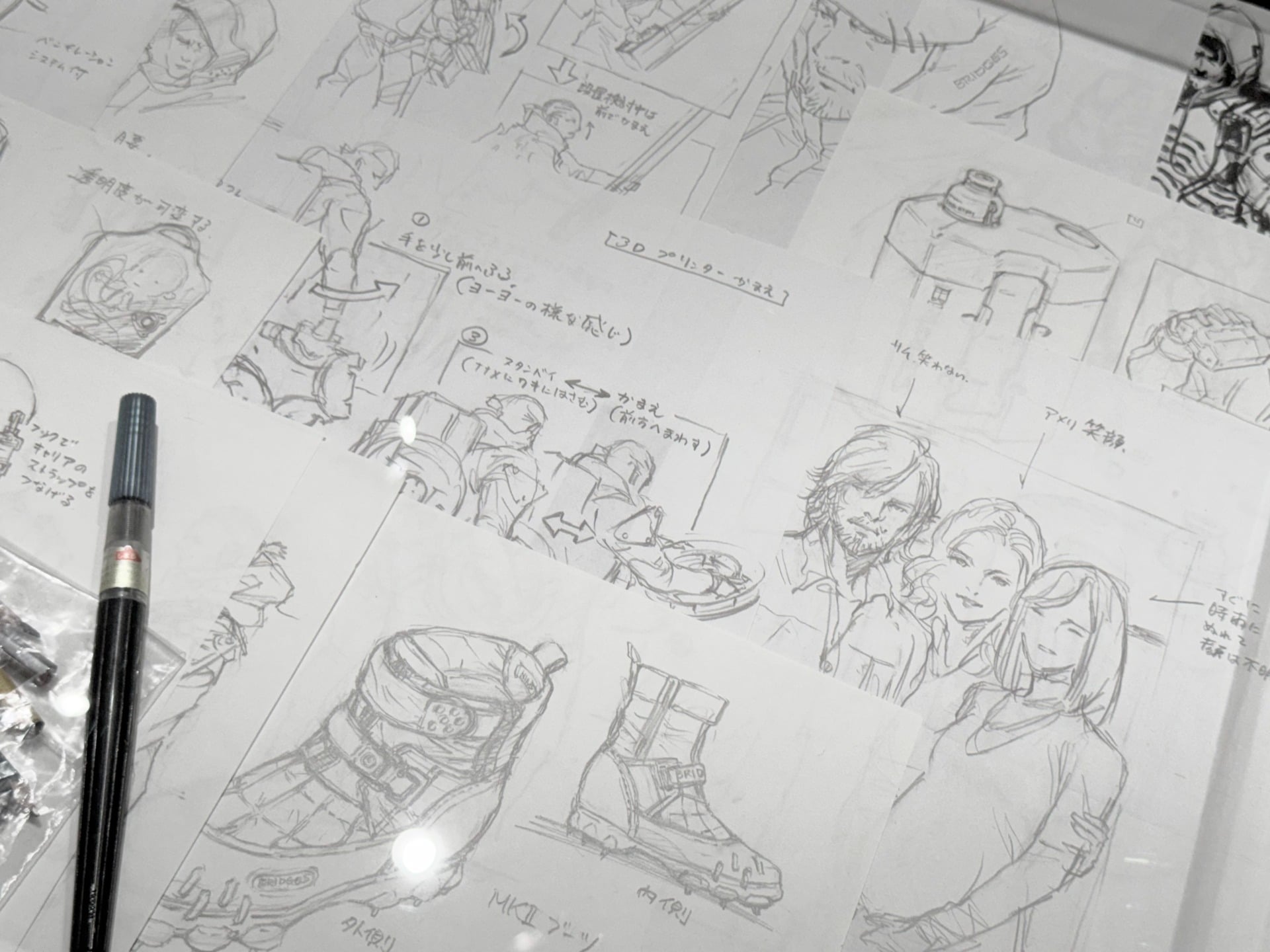
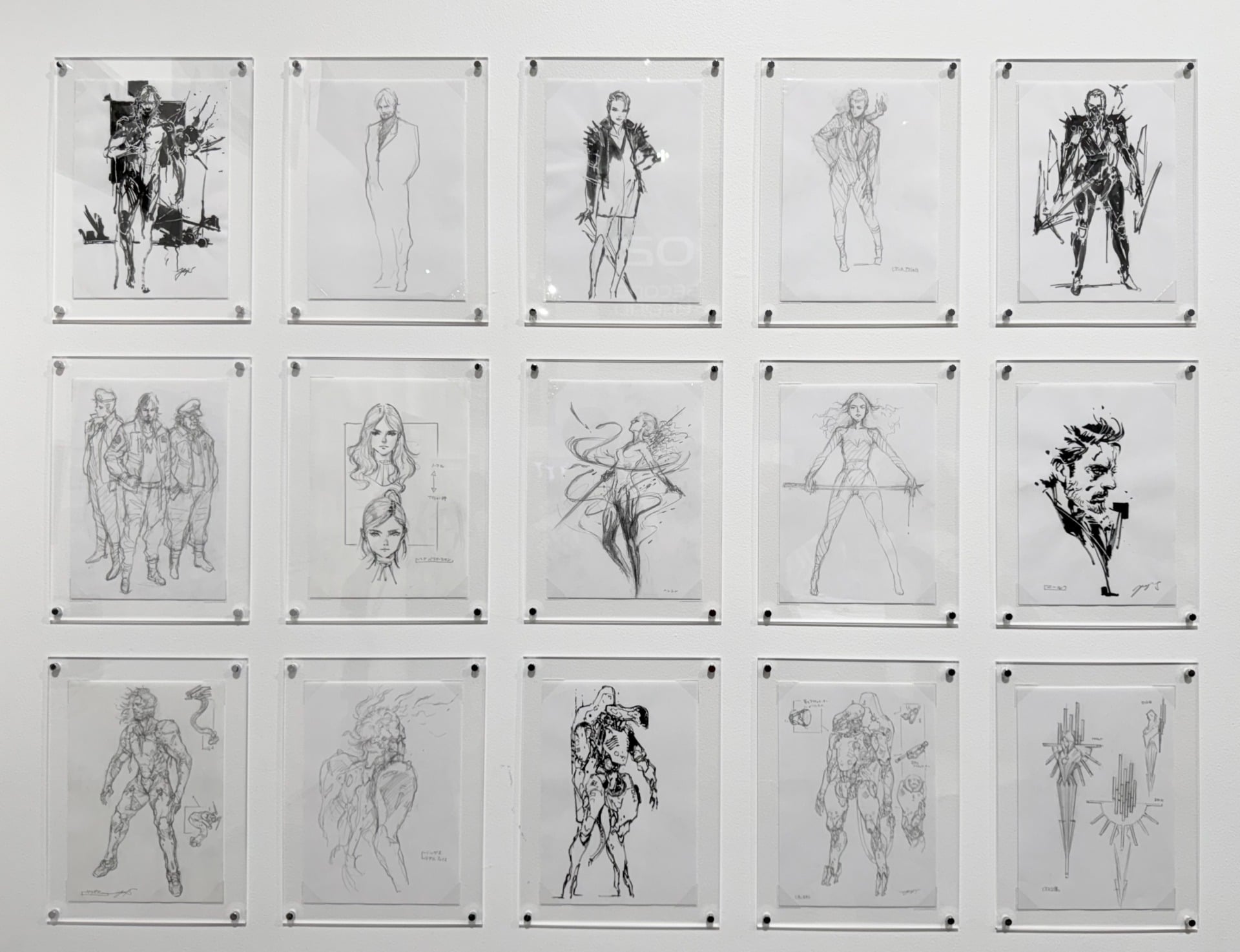
While some concept art for the original Death Stranding has been released to the public via art books, a lot of never-before-seen artwork and footage for the game was shown at the event, making up a sizable portion of the exhibit. This included early attempts at a logo, original sketches by designer Yoji Shinkawa, and more.
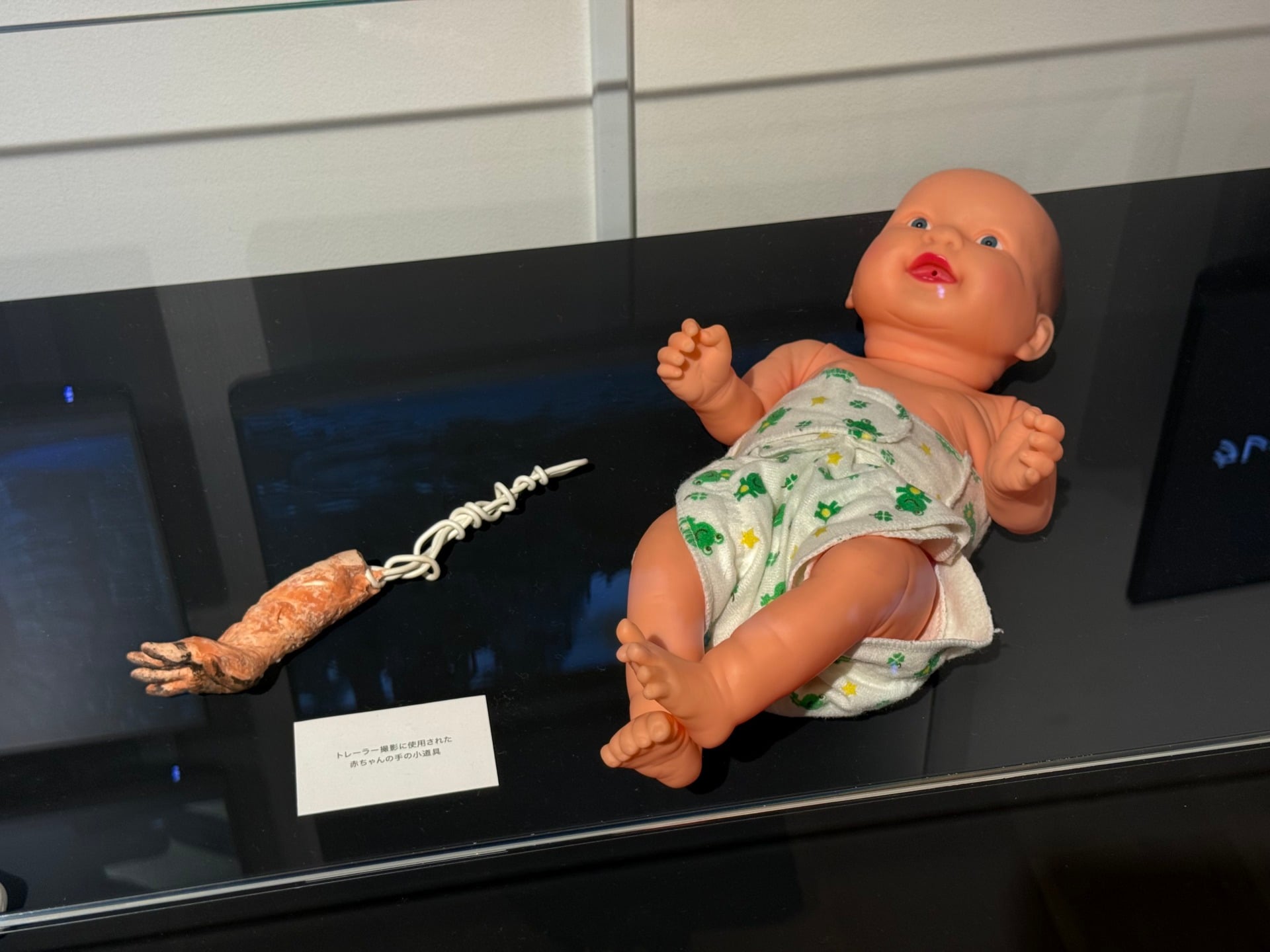
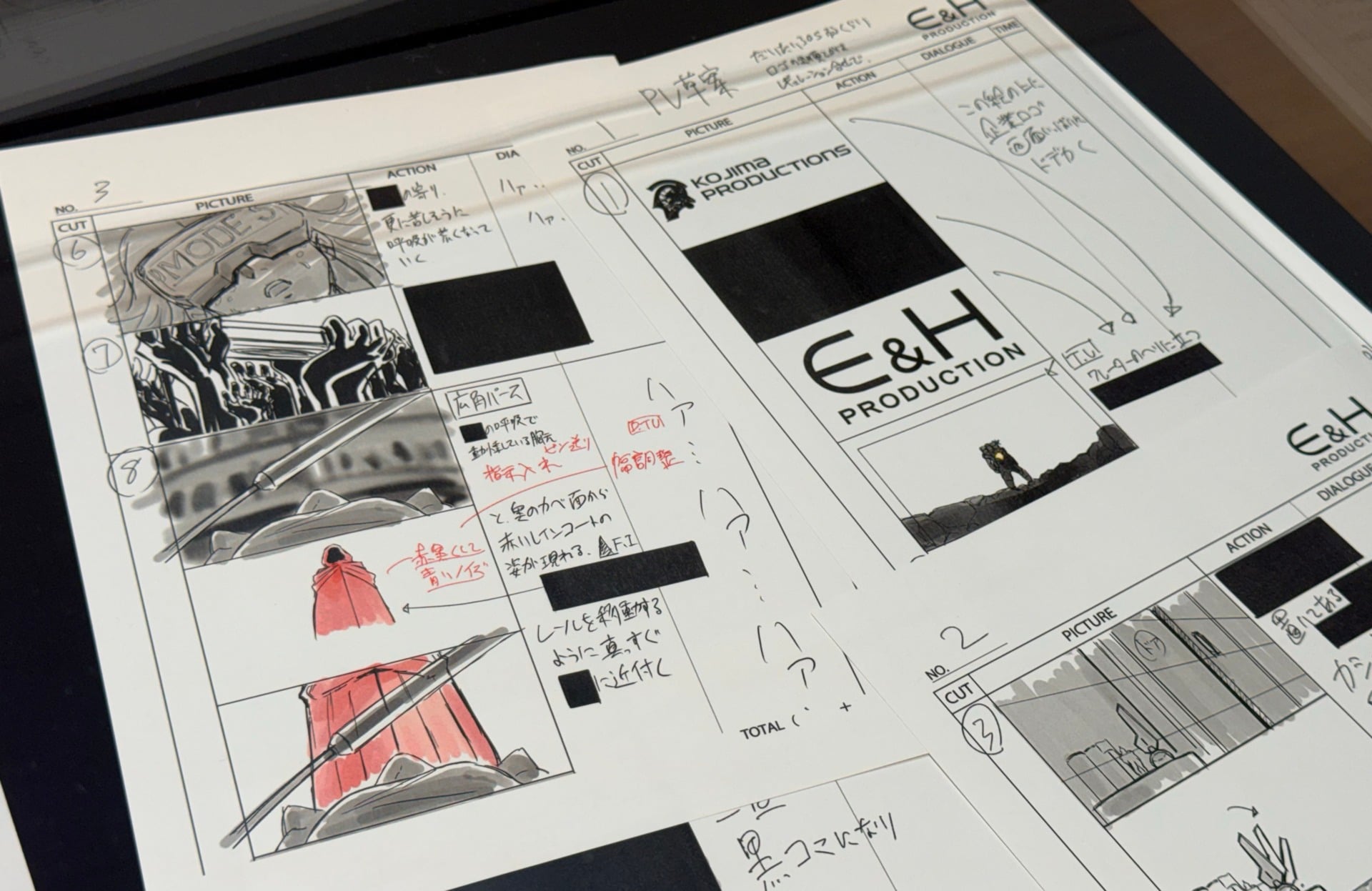
Particularly notable, however, were the screens on various walls showing behind-the-scenes footage of motion capture and how the designs for each character changed during development. Early cutscenes were printed on planning documents with Kojima’s handwritten notes (in amusingly shiny gel pen). And, of course, we got a brief look at the baby doll that was used during these sessions, and the original 3D-printed prototype for the Pods that hold the BBs in the game.
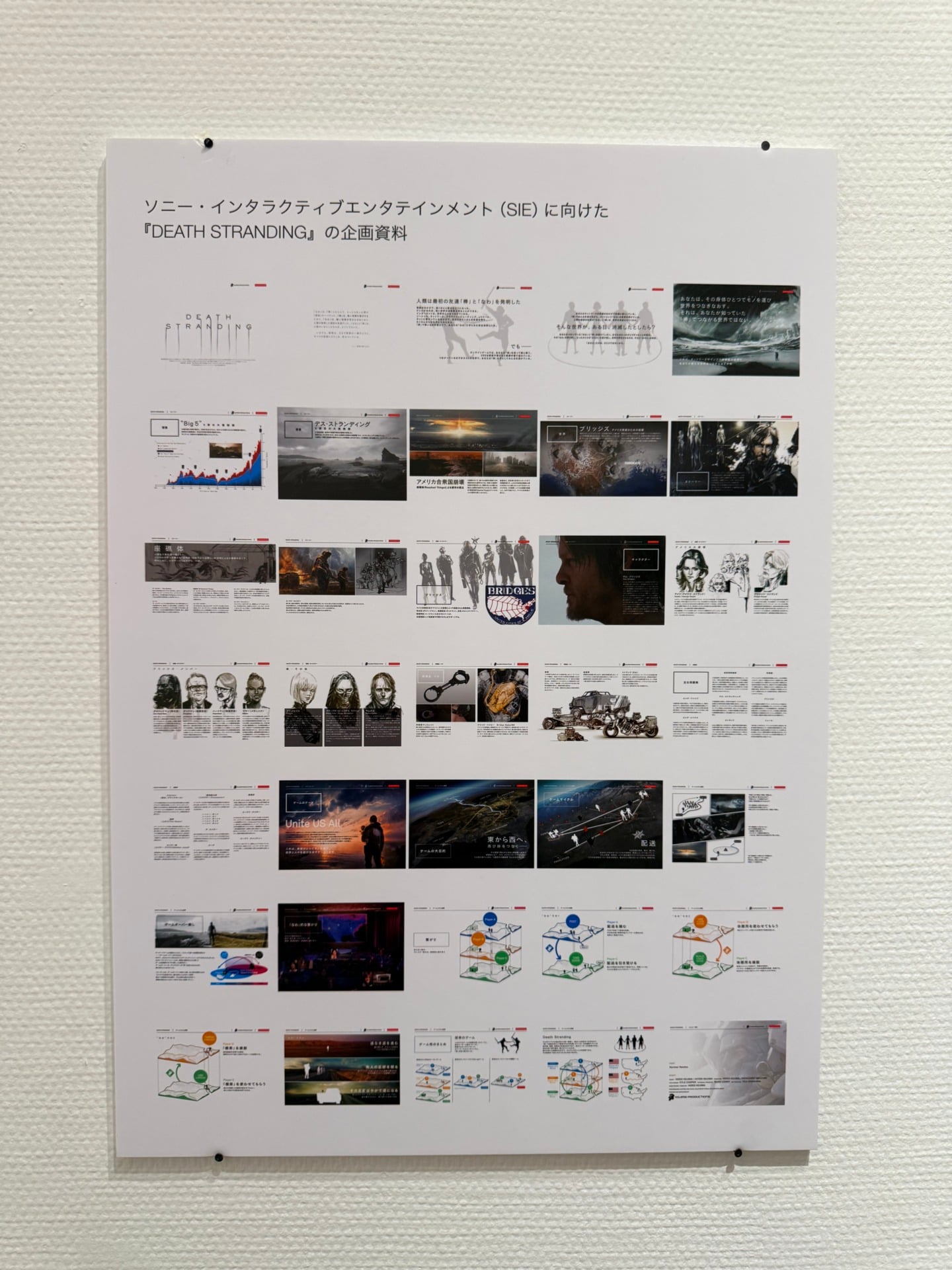
Summaries of documents sent to Sony during the planning stage of Death Stranding to secure support from the company were also on display. These documents explain the concept of “Strand” gameplay as a genre in which multiple players indirectly interact in the same space. The documents also convey that the concept of the game is to “unite us all” through your actions as you traverse the United States. Early concept art for all of the major characters, including a vastly different version of Fragile, are also on display.
The game’s complex development pipeline was also documented in images that were on display, conveying just how many differing, simultaneous tasks a team must undertake to take a game from concept to finished product within AAA game development.
Death Stranding 2’s Story Changed A Lot Due To Covid-19
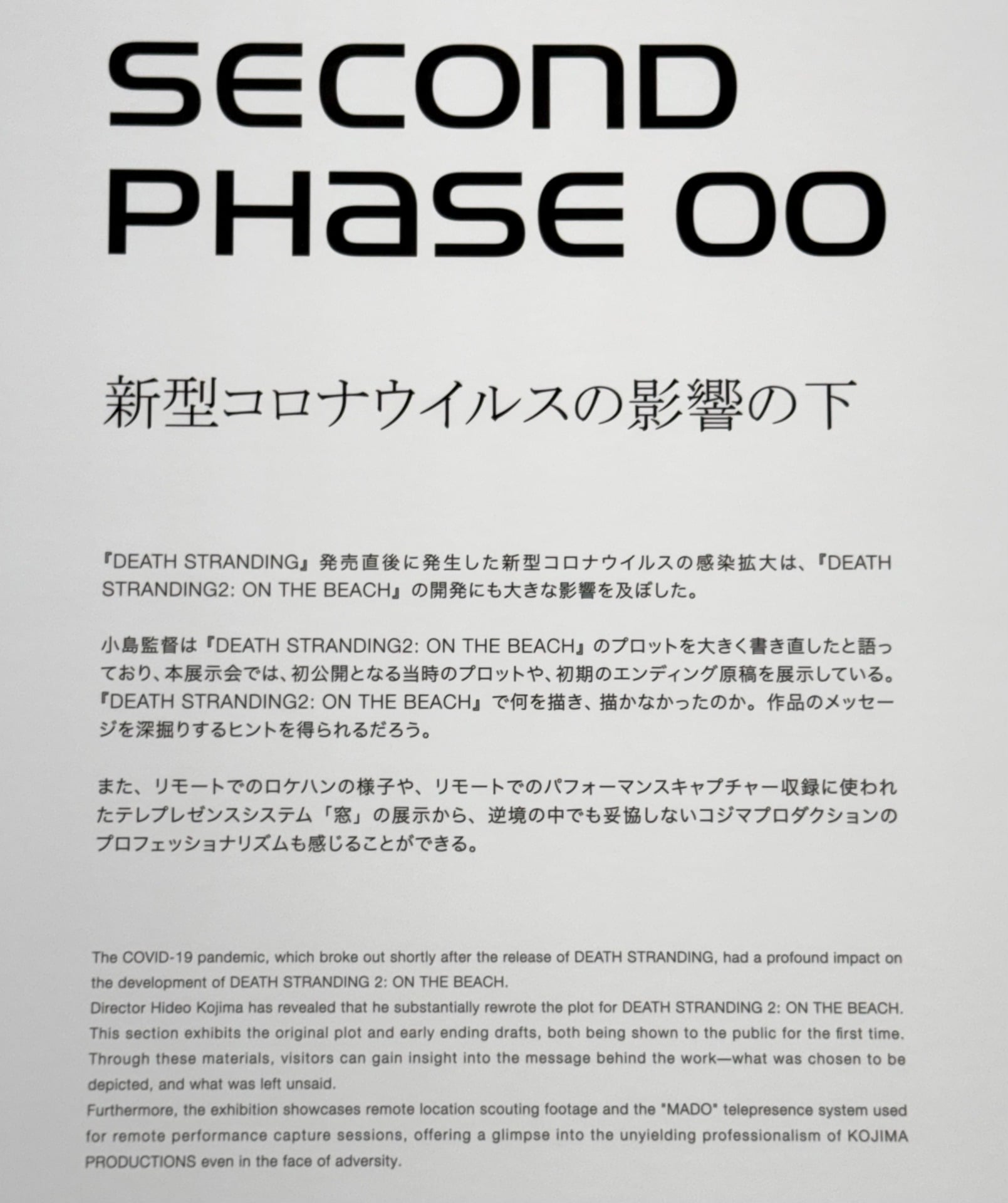
While some call the first Death Stranding prophetic for how its concepts of connection and delivery were later realized in real life when the world shut down during the Covid-19 pandemic, it turns out Death Stranding 2’s story was radically reworked to consider the altered state of the world as everything shut down to prevent the spread of the virus.
Based on documents shown at the event, the first concept for Death Stranding 2 was produced in 2017, toward the end of development on the first game. Most notable from these documents is a vastly different ending to the game compared to the one we actually got—a far more optimistic and positive one. The fate of all the characters is revealed, with Fragile alive and leading a delivery team, and Rainy and Tomorrow raising a baby together.
正式リリースされた #DeathStranding2 とは異なる初期案が面白そう過ぎる
中米から南米まで繋げるとか街を作るとか縦移動が増えるとか続編でも使えそう
没案が2に活かされるもあった気がするし
あとすごいハッピーエンドな案もあって涙が出そう、こうなって欲しかった#コジプロ展 #KojimaProductions pic.twitter.com/wWDLv02AQ8
— 百合@ポーター・ブリッジス🇯🇵🇺🇦 (@L_lily_Porter) November 2, 2026
The document also details subterranean gameplay that would allow for greater variety in traversal, though the overall concept of connecting the world was present from this early state. It also appears that even at this time, Elle Fanning had already been considered for Tomorrow, as her name is brought up in the document.
Kojima Productions Utilized A Unique Zoom-Like Communication System To Aid Remote Development
We will be exhibiting “MADO,” a telepresence system that enables seamless two-way communication between remote locations. We used it during the COVID-19 pandemic for performance capture sessions connecting Los Angeles and Tokyo. Throughout the exhibition, “MADO” will continuously… https://t.co/Y7Jc3HzYJG pic.twitter.com/oxwhnpvQGS
— HIDEO_KOJIMA (@HIDEO_KOJIMA_EN) October 18, 2026
To aid in development, and especially with scanning actors and conducting motion capture when borders were closed during the pandemic, Kojima Productions developed its own communication system to aid in networking with actors and remote workers, known as Mado (Japanese for “window”). Developed by MUSVI Corporation, Mado was used to connect people in a more immersive manner than a mere video call could allow for. Kojima Productions used it to connect with motion capture studios in Los Angeles for more effective direction of actors during these sessions, even when separated across different countries and time zones.
For the exhibition, the technology was on display with a direct feed to the Kojima Productions office in real time, providing a so-called window into the studio. During our visit, this showed the area in the studio where 3D scans of actors are done, but it seems that this will be changed up throughout the event.
こんな感じで麻布台ヒルズギャラリーの「窓」🪟とコジプロの「窓」🪟を繋いでいます。
たまに小島監督も登場しています!#コジプロ展 #BeyondtheStrand https://t.co/ECvNIsSaP1 pic.twitter.com/LuChYDrz09
— Ayako (Touchy!) (@Kaizerkunkun) November 5, 2026
Staff members at Kojima Productions will make unscheduled appearances on the video conferencing tool to speak with attendees throughout the duration of the exhibition. During our visit, Kojima himself made a brief appearance to speak with visitors in Japanese and English. Don’t take that as a guarantee that visiting the event will be a chance to talk to the man himself, but it’s seemingly not impossible.
There Are So, So Many Cross-Media Collaborations For Kojima Productions (And Even A Credit Card!)
Kojima Productions is far more than just the games it develops. To an extent, the exhibit feels as much like a showcase for the studio’s multimedia and merchandising efforts as it does a window into the company’s game development process. An entire section of the exhibition floor is dedicated to the various external partnerships the studio has created, including storyboards for its various anime projects including Death Stranding Isolations, and even credit cards released in collaboration with Japanese bank MUFG.
These partnerships were peppered all around the show floor. In the photography-prohibited showcase of new information for OD: Knock, a special RIMOWA custom suitcase to hold a statue of the game’s protagonist was on display. The case included the letters H K on a luggage tag, surrounded by crows. Another section featured the many musical partnerships for Death Stranding 1 and 2. Expanding Kojima Productions beyond gaming was a key point of emphasis throughout the exhibit—the merchandise store at the event includes new clothing collaborations with F.C. Real Bristol and a chibi-fied plushie of Kojima himself.
We Played An Early Prototype Of A Niantic-Powered Death Stranding Mobile Game
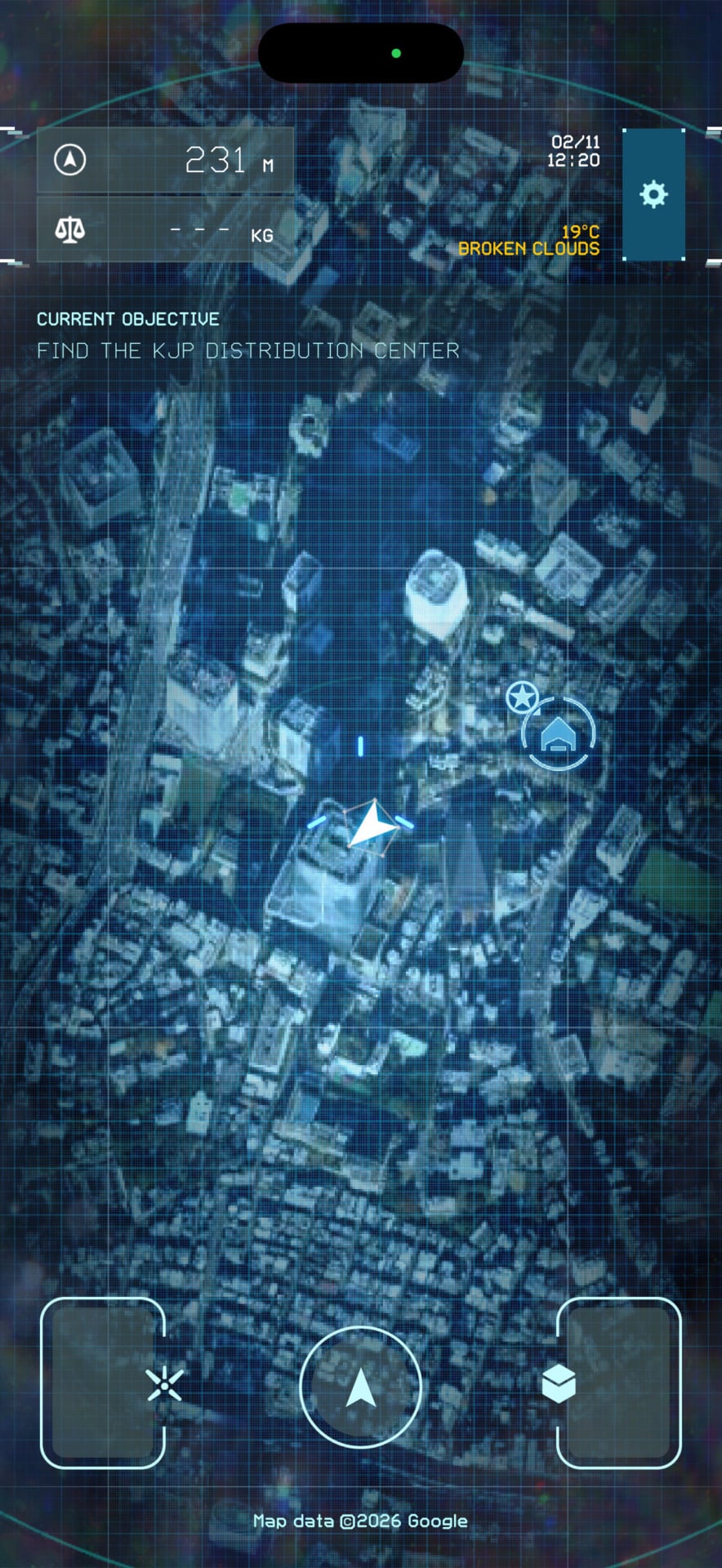
Attendees of the exhibition get a chance to play an early demo of a planned AR game for mobile phones created in partnership with Niantic Spatial. Called Death Stranding: Odradek (Tokyo Prototype), it uses the technology underpinning Pokémon Go to have you deliver parcels in the real world. Currently this is very scripted (the only available deliveries exist within the Azabudai area of Tokyo surrounding the exhibit), but one can assume the game could automatically generate new deliveries for players anywhere in the world in a potential future version for general audiences.
Players would also need to care for their own BB, and the game uses the camera on your phone to scan the world around you for signposts and guidance from other players. Taking the Strand gameplay concept into this new title, players can “like” helpful guidance, and it’s even possible to run into BTs when using your phone’s camera to look around the world.
OD: Knock Used GoPro Shoots To Refine Its First-Person Perspective
New information about the upcoming horror game OD: Knock was showcased at the exhibition, although photography was strictly prohibited. However, what we saw was a game taking clear cues from the experiments Kojima did with PT and continuing his attempts to bring the worlds of live-action filmmaking and video games together.
In order to model how traversal is presented in the game, Kojima and his team recorded a walkthrough of a real-world environment using a first-person perspective captured on GoPro cameras, before recreating the fisheye perspective and framing of these shots virtually within the game’s engine. One comparison image showed a photograph of a dual-GoPro image depicting a dirty kitchen countertop and a window looking out onto a damp British street, compared to a similar shot captured in-engine.
OD: Knock Team Didn’t Just Scan People: They 3D-Scanned Vintage Furniture And An Entire TV Drama Set
Clearly not content with only scanning people for his games, Kojima has taken things further when it comes to what he will digitize. Detailing the 3D scanning process, the exhibition confirmed that the team partnered with 2024 TBS TV drama Sayonara, Maestro! in order to capture detailed 3D scans of many of the show’s sets for reuse in the game.
The drama, which follows a conductor named Natsume (played by Drive My Car actor Hidetoshi Nishijima) returning to Japan and attempting to rebuild his relationship with his daughter, could not be further from the horror story being presented in OD. However, the show makes use of sets for the interior of the home the pair live in. The Kojima Productions team took detailed scans of the sets to help them model a family home, though just how that setting will be used in the game has not yet been revealed. Kojima’s radio program is also produced in partnership with TBS, likely helping to facilitate the director’s efforts to scan the set.
Similarly, the team has digitized a number of pieces of vintage furniture, such as old dressers, in order to ensure that such furniture in-game looked sufficiently aged.
The Kojima Productions exhibition in Tokyo runs until December 20th, and fans of the studio’s games are sure to enjoy the hundreds of unseen pieces of concept art and design documents that provide a window into the past decade of game development at the studio. More than that, however, it shows how expansive the Kojima Productions mission has become. If Kojima’s work at Konami was largely restricted to his work on Metal Gear Solid and his activities as a game developer, Kojima Productions has made him the head of an entertainment company and brand that happens to make games.
The fact the company has organized its own exhibition where movies and merchandise are as prominent as game design is proof of that. The RIMOWA custom case? Kojima showcased his own suitcase in a separate exhibition last month in Tokyo. He’s worked with Prada. The company routinely works with celebrities known for acting and filmmaking, and as you enter the exhibit, thank-you messages from many such figures including Norman Reedus and Mamoru Oshii welcome you to the event.
This isn’t a bad thing. It’s just emblematic of how, as game development becomes more expensive, supporting such high-budget work requires that you produce more than just a single game or DLC at the end of the road. You must produce a high-quality game, of course, and the concept art and design documents showing just how much effort the studio puts into its games prove that Kojima Productions takes that very seriously. But creating passion that will have fans flocking to buy that expensive jacket with the studio logo on it and charge it to a branded credit card? That’s something else entirely.





 English (US) ·