
 4 hours ago
7
4 hours ago
7
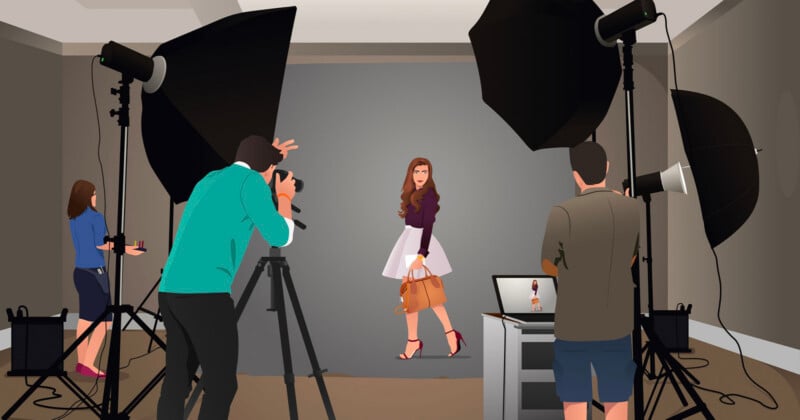
Are photographers competing against AI? It’s a question posed by a recent Vogue article after photographer Jack Davison questioned his Instagram followers on whether it is increasingly becoming an issue.
Davison told his 366,000 Instagram followers that he has been “coming up against it [AI] more and more in the commercial space,” adding that, personally, it’s a line he won’t cross.
The photographer says he’s been asked whether he can use AI to replace backgrounds, animate stills, storyboard, and replicate mock-ups. Davison is a successful editorial and commercial photographer and boasts high-profile clients. “I acknowledge that I have the privileged position to be able to turn down that kind of job,” he notes.
Davison tells Vogue that one client wanted to use multiple background replacements using AI. “I was a bit shocked by how quickly it had crept into more and more elements of the industry, and I wanted to see what others were experiencing,” he says of his Instagram survey.
Some of the respondents say that AI is setting “unreasonable expectations”, and while not everyone is experiencing it, a lot of comments agree with Davison that this is happening more and more. “I’ve lost two great clients for my refusal to use AI,” says one person.
How Clients Are Using AI
One of the issues that photographers are reporting is clients using AI-generated mock-ups, known as scamps, for a shoot that are difficult to replicate in the real world.
Vogue explains that because AI can be so specific, clients already have a clear vision in their mind, rather than a more general direction for the photographer and their team to follow. The client can also become overly enthusiastic with AI and generate ideas that significantly exceed the proposed budget.
“Because they look like finished images rather than rough concepts, the gap between the brief and what’s practically possible is harder to explain,” Vogue writes.
Stuck in the middle of all of this are agents that represent photographers. One such agency, Webber, tells Vogue that they’ve had to update terms of contracts because of it.
“Any kind of scamps, pre-production briefings, or approvals that use AI have to be signed off or approved by us, just to ensure that they can deliver what the client has asked for,” says Webber director Laura Dawes.
It’s just not pre-production that AI is affecting: one photographer tells Vogue that after delivering a series of fashion images to a client, she was “alarmed” to see the client shared them as an AI video on social media. Charlotte Long says she got over the initial shock and was ultimately impressed by the end product, but notes that she might have tweaked things differently, like lighting, if she had known the photos would wind up as videos.
One person tells Davison on Instagram that a photographer was told by a client they weren’t getting any more work because the client was going to use their previous work and iterate on it with AI. The photographer had agreed to a full buyout of the images, but didn’t anticipate the AI use.
That raises all sorts of ethical and legal issues, including whether the subjects in the photograph give permission to continue using their likeness.
Trickle-Down Effect
While working photographers in 2026 grapple with AI technology affecting their career, one of the issues raised by Davison’s social media survey and Vogue is what happens to the young photographers who are breaking into the industry. If AI is taking away the boring jobs given to low-level clients that photographers like Davison cut their teeth on, then how will young photographers ever get a chance?
“It’s the whittling away of boring, forgettable ‘functional’ photography that will end up really pulling the rug out from the industry as a whole,” says one anonymous photographer.
In January, the U.K.-based Association of Photographers surveyed its members and found 58% of them have lost work to generative AI.
Image credits: Header photo licensed via Depositphotos.


 English (US) ·