
 3 hours ago
7
3 hours ago
7
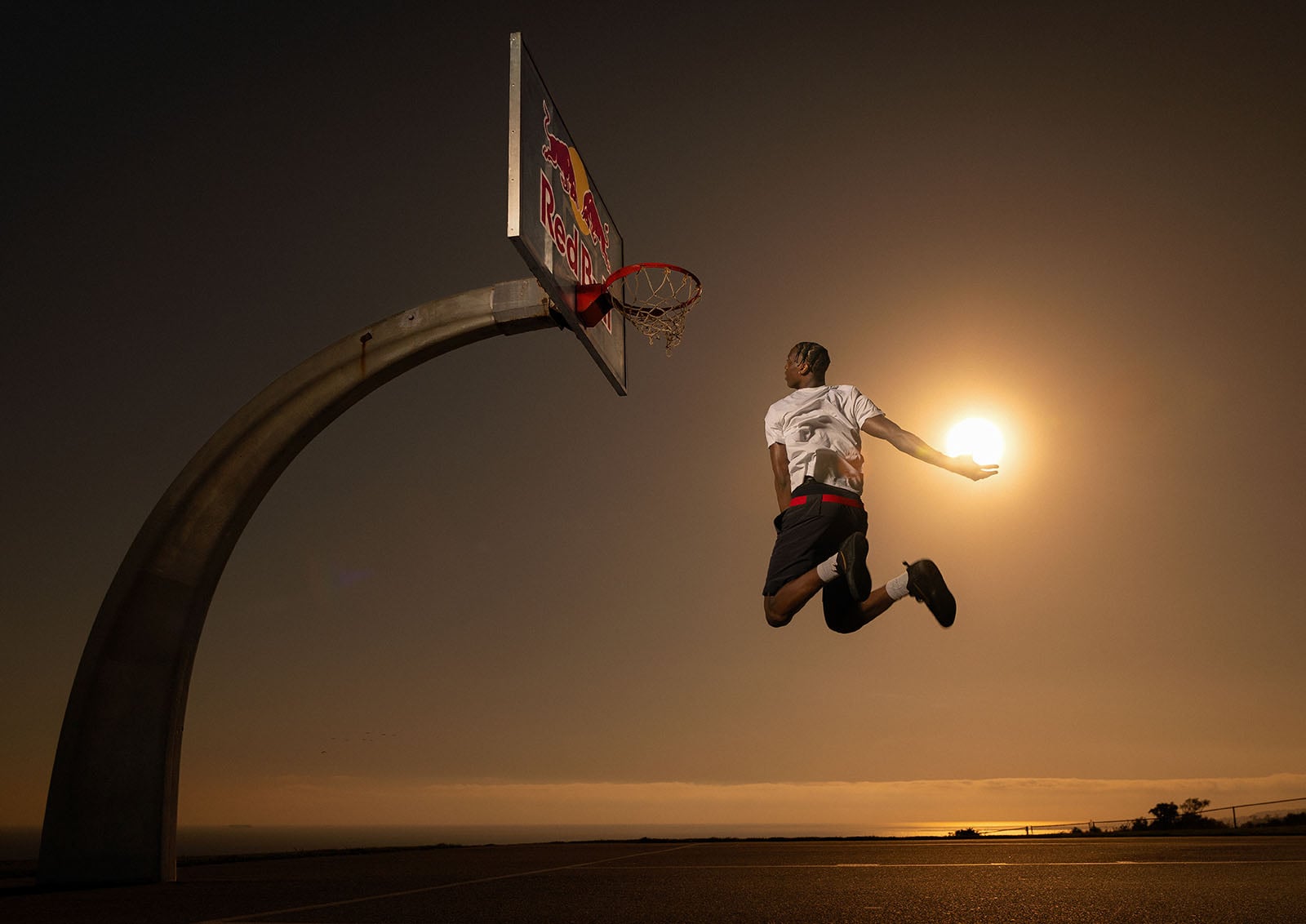
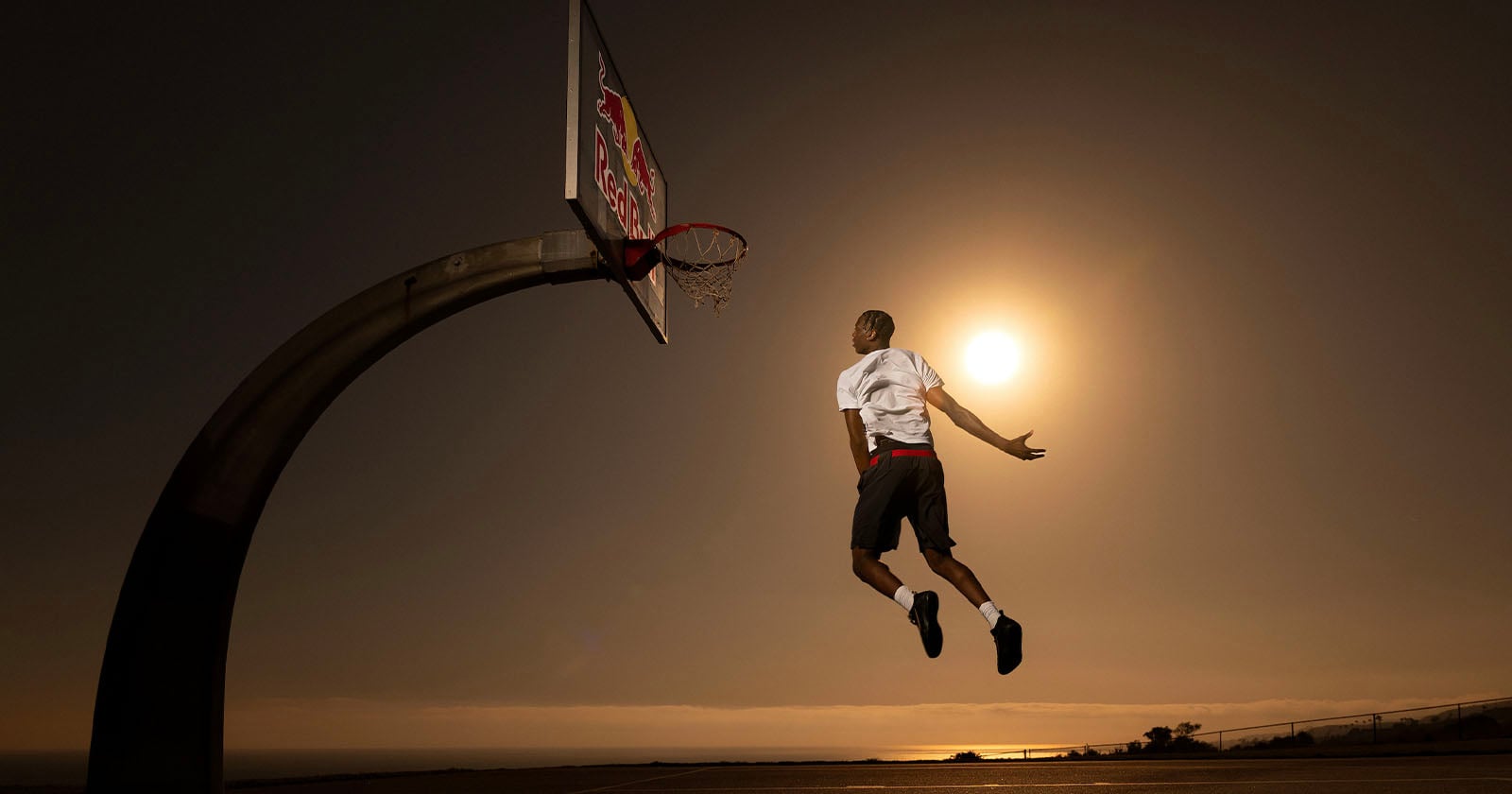
Over 10 years ago, photographer Dustin Snipes revealed how he captured an iconic shot of NBA star Anthony Davis dunking the Sun. But fast-forward 11 years, and Red Bull once again commissioned Snipes to do a near-identical shoot. Only this time with AJ Dybantsa, who is projected to be the number one pick at today’s NBA Draft.
“Pulling off a shot like this feels like I’m putting on a lab coat and tacking images connected with strings to equations all over my wall,” Snipes tells PetaPixel.
“You have to unleash your inner mad scientist a bit — blending camera and lighting knowledge with orbital mechanics, hard lighting physics, and precise geometric timing to solve the ultimate basketball photoshoot equation: how to dunk the Sun.”
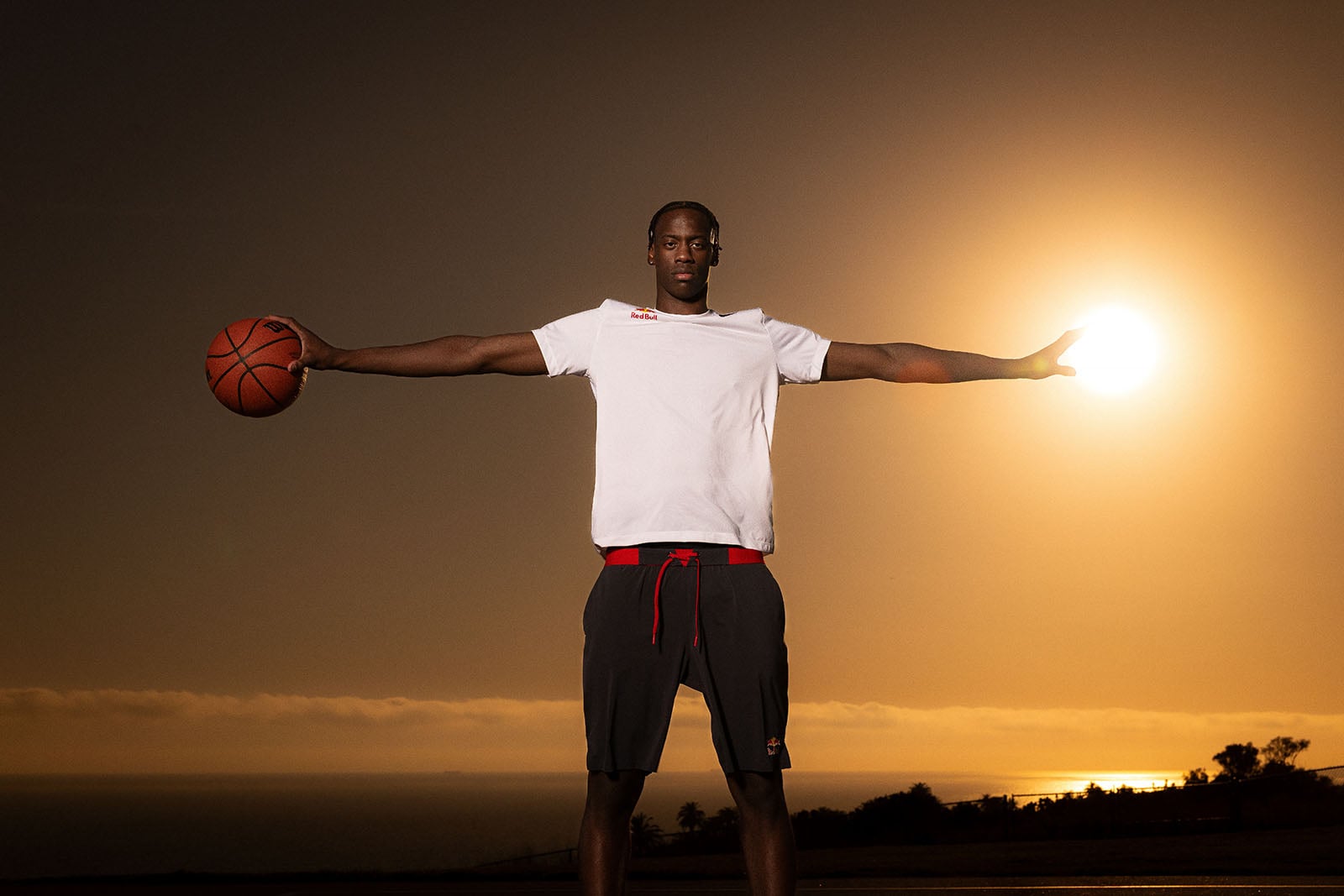
Snipes even went back to the exact same basketball court in San Pedro, California, where he shot Davis in 2015, and where he knew he would get an unobstructed view of the horizon.
“The Sun is constantly moving across the sky roughly the width of its own diameter every two minutes. Because of this, the entire shoot must be choreographed minute-by-minute,” Snipes explains. “Once the alignment hits, there is zero room for hesitation — things have to flow perfectly, and if not, move on, or the Sun will move on without you!”
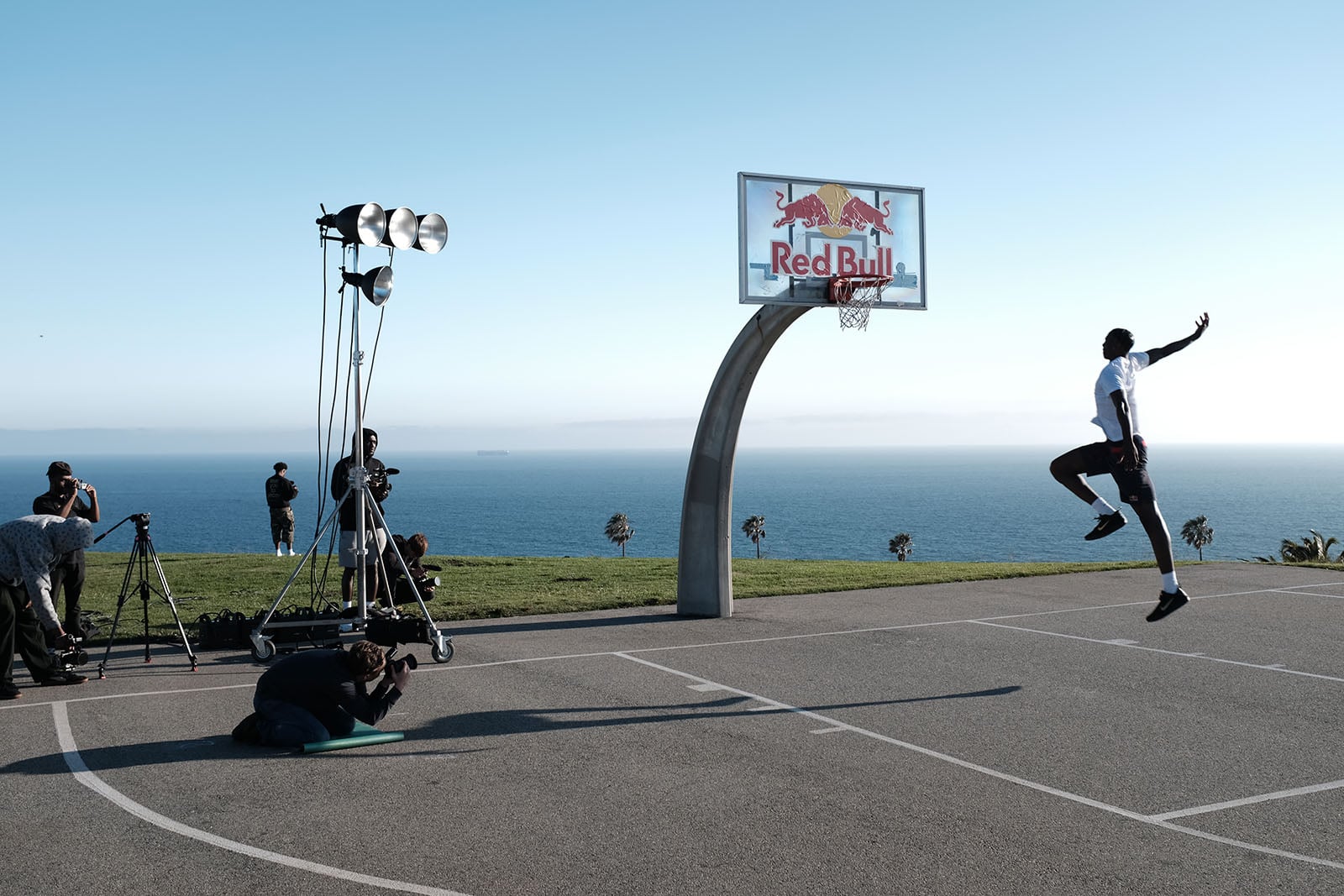 To the uninitiated, it looks like Dybantsa is playing imaginary basketball. | Photo by Marv Watson
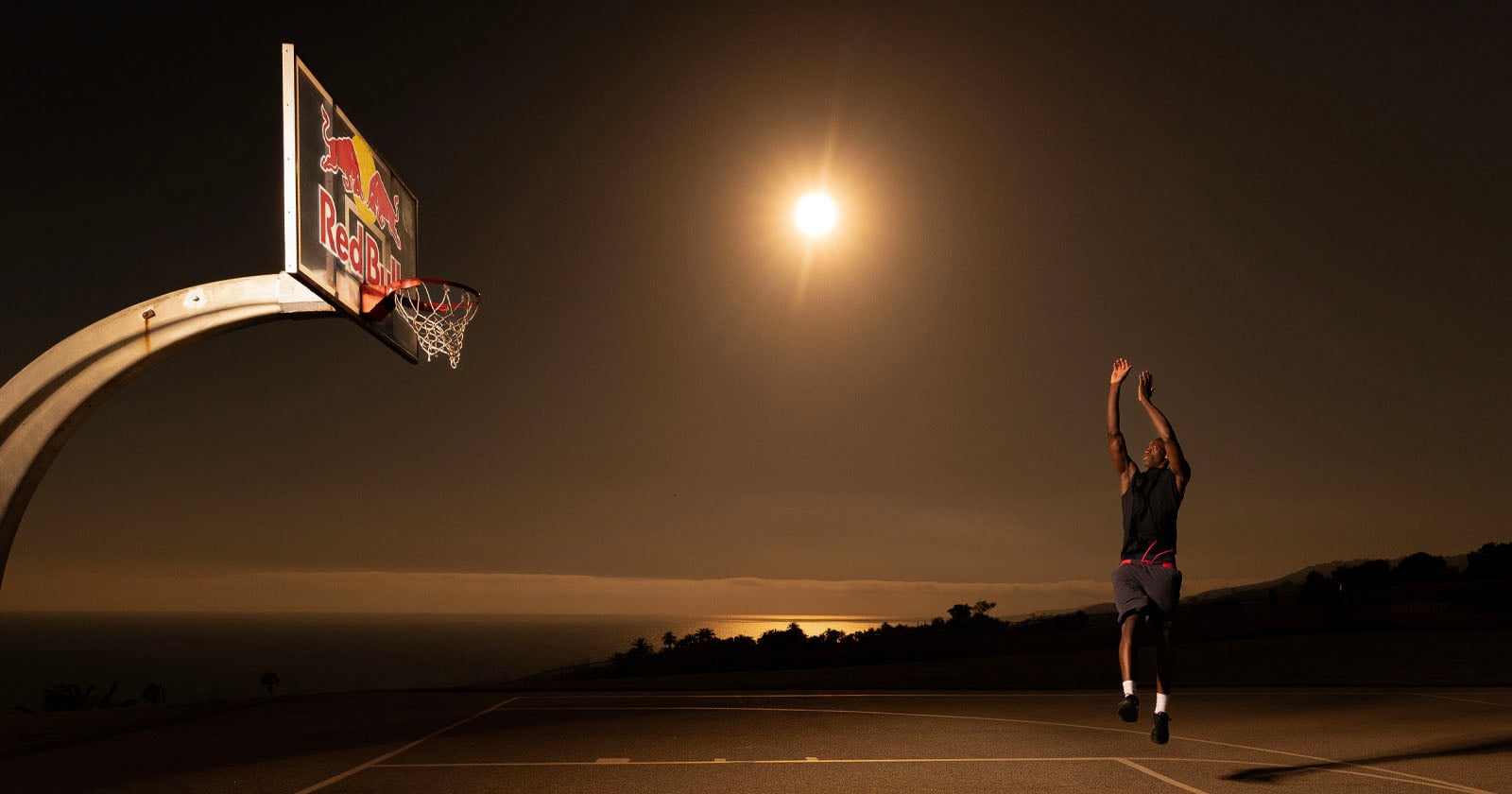
Snipes says that for the shoot to work, the photos have to be dramatically underexposed relative to the ambient light. For this, Snipes needed the help of a 6-9 stop variable ND filter, which not only enabled him to set his camera on the correct settings but also protected his eyes and equipment from the Sun’s power.
“If you tried to shoot directly into the Sun at a normal native sync speed without that filter, you would be forced to choose between two literal impossibilities to get that exact same dark ambient look,” Snipes says.
“If you wanted an f/4 aperture, you would need a shutter speed of 1/128,000. Or if you kept your shutter speed at a sync speed of 1/250 or 1/400, you would require an aperture all the way down to f/64 or f/90!”
Mechanical shutters tend to peak at 1/8000 and standard lenses only stop down to f/22. So without the ND filter, it’s an impossibility.
“Slapping on a variable nine-stop glass did the heavy lifting, so I could shoot at a crisp, highly functional 1/250s at f/4 on the Canon R5 Mark II, and 1/400s on the R1.”
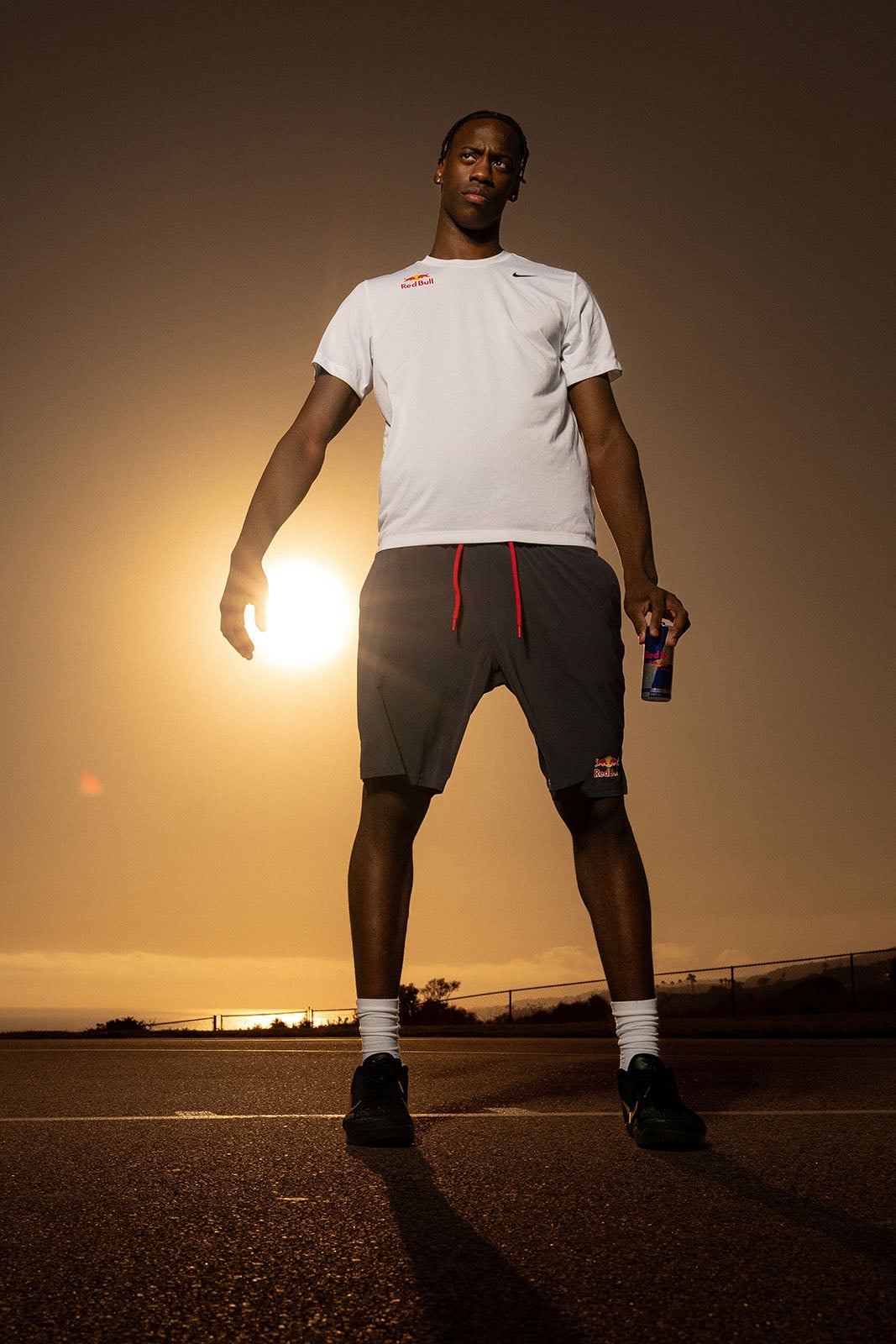
The variable filter also solved another problem for Snipes. When using a 9-stop filter, it is too dark for the camera’s autofocus sensors to see through and lock on to the subject. To bypass this, Snipes rolls the variable ND down to its lowest density, knocks the focus into manual, then rolls the glass back up to the maximum density to bring the Sun back to basketball size.
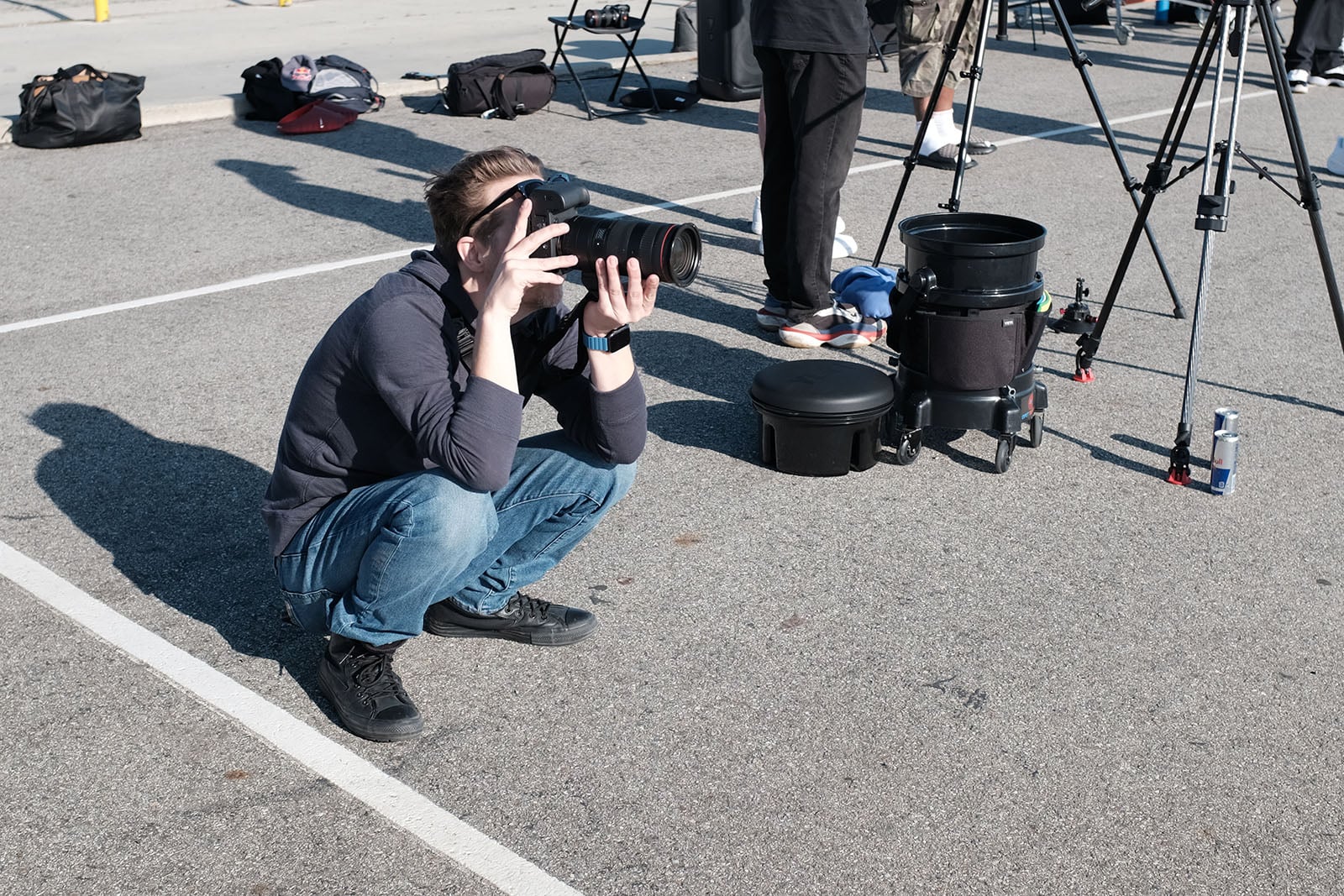 Snipes in action. | Photo by Marv Watson
Exposing for the Sun means that the rest of the frame will be underexposed and dark. So to light up Dybantsa as he leaps, it required a powerful lighting rig.
“To throw light across a 15-to-20-foot gap and beat the Inverse Square Law, I used 4x Profoto Pro-11 packs (9,600Ws total capacity) with one head per pack,” Snipes says.
“I then used two Telezoom reflectors and two Magnum reflectors on the lights. These modifiers created a highly concentrated, narrow beam. This maximized our power output but left a razor-thin ‘hit zone’ for the athlete, making precise sync and timing between my shutter and their jump absolutely paramount. The athlete and I must create a rhythm and work as a team to get the best results.”
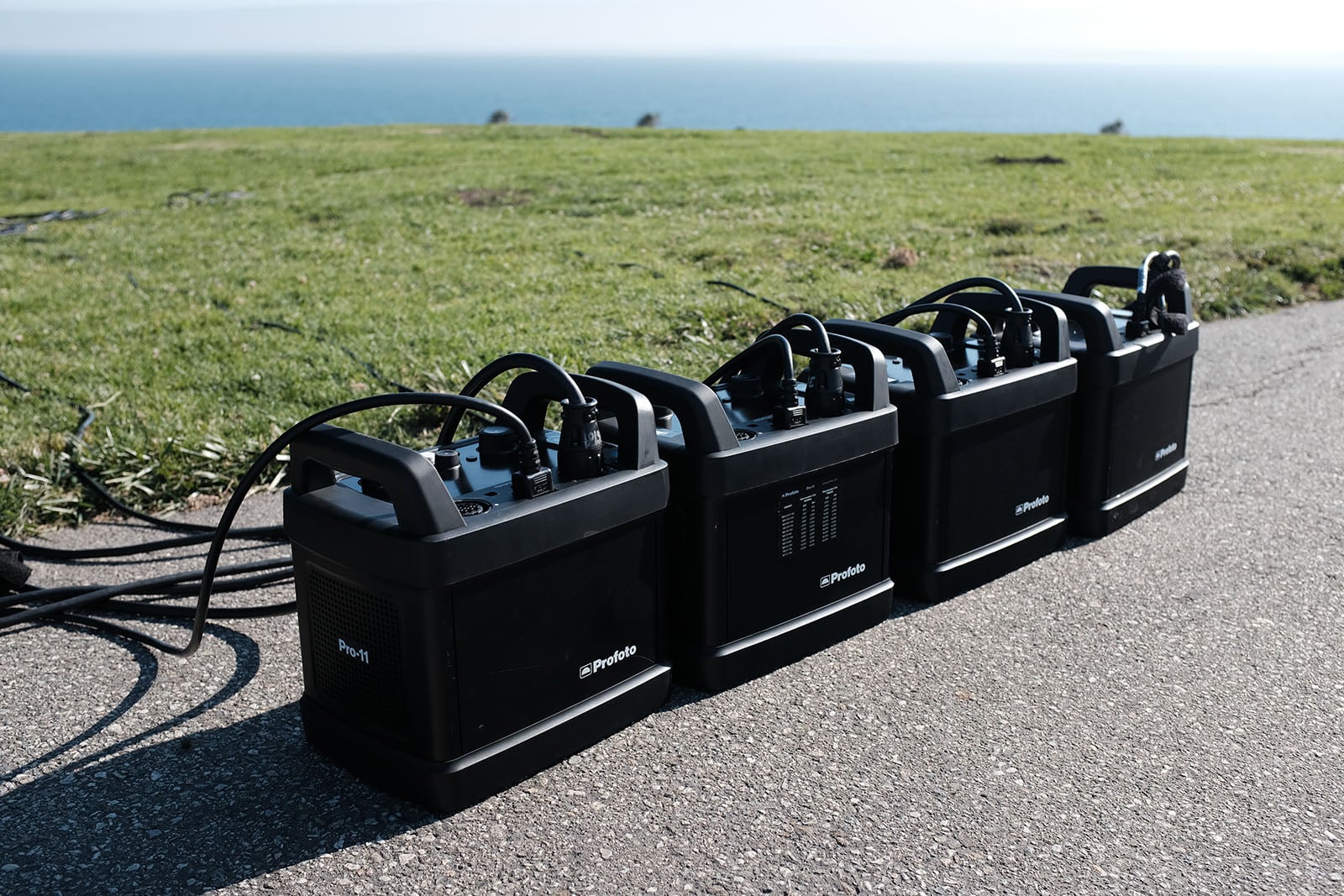 Photo by Marv Watson
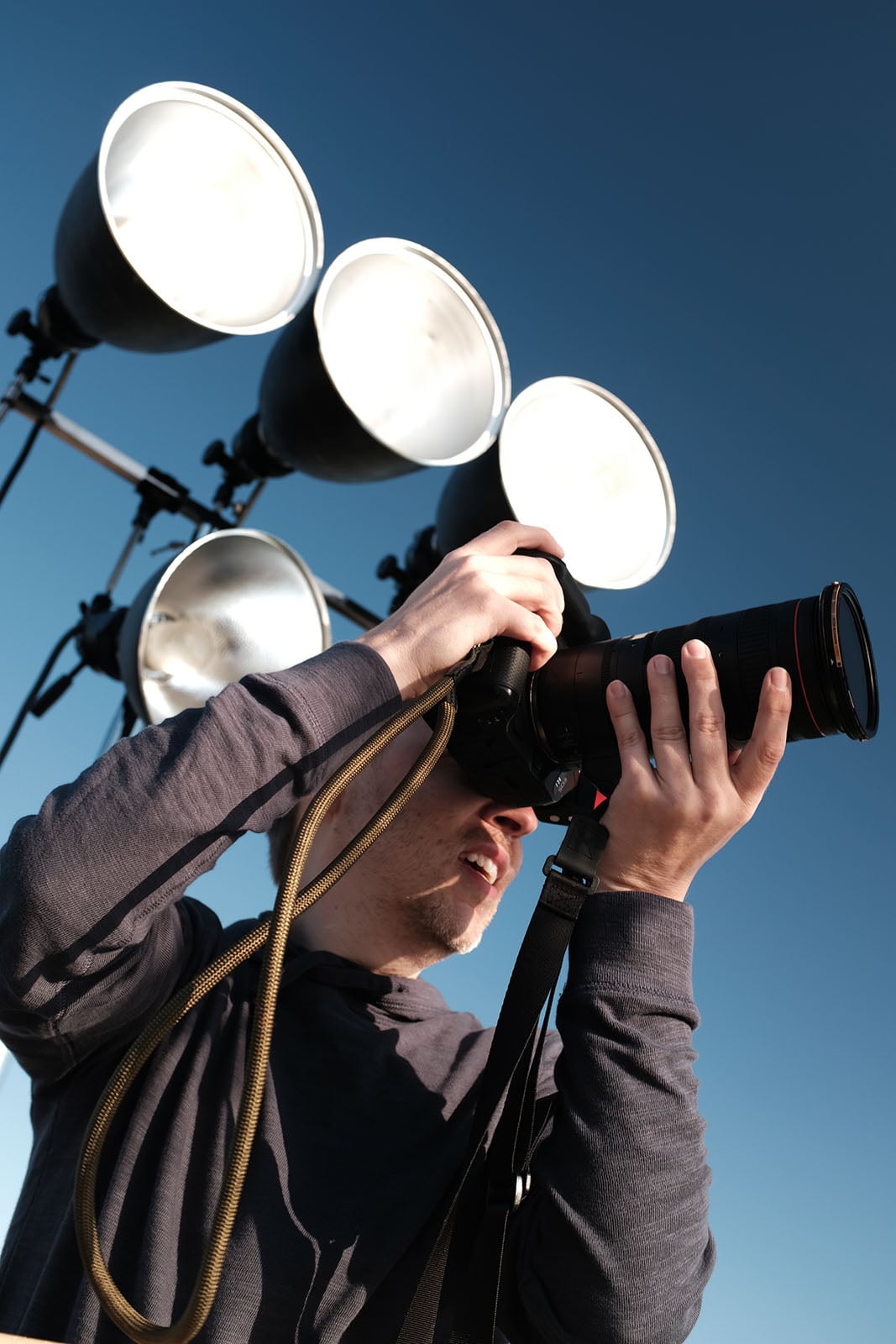 Photo by Marv Watson
Leaving Nothing to Chance
“I did a full site run-through 24 hours prior. I mapped out the Sun’s trajectory minute-by-minute, planning the exact timing for each of our seven to 10 positions (dunking, shooting, standing, and holding the Sun, etc.),” Snipes says. “I recorded my precise distance from the player, the required focal length, and the Sun’s position for every single frame.”
Snipes also had to think about protecting his eyes and his camera equipment, since he was pointing directly into the Sun.
“Pointing your camera straight at the Sun turns your lens into a magnifying glass, focusing intense heat into a single point,” he says. “If you zoom in without a heavy ND filter, you can physically melt your shutter blades or burn out your digital sensor in a fraction of a second… I’ve done this before.”
“The danger is even worse if you are using an older camera with an optical viewfinder,” he continues. “Looking through that glass means focusing blinding solar radiation directly onto your retina, which can cause permanent eye damage instantly. That heavy variable ND filter isn’t just an exposure tool — it is a mandatory shield for your eyes and gear.”
More of Snipes’ work can be found on his website and Instagram.
Image credits: All photos by Dustin Snipes/Red Bull unless otherwise stated.



 English (US) ·