
First Released October 16, 2026
Systems



Published Oct 16, 2026, 9:00 AM EDT
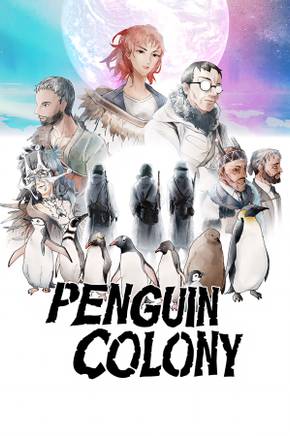
Penguin Colony is an intriguing take on H.P. Lovecraft that stands out from most horror games but stops short of its potential for greatness.

H.P. Lovecraft's At the Mountains of Madness mentions penguins a few times. They exist only on the periphery of the story, wandering about the Antarctic with less intent than the human expedition at the center of the novella. When several appear in the depths of an ancient civilization's remains, they're described as "aliens there, but indifferent and unseeing."
Penguin Colony, developed by ORIGAME DIGITAL and published by Fellow Traveller, questions just how unseeing those penguins were. Rather than stepping into the shoes of At the Mountains of Madness protagonist William Dyer, the game displays its remix of At the Mountains of Madness through the eyes of a flightless bird, waddling and sliding across erratic landscapes. It's a curious approach to a horror tale, abandoning most of its fear factor and offering up a few interesting ideas as a substitute for scares.
Penguin Colony Is A Sliding Simulator

Penguin Colony opens with the firing of a flare, a distress signal sent into the sky of an uncaring, frozen wasteland. Although it's hard to imagine any human capable of helping ever seeing the desperate gesture, a penguin does, and it starts to waddle toward the flare's light. Like most games, Penguin Colony is about following an objective, but the reason to do so is more instinctual and obscure.
While this is a walking simulator through and through, the fun of walking gets a big assist from playing as a penguin. As you traverse ice floes, snow drifts, and the strange geometry of ancient ruins, you can waddle, slide, swim, and leap, taking advantage of the simple joys of momentum. The physics behind it all don't make very much sense — you'd be surprised by how much uphill sliding is possible here — but that isn't really the point.
All of that explains the Penguin part of the title easily enough, but the Colony is also significant. Rather than playing as a single bird, you can swap between penguins whenever others are around, taking advantage of different species for different perks.
Some swim faster, some jump higher, and some contain presumably unique traits hidden behind the script of a long-forgotten language. The concept is neat, but limited in practice. The differences between penguins aren't large enough to make most of them especially interesting to play, and I found myself sticking to the rockhopper's jumping ability more often than not.
Whether you're playing a fuzzy penguin chick or a towering king penguin, you'll keep pressing forward, picking up a number of collectibles along the way. Orbs of light strewn about the snowy wastes contain words, which have no particular impact on the game but contribute to an interesting archival sensibility. At the end of the game, a map of collected information calls for players to synthesize their findings with others, gesturing toward community in an otherwise lonely game.
A Horror Game On The Periphery

Penguin Colony's loneliness is foundational to its experience. The penguins might not be unseeing, but mechanically, they're roughly as impassive as Lovecraft described. As the game progresses, it reveals a long succession of explorers with shattered minds and corpses littering the snow. The penguins, however, simply keep moving, and the forces that have driven the men insane never harass them very much.
Over the course of Penguin Colony's runtime (which is only a few hours), it touches on the tale of two different expeditions. One is wrapped up in fascist desires, while the other represents an initially unclear but fundamentally different goal. Penguin Colony follows the impulse of modern Lovecraft adaptations to repudiate the author's objectionable beliefs, and it gives the sparse narrative an interesting thematic element.
The act of observing in Penguin Colony makes it feel unlike most horror games. While many struggle to find the perfect balance of player agency and helplessness, Penguin Colony embraces powerlessness, but establishes neither the desire to intervene nor any particular fear associated with the inability to do so. At its core, it's a vaguely pleasurable game about sliding around, and horrors just so happen to unfold as you do so.
Depending on what you want to get out of it, this could be a good or bad thing. Seeing an orca underwater is scarier than encountering a shoggoth, because for a penguin, the orca actually matters. A dispassionate horror game is a unique premise, and it contributes to the game's re-framing of human insignificance in a Lovecraftian universe. Those interested in scares, however, can understand why the concept isn't more common.
Beyond that, Penguin Colony's treatment of cosmic horror struggles to find anything particularly cosmic. In a media landscape saturated with weirdness, it's hard to make ideas like ancient beings and alien structures as scary now as they were to Lovecraft's original readers. Penguin Colony features a few interesting visuals toward the end, but for most of its runtime, it doesn't even live up to the novella in this regard, rendering its ruins in a disappointingly routine way.
Penguin Colony Stops Short Of Its Full Potential

This is part of Penguin Colony's broader limitations, which lie in the general underdevelopment of its ideas. Despite all the interesting elements at play, it doesn't feel like most of them are taken as far as they could be. The light touch may be intentional in some regards, and attempting bigger swings could detract from the game's observational sensibility.
Aside from the landscapes becoming more complex to traverse, though, the overall experience verges on monotonous, without many sparks of interest or brilliance to punctuate the journey. Penguin Colony crafts a compelling vibe with an interesting new take on a classic horror story, but the retelling struggles to deliver a definitive punch.








 English (US) ·