
 2 weeks ago
9
2 weeks ago
9

Panasonic Lumix makes fantastic hybrid cameras that perform well in a variety of situations. However, many argue that most aren’t particularly good-looking cameras.
Speaking to PetaPixel at the CP+ Show in Yokohama, Japan earlier this year, Panasonic’s Toshiyuki Tsumura, Executive Vice President, Director, Imaging Solution Business Division, agrees, and the S9 is the first example of the company recognizing the importance of attractive design.
“Except for the S9, Panasonic’s Lumix cameras are generally seen as somewhat practical-oriented. Perhaps influenced by the success of the S9, which particularly appealed to younger users, Lumix has started paying more attention to users who value style and design. The S9 primarily targets young smartphone users, so its development focused on designs that appeal to that demographic,” he says.
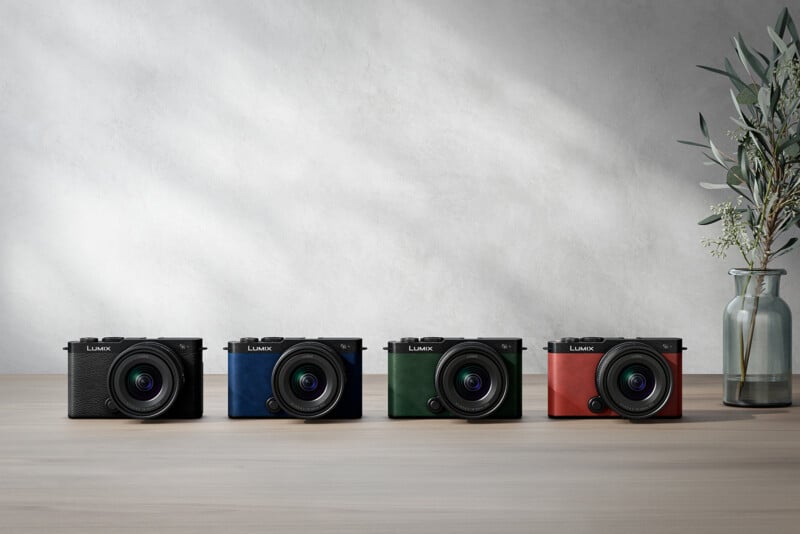
Even so, Tsumura did not dismiss the designs of its more recent other full-frame cameras, arguing that the team’s choices there made sense from their perspective.
“On the other hand, the S1 II and S5 II series also incorporate designers’ meticulous attention. The concept behind their design is ‘Mushin Shaping Emotion.’ The idea is for photographers to fully concentrate on their subject and capture the exact moment they want without thinking about the operations, thereby effortlessly creating their ‘works.'”
Mushin is the Japanese concept of emotional equilibrium. It roughly translates to the idea of “no mind,” but that doesn’t mean no thought. Instead, it is the idea of freeing the mind from over-complicated thoughts of fear, hesitation, ego, and the like. Essentially, it is a concept that encourages people not to overthink and, hopefully, flow more naturally with a process.
 Photo by Erin Thomson for PetaPixel
“Lumix aims to be that supportive presence behind the scenes. To achieve this state of mushin, or calm focus, we carefully analyze each operation, pay attention to even 0.1mm adjustments, and pursue ‘functional beauty’ based on the optimal layout and usability. Reliable operability ensures that you never miss the decisive moment in any situation,” Tsumura says.
“To achieve this, we repeatedly experiment and verify countless prototypes, considering not only stability and grip comfort but also portability. We carefully design the knurling of dials and lens rings, considering surface shape, pitch, finger grip, and tactile feel. Buttons and levers are also meticulously refined in terms of shape, protrusion, and feel when pressed, balancing usability as a tool with the pleasure of operation. We are dedicated to designing each category with careful attention to meet the needs of our target users.”
Image credits: Unless otherwise noted, photos via Panasonic Lumix







 English (US) ·