
Oscal Pilot 5: 30-second review
The Pilot 5 sits in the lower-mid tier of the Oscal rugged lineup, slotting beneath the Pilot 6 and the more premium Marine 3. Its headline features are a 15,000mAh battery with 33W fast charging, a 6.67-inch 120Hz IPS display, and the UNISOC T8100 chipset built on a 6nm process. Importantly, it ships with Android 16 via Oscal's DokeOS 5.0 skin, which is ahead of most of the competition at this low price point.
Performance from the UNISOC T8100 is modest by flagship standards, being roughly in line with what you would expect from a mid-range chip at this price bracket. Day-to-day tasks, navigation, and messaging are handled without fuss, though the processor is not intended for demanding 3D gaming. The 8GB of LPDDR4X RAM is extendable to 24GB via virtual memory, though by current standards, the memory type and capacity aren’t the best.
Even greater cost-cutting was evident in the camera choices, with a 16MP rear sensor and a 13MP front camera, making this less than ideal for photography.
The genuine strength of this device is its battery and power efficiency. At 15,000 mAh with 33W fast charging, endurance over several days of moderate use is realistic.
Connectivity is broad, covering 5G across a solid band selection that includes the key UK and European frequencies. Wi-Fi reaches 802.11ac (Wi-Fi 5) but stops short of Wi-Fi 6, which may disappoint those who want the fastest possible local network speeds. Bluetooth 5.0 and NFC are both present.
The built-in 5W speaker is rated at 140dB if you want to damage your hearing, and the 410-lumen camping torch is a practical inclusion for outdoor users. Oscal's Doke AI 2.0 platform integrates DeepSeek-R1, ChatGPT-4o mini, and Gemini 2.0, giving the device a broad AI toolkit that goes well beyond what most competitors at this price offer.
Overall, the Oscal Pilot 5 is a mixed bag with a few good points and undeniable weaknesses. It’s affordable, but it won’t be included in our best rugged smartphone collection.
Oscal Pilot 5: price and availability
- How much does it cost? $390/£232/€277
- When is it out? Available now
- Where can you get it? You can get it directly from Blackview or via many online retailers.
The phone is available directly from the makers, Blackview, where the price is £232 in the UK and €266.95 across Europe. Oddly, and this might be tariff-related issues, the US price is $389.99 direct from Blackview, but it can be found on AliExpress for only $269.98, a much better deal.
However, I can’t confirm if there might be extra duty to pay using that source. For Europeans, the best place to buy this phone is directly from the brand, since prices are better than on popular Chinese importers like AliExpress.
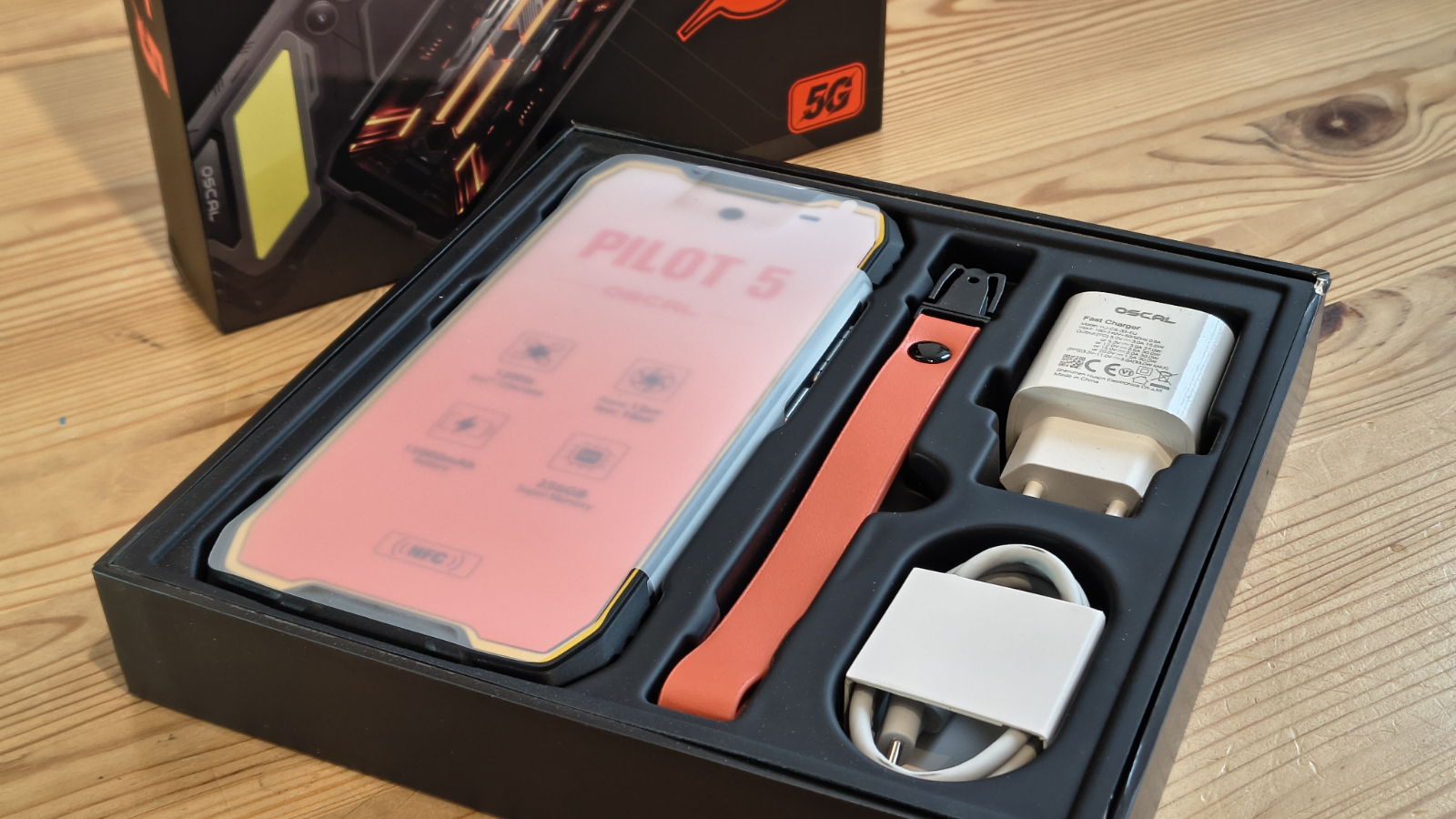
There are only two SKUs of the Oscal Pilot 5, and those are the two colours on offer: Yellow and Black. All have 8GB of RAM and 256GB of storage.
What’s slightly curious is that one of the strongest competitors, the Pilot 5, also comes from the same stable, the Blackview Rock 2 Pro. It offers the same 15,000mAh battery with a dual 400-lumen camping light, 32GB RAM (8GB physical plus 24GB virtual), 256GB storage and a similar camera arrangement. And at $363.99, it is cheaper than the Pilot 5.
A better choice than either of those is the Oukitel WP56, since it has a 108MP camera sensor, 16000mAh battery and 45W charging, all for around $260.
If I wanted a cheap, rugged phone, I’d also look at the Doogee S200 and Ulefone Armour 29 Ultra, both of which have better specs and lower prices.
Overall, the Pilot 5 is an inexpensive phone, but that doesn’t make it a great value for money.
- Value score: 3.5/5
Oscal Pilot 5: Specs
Swipe to scroll horizontally
Item | Spec |
UNISOC T8100 (UMS9620), Octa-core, 6nm, 4 x A76 @ 2.2GHz + 4 x A55 @ 2.0GHz | |
GPU: | ARM Mali-G57 |
NPU: | Unknown |
RAM: | 8GB LPDDR4X |
Storage: | 256GB UFS2.2 (expandable via MicroSD) |
Screen: | 6.78-inch IPS Screen protected with Panda Glass |
Resolution: | 720 x 1604 |
SIM: | 2x Nano SIM + TF (one shared position) |
Connectivity | Wi-Fi 802.11a/b/g/n/ac (2.4GHz / 5GHz), Bluetooth 5.0, NFC, GPS |
5G Bands | N1/2/3/5/7/8/20/26/28/38/40/41/66/77/78 |
4G Bands | FDD: B1/2/3/4/5/7/8/12/17/19/20/26/28A/28B/66; TDD: B38/40/41 |
3G Bands | WCDMA B1/B2/B5/B8 |
2G Bands | GSM B2/B3/B5/B8 |
Weight: | 570 grams |
Dimensions: | 188.6 x 89.7 x 25.3mm |
Rear cameras: | 16MP Camera + 2MP Macro |
Front camera: | |
Audio: | 5W Smart-K BOX Speaker |
Camping Light: | 410-lumen |
OS: | Doke 5.0 (based on Android 16) |
Battery: | 15000 mAh (33W wired, 5W reverse charge) |
Colours: | Black. Yellow |
Oscal Pilot 5: design
- Not excessively heavy
- 720p display
- No wireless charging
- Doke 5.0
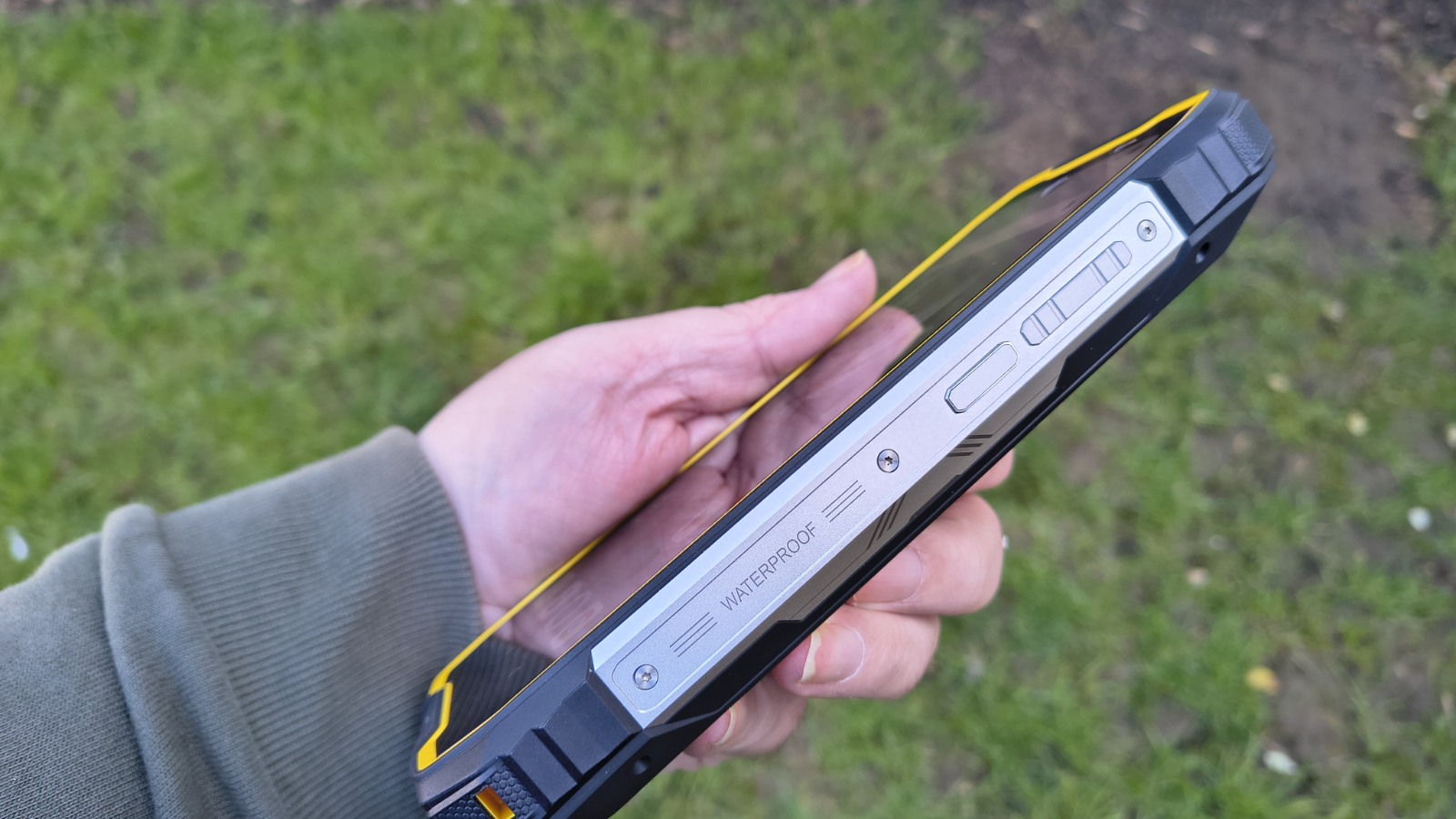
The physical form of the Pilot 5 will be familiar to anyone who has handled a Blackview design in the past five or so years. It sports the solid feeling metal-sided that gives way to reinforced plastic corners, and a bevelled edge makes it easier to hold.
At 570g, this isn’t the heaviest rugged phone by any degree, but it's not lightweight either, and fitting it in a pocket might prove a challenge.
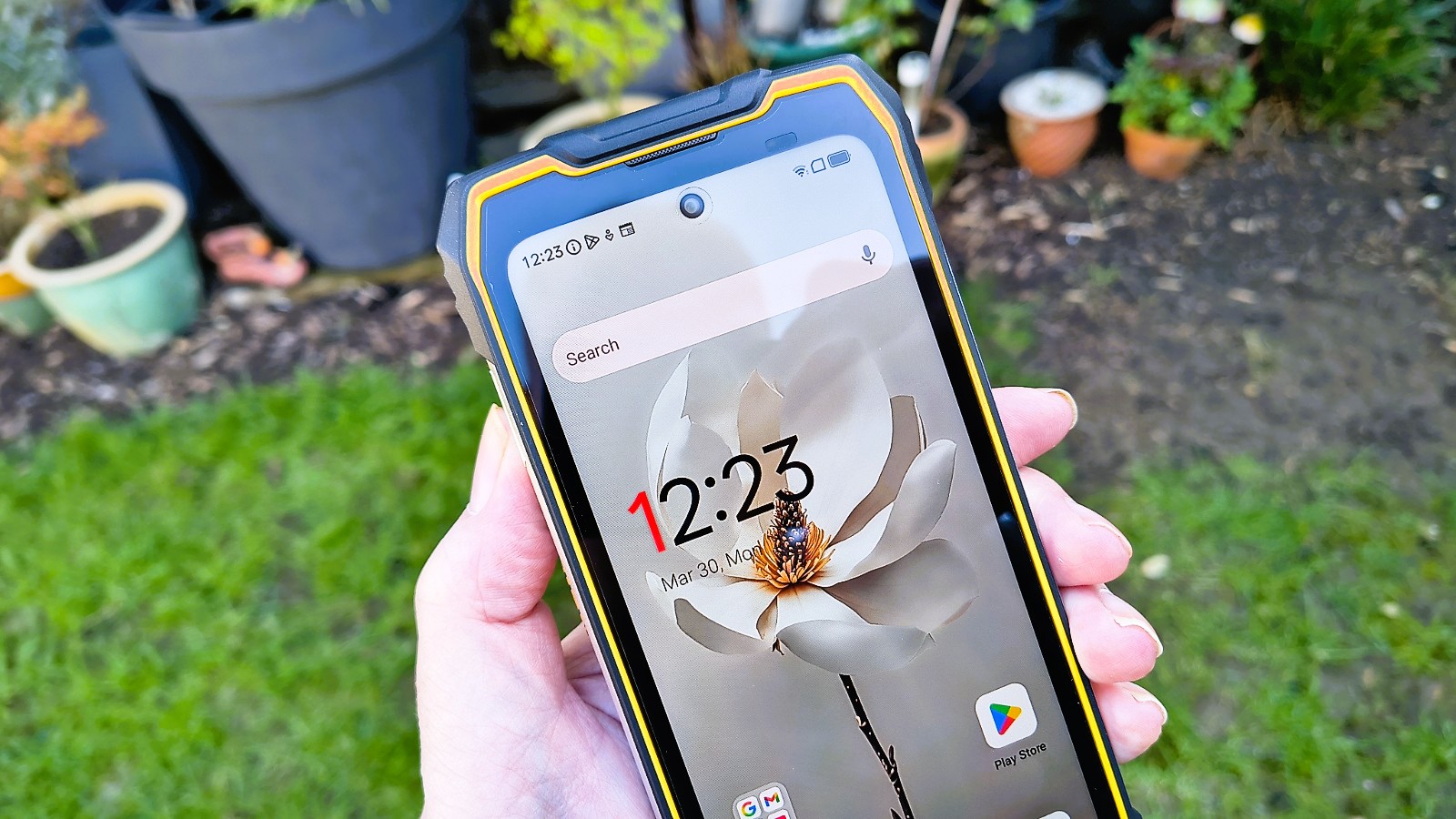
The Pilot 5 is available in Black and Yellow, with the latter being a popular choice in outdoor and worksite environments where high visibility matters. The yellow model that I received for review has a highlight line on the front, and that’s almost all the yellow on it.
That border also serves to highlight how much smaller the display is than the front of the phone. According to Blackview, this phone measures 188.6 x 89.7 x 25.3mm, but I measured the display width at around 70mm and the length at 155mm, resulting in substantial borders on all sides.
The panel is an odd 720 x 1604 resolution, which doesn’t achieve the level of FHD, never mind FHD+.
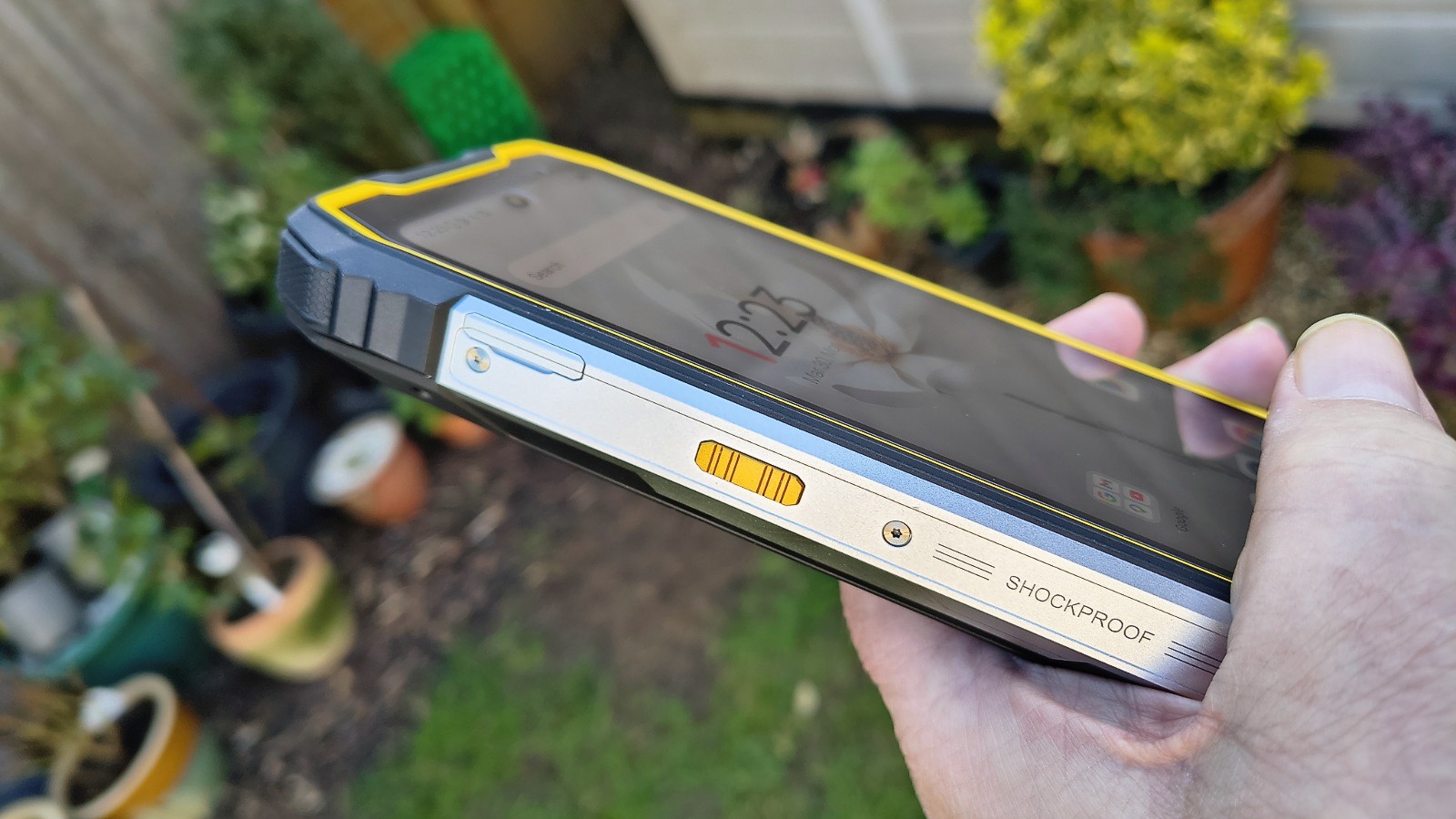
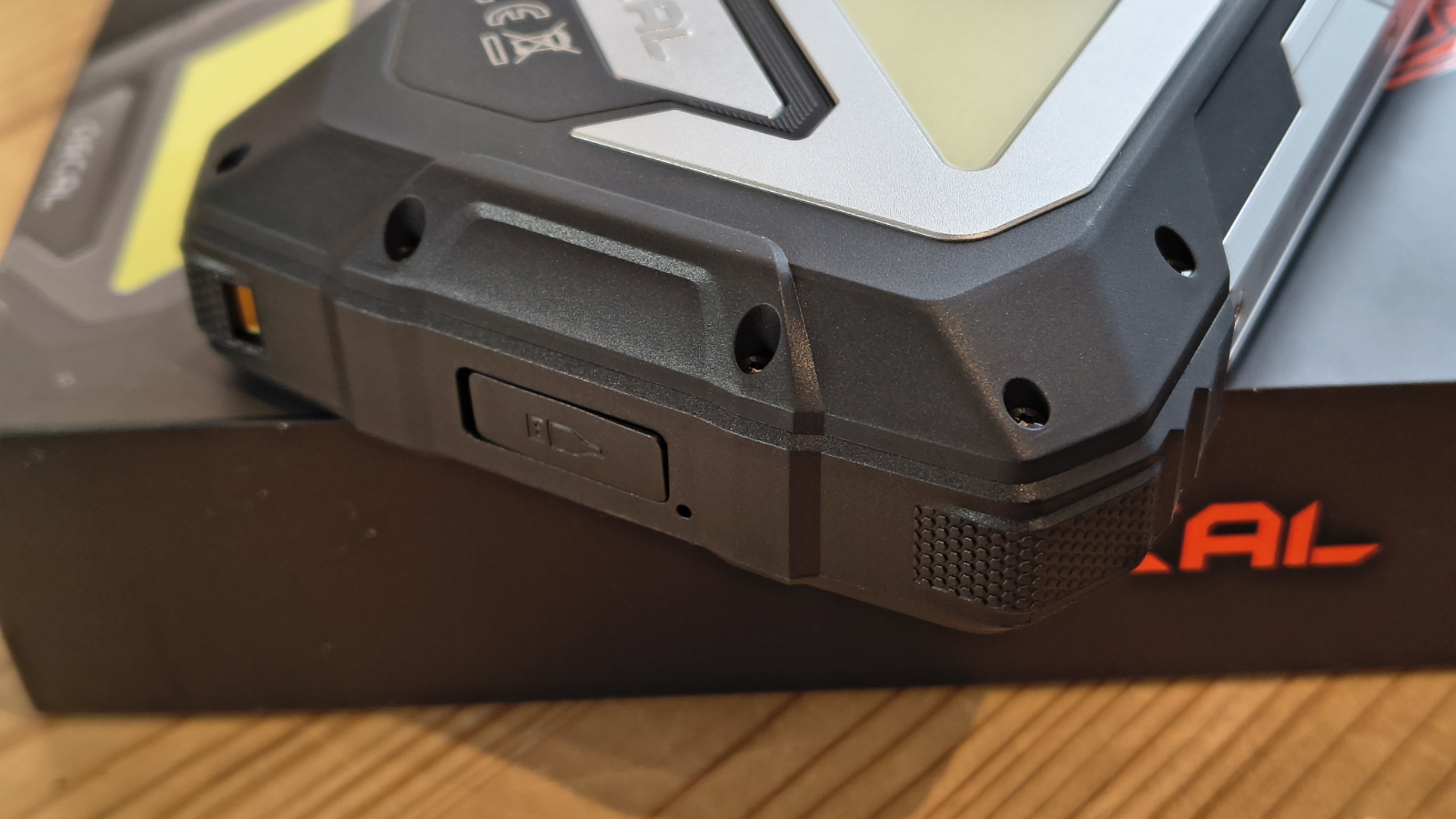
The buttons are less of a diversion, with the classic placement of power and volume on the right, with a custom button and SIM tray to the left. The USB-C port is on the bottom edge, and there is no 3.5mm audio jack for those who prefer that headphone option.
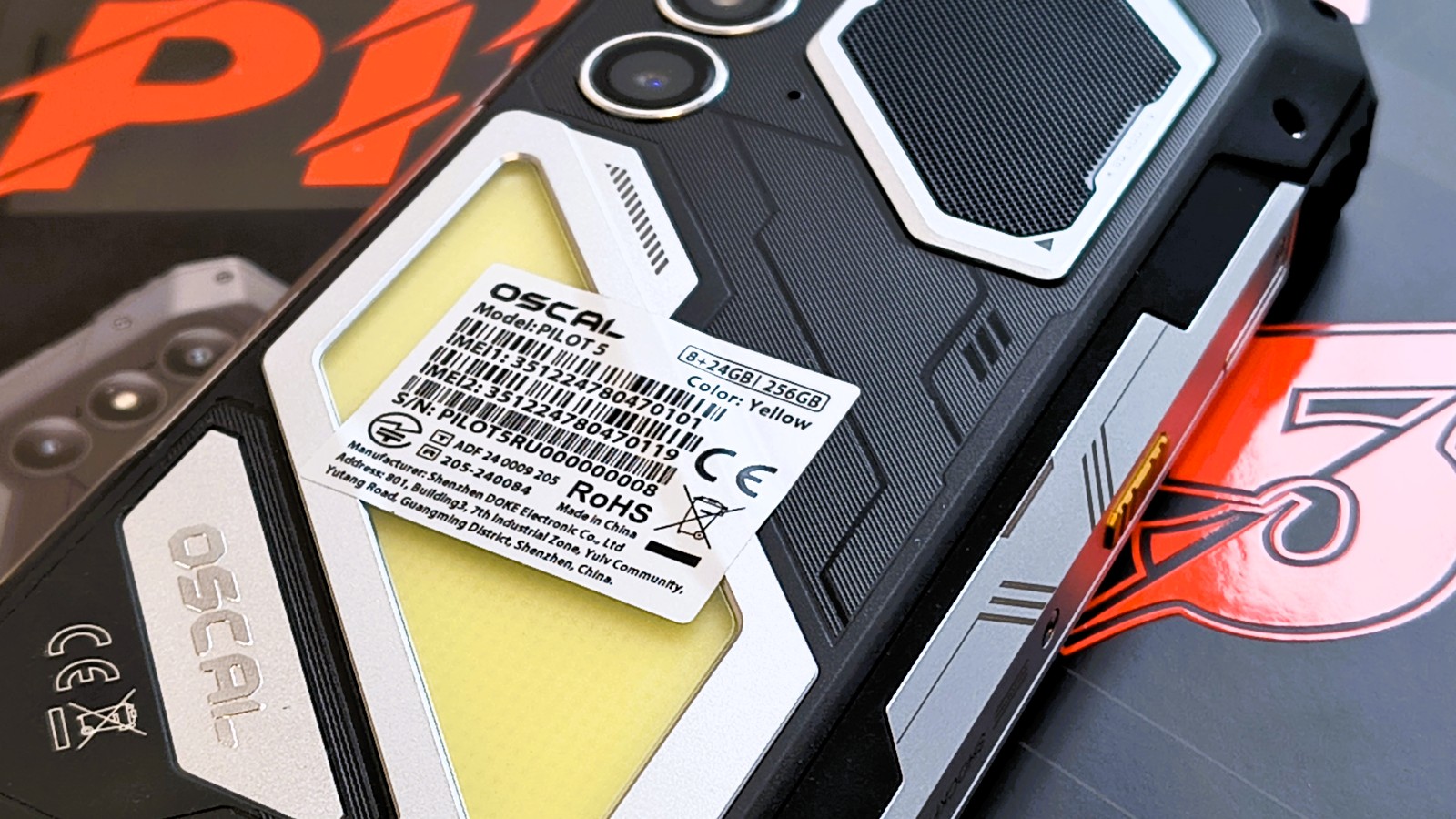
On the back, the camera cluster is forced onto the left to make room for a 5W speaker, and below that is a curious isometric camping LED that the makers helpfully obscured a portion of with the critical manufacturing label. Not sure why phone makers do this rubbish with the label, but it's certainly annoying. The placement and angle of the camping LED guarantee that there is no room for wireless charging coils, sadly.
The Pilot 5 ships with DokeOS 5.0 built on Android 16, making it one of the first rugged phones at this price point to launch with the latest Android release. Oscal's skin adds a range of customisation options, including wallpaper hubs, colour schemes, and theme styles, alongside a deep-cleaning memory management tool.
Doke AI 2.0 is the platform's AI layer, integrating three third-party models: DeepSeek-R1, ChatGPT-4o mini, and Gemini 2.0. The Hi Doki assistant handles document parsing, online search, and creative generation. The AI Global Smart Control feature is described as allowing voice or text commands to operate across the entire phone, including switching between apps.
None of these things is free, and a subscription is required for those who wish to chat on their phone on a regular basis. Since nobody has made a compelling argument for paying for AI right now, I suspect these tools will have quietly disappeared by the time the 2027 models come along.
Doke 5.0 is heavily encrusted with bloatware, so be prepared for that.
Design score: 3.5/5
Oscal Pilot 5: hardware
- UNISOC T8100 (UMS9620)
- 15000 mAh battery
This is the third phone I’ve covered that uses the MediaTek Dimensity 7025, and I haven’t changed my opinion of it.
The UNISOC T8100 is a 6nm octa-core chip comprising four Cortex-A76 cores running at 2.2GHz and four Cortex-A55 cores at 2.0GHz. This is a step up from the older T7300 found in many budget rugged phones. However, even mid-priced phones are using 4nm SoC these days, although at least the accompanying GPU is an ARM Mali-G57.
A wide selection of benchmarks places the Pilot 5 in the mid-range bracket, comfortably ahead of budget MediaTek Helio G-series chips but well below the Dimensity 8300 used in Blackview's more expensive Xplore 2. For the intended workload of rugged mobile users, this is generally adequate.
The 8GB of physical LPDDR4X RAM can be supplemented by up to 16GB of virtual memory drawn from the UFS2.2 storage, bringing the addressable total to 24GB. This virtual expansion is useful for keeping more apps resident in memory, but does not replicate the sustained throughput of physical RAM.
The 15,000mAh battery is the Pilot 5's most prominent specification. Oscal claims the device can cope with heavy use across multiple days, and with the phone in standby, the capacity should sustain the handset for weeks. For users whose daily routine involves long periods in the field with limited access to charging infrastructure, this is a meaningful advantage over a standard consumer smartphone.
My only reservation is that the 33W ‘fast charge’ that is highlighted in the phones promotional material isn’t all that special these days. Some phones charge at 45W and others at 66W, so 33W isn’t the fastest to refill the 15000mAh capacity.
While it can recover 20% from exhaustion in 30 minutes, the slower rate at which batteries charge as they reach full capacity would suggest that a complete recharge takes over three hours, and maybe closer to four.
I’m unsure if the 5W OTG support is useful, but it means the Pilot 5 can also act as a power bank to charge other devices. However, it's worth noting that each power transfer costs capacity to achieve.
With the exception of the battery capacity, there isn’t much to write home about under the hood of the Pilot 5.
- Hardware score: 3/5
Oscal Pilot 5: cameras
- 16MP, 2MP on the rear
- 13MP on the front
- Three cameras in total
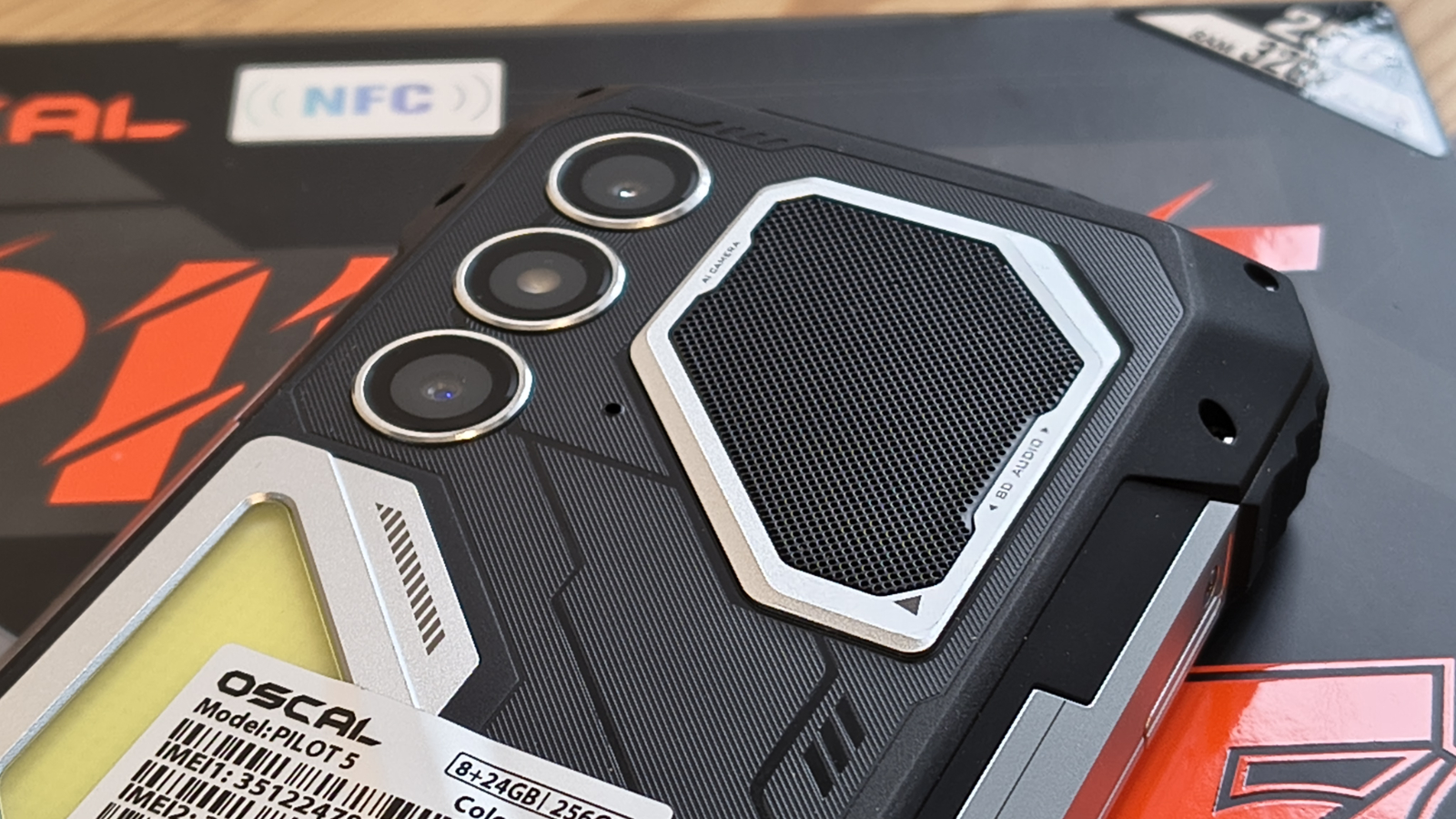
The Oscal Pilot 5 has three cameras:
Rear camera: 16MP + 2MP Macro
Front camera: 13MP
Normally, it’s not hard to work out what the camera sensors on phones are, mostly because the makers document that in the specifications.
In the Oscal Pilot 5 specifications, the selfie camera is listed first as a SC820CS by SmarSens Technology. I don’t believe this for good reasons, one of which is that the SC820CS sensor is only 8MP. It’s more likely that it’s a SC1320CS, but that’s a wild guess.
Another issue is the primary sensor, which is listed as an Omnivision OV13B10, a 13MP sensor, but it doesn’t meet the 16MP spec. Let’s assume that’s also wrong.
And, the 2MP macro sensor isn’t mentioned by Oscal, though a hardware analysis of the phone sees it. It could be an Omnivision or a GalaxyCore sensor, but I’m not sure which one.
Part of the issue here is that, normally, you can make educated guesses about the sensors used because those binaries were added to the platform when the OS was compiled. But in this case, no less than 82 camera sensors were compiled with Doke 5.0, including ones for 108MP Samsung sensors. Depending on how generous you feel, that’s either overkill, untidy or intended to obscure what is actually used.
But irrespective of the specific details of these sensors, the primary rear sensor is a 16MP unit with autofocus and a rear LED flash. The front-facing selfie camera is 13MP. There is no telephoto or ultra-wide lens and no dedicated night-vision sensor, which sets the Pilot 5 apart from the alternative Pilot 3 and Pilot 6 designs.
I’m not sure when the last time was I covered a phone that had a 16MP sensor as the best it could offer, but this one barely captures still images that are higher resolution than 4K video.
They are a suitable resolution for social media posts, but you wouldn’t want to try to print them.
Unsurprisingly, the top video resolution is 1080p, but you also get the same video resolution on the front. I could go into painful detail about how these sensors disappoint, but it would be easier if we just accepted that this isn’t the phone for photographers and moved swiftly on.
Oscal Pilot 5 Camera samples
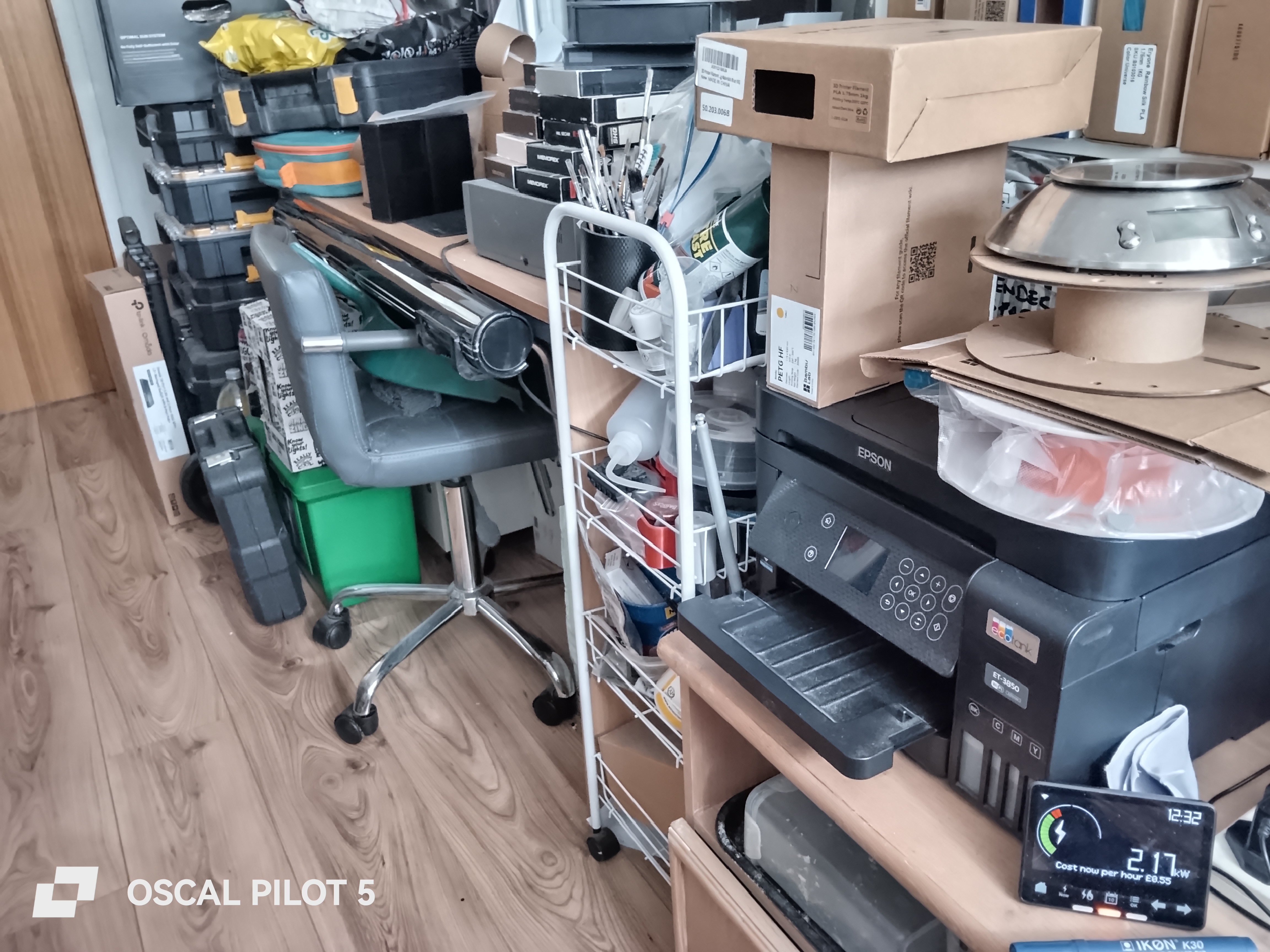
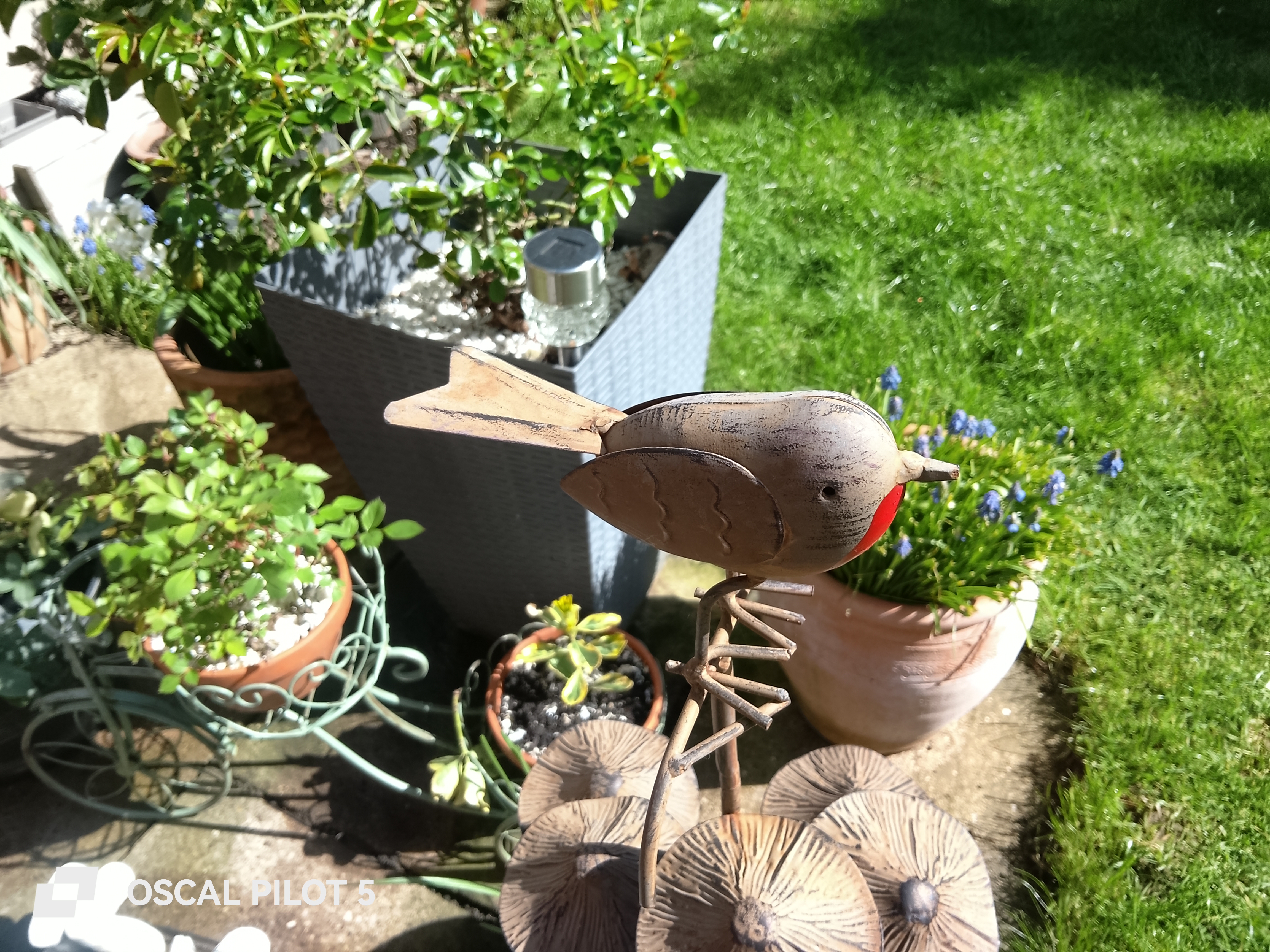
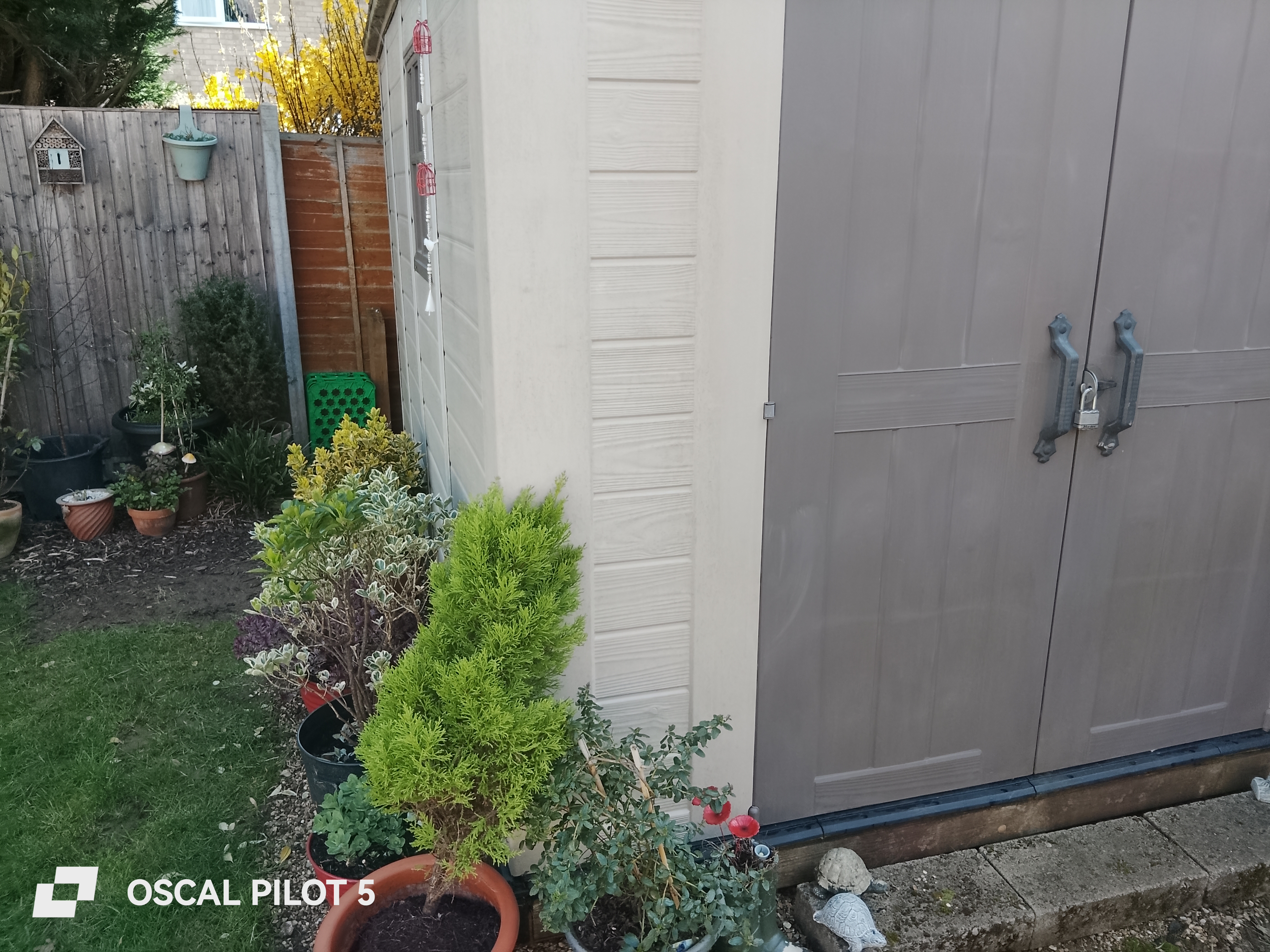


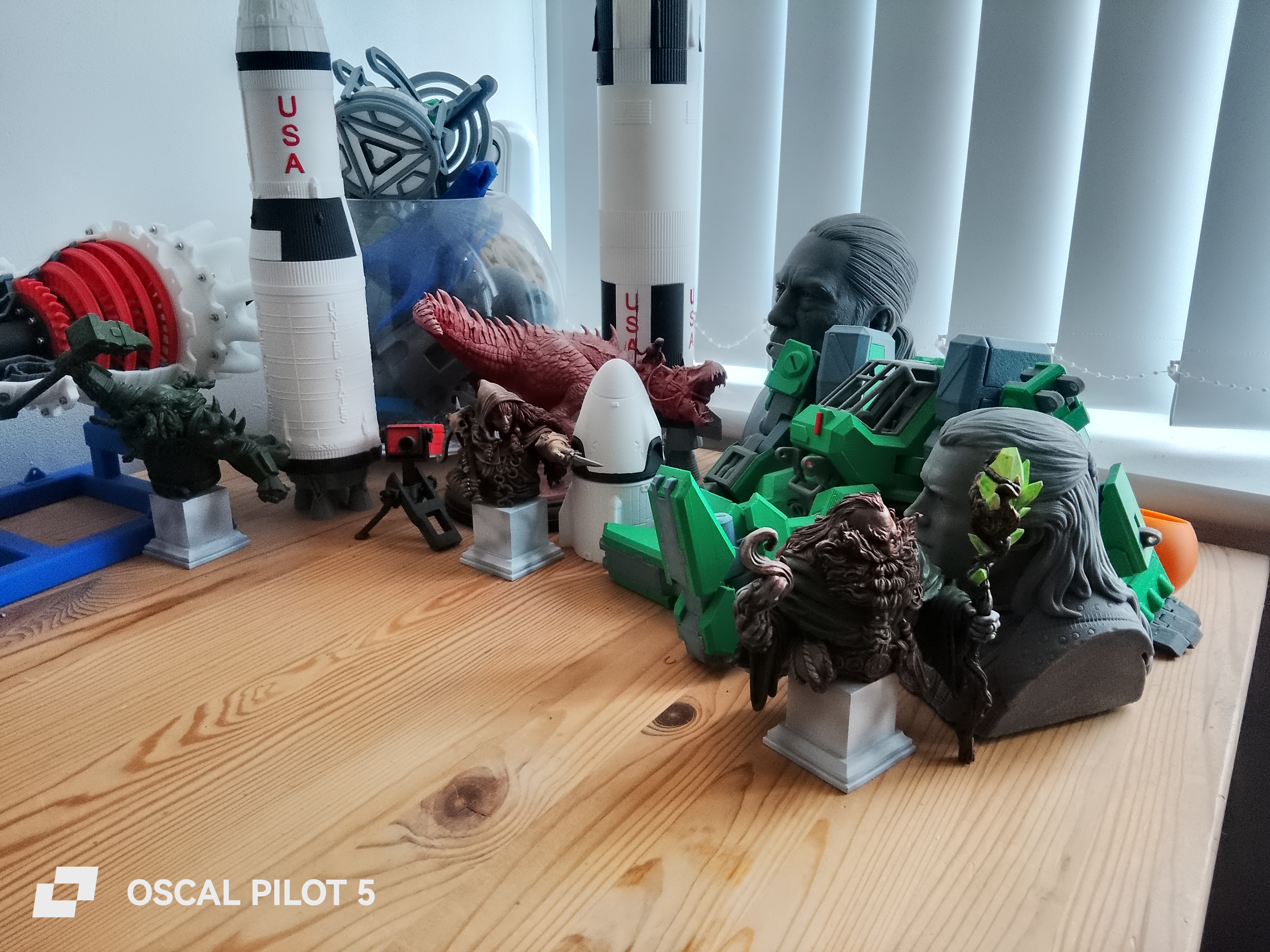
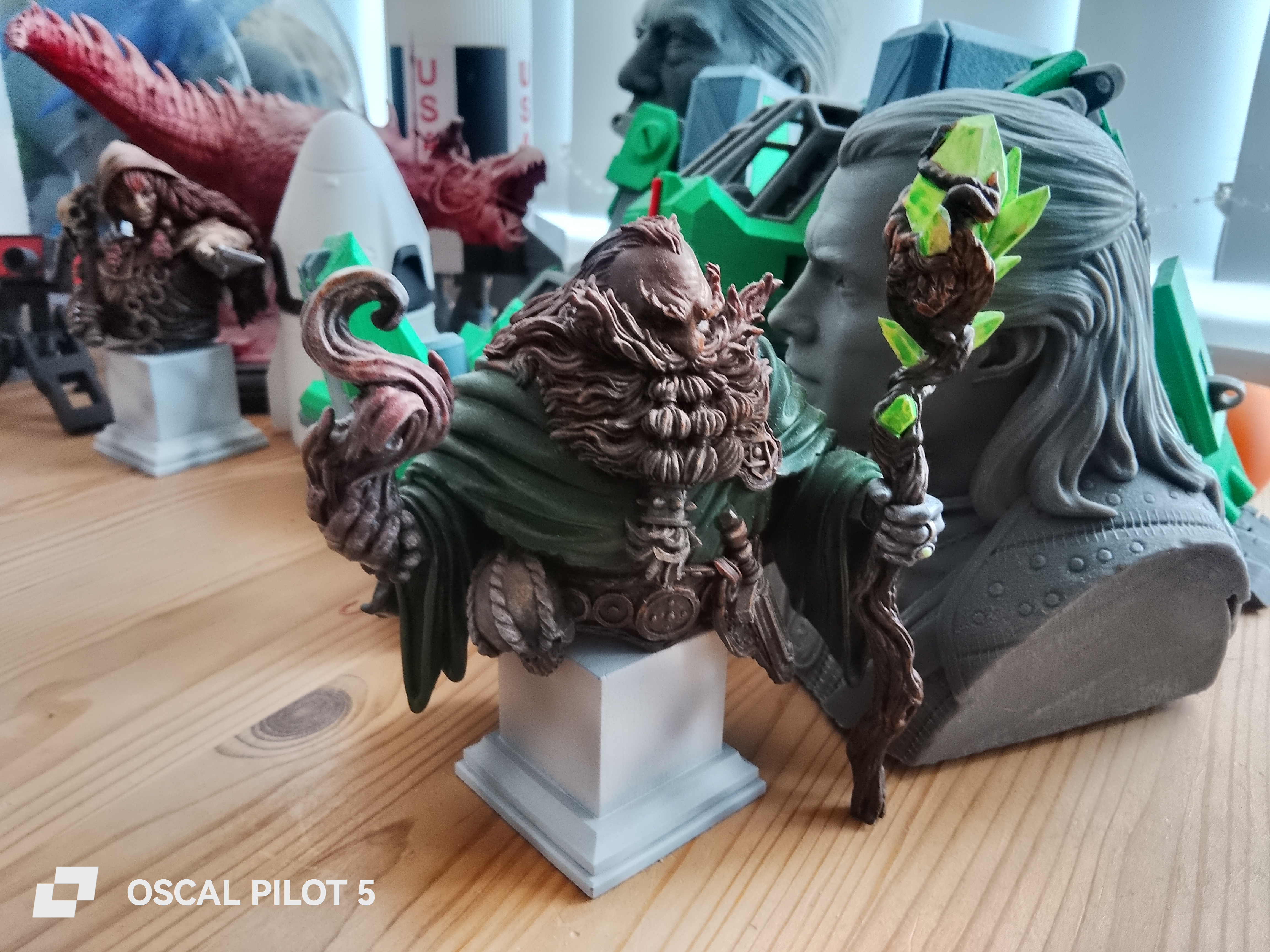

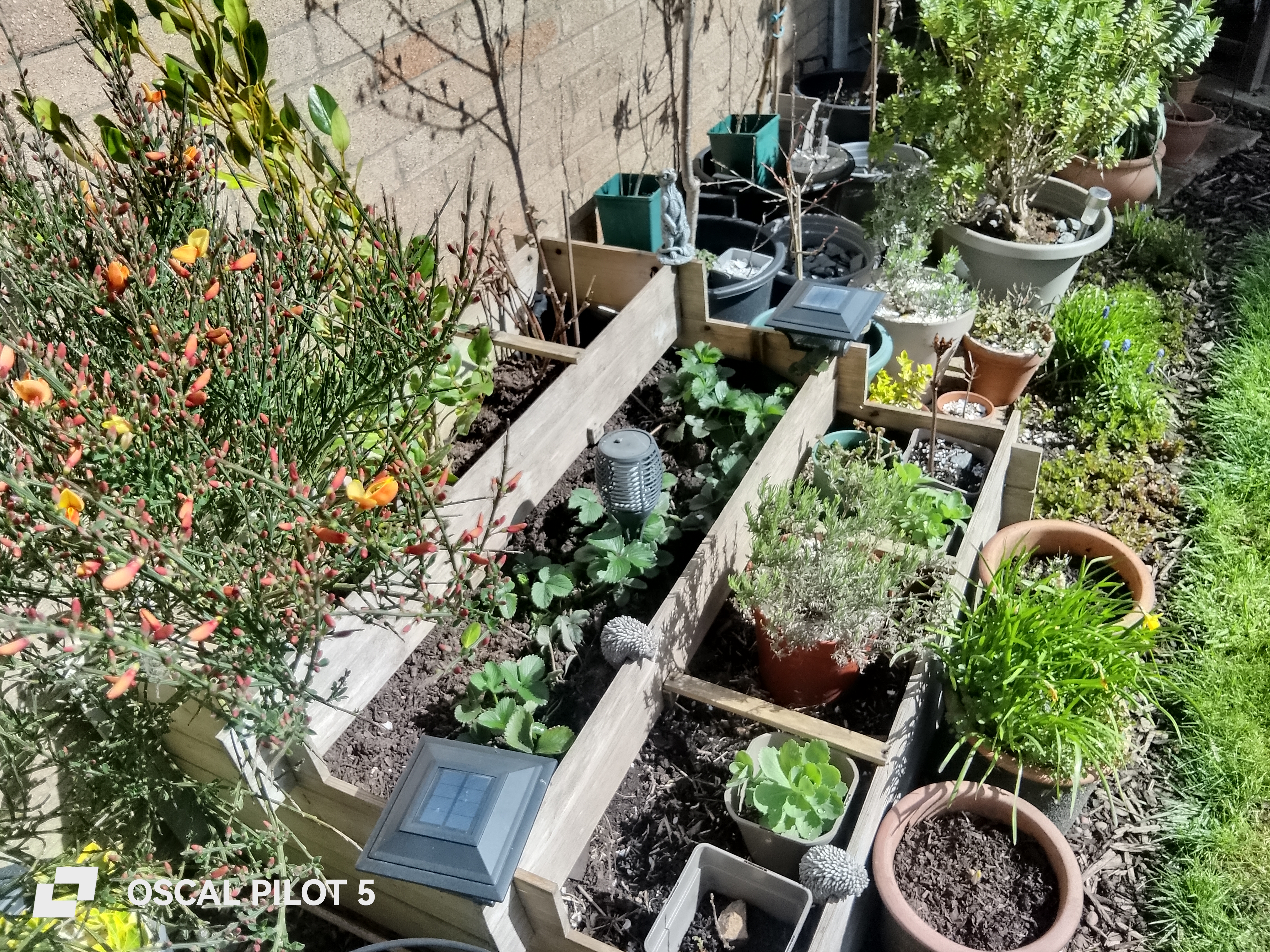
- Camera score: 2/5
Oscal Pilot 5: performance
- Older 6nm SoC
- Great battery life
Swipe to scroll horizontally
SoC | UNISOC T8100 | MediaTek Dimensity 7050 | |
GPU | ARM Mali-G57 | Mali‑G68 MC4 | |
NPU | Unknown (3.2 TOPS) | MediaTek NPU 550 | |
Memory | 8GB/256GB | 12GB/256GB | |
Weight | 570g | 640g | |
Battery | 15000 | 20000 | |
Geekbench | Single | 755 | 920 |
Multi | 2399 | 2466 | |
OpenCL | 2041 | 2471 | |
Vulkan | 2101 | 3036 | |
PCMark | 3.0 Score | 11235 | 11684 |
Battery | 33h 49m | 33h 57m | |
Charge 30 | % | 20 | 13 |
3DMark | Slingshot OGL | 4282 | 5293 |
Slingshot Ex. OGL | 3208 | 4150 | |
Slingshot Ex. Vulkan | 3220 | 3940 | |
Wildlife | 1684 | 2232 | |
| Row 17 - Cell 0 | Nomad Lite | 191 | 266 |
Since both the Oscal Pilot 5 and Oscal Tank 1 both come from the same source, it just seemed right to see what each offered.
The first obvious thing to say is that the Dimensity 7025 in the Tank 1, which is a rebranded SoC from the 1000 series, has more punch than the UNISOC T8100 in the Pilot 5. And, the Mali G68 MC4 is an improvement, if modest, over the ARM Mali-G57.
So, where does the Pilot 5 win? Well, offering less performance, it manages to last almost as long with 75% of the battery capacity in the Tank 1. And, it also recharges more rapidly.
It should also be noted that when the Pilot 5 shut down, the PCMark battery test still had 24% capacity left, suggesting that 40 hours isn’t unrealistic.
I’m glad the Pilot 5 has this one thing that’s good about it, because almost everything else isn’t remarkable or special.
- Performance score: 3,5/5
Oscal Pilot 5: Final verdict
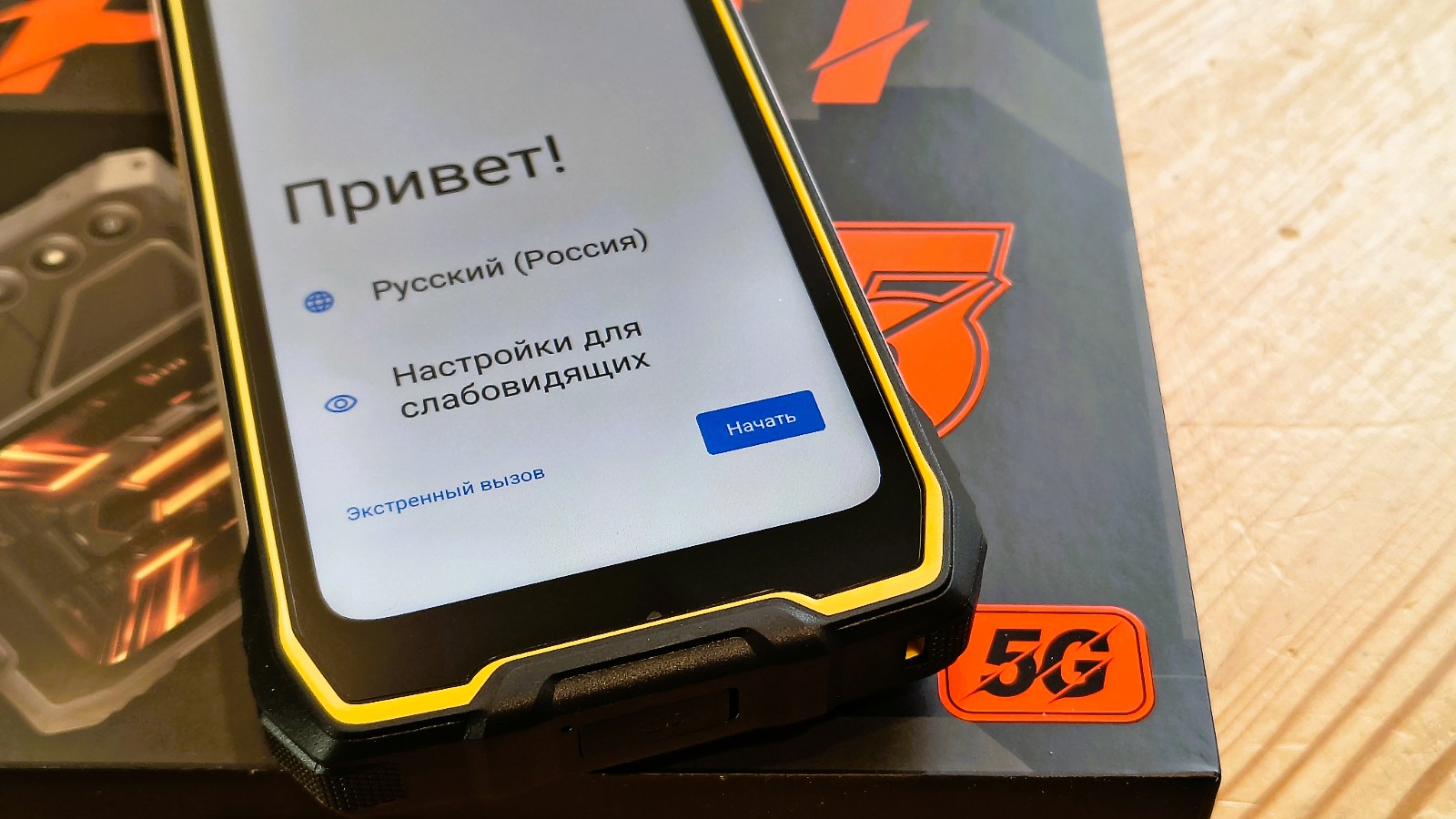
My experience with the Pilot 5 wasn’t the best; it started badly because, for some inexplicable reason, Blackview sent me a phone intended for the Russian market.
I eventually worked out how to get English as the language, but the phone ignored that change and salted the Doke 5.0 with Russian applications. Presumably, everything about my testing was relayed to Comrade Putin before breakfast the next day.
To start on a positive note, this phone has a decent amount of battery capacity, and because the SoC isn’t a massive power drain, it can run for at least four working days, or even longer with some curation.
However, this is far from a gaming platform, and its curious resolution screen isn’t ideal for watching streamed content. But where it truly falls down is the cameras, which reminds me that the first smartphone with a 16MP sensor was the Nokia Lumia 1020 in 2013, if I’m not mistaken. That said, Apple only introduced better than 12MP in 2022, so it's possible to take good pictures with relatively few pixels. But in this case, the pictures aren’t wonderful.
That aspect, coupled with a 5W speaker that the maker claims can output 140dB, enough to permanently damage hearing if true, makes the Pilot 5 something of an acquired taste.
What I think undermines this design somewhat is that it’s not especially cheap, and it’s relatively easy to find a 2024 phone design with more of everything for less money.
Should I buy a Oscal Pilot 5?
Swipe to scroll horizontally
Value | Not expensive, but hardly cheap. | 3.5/5 |
Design | Standard Blackview design playbook | 3.5/5 |
Hardware | 6nm SoC and only 8GB of RAM, but 15000mAh of battery | 3.5/5 |
Camera | 16MP sensor that underachieves, only 1080p video | 2/5 |
Performance | Great battery life, but little else that’s impressive | 3.5/5 |
Overall | Excellent battery life, but poor camera | 3.5/5 |
Buy it if...
You need a phone for outdoors
The water and dust resistance of the Pilot 5 makes it robust enough for extreme weather conditions and even immersion. But it is heavy and unsuitable for small hands, and the camera is poor.
You need extended battery life
With a rugged phone, you need multi-day battery life. The 15,000mAh cell and 33W charging make the Pilot 5 a strong choice for extended fieldwork.
Don't buy it if...
You want a versatile camera setup.
The single 16MP rear sensor without night vision or wide-angle coverage is limiting for more demanding photography use cases. Also, the video capture only does 1080p.
You use graphics
If you use AR, VR or play games, I’d avoid this design, because the GPU isn’t great. It’s fine for video playback and the interface, but it lacks the raw performance that more modern graphics engines offer.
Also Consider

Ulefone Armour Mini 20 Pro
A practical, 5G rugged design with an inbuilt camping light, night vision camera, but with less battery than the Pilot 5. This makes the phone easily pocketable and usable like a normal phone.
Read our full Ulefone Armor Mini 20 Pro review
Blackview Xplore 2 Satellite
Offers satellite communications via Skylo, the more powerful Dimensity 8300 SoC, and a 20,000mAh battery with 120W fast charging. But this is twice the price.
Read our full Blackview Xplore 2 Satellite review
For more ruggedized devices, we've reviewed the best rugged tablets, the best rugged laptops, and the best rugged hard drives








 English (US) ·