
 4 weeks ago
32
4 weeks ago
32
There are now more than a few external SSDs with magnetic backs, designed to snap onto iPhones (and a few Android phones) to make direct recording to drives easier. Corsair's excellent 40 Gbps EX400U does this, as does the Orico BookDrive P10Plus we're looking at here. The Orico drive adds another feature I haven't seen on other portable SSDs: a second USB-C port that supports 100W PD passthrough, so you can charge your phone or laptop through the drive while using it.
That's probably a more useful feature for those recording long-form video from their phones than it is for laptop users, but it is at least an interesting idea thatI haven't seen on a standalone external SSD before.
Orico BookDrive P10Plus (512GB) specifications
Swipe to scroll horizontally
Pricing | $74 | $159 | $184 |
Interface / Protocol | USB 3.2 Gen2 (10 Gbps) | USB 3.2 Gen2 (10 Gbps) | USB 3.2 Gen2 (10 Gbps) |
Included | 5-inch UBC-C cable (20 Gps) | 5-inch UBC-C cable (20 Gps) | 5-inch UBC-C cable (20 Gps) |
Sequential Read | Up to 1,000 MB/s | Up to 1,000 MB/s | Up to 1,000 MB/s |
Sequential Write | N/A | N/A | N/A |
Dimensions | 69 x 100 x 12 mm | 69 x 100 x 12 mm | 69 x 100 x 12 mm |
Weight | 78 grams | 78 grams | 78 grams |
Warranty | 3 years | 3 years | 3 years |
Design and accessories
Externally, the BookDrive P10Plus has some interesting things going for it, like a nice silver metal shell, a magnet built into the back to attach to compatible smartphones, and a 100W PD charging pass-through port. This lets you charge your laptop / smartphone and use your drive while only having a single cable connected to your device, which can certainly be handy.
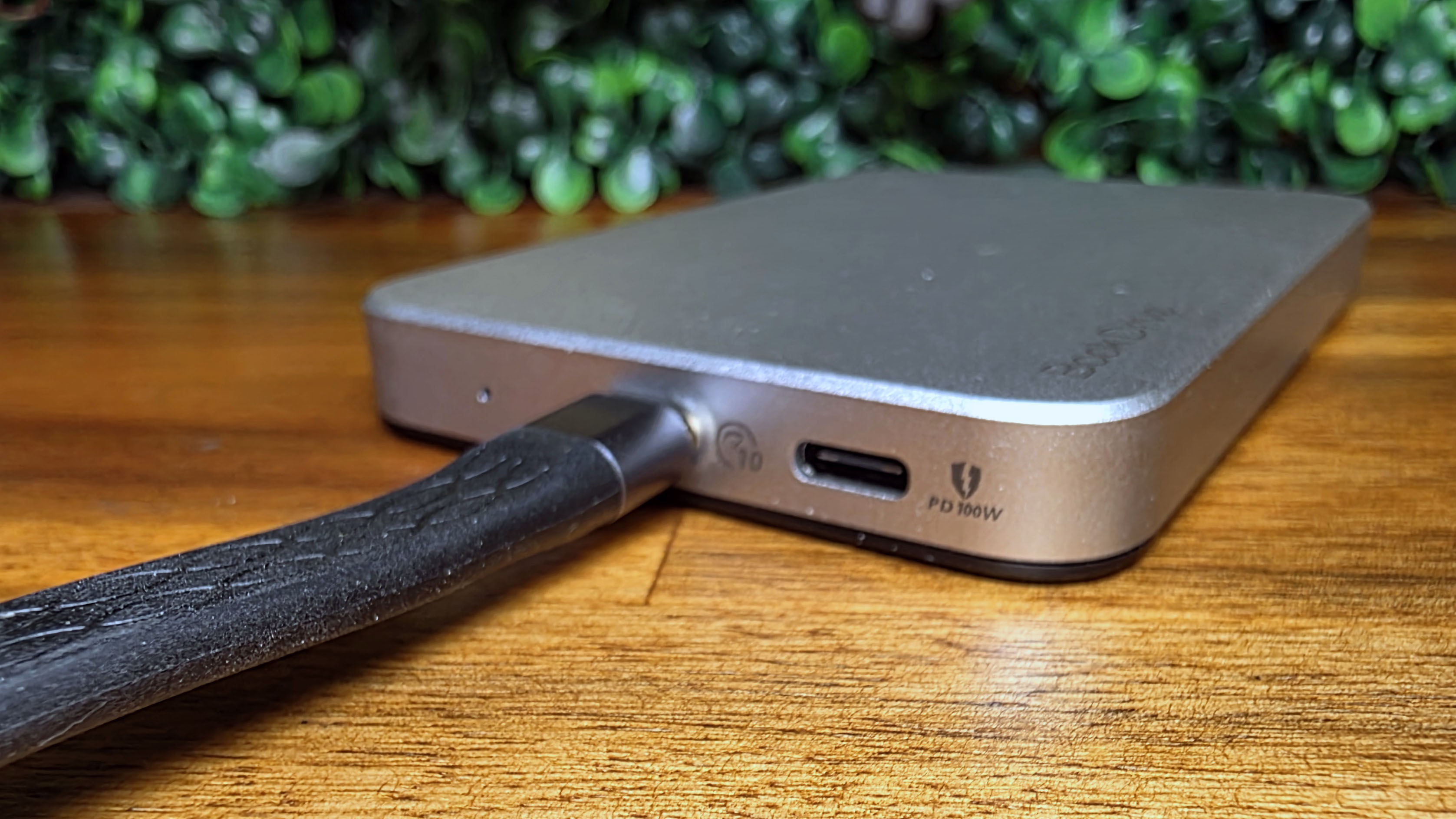
The included cable, though, is only about 5 inches long, which is better for phone use. It is a 20 Gbps cable, despite the drive only being capable of 10 Gbps speeds. That at least makes the cable useful for other, faster devices. And it's a nice flat, rubberized cable that feels like it should last.
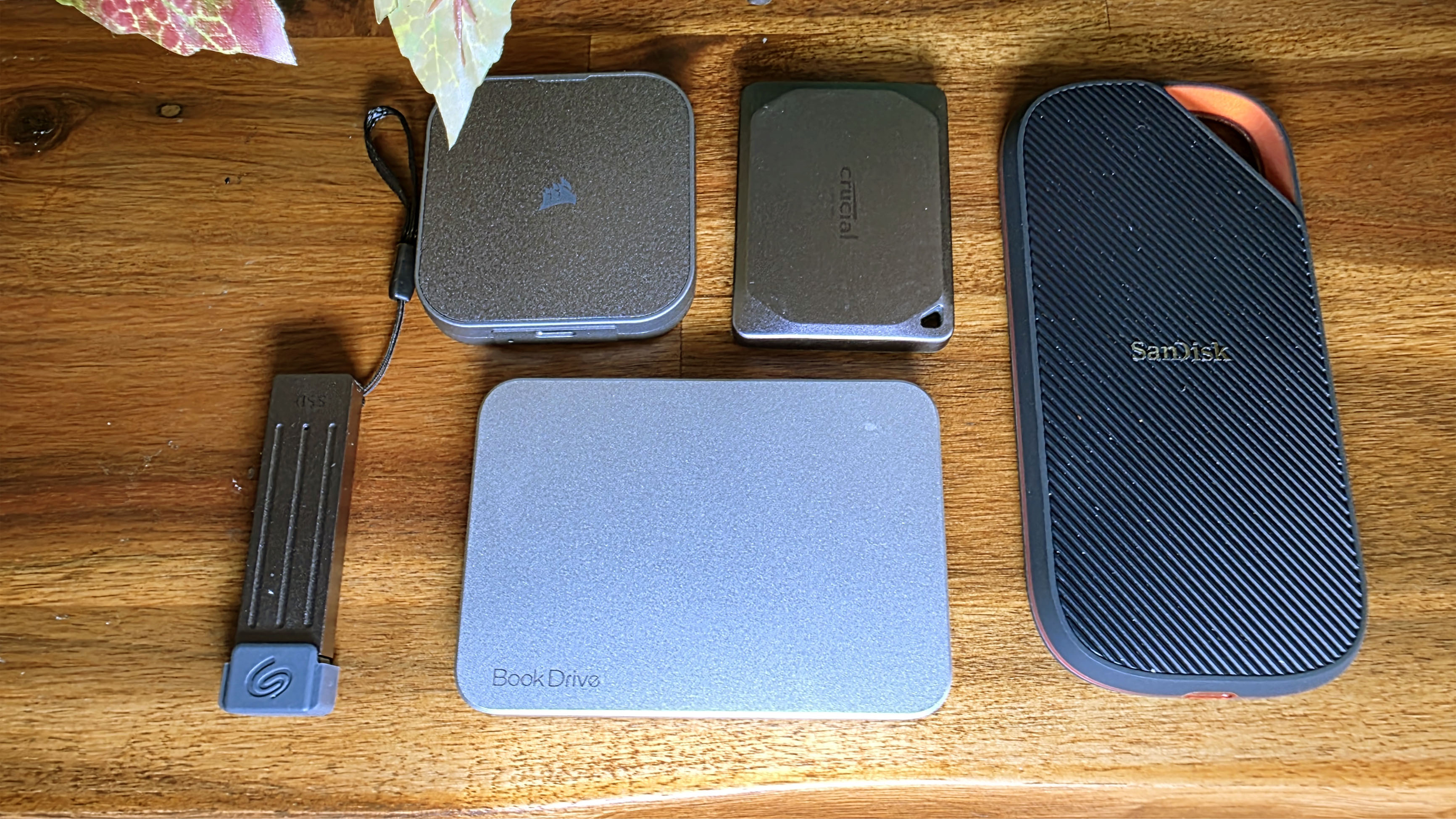
The drive itself ships empty, and there is no mention of software, either in the box or on Orico's site. You do, though, get a pair of magnetic rings in the box, in case your smartphone doesn't support MagSafe / Qi2 on Android. But that's it for accessories.
Comparison products
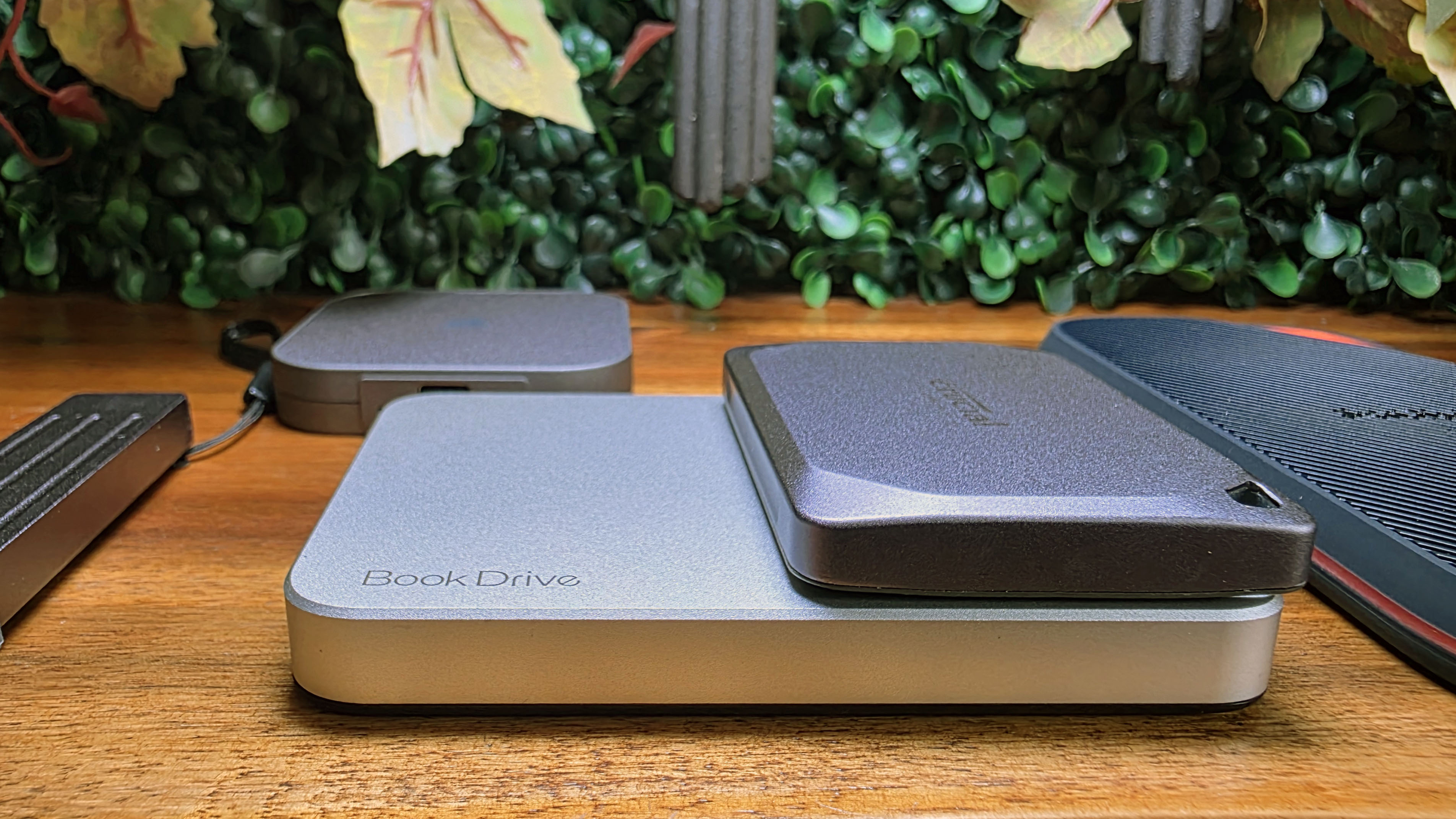
Despite ongoing datacenter-related issues driving up standalone SSD prices, the market is still saturated with older 10 Gbps external SSDs at somewhat reasonable prices. And that makes things tough for Orico's drive. At $184 for the 2TB model (which at least makes more sense than the $159 1TB version), it has to compete with excellent 10 Gbps options like the Crucial X9 Pro (which we tested alongside the X10 Pro in 2023), which was $172 for the 2TB model when we wrote this. And sure, the Crucial drive doesn't have the magnetic back and the passthrough charging. But it's also less than half the size of the BookDrive, and as we are about to see, the older Crucial drive performs much better.
Storage Testbed
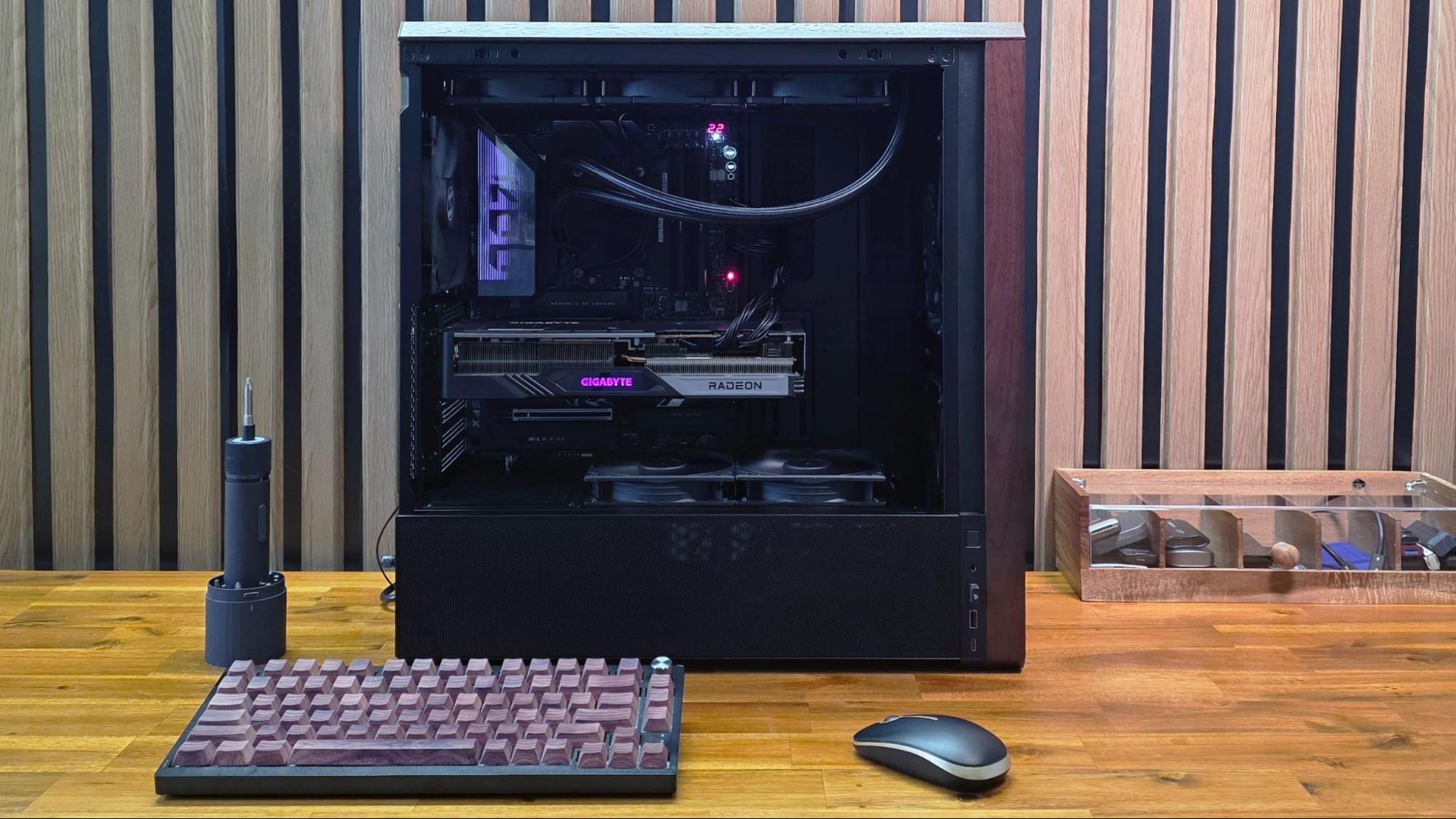
In early 2025, we updated our external storage testbed to an AMD Ryzen 7600X-based PC with an Asus ROG Crosshair X870E Hero motherboard, installed in Lian Li’s Lancool 217 case. This was done in part because we needed a system with native USB4 support for upcoming drives (like this one).
All the drives in the charts below have been re-tested on the new X870E system, with the exception of the final Iometer sustained sequential test. That benchmark is less about top speed and more about how long a drive can write before depleting any fast cache onboard. We also updated to CrystalDiskMark 8, rather than the older (and non-comparable) version 7 we used on the previous testbed.
Trace Testing - PCMark 10 Storage Benchmark
PCMark 10 is a trace-based benchmark that uses a wide-ranging set of real-world traces from popular applications and everyday tasks to measure the performance of storage devices.
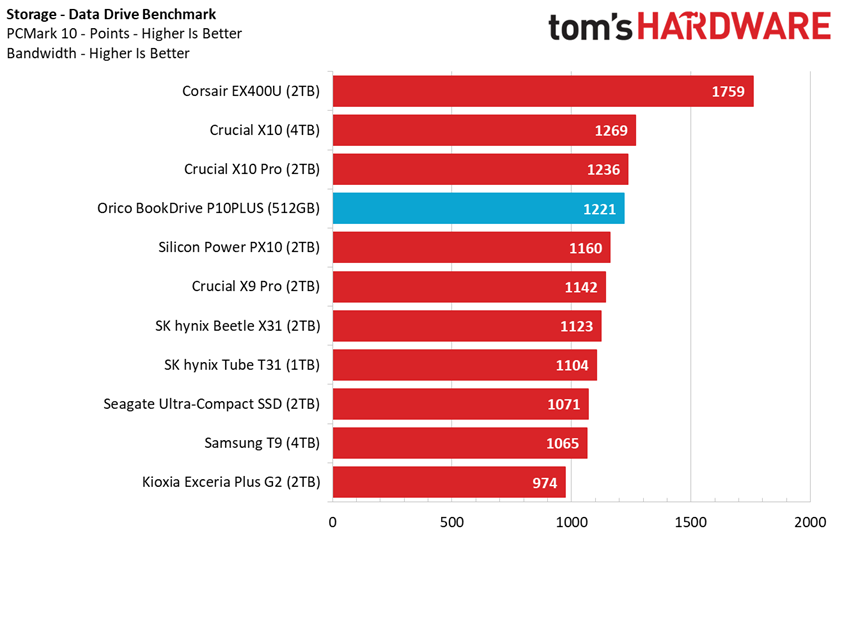
Orico's BookDrive started out our testing looking quite good. Its score of 1221 put it just behind the fastest 10 Gbps drives we've tested (both from Crucial), and well ahead of big-name brands like Samsung and SK hynix.
Transfer Rates – DiskBench
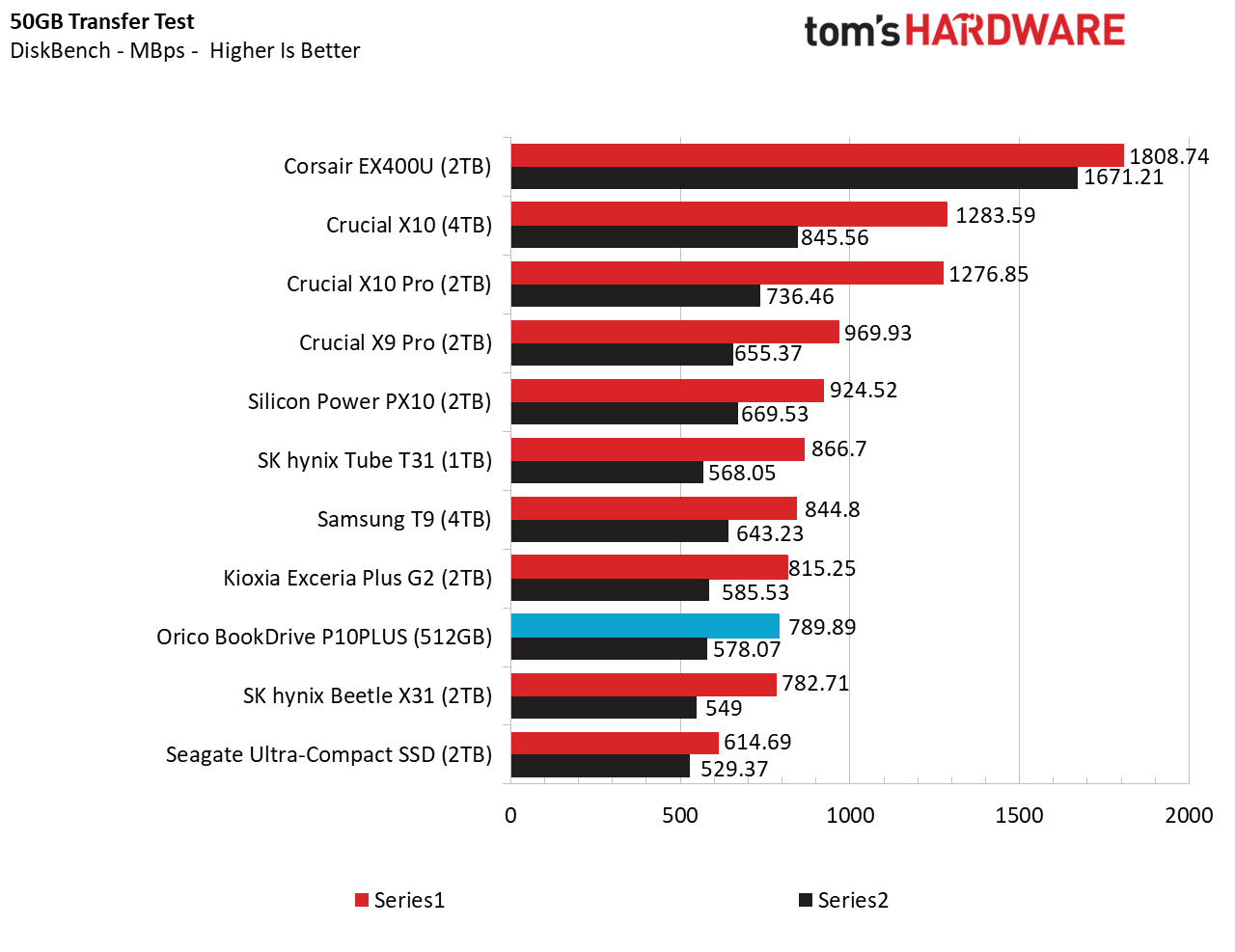
In this real-world file transfer test, the Orico BookDrive lands in the lower-middle portion of our charts, competing with Kioxia's 10 Gbps Exceria drive, but falling slightly behind.
Synthetic Testing CrystalDiskMark
CrystalDiskMark (CDM) is a free and easy-to-run storage benchmarking tool that SSD companies commonly use to assign product performance specifications. It gives us insight into how each device handles different file sizes. We run this test at its default settings.
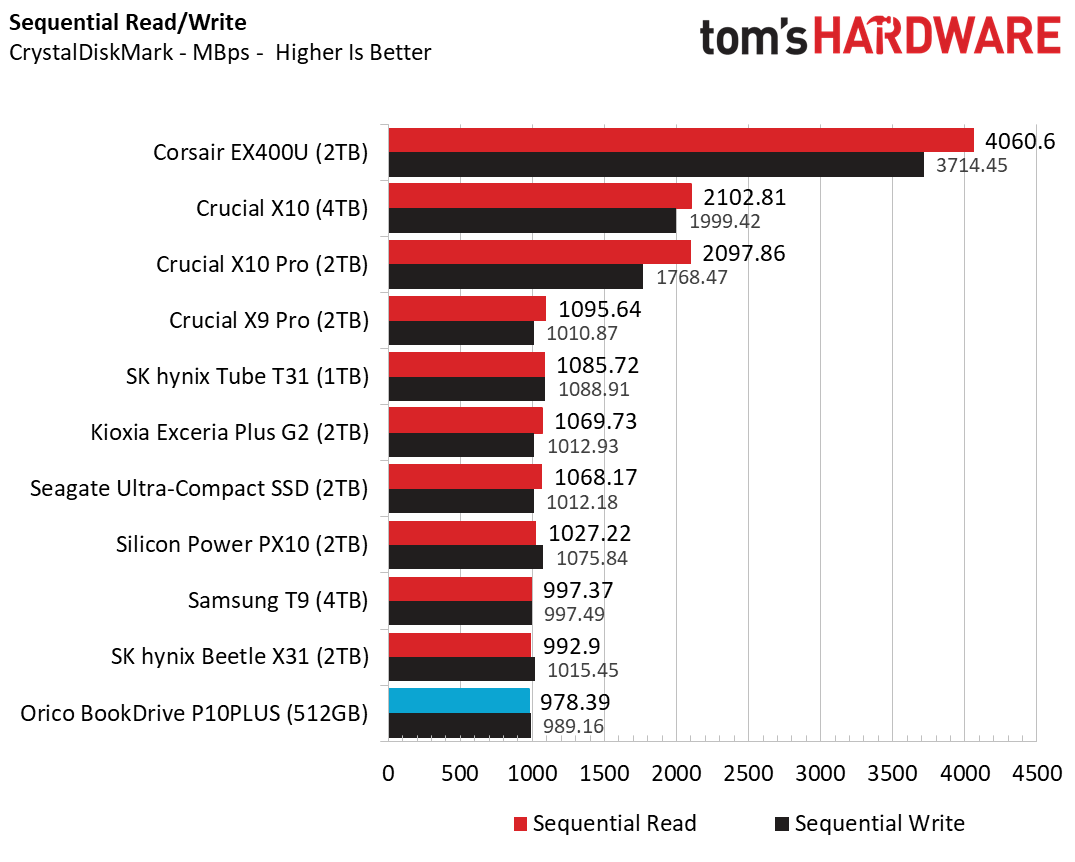
Moving back to synthetic tests, the Orico drive lands last in synthetic reads and writes, but it's still close on the heels of SK hynix's Beetle and Samsung's T9.
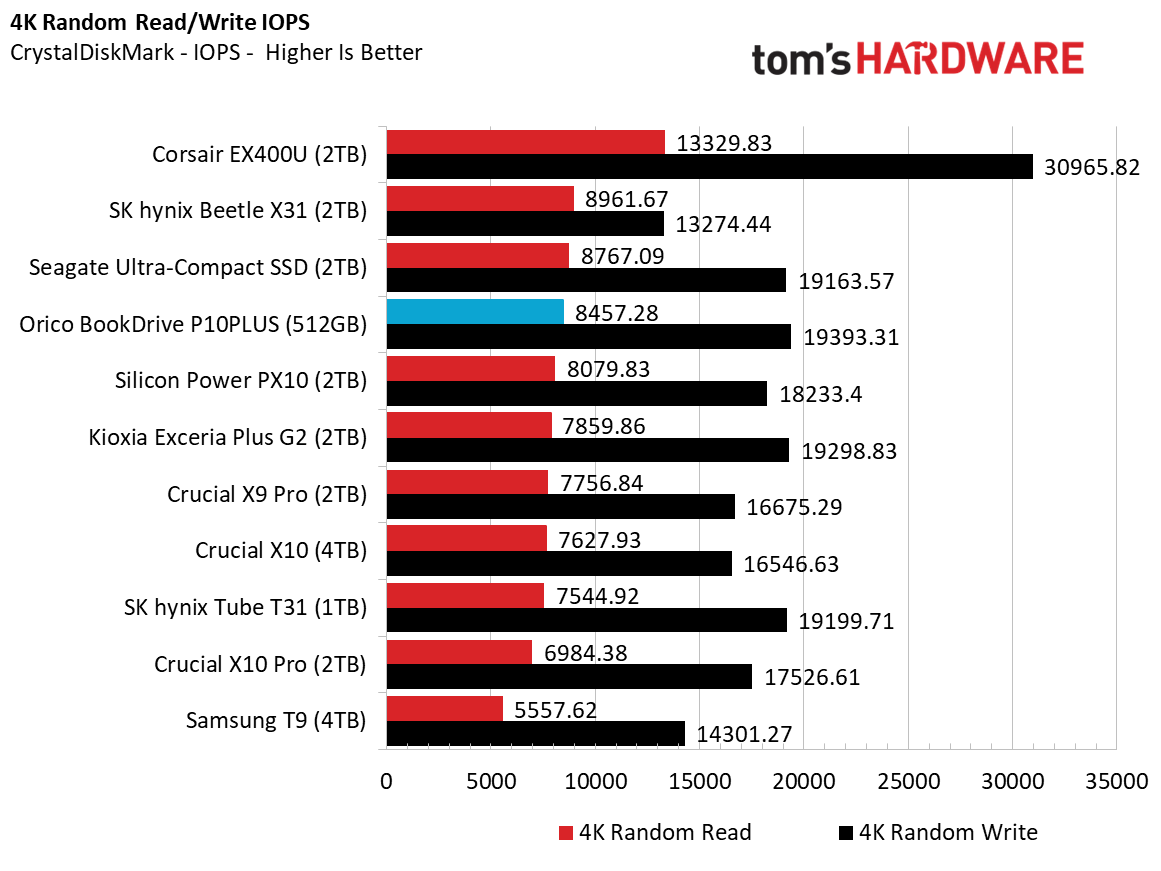
But looking at small file performance, the Orico drive jumps back up the charts, landing in third place among 10 Gbps drives on reads and is neck-and-neck with the best in its class when it comes to writes.
Sustained Write Performance
A drive's rated write specifications are only a piece of the performance picture. Most external SSDs (just like their internal counterparts) implement a write cache, or a fast area of flash, programmed to perform like faster SLC, that absorbs incoming data.
Sustained write speeds often suffer tremendously when the workload saturates the cache and slips into the "native" TLC or QLC flash. We use Iometer to hammer the SSD with sequential writes for 15 minutes to measure the size of the write cache and performance after the cache is saturated.
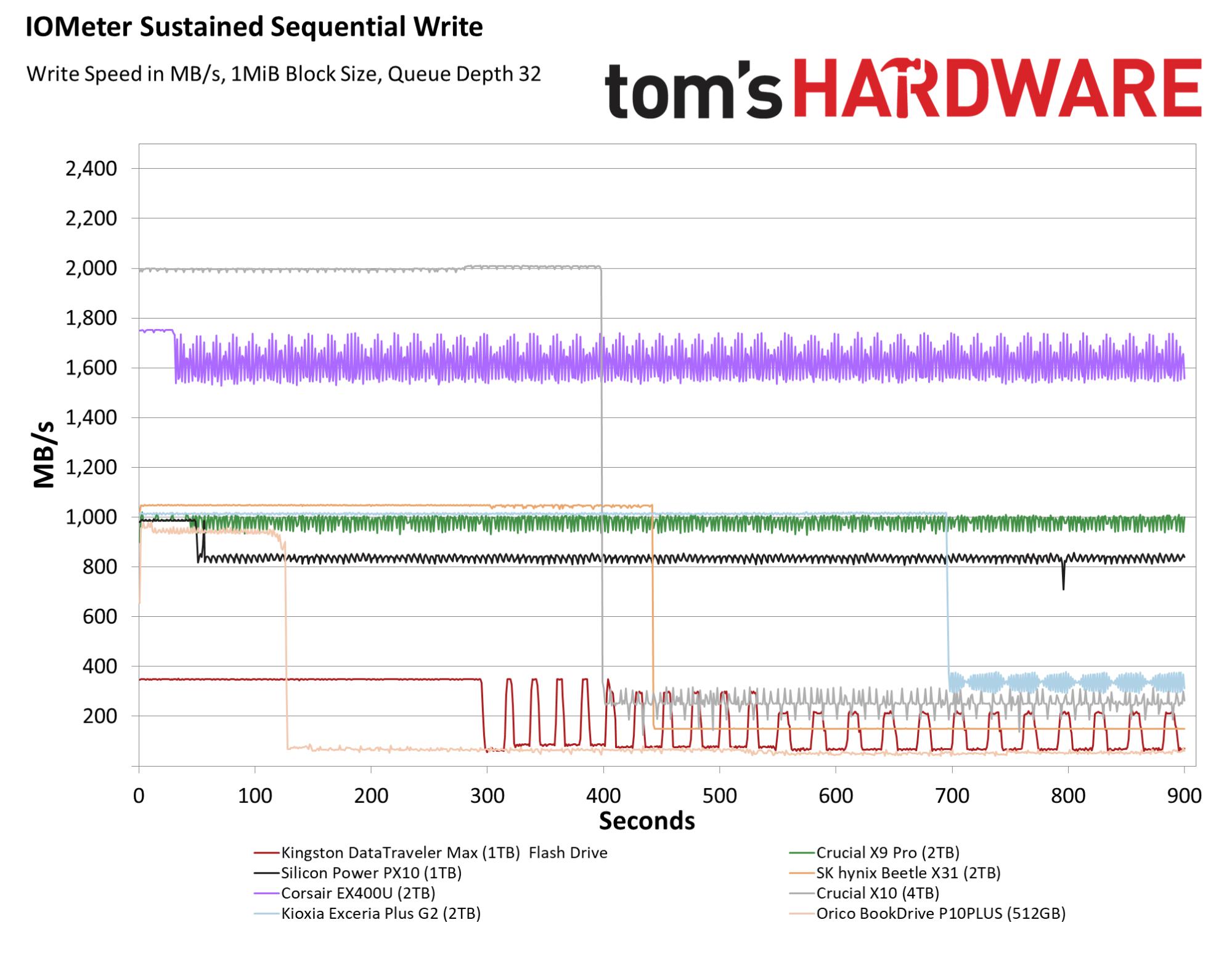
Ouch. We've weeded out some of the competition here, to make this chart more legible, but that doesn't exactly help Orico's BookDrive. Its performance was fine on this test for the first 140 seconds or so, hovering in the mid-900 MB/s range. But after the drive's cache was used up, its performance cratered into the 60-80 MB/s range for the rest of the test, occasionally dipping below 50 MB/s. Now, for this drive's primary purpose of recording video from a smartphone, that should still generally be OK so long as you aren't straying much beyond 4K/60. But note that even the Kingston DataTraveler Max, which is one of the best flash drives, did noticeably better on this sustained write test. And the Crucial X9 hovered at or above the mid-900 Mbps range for the duration of this test, making its sustained write speed about 14x faster than the Orico drive, while costing about $12 less. To be fair, the Orico drive suffers somewhat here from the smaller 512GB capacity that the company sent for testing. The competing SSDs were tested at 1 or 2TB capacities, and an Orico rep told us that the SLC cache is configured to be roughly 20% of the drive's total capacity. But a larger SLC-style would only delay / mask what is clearly extremely slow native write performance. You might not notice it in many mainstream workloads, but if you do lots of large writes, this is definitely not the drive for you.
Bottom Line
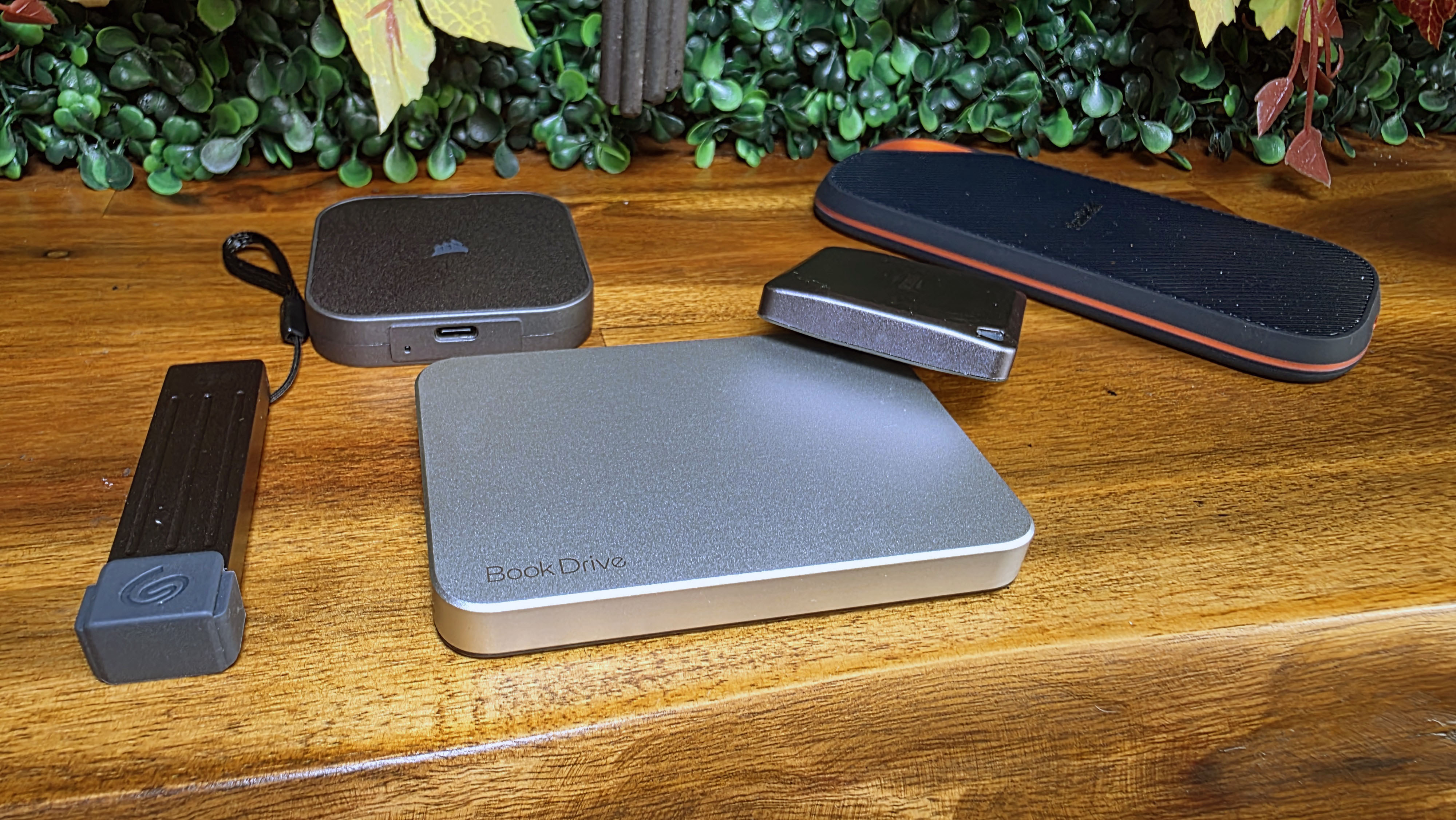
Orico's BookDrive P10PLUS brings passthrough charging and MagSafe support to an otherwise saturated and, frankly, boring 10 Gbps external storage field. Its features are welcome, particularly for smartphone users. And its performance in bursty tasks is at least decent. But its sustained write speeds scrape the bottom of the barrel of performance that we've seen from competing drives in recent years. That, combined with a price that's much more than big-name competition that's faster, makes it hard not to judge this book by the flash that is under its cover.
MORE: Best SSDs
MORE: Best External SSDs





 English (US) ·