
 1 hour ago
7
1 hour ago
7
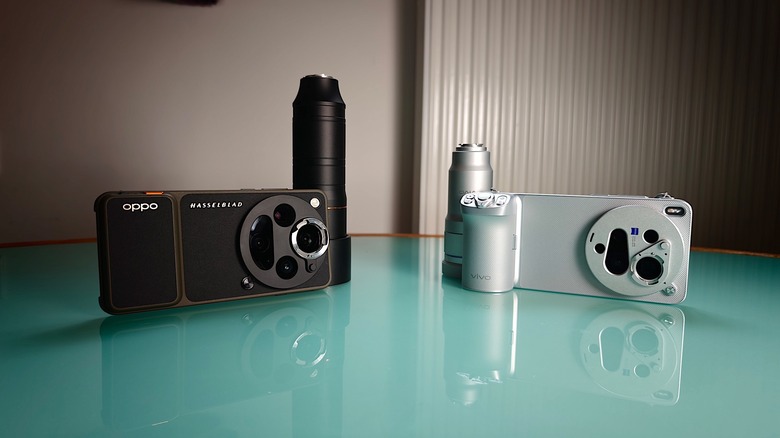
Two incredible camera phones with different strengths.
Mat Smith for Engadget
For some companies, the evolution of smartphone camera tech can't come fast enough. In the last few years, both Vivo and Oppo have been experimenting with teleconverters, barrel lens add-ons that expand the zoom of their flagship phones to dizzying heights. This year, two "ultra" flagships have launched side by side, with similar propositions as true replacements for your dedicated camera.
Vivo's X300 Ultra and Oppo's Find X9 Ultra have a lot in common. Both have teleconvertors, yes, but the companies have also allied themselves with storied camera brands; Vivo worked with Zeiss on both lenses and its color technology, while Oppo continues its Hasselblad partnership through the camera software, some hardware design touches and its 10x telephoto camera.
Both phones have a lot in common, but what's more interesting are the different choices Vivo and Oppo made with their strongest feature: the cameras.
Cameras
Mat Smith for Engadget
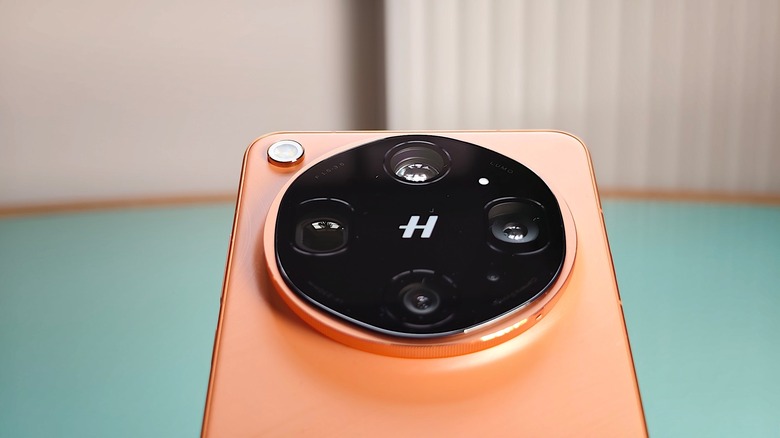
On the Find X9 Ultra, the primary camera has a 200-megapixel 1/1.28-inch sensor. With a low f/1.5 aperture possible, this is an incredibly versatile camera, built to take in light and work well even in difficult shooting conditions. There's also a pair of telephoto cameras. The first has a 200MP sensor and can zoom up to 3x (70mm equivalent) for portrait photos and general-purpose shots, while the showstopper is an 'ultra' telephoto, capable of 10x zoom at 50MP.
It's rare, but we've seen 10x zoom in smartphones, including, briefly, Samsung's Galaxy S23 Ultra. However, they weren't paired with such high-resolution sensors. This offers more detail in shots, as well as the ability to digitally crop down to get even closer to the subject — although you won't need to nearly as often. The Find X9 Ultra also has a 50MP ultra-wide camera and a 3.2MP multispectral sensor to strengthen white balance and color accuracy.
 Mat Smith for Engadget
However, Oppo's innovative 10x telephoto is the most thrilling part of the phone's penta camera setup. The 10x optical zoom also opens up the possibility of 20x lossless zoom, all before we start attaching Oppo's teleconvertor lens. It also has sensor-shift stabilization to improve clarity and reduce the chances of blur. (Vivo has its own solution, which we'll get to in a minute.)
The 3x telephoto camera is a convenient midpoint between the main camera and its huge sensor and the incredible range of the 10x telephoto. However, Oppo gets a little too keen on computational photography boosting here and I'd often get shots with ghostly outlines, especially of human subjects. Overly aggressive digital sharpening also made some images look unnatural.
 Mat Smith for Engadget
Within the camera app (and arguably too many shooting modes), Oppo's collaboration with Hasselblad gives shooters a Master Mode that blissfully strips away the computational AI tricks and augmentations. This means that while you won't get that AI nip-tuck on telephoto shots, you also won't get nightmarish low-res faces or scrambled alien lettering. I broadly preferred it, though I occasionally missed the better low-light performance of the AI-boosted basic photo mode.
 Mat Smith for Engadget
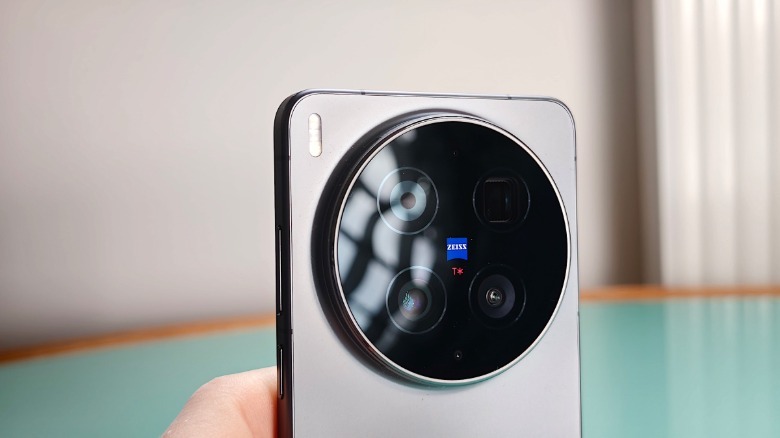
The Vivo X300 Ultra has the exact same 1/1.12-inch 200MP main camera sensor, although it has a narrow 35mm focal length, which could be argued to be more "cinematic'. Its aperture can go as low as f/1.85, losing again to its Oppo rival.
The X300 Ultra ultrawide camera, however, performs head and shoulders above the Find X9 Ultra's version. Unlike most smartphone ultra-wide cameras, which I cynically view as a lazy effort by companies to add another camera to their smartphones, Vivo went to town. To start, Vivo added optical image stabilization (OIS), which is rare for this focal length. This, combined with a 50MP sensor, means images look crisper and more detailed than those from rival devices, which typically use lower-res sensors.
To Oppo's credit, its ultrawide camera isn't bad. The Find X9 Ultra also has a 50MP camera sensor and a lower f/2.0 lens. However, the sensor isn't as big (the X300 Ultra's 1/1.28-inch sensor is nearly twice the physical size of the Find X9 Ultra's 1/1.95-inch sensor ) and it lacks built-in OIS. There's also a lot less lens flaring on light sources with the Vivo phone, likely due to Zeiss' anti-reflective lens treatment.
 Mat Smith for Engadget
The X300 Ultra's telephoto (another 200MP sensor) maxes out at 3.7x zoom without a teleconverter and while you can crop down from that for more 'zoom', it loses a lot of detail and adds a lot of artifacts in the process. Fortunately, for those looking to punch in further, Vivo has you covered.
Teleconvertors
Mat Smith for Engadget
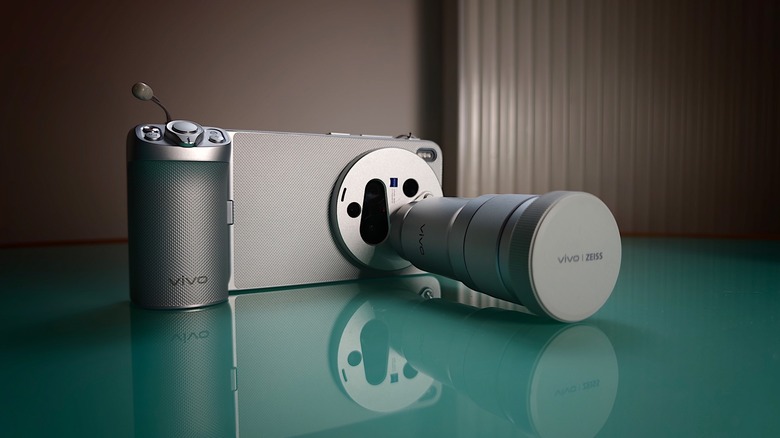
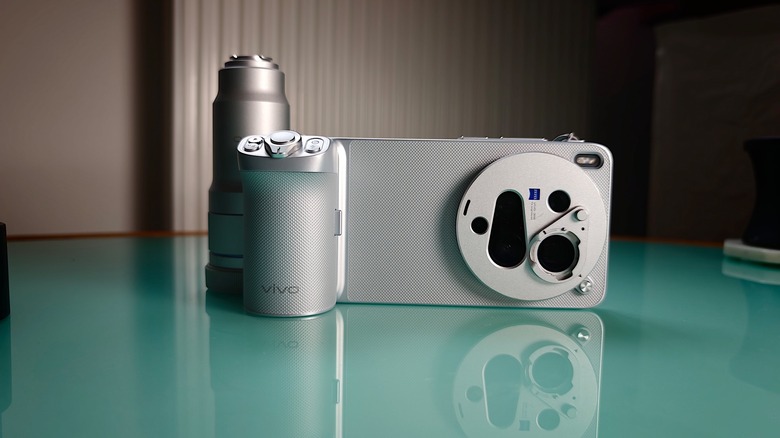
Despite both offering teleconverters, the two companies took different approaches. If you're looking for pure king-of-zoom credentials, Vivo takes the crown with the furthest total optical zoom, with 400mm focal length (approximately 17x zoom). The X300 Ultra also offers a convenient one-touch icon to transition to teleconvertor mode. With all these cameras and shooting options, it can be laborious to swipe to the teleconvertor on either phone.
The X300 Ultra also offers a bit of versatility with two pieces of glass. The 200mm lens offers some telephoto middle ground, with an 8.7x optical zoom. And yes, that's a lower zoom than the Find X9 Ultra's built-in telephoto camera, even if the X300 Ultra uses a bigger, more capable sensor.
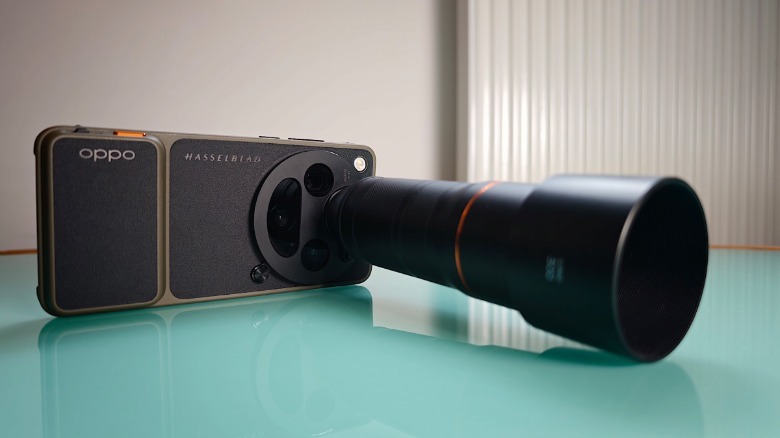
But it doesn't make Vivo the definitive winner. The Find X9 Ultra's 300mm Explorer teleconverter provides 13x optical zoom by using the phone's 200MP 3x telephoto sensor. It may not sound like a major leap over the built-in 10x zoom. Still, it captures images on a substantially larger sensor with an f/2.2 aperture, offering more detail and better performance in adverse lighting. Attaching the teleconvertor does mean the effective aperture increases, but it'll still take in more light than the Find X9 Ultra's built-in 10x telephoto lens and f/4.3.
 Mat Smith for Engadget
While I balked at the size of Oppo's teleconvertor, I think the Find X9 Ultra has the better setup. Vivo's teleconvertor struggles in low-light scenes and adding the lens means gimbal-grade OIS can't handle high zoom levels. It definitely seems shakier than the Find X9 Ultra.
Regardless, like the camera-focused smartphones that came before them, playing with both teleconvertor systems is a lot of fun. These telephoto lenses offer far better light sensitivity and more detail than any built-in telephoto camera — and no image-cropping subterfuge to do so. It means you can capture wildlife shots and track moving objects and still often get pin-sharp results — especially if you're willing to tether all that glass and phone to a tripod. Fortunately, the teleconvertor kits come with tripod convertors that attach to the lens.
Video
Mat Smith for Engadget
Vivo has been framing its Ultra phones as professional-grade video cameras. While I'm not a professional cinematographer — more of a front-of-the-camera talent — on paper and during my testing, the X300 Ultra would be a pretty capable secondary camera for smaller video shoots.
Immediately, the X300 Ultra offers 4K/120 fps 10-bit log video capture on all three cameras, making it easier to use the device's full video capabilities during both capture and production.
We've already established that the X300 Ultra has great camera sensors, but it's the post-production and pro camera interfaces that stand out. The phone supports the APV 422 codec. Without getting too far into the weeds, most smartphones record in 4:2:0, which discards half of the color information to save space. APV 422 records at 4:2:2 chroma subsampling. This offers a wider color gamut and less compression than typical mobile video formats. It also supports the Academy Color Encoding System (ACES), meaning you can drop the phone's video content alongside professional cinema camera footage with little fuss.
 Mat Smith for Engadget
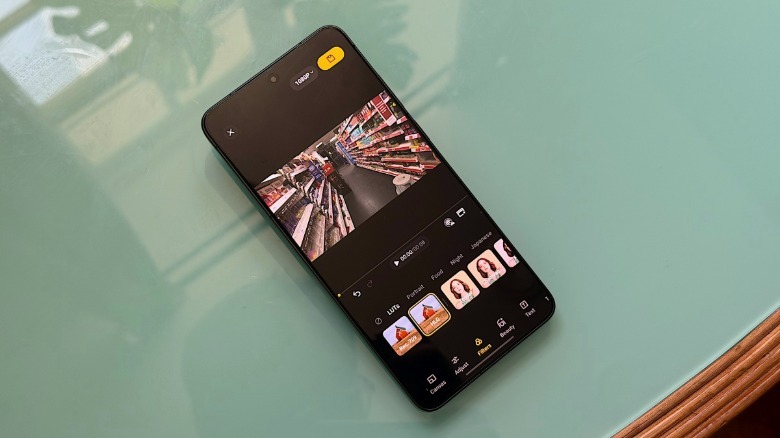
For me, the most notable and useful feature was custom 3D LUT previews during recording. This meant that when capturing video in RAW, instead of the typically muted, grey view, you could get a better approximation of how the video would eventually look. Does this matter for vertical video snippets or cool lil' happenings you're going to share on WhatsApp? No. But for more ambitious projects (or perhaps even professional video work), it's impressive.
Video capture is also the best showcase for Vivo's "gimbal-grade" image stabilization tech. Inside the X300 Ultra, tiny electromagnetic motors move the entire sensor-lens assembly, which Vivo says can compensate for up to seven stops of shake. This setup generally means less blur and no jumpy digital stabilization that most smartphones use to stabilize video. The X300 Ultra's horizontal line stabilization is a very cool mode that keeps the horizon locked, regardless of how you contort the device — it's more typically an action-cam feature.
The Find X9 Ultra, while supporting ACES, does not support most of those features. There are some Hasselblad-branded video filters, which suggest an aesthetic direction over technical flexibility. In low light or while moving, I'd often get a pixelated, pulsing effect as it struggled to keep things stable. In pretty much every setting I tested it, the X300 Ultra dominated when it came to video.
Hardware
Mat Smith for Engadget
Oppo's Find X9 Ultra is in many ways an upgrade from the Find X9 Pro. Aside from five (not four) cameras, it also has a true flagship processor, the Snapdragon 8 Elite Gen 5 — a substantial improvement over the MediaTek Dimensity 9500 inside the X9 Pro. Despite weighing more and being thicker than the Pro model, the X9 Ultra has a smaller 7,050mAh battery, though I didn't notice any negative battery-life differences compared to the Pro. It's also 10g (0.35 ounces) heavier.
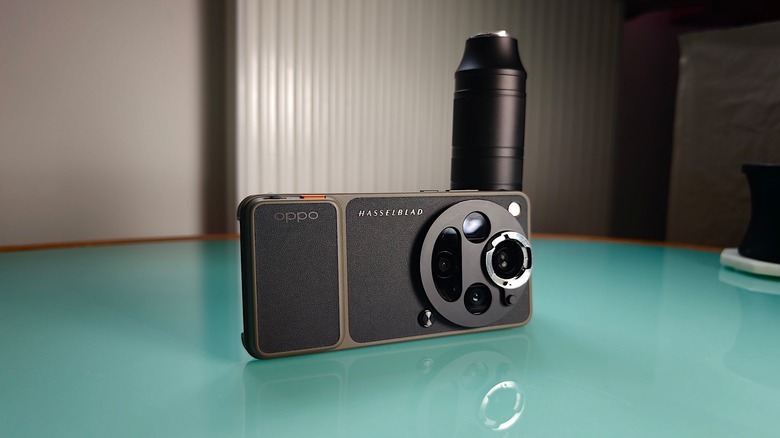
Both Vivo's X300 Ultra and Oppo's Find X9 Ultra offer camera grips and fittings for attaching teleconvertor lenses. Oppo's Earth Explorer kit consists of a new camera grip/case with a two-stage shutter button, zoom rocker and a 300mm teleconvertor lens. Only the Find X9 Ultra supports it, however. There's no reverse compatibility with older Oppo teleconvertors and the new 300mm lens won't work with the Find X9 Pro either, which will be frustrating for those wanting to upgrade from older models.
Oppo's Ultra smartphone is ultra-sized, with a 6.8-inch LTPO AMOLED display (3,168 x 1,440) with adaptive refresh rates between 1 and 120Hz. It can also crank up to 144Hz for supported games, including Genshin Impact and Zenless Zone Zero.
The Find X9 Ultra's screen peaks at 3,600 nits of brightness in HDR, and while Vivo's X300 Ultra has a largely identical screen, it can reach up to 4,500-nit peak brightness. While testing the phones side-by-side, there wasn't as much difference as you might expect, with those higher brightness levels only really kicking in with compatible HDR content.
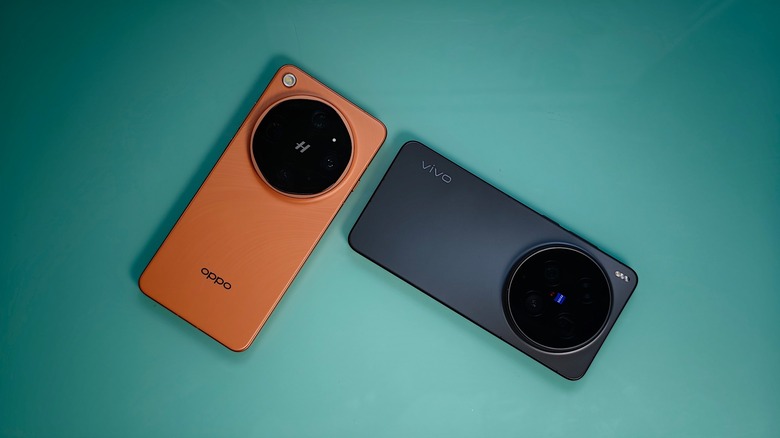
The hardware design is similar across both phones, with a large circular camera unit dominating the designs. Vivo's camera noticeably protrudes a few millimeters more than Oppo's, although the phones' thicknesses are largely identical. The Find X9 Ultra has a capacitive camera button, like the iPhone 17 series, positioned at the center of the right edge. Vivo's X300 has no camera button at all, which seems like a curious oversight.
There are other hardware differences: While Vivo's "Ultra" smartphone has the same Snapdragon 8 Elite Gen 5 processor as the Find X9 Ultra, it has a smaller 6,600 mAh battery. Both phones use Silicon Carbon batteries, taking up less space despite their high capacity. Both phones support up to 100W charging, which is great when you're pushing them to their limits with video capture and countless still shots.
In our battery rundown test, Vivo's X300 Ultra managed to eke out 36 hours of video, while the Find X9 Ultra managed 39 hours. It's not a decisive result for either phone, but compared to the S26 Ultra's 30 hours, it's a notable leap. It might be time for Samsung (and everyone else) to get into Silicon Carbon batteries.
Wrap-up
Mat Smith for Engadget
Deciding between the Find X9 Ultra and the X300 Ultra comes down to whether your priorities are photography or video, with or without the telephoto accessories. Oppo's Find X9 Ultra excels in stills, with a powerful 3x telephoto and true 10x optical zoom built in, complemented by the pure, AI-free shots of the Hasselblad Master Mode.
Serious filmmakers will find the Vivo X300 Ultra superior, with its professional-grade video features and current best-in-class "gimbal-grade" stabilization. In fact, you might even reach for it as a secondary camera in small shoots. Vivo also boasts a far better ultrawide camera, while Oppo offers the more versatile zoom setup out of the box, with less reliance on external teleconverters.
Cameras aside, both are powerful smartphones that suffer from limited availability and confusing, variable pricing. While both companies are claiming global launches, that's unfortunately not true for either. But if you want either of them enough (and have the money to spend), you'll be impressed by what both phones are capable of. Ultimately, your choice between them will depend on which feature you value most.
The X300 Ultra, which won't officially go on sale here in the UK, is priced at 1,740 Euros (approximately $2,023). In contrast, the camera kit, including the phone itself, camera grip case, adapters and two lenses, is priced at 2,323 Euros (roughly $2,700). It's flagship foldable pricing — and that's before the top-of-the-range bundle that includes a camera cage, cooling fan, grips and more, which is 2759 Euros — over $3,200.
Oppo's Find X9 Ultra is coming to the UK, priced at £1,449 (roughly $1,673), while the camera kit (including the Hasselblad-inspired camera grip, adapters and teleconvertor) is priced at £499 (around $577). However, that isn't yet available to order on the company's UK site.
Availability aside, it's a good time to check on how Chinese phone makers are evolving their biggest, most expensive smartphones. With a dogged focus on their cameras, both phones serve a niche, but you shouldn't disregard that both devices are powerful Android phones, too.






 English (US) ·