
 1 hour ago
4
1 hour ago
4
The Oppo Find X9 Ultra will be the company’s first “Ultra” flagship to go beyond China’s borders, making it something of a global debut. Those in the know recognize the symbolism, but the backbone of this introduction begins and ends with the quadruple rear camera array.
Oppo is gunning for the mobile photography crown by throwing everything it can into an overhauled system that finds better ways to marry its Hasselblad partnership with more effective hardware. I initially tested it out in China’s Yunnan province, in places like Shangri-la, Dali, and Lijiang, with a stop in Hong Kong, before continuing in Toronto.
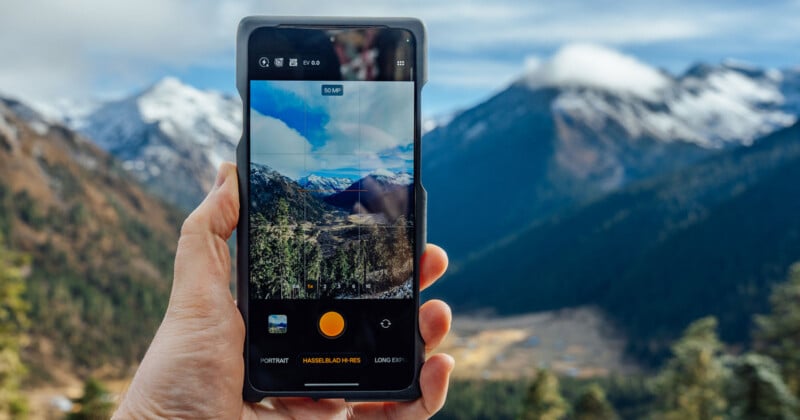
The results are often satisfying, especially given how much they widen the gap against North America’s major players. You won’t be able to get the $2,000 Find X9 Ultra directly in North America, but other Western markets will get it, cracking the door open for an import.
Oppo Find X9 Ultra Review: Design and Build
Oppo really likes orange. It rarely fails that once Apple chooses a primary color for the iPhone that pops, others seem to follow — especially Chinese brands. The Find X9 Ultra comes in Canyon Orange and Tundra Umber, both with different materials on the back. My review unit is the latter, and its faux leather veneer gives it a more camera-like appearance, though I must admit, the orange variant looks so, so slick.
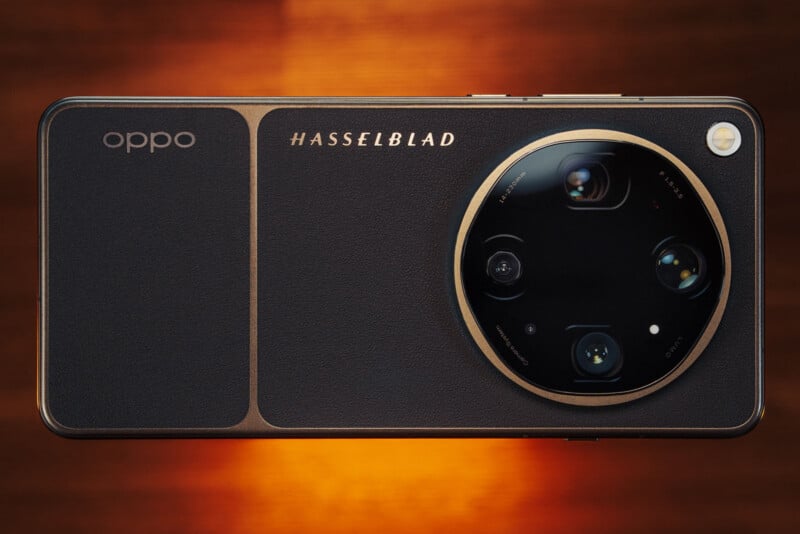
The large camera module in the rear presents an air of seriousness, as it should, given its “Ultra” moniker. A vibrant 6.82-inch LPTO AMOLED display (3168 x 1440) with 144Hz refresh rate (for gaming) and 1800 nits (3600 peak brightness), Oppo basically went with the same panel as the previous Find X8 Ultra. That also applies to the IP68/69/69K dust- and water-resistance ratings.
There’s no built-in MagSafe support, but at least Oppo includes it in some of its cases. One arrived to me on the eve of this review, and it works nicely despite the larger module.
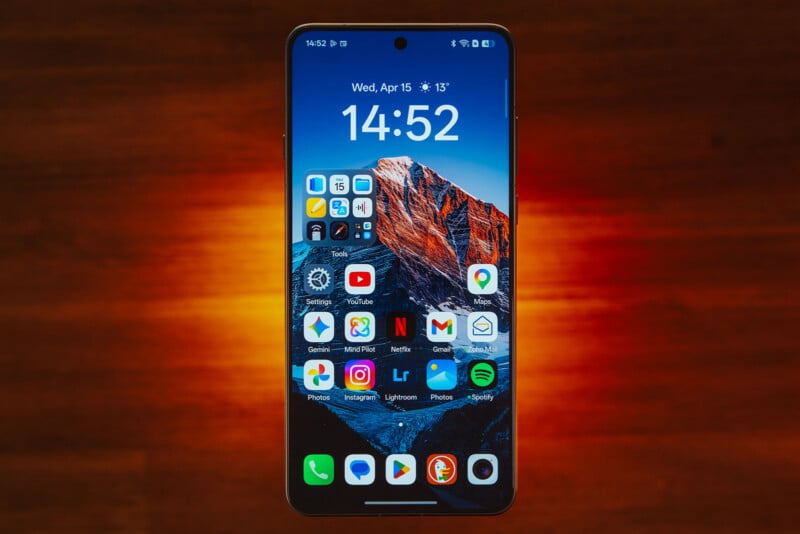
The Quick Button along the right edge, below the volume and power buttons, returns as a camera-centric, iPhone-esque activation. Double-clicking it launches the camera, while sliding it can control the focal length. Very much a carryover from past Oppo devices, most of what it does is wisely off by default to avoid accidental touches. Going into Settings > Quick button gives you plenty of options, including adjusting the sensitivity. Since it doubles as a shutter, you can use it to capture stills or video, or even hold it down for a burst.
Running on the Snapdragon 8 Elite Gen 5 chip, the Find X9 Ultra actually deviates from the Find X9 Pro, which used a MediaTek chipset. Configurations start at 12GB of RAM and 512GB of storage, going up to 16GB of RAM and 1TB of storage. Not surprisingly, there’s a big 7050mAh silicon-carbon battery inside that holds up fairly well, though I’ll touch on some caveats further down. And charging speed? The phone doesn’t come with its own charger but can handle 80W charging (100W in other markets), going from empty to 100% in about 30 minutes. Wireless charging maxes out at a brisk 50W.
Oppo Find X9 Pro Review: Camera Features
Having never tested the previous Find X8 Ultra, my experience generally draws back to the Find X9 Pro. The X9 Ultra isn’t a direct sequel, but I still wanted to see Oppo improve on what it achieved with that device.
In this case, Oppo makes changes to the rear camera array, including shifting image sensors around like musical chairs. This is among the first (along with the Vivo X300 Ultra) to sport two 200-megapixel image sensors in a phone. The 200-megapixel main camera (23mm equivalent) uses a Sony LYT-901 Type 1/1.12 sensor with f/1.5 aperture and full OIS.
The 200-megapixel 3x periscope telephoto (70mm equivalent) uses an OmniVision OV52A Type 1/1.28 sensor with f/2.2 aperture and OIS. It can also do double duty for macro shots with a minimum focusing distance of just 15cm.
Meanwhile, the 50-megapixel Sony LYT-600 Type 1/1.95 sensor Oppo previously used in the X8 Ultra’s 6x telephoto is now behind the X9 Ultra’s ultra-wide (14mm equivalent), albeit with a wider f/2.0 aperture.
 20x zoom
One of the key differentiators is the 10x telephoto camera. A 10x optical zoom (230mm equivalent) is unusual for a smartphone, but not unprecedented. Samsung previously did it in the Galaxy S23 Ultra, only to have since abandoned the idea. In this case, Oppo worked with Samsung to customize the 50-megapixel 1/2.75-inch JNL sensor — currently standing as the largest ever used on a 10x shooter. Together with a pretty wide f/3.5 aperture, the Find X9 Ultra gathers considerably more light by comparison.
Part of the reason is what Oppo calls a “Quintuple Prism Reflection Periscope”. Basically, when light passes through the lens, it undergoes five separate reflections inside, which is how Oppo reduces the physical length without losing the optical focal range.
Oppo claims the 10x telephoto can focus as close as 1.2 meters, making it capable in macro situations. There is a catch to this in Master mode that I’ll get to later, but the versatility in this lens proves surprising.
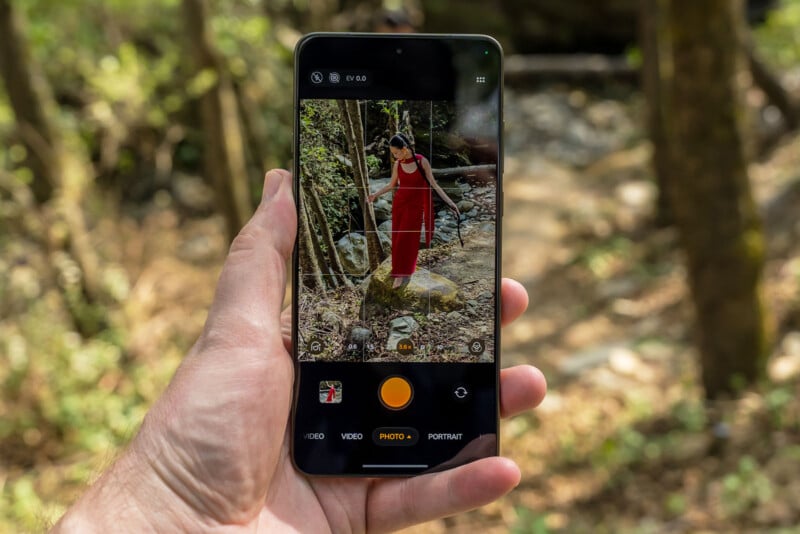
 10x zoom
In fact, Oppo also states that the X9 Ultra has “8 high-quality built-in lenses”, counting the 2x, 6x, 20x digital crops — plus the 3x macro — in addition to the four lenses. To double down on this, the company says the dual 200-megapixel sensors still deliver 50 megapixels of native resolution, essentially offering 50mm equivalents.
A lot of this is marketing fluff for two reasons: First, the sensors, while larger than some other phones, won’t deliver the kind of crop quality that, say, a full-frame mirrorless could with APS-C crop. The physical constraints eventually reveal themselves. Second, much like Apple’s own nonsensical claim with the iPhone 17 Pro and Pro Max, software isn’t the same as an actual image sensor and lens. The Find X9 Ultra has four rear cameras and one front camera. That’s it.
Oppo Find X9 Ultra Review: A New Teleconverter
Like Oppo’s previous two flagships (X8 Ultra and X9 Pro), there is a photography kit, the Hasselblad Earth Explorer Kit. Mine arrived too late to figure in this review, so I will look to cover it separately at a later time.
In any event, the kit includes a Hasselblad case and Hasselblad 300mm Explorer Teleconverter. The case’s vegan leather and dark-green hue are inspired by Hasselblad’s X2D 100C Earth Explorer Edition camera body. The integrated grip features a two-stage shutter button and a physical zoom dial. Placing an included adapter on the ring around the rear camera module doubles as both a lens mount for the teleconverter and for any standard 67mm filter.
The teleconverter mounts directly onto the 3x telephoto camera to deliver the 300mm equivalent focal length — a 13x optical zoom in smartphone terms. Once active, Oppo says the phone’s own 30x zoom (equivalent to 690mm) will be “ultra-clear” thanks to an in-sensor crop from the 200-megapixel camera. I didn’t get to test that in time for this review, but what is clear enough is the lens mount is different on this X9 Ultra. This particular lens won’t work on past Oppo devices, nor will their lenses work on this phone.
Oppo Find X9 Ultra Review: New Processing and Less AI
While the Find X9 Ultra has the Snap key on the left edge to access the AI features within ColorOS (Mind Pilot and Mind Space), they otherwise largely stand pat on the camera side.
Instead, the imaging focus is on processing, much of which centers on two main pillars propping up Oppo’s Lumo image pipeline. One is Real Time Triple Exposure — basically bracketing three exposures into one image. The other is what Oppo calls its New-Generation True Color Camera, housed in the rear multispectral sensor, whose sole role is to measure white balance data to produce more accurate color reproduction.
 XPan mode | Oppo also paid extra attention to the Hasselblad XPan mode for the first time in years. In practice, it actually appears like less of a hands-on approach after capturing a photo, and while I found some photos a bit muddier in the background (particularly for the 10x), there’s consistency here that’s easy to like. Oppo says it wanted to approach the whole system with efficiency and consistency in mind, meaning no shutter lag and results that don’t stray.
Oppo engineers told me that traditional computational photography often sacrifices tonal accuracy to achieve a “false” HDR effect. Master mode delivers better dynamic range without introducing unrealism, mostly done by avoiding regional processing on the tonality, which also explains why there’s a manual slider for it.
Pixel binning in the more automatic modes also fluctuates based on how the system perceives available light. Most of the time, particularly in low-light situations, it downsamples to 12.5 megapixels, but when you look at the metadata, good lighting can yield 25-megapixel images. The Hasselblad Hi-Res mode shoots at 50 megapixels by default, along with 200 megapixels as an option at the top of the interface.

Master mode takes that further with “Max” options to shoot in JPEG or RAW at 50 megapixels in 16-bit. It also introduces nine film simulations you can apply like a filter — but more importantly, also adjust to your liking by changing tonality, saturation, temperature, and more. Unfortunately, there’s no way to save what you’ve done as a separate preset, which would make practical sense for more discerning mobile photographers.
Those same simulations are available in other modes as well, without the granular adjustments, apart from a 0-100 slider for potency. That also goes for the Photo gallery app’s editing suite, where you can slap on one of the simulations after the fact and use that as a base for working on an image.
The breadth of modes available, like Portrait, Long Exposure, XPan, Night, Time-Lapse, Underwater, and Text, are all existing ones, but some benefit from the work Oppo put in here. Though not perfect, the overall camera system is one of the best you can use.
Oppo Find X9 Ultra Review: Image Quality
Reliability and Versatility
I haven’t mentioned Hasselblad as much as I’ve done in past Oppo and OnePlus reviews, but its presence isn’t lost on the Find X9 Ultra. The color science is easily the best it’s ever been on an Oppo device, and the multi-spectral sensor gets a major assist from Qualcomm’s Snapdragon chip to improve skin tone and bokeh.
 3x telephoto
 3x telephoto
Granted, I was in some spectacular locales, but mediocrity doesn’t care about location. That’s simply not the case here, where photos routinely turn out looking good and provide the kind of flexibility to look even better with some editing afterward. The best part is that this often applies across the board. While the ultra-wide camera is the weakest link and would benefit greatly from a better sensor next time, the main and telephoto cameras deliver at a very high clip.

I personally look for versatility in a smartphone camera, and the X9 Ultra excels in that regard. Day, night, indoors, outdoors, action, long exposure, people, nature, architecture — I could go on; they all look great and at different focal lengths. While I reject any assertion that a hybrid digital crop constitutes an actual “camera”, Oppo does a fine job in not running the camera off a cliff when using the 2x and 6x crops. It’s in these conditions that the X9 Ultra decimates the likes of Apple and Samsung.

My default is the 35mm 1.5x crop because I find the native 23mm too wide in most cases. Shooting at 35mm, despite the crop, never felt like a trade-off. More broadly, dynamic range feels steady across the range, and thankfully, Oppo restrains itself from introducing oversharpening, taking too much out of shadows, and saturating color to a ridiculous degree. Less is more sometimes, and it shows here.
The best part is the camera doesn’t abandon these key principles when capturing photos in different conditions and with different tools. Oppo wisely keeps exposure compensation at the top of the interface for easy access at all times. My one gripe is that rejigging the interface hides Action mode behind the sub-menu accessible at the top-right. It’s easy to shoot in burst mode by holding down the shutter button, but I tend to press it rapidly instead. While it won’t match the speed of a burst, composition is usually better with the latter method, and in some instances, buys just enough time for the software to make changes, if necessary.
 3x telephoto — Action mode
 3x telephoto — Action mode
Modes like Action (even if it’s an add-on rather than standalone) and Long Exposure are jewels to the whole system. I had a blast using them and appreciated that Oppo includes 0.5-second intervals for long exposure shots. Face and eye detection are also key to helping keep a subject in focus without tapping the screen. I’d like to see this expand to objects as well, or at least include an option to toggle between the two, given how helpful that would be for action shots.

The best part is that all of these points apply to the 3x telephoto as well, which is arguably the strongest anchor to the wider system. I found myself using it more than any of the other focal ranges in the mix here.
Master Mode, RAW Capture, and Hi-Res Capture
This Master mode feels different because it can take photos that are easy to work with later. I use Lightroom a lot to edit images, regardless of whether they’re JPEGs or RAW files, and both turn out nicely. The film simulations also don’t feel like gimmicky filters, especially when using the available sliders to tailor them.
 Master Mode RAW photo processed to taste in Adobe Lightroom
 Hi-res mode
Applying dynamic range without overly processing an image is nice, an approach that applies to both JPEGs and RAW files in different ways. Either way, a larger sensor definitely plays a role here as well, and while a Type 1 sensor would have been fabulous under the circumstances, I grew to trust Master mode more and more as I kept using it. I can’t say that’s always the case with other phones, so it’s a big win for the X9 Ultra.


Full-res RAW files at 16-bit? And with the whole camera array? Absolutely. Not every brand supports full-res RAW, let alone on anything beyond the main camera. To have a full gamut here feels creatively liberating. Of course, none of that would matter if the other lenses produced terrible results, but that’s certainly not true here.

Even the Hasselblad Hi-Res mode at 50 or 200 megapixels is a solid choice. I actually shot at 50 megapixels more than any other resolution, leaving the highest resolution for vistas and landscapes. It has some cachet with street photography when you want to crop in later, but the processing takes a little longer, so it’s not ideal if you’re looking to take shots with a quicker cadence.
More than anything, I just like that increasing the resolution doesn’t discriminate against the subject. Capturing people feels just as good as wildlife or beautiful scenery. The dilemma often becomes choosing the best way to go.
10x Telephoto Shots
When I first saw the 10x optical zoom on paper, I admit I was skeptical. Given that it’s not a common focal length on phones, a 230mm equivalent would quickly fall flat without extra help on the backend. The nifty prism helps reduce the phone’s thickness, but frankly, the sensor’s size and wider aperture are big reasons it works better than expected.

I’m surprised at how versatile it is, doing well with portraits, as well as managing to freeze action. The only catch is handheld stability, where it’s easy to lose sight of a moving subject, so unless you’re using a gimbal or tripod, it’s most effective for static scenes and subjects.
Oppo plays up the 20x zoom (460mm) as an additional “camera” (it’s not), and while respectable, it cuts down light gathering to the point where you need a very well-lit environment to actually make something out of it. Processing also lends a heavier hand to images once you introduce hybrid cropping at this range, so results may vary.

There is one big catch I noticed when using the 10x to shoot macro. Using Master mode with autofocus, the subject appears in focus so long as I don’t exceed the 1.2-meter minimum. The problem is that when I turn on manual focus to make minute adjustments, it throws everything off into a blurry mess (I demo it in the video at the top). I asked Oppo about this, and it seems that the 10x is, in fact, a 3x telephoto digital crop in autofocus, whereas the focusing distance forces me to step back much further to get the 10x optical range.
Video Features
I focused this review on still photos, but I have to give video its due as well. Oppo prioritized this part of the camera in ways it’s never done before, and it shows. Every camera on the Find X9 Ultra can record in Dolby Vision at 4K 60fps without a resolution downgrade upon switching lenses. There’s also 8K 30fps recording for the first time in an Oppo flagship, but I find shooting in 4K garnered better results, overall.
Since the imaging pipeline works the same way for video, there’s real consistency in quality here. Oppo combines OIS with electronic stabilization on the telephoto lenses, and while there is the occasional jerky effect when switching to one of the telephotos, it’s not a pervasive problem that ruins a clip. Footage usually looks really good.
Pro Video mode takes things further by letting you choose the kind of stabilization you want (with a crop factor involved). Full manual controls for composition, plus extras like focus peaking and a histogram, are also available. You can choose between SDR or HDR Hasselblad tuning or go with Oppo’s own O-Log2 for Log recording.
As for LUTs, you can just go with Rec.709 or HDR, or use one of the few others Oppo offers. If you have your own .cube files, you can import them to add to the list and make footage truly your own.
Oppo Find X9 Ultra Review: One of the Best of 2026
This is a win on various fronts for Oppo. The Find X9 Ultra is more of a camera that happens to be baked into a phone than the other way around. Mind you, ColorOS is an excellent Android overlay, and with all the other good things the phone does, it’s without question one of the best phones of the year already.
A phone camera you can trust is a big deal, and while I would never claim it can replace a mirrorless camera, it’s still a powerful tool that fits in your pocket. Without exaggeration, I could’ve chosen 50 worthy photos to include for this review. It also obliterates the best Apple, Samsung, and Google currently offer.

The photos here should speak for themselves about the kind of range I’m talking about, but I can’t stress enough how much this phone feels like a camera more than a phone. While not perfect in every respect, the distinction this phone represents becomes obvious once you start taking photos in various conditions. As is so often the case, friends and family were blown away by the results, even before I edited them.
Even on the video side, cracks are showing. The iPhone has long been the gold standard for mobile video but that lead will quickly evaporate if Oppo (and Vivo) maintains this pace and Apple doesn’t realize complacency is a terrible strategy.
Are There Alternatives?
The most obvious competitor is the Vivo X300 Ultra — also a first “Ultra” global launch for Vivo — not least of which because they use the exact same Sony LYT-901 sensor for their main cameras. I give Vivo the edge on the ultra-wide, which is considerably better. While Oppo has a 10x zoom Vivo doesn’t, the latter’s color science is still the best in the business, in my opinion. But on the dynamic range side, Oppo closed the gap to the point of almost being on par (it varies by lighting situation).

The Xiaomi 17 Ultra is a solid choice thanks to far better dynamic range performance this time, though I can’t say the overall camera took a major stride. I would argue that the Xiaomi Leitzphone co-engineered with Leica is a more serious competitor as a camera because the exclusive Leica styles in it are seriously good. And you can use them in Pro mode with full manual control at full resolution in RAW, too.
Apart from that, the Honor Magic 8 Pro deserves some praise as a solid alternative, though Honor’s processing is more obvious. On this side of the world, the Samsung Galaxy S26 Ultra offers some flexibility with Expert RAW and wider apertures for the main and telephoto lenses, except the system is let down by the fact Samsung refuses to use larger sensors — including those it actually makes itself.
The Google Pixel 10 Pro leans more on AI-driven features and experiential points rather than any seriously meaningful composition or hardware upgrades. The Nothing Phone 3 may be a 2025 device, but it’s far more effective than some give it credit for as a camera system.
For those using the iPhone 17 Pro or Pro Max, let it be known you’re unlikely to get results like this, especially from the weak telephoto camera and hybrid zoom. It only further illustrates that Apple has a lot of catching up to do.
Should You Buy It?
Yes. While importing may not be ideal, this global version plays nicely in a variety of locales, so availability is the bigger problem than compatibility. The camera is fantastic, but so is much of the rest of the phone experience, including the software and battery life, making it good value despite the hefty €1,699 ($2,000 USD) price.








 English (US) ·