
 3 weeks ago
34
3 weeks ago
34

Published Jul 5, 2026, 12:00 PM EDT
What does a fairy gotta do to get some kudos around here?
 Image: Nintendo
These days, it seems like you can’t load an online storefront without finding a 3D adventure game of some sort featured. There was a time when they were considerably less familiar, though. Developers had to find compelling ways to usher players through intimidating environments while teaching them a different way to play. Innovation abounded, and almost everything was new, including a helpful fairy named Navi who guided players through the wonder that was The Legend of Zelda: Ocarina of Time. Nintendo announced a remake of the N64 classic last month, and the developers of that remake shouldn’t mess with perfection.
Listen, it’s pretty clear that not everyone loves Navi, especially today. When people mention her, they often talk about the more annoying aspects of her existence. And we’re not here to dismiss those entirely. We just feel that some of the objections get more emphasis than they ought to, especially when one considers the gifts the helpful character brought to the game.
 Image: Nintendo
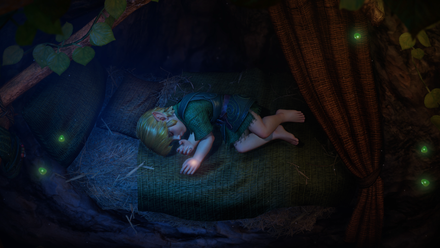
At the start of Ocarina of Time, the camera followed the tiny little fairy as she flew down to a hut in Kokiri Forest, where a fitfully slumbering Link had no idea just how much his life was about to change. That’s the same moment Nintendo featured in its recent remake trailer, although Navi didn’t appear.
From the moment Link awakened that fateful morning, he had a dependable ally who would leave players divided. She first guided him to the Great Deku Tree, which set him on his quest to save Hyrule from the malevolent Ganondorf. Along the way, Navi offered encouragement, helped him target enemies in combat, and explained the variety of lore he encountered in the broader world. She remained by his side from the game’s beginning to its end, pitching in whenever things got dark or confusing. Yet some players still don’t care for her at all.
It’s true that Navi could be annoying. In the original game, sometimes she would pop up to shout the same tired phrase just when players were trying to accomplish something difficult, summoned by an errant button press. Or she zoomed in on a distant object, interrupting Link while he prepared to deal with roaming skeletons (or worse). And there wasn’t a lot of variety in what she had to say. But such flaws are forgivable.
 Image: Nintendo via Zelda Dungeon
Every time Link targeted an enemy, locking onto it so he could strafe, Navi made that possible. Combat thus proved reasonably elegant, especially considering the era. 3D cameras in games still had a lot of developing left to do. Without a targeting system, players might easily get lost among the weeds while dangerous foes wailed on them. Try playing the game without it and see for yourself. The mechanic allowed Link and his enemies to circle each other, strafe, jump out of the way of attacks, and to look for openings instead of admiring blurry wall textures around them. Whatever its flaws, Navi made the game’s camera better.
Sometimes, while exploring, Link would spot a distant object of potential interest. By focusing on it and pressing the appropriate button, he could send Navi to investigate and offer a report. This mechanic often helped to highlight noteworthy features of the surrounding area that otherwise might have faded into the background, including higher or lower ledges that gave the dungeons their sense of verticality. This thoughtful design element, implemented over the course of a big adventure, made Hyrule feel more vibrant and interactive. A Kokiri lad and his fairy ally made a great pair.
Their connection lay at the very heart of the game. When Link woke after a journey through time, who was waiting for him seven years later? Navi. When Link battled Ganon near the very end of his quest, who did the monster separate from the hero? Navi. And at the game’s conclusion, when Navi flew away through an open window, it felt like something important had been lost. The bond that had carried hero and fairy through the game was severed. Their journey together had concluded not only because Ganondorf had been vanquished, but because Link no longer needed Navi to guide him. He had grown past her.
 Image: Nintendo
But had he really? Majora’s Mask, the surprise sequel, found Link wandering an unfamiliar land in search of a beloved and invaluable friend. The quest quickly turned to weightier subject matter, such as the leering moon that was about to crash into the planet. A lot of players understandably forget about the missing friend plot and focused on the three days’ time they had to prevent a cataclysmic collision. Even when the game concluded, the expected reunion never came. Link simply left to renew his search. So, who was that friend he so desperately sought? There’s every reason to believe it was Navi. Who else had Link grown so close to during his previous adventure?
Navi wasn’t perfect. On one level, she was simply a mini-tutorial that players could summon with the press of a button. But Nintendo’s developers made her into something much better. They gave her tiny wings, a digital voice, and undying loyalty that helped Zelda transition into the third dimension with exemplary success. She deserves more than derision; she deserves our gratitude.
 Related
Nintendo's Zelda: Ocarina of Time reveal was a mistake
It's exciting, but there's too much room for speculation







 English (US) ·