'Ocarina of Time' Revolutionized Gaming. Nearly 20 Years Later, 'Breath of the Wild' Pulled It Off Again
2 hours ago
9
Published Sep 13, 2026, 8:18 AM EDT
Randy Rhodes' first gaming memory is Kirby'sAdventure on the NES, and his love for gaming only rose from there. Playing games eventually wasn't enough for him. He began following the industry closely. In 2024, he finally started putting that to use by launching the ProjectUntitledGamingPodcast and later the Dual-WieldGamingPodcast. Covering the news week to week turned out to be something he loved, but a weekly show only has so much room in it, and writing was already something he wanted to do more of.
Randy has written for LordsofGaming since March 2025 and already has over 200 articles published to show for it. His coverage centers on Nintendo, Xbox, and indies, and runs across news, reviews, previews, and editorial. He enjoys writing about and critiquing the games that he's played, but analyzing the industry brings just as much enjoyment for him. He tends to write editorials that try to dig deeper into the news instead of just restating it.
Randy reviews and previews games broadly across all genres. He has a soft spot for co-op games, 3D platformers, and the majority of Nintendo's first-party output, but he also adores cozy and niche titles that don't always get a serious look: visual novels, farming sims, life sims, etc. He's always looking for up-and-coming indie games worth writing about.
Outside of games, Randy is into DnD, cooking, music and music production, which inspired one of his favorite pieces to write: 50SongsLeveledUpByVideoGameSamples. He also cares about Black representation in games and in the industry behind them, and he's always looking for opportunities to cover it.
In 1998, The Legend of Zelda: Ocarina of Time revolutionized a medium still figuring out the jump to 3D, handing the industry a blueprint that is still followed today. Nearly 20 years later, Nintendo did it again. Unlike OoT, The Legend of Zelda: Breath of the Wild entered the scene when the open-world genre had already matured. That didn't stop the 2017 Game of the Year winner from tearing the scaffolding down and turning the genre on its head. Most open-world games of its era, such as The Elder Scrolls or Far Cry, were locked in a never-ending battle to populate their worlds with more: more icons littering the map, more collectibles to distract you from your journey, more cloned NPCs providing a false sense of a living world. Nintendo's first attempt at a modern open-world Zelda opted for a surprising approach: It decided to give the players less.
Not in terms of content, of course. The Legend of Zelda: Breath of the Wild offers a breadth of content that can keep you engaged for hundreds of hours. What Nintendo did cut from the experience were restrictions and distractions, removing the hurdles between the player and the highly explorable world of Hyrule. Hidemaro Fujibayashi and Eiji Aonuma, the director-producer duo behind this masterpiece, tore down the formulaic foundation that games like Horizon Zero Dawn followed as gospel for the last decade and instead emphasized the underutilized core of an open-world's charm. The result was an "open-air" adventure (as Nintendo coined it) offering a sense of freedom rarely felt since The Legend of Zelda: Ocarina of Time ushered in a new era nearly two decades before.
Nintendo Uncluttered The Open-World to Make Hyrule Shine
Image via Nintendo
The first noticeable aspect of the open-world genre that Nintendo cleaned up was the map. Assassin's Creed and Ghost Recon Wildlands proved they can wow by shoving tons of icons on the map showcasing main quests, side quests, shops, enemy bases, and all kinds of collectibles. Catering everything the game has to offer on a silver platter definitely worked for some, but the checklist feel of the open-world genre caused fatigue in many players. Breath of the Wild flipped the script by only marking the bare minimum on the map and telling players to go in the direction that calls to you.
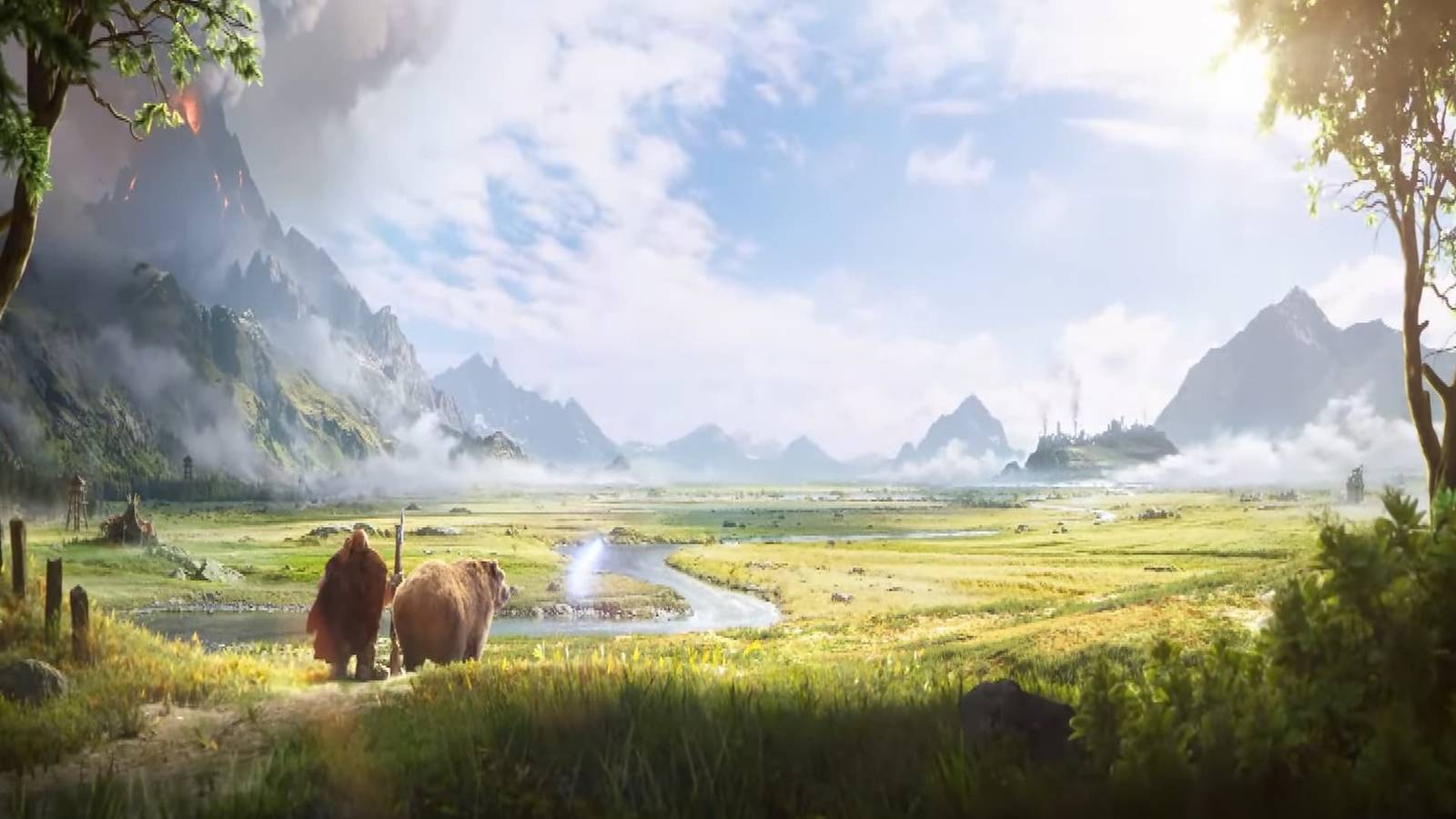
With only the short list of main quests, Sheikah Towers and Shrines permanently taking a spot on the giant blueprint of Hyrule, you're trusted to explore Hyrule freely and organically find the funplanted by the developers. Unique side quests, tough bosses, powerful gear, and lots of Koroks are only found by following your own path, not a waypoint. Nintendo took something as simple as a scope and player-placeable markers and turned it into a fresh way to fuel discovery.
The developers were so dedicated to this philosophy that even fetch quests in Breath of the Wild forego waypoints that lead you to the exact location. Instead, the NPC only gives you verbal directions to follow in order to reach your destination. This made what is normally the low-hanging fruit of quest design into an interesting challenge of map literacy and navigation skills. That is just one example of how this simple reduction elevated the experience.
'Breath of the Wild' Made The Open-World Feel Open
Another shining example happens in the backend: the elimination of an experience bar and intricate stat management. Thismay seem like a dampening of depth, but in reality it opens up more possibilities for how Link takes on a Ganon-ruled Hyrule. For one, Breath of the Wild conquers a sneaky distraction from the gameplay by cutting the player's need to spend time in the menu. Managing branching skill trees and dozens of intricate gear pieces can eat up a lot of time without you even realizing it. The simple, one-number gear and weapon score system keeps your focus on the game and not on the options.
No levels also mean no level gating: Breath of the Wild doesn't try to use big numbers to scare you onto a golden path. The open-world genre really hadn't been as open as it seemed. The giants of the space, like Final Fantasy VII Rebirth, perfected the art of feeding the player a linear adventure through an open landscapeusing level gates or narrative triggers. Once Link leaps off of the Great Plateau, every corner of Hyrule is a viable option for fun.
That even extends to heading straight for the ominous Hyrule Castle to face off against Calamity Ganon with nothing but a Rusty Broadsword and a dream. You will more than likely die a hundred times, or you may cut your losses and run, but it makes for a memorable experience either way. What makes the journey so special is that Nintendo made sure that nothing was off the table.
No Right Way to Play 'Breath of the Wild'
Image via Nintendo
This sentiment is intensified in one of Breath of the Wild's greatest design philosophies: everything's a puzzle and you can solve it any way you want. The robust physics engine and chemistry system are impressive in their own right, rivaling the genre's top-class systemic worlds in games such as Red Dead Redemption 2 and Grand Theft Auto V. Fires spread and create updrafts that lift Link into the sky, water can be frozen to create pathways, lightning is attracted to metal objects, and the Sheikah Slate's god-like abilities grow the sandbox even further.
The way Nintendo utilizes these systems is what makes them even more impressive, however. Breath of the Wild's Hyrule pushes players to push back against the conventions laid out by the developers. Although there's usually a "right way" to take care of a puzzle or battle, you can use the game's various systems to "break the game." Combining the Sheikah Slate with the physics and chemistry engine's mechanics, you can make gameplay as emergent as an immersive sim and pull off feats that even the developers could never have thought of.
These aspects of Breath of the Wild are well received and universally praised, but there's one important mechanic that follows these same philosophies and is usually met with ire: weapon durability. This misunderstood mechanic was a necessary evil that restricted your arsenal in order to open up your gameplay options. Losing a Royal Claymore in the middle of a Lynel fight may feel bad in the moment, but knowing that your best option is expendable changes how you approach the situation and empowers you to adapt on the fly and utilize more of the game's mechanics.
40 Years of 'Zelda', 40 Years of Excellence
Image via Nintendo
The single most important aspect of The Legend of Zelda: Breath of the Wild is Nintendo's lack of handholding and trust in the player to save Princess Zelda in a way that feels organic. That philosophy didn't light everyone's fire, and criticisms of the narrative structure and Divine Beasts are valid. Although vocal fans call for the series to return to the blueprint Ocarina of Time laid out, the overall design of the game is an achievement that is vindicated by the titles that prospered because of its influence. Genshin Impact, Elden Ring, and Ghost of Tsushima are just a few examples that would've been worse off without Breath of the Wild storming onto the scene.
With the 40th anniversary of The Legend of Zelda underway and the release of the highly anticipated Ocarina of Time remake pushing towards its Nintendo Switch 2 launch on November 5, Breath of the Wild remains one of the most important games not just in the franchise's history, but in gaming's history as well. No matter which way the franchise goes from here, never expect Nintendo to settle for what the industry deems the "right way." It will keep building the path the industry follows next.


 Image via Nintendo
 Image via Nintendo
 Image via Nintendo


 English (US) ·