
 3 weeks ago
48
3 weeks ago
48
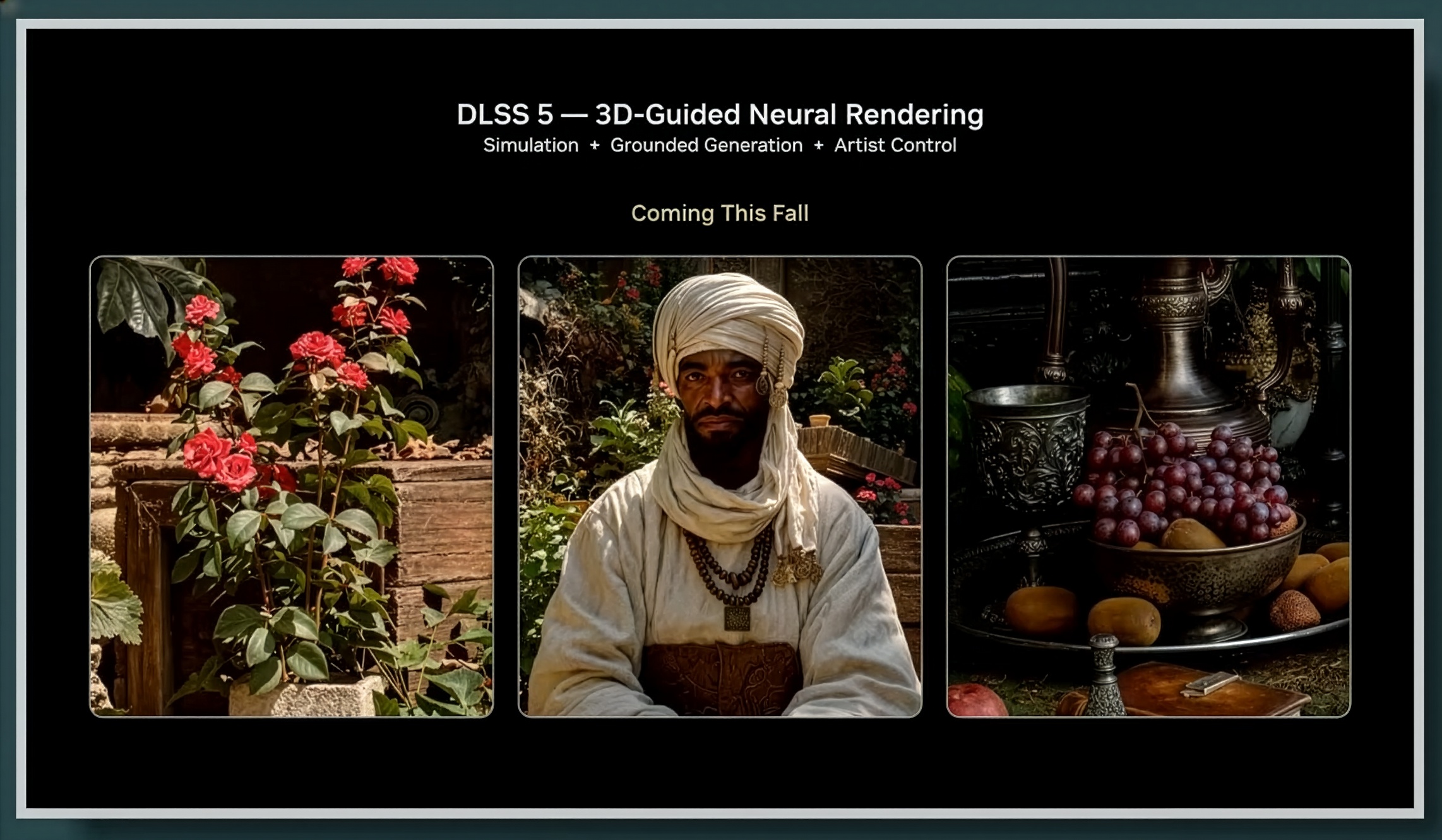
Nvidia first debuted DLSS 5 earlier this year to a strong, critical response. The upscaling tech was almost slammed by some press and enthusiasts for overstepping its boundaries and going too far with AI.
Go deeper with TH Premium: GPUs
At the time, Nvidia reassured the community that DLSS 5 would preserve artistic intent and CEO Jensen Huang even went as far as to claim that gamers didn't understand it. Now, at SIGGRAPH, the company has once again showcased DLSS 5, and it admittedly looks different this time around.
NVIDIA Keynote Live at SIGGRAPH 2026 - YouTube
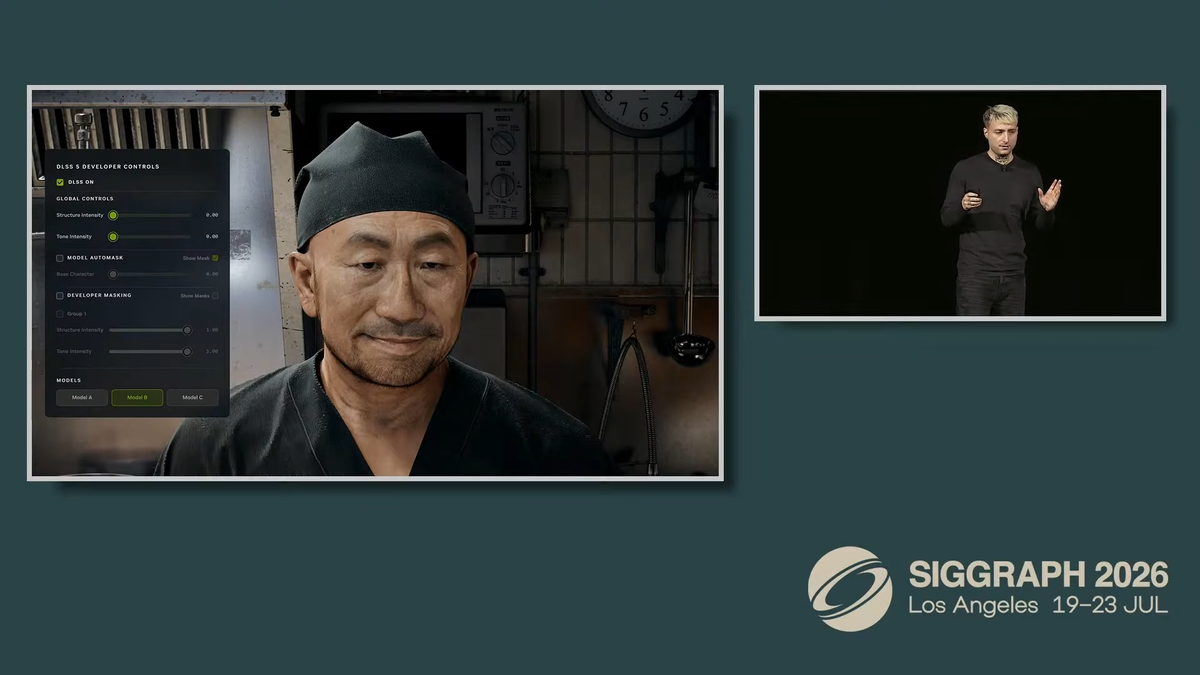
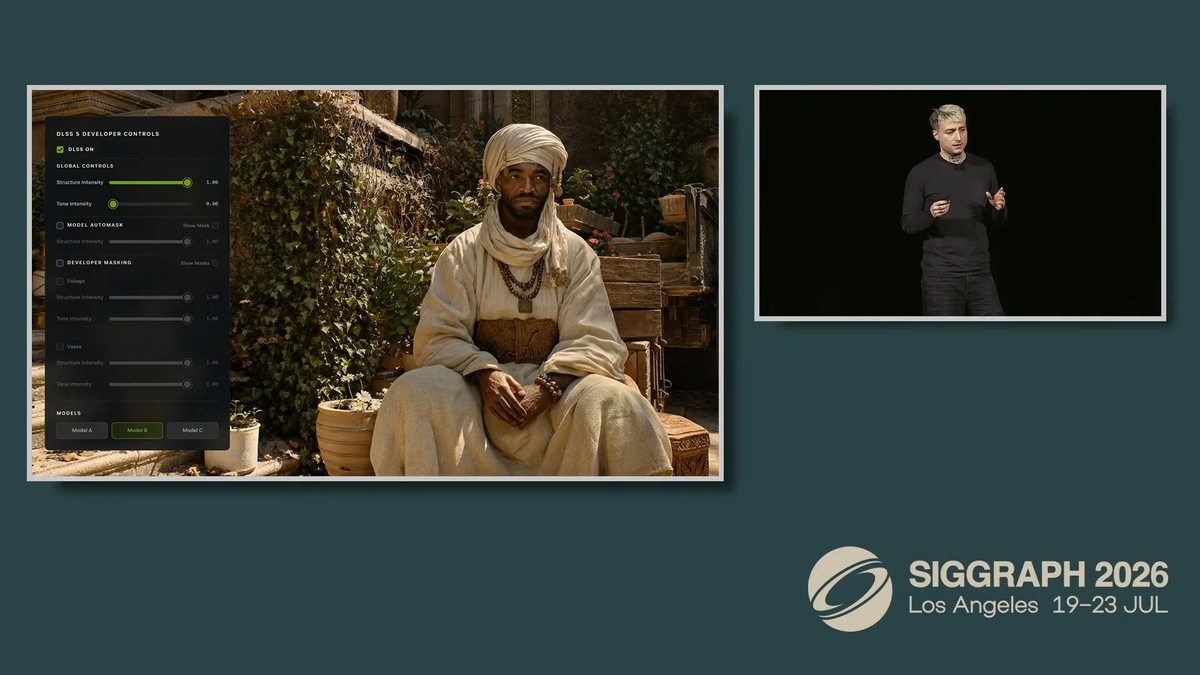
The main takeaway is the introduction of three different models with varying levels of detail and impact on performance. A game doesn't need to be confined to a single model the whole time; instead, developers can choose to employ different models for different scenes. Individual elements of scene, such as the characters versus the world, can also be fine-tuned in respect to how much DLSS touches them up (or not at all).
Image 1 of 2
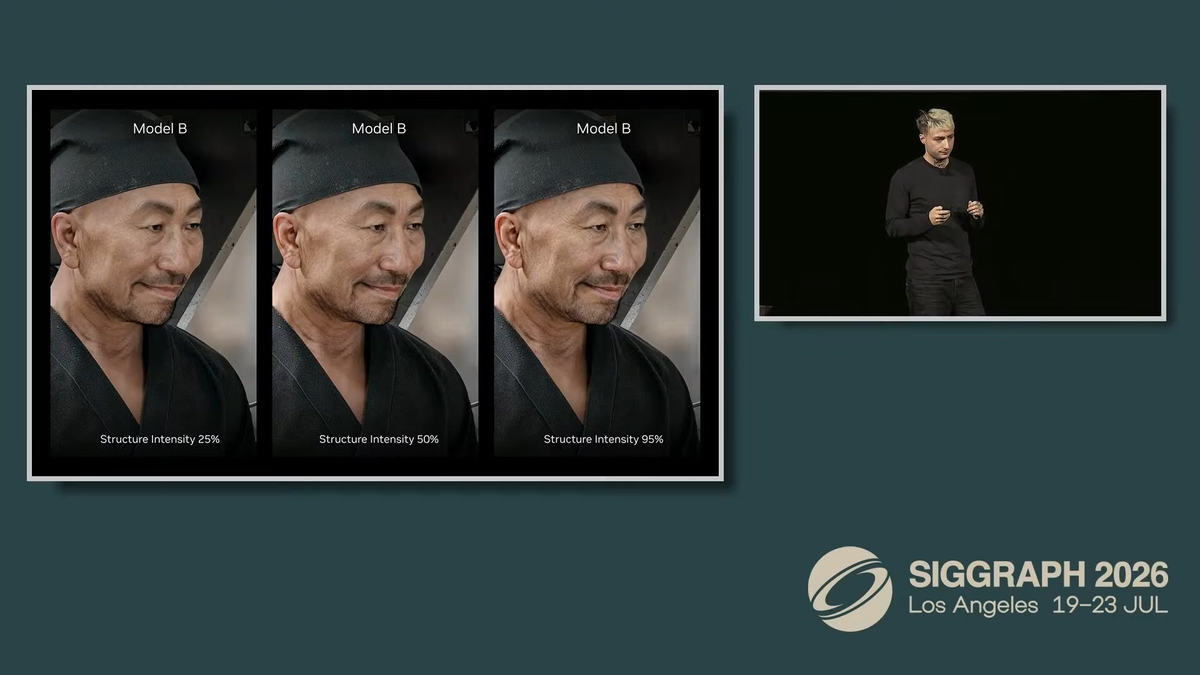
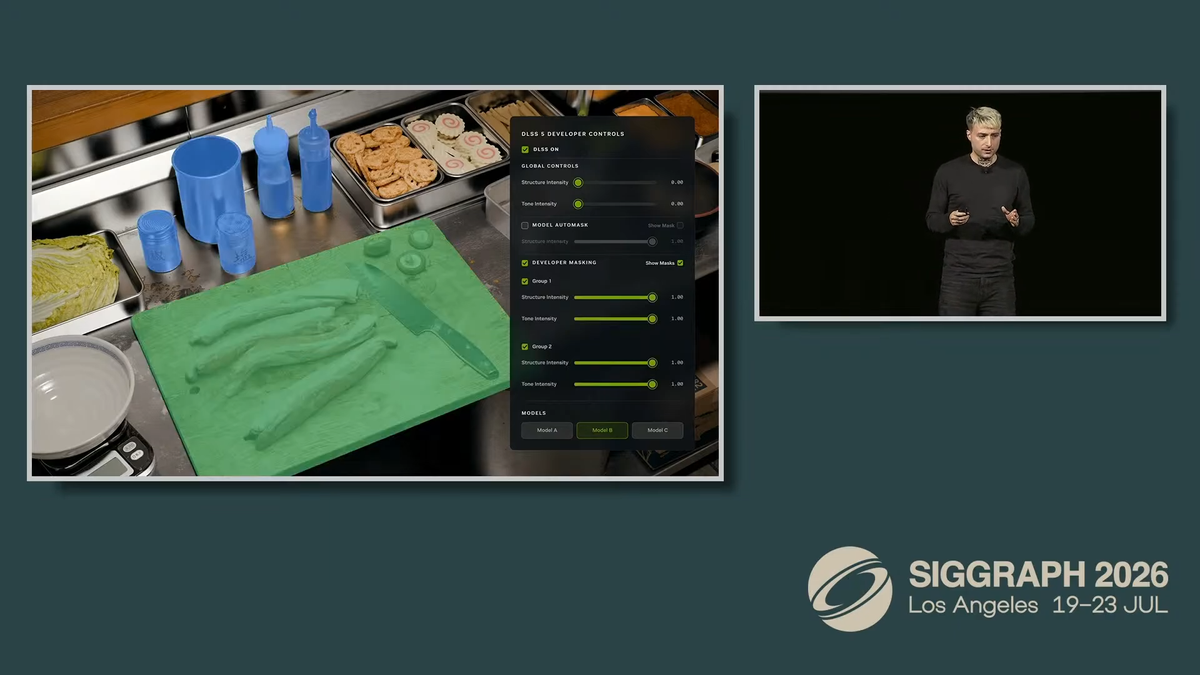
Then, you have the liberty to switch between the models in real time without incurring latency. DLSS 5 uses a combination of techniques to take the original rendered frame and apply effects on top, going beyond just upscaling the image. These days, DLSS, FSR, and XeSS are mandatory parts of the equation, acting as the preferred anti-aliasing solution in modern titles, and helping in other areas like ray tracing.
The upscaling part works conventionally and is still responsible for dictating the foundational blocks of the image, like lighting and geometry. The part that was so heavily criticized is therefore optional, as it only comes into play after the original rendered frame has been upscaled. However, it's unclear whether developers (or you) can actively choose to not process the frame through the beautification features.
Image 1 of 2
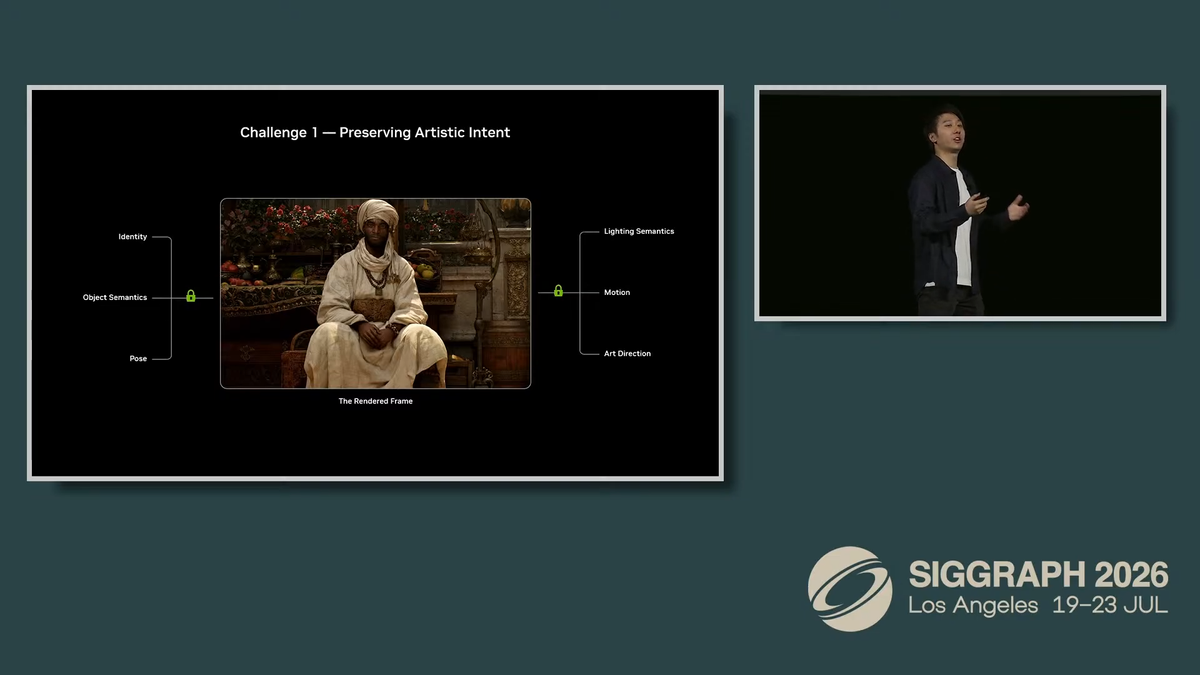
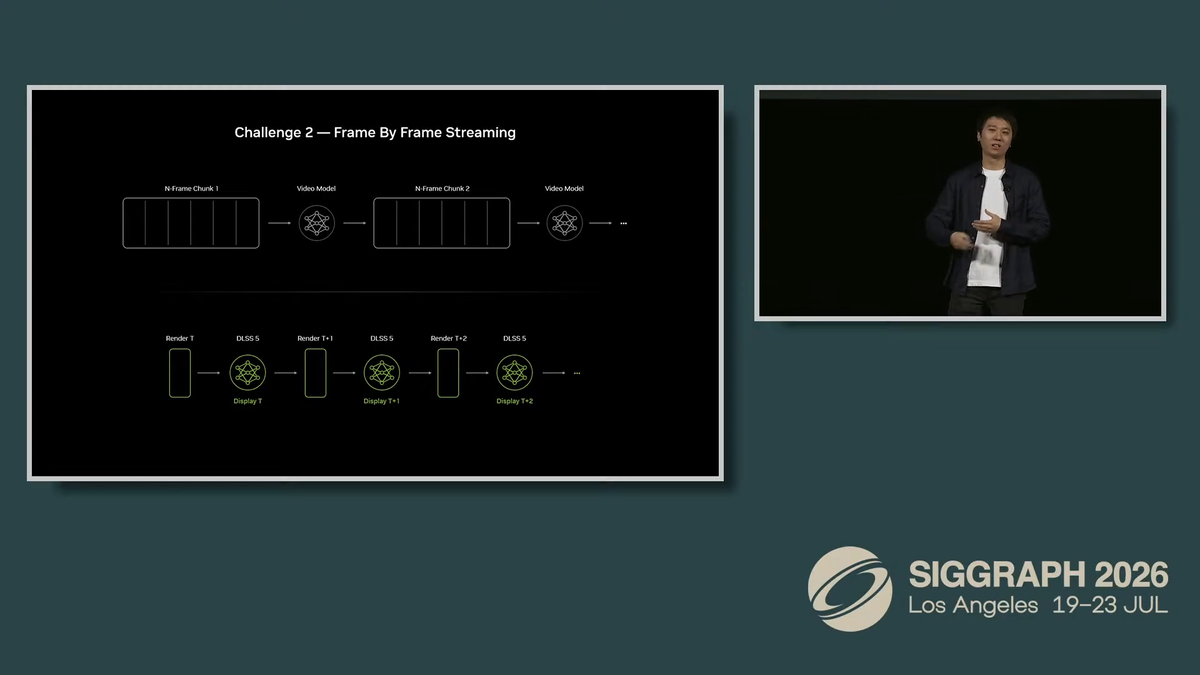
Nvidia outlined three main challenges that the company faced when developing DLSS 5, some of which is probably reactionary after the initial reveal. The first challenge is preserving the original creative vision, which we already explained. The second challenge was to handle one frame at a time, which generative AI models don't — they process multiple frames together. That means DLSS 5 shouldn't negatively affect response times.
Image 1 of 3
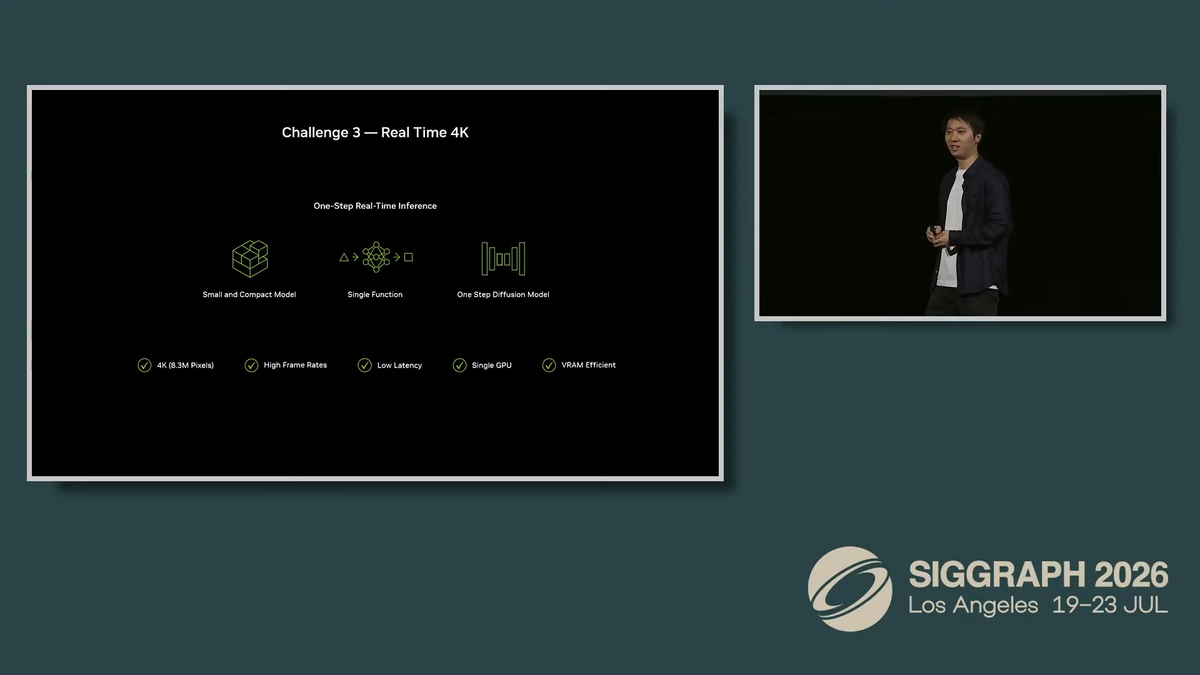
The third and final challenge pertains to the optimization of DLSS 5. The slides shown at SIGGRAPH say the model can run on a single GPU and that it's "VRAM efficient." For context, last time we saw it running on two RTX 5090s. Nvidia did not say whether it still needs the highest-end Blackwell gaming GPU to work properly. The company is promising real-time 4K performance thanks to a more compact model that has learned from a larger diffusion model.
DLSS 5 is building up to be a significant step for upscaling tech just when we thought AMD was finally catching up. However, many people may still worry about artistic intent, even if the new demos look a lot more polished and mature. We'll have to see what happens when it finally releases. There is no official release date for DLSS 5, but it should launch during Q3 2026 as Nvidia continues to tweak the models and its parameters based on community feedback.

Follow Tom's Hardware on Google News, or add us as a preferred source, to get our latest news, analysis, & reviews in your feeds.






 English (US) ·