
 4 hours ago
9
4 hours ago
9
Nvidia has placed another bet on the idea that AI’s next act happens off the screen. On October 5, 2026, Reactor, a San Francisco startup building infrastructure for real-time generative video and world models, said Nvidia and Sapphire Ventures had joined its Series A.
The new backers bring Reactor’s total funding to $74 million. When the company emerged from stealth on May 28, 2026, that figure stood at $59 million.
The timing is hard to miss. Days earlier, AMD announced plans to acquire World Labs for $8.2 billion in stock, putting an eye-catching price tag on a category that barely registered with most investors a short while ago.
What Reactor is actually building
Lightspeed Venture Partners originally led the Series A. Nvidia and Sapphire Ventures are latecomers to the round, though hardly minor ones.
Reactor is not trying to build the flashiest world model itself. It sells a developer platform, offering an SDK and API that let other companies run world models in their own products.
The company says its platform runs at over 60 frames per second with latency under 40 milliseconds.
That performance rests on three pieces Reactor built itself: a proprietary inference engine, a global GPU cloud, and a streaming layer.
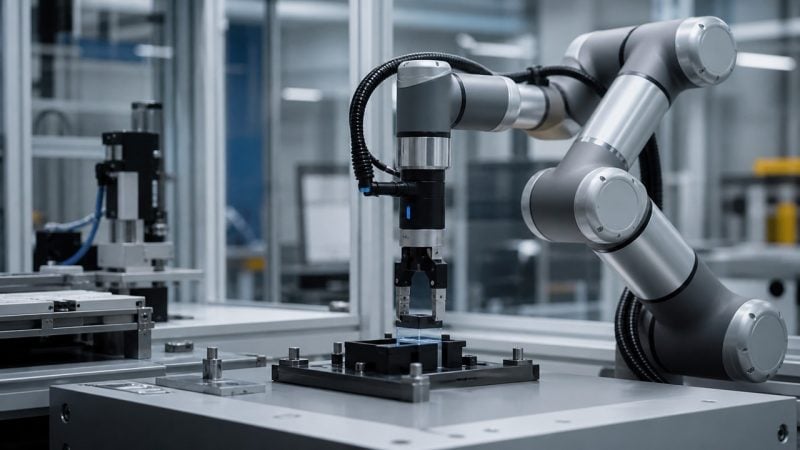
Reactor is aiming at two very different customer groups. The first is media and entertainment, covering Hollywood studios, advertising platforms, and streaming services. The second is physical AI and robotics.
The startup also has partnerships with AWS and with world model research labs, including Overworld.
The Vision Pro alumni behind it
Reactor was co-founded by CEO Alberto Taiuti and CTO Bryce Schmidtchen. Both served as technical leads on Apple’s Vision Pro.
The broader team draws from Apple, Meta, Google, Netflix, Adobe, Replicate, and Microsoft.
Why world models are suddenly everywhere
World models are AI systems that learn from video and other data to simulate dynamic physical environments and interact with them.
In the same week as AMD’s World Labs announcement, video AI startup Runway released the first open-weight version of its world model, meaning developers can download and work with the underlying model weights directly.
What this means for the world model race
The most interesting contrast is between the two chip giants. AMD is buying a world model developer outright, while Nvidia is taking a position in a company built to deliver world models to end users.
For Reactor, the investor list carries weight beyond the dollars. A developer platform lives or dies on whether studios, ad platforms, and robotics teams trust it enough to build on top of it, and names like Nvidia, Lightspeed, and Sapphire help with that pitch.
Reactor’s partnerships with AWS and labs like Overworld suggest it wants to be a neutral layer that cooperates with both sides rather than competing head-on.
If AMD’s $8.2 billion deal marked the price of owning a model, Reactor’s $74 million round shows investors are also paying for the tools that make those models usable in real time.
Disclosure: This article was edited by Diego Almada Lopez. For more information on how we create and review content, see our Editorial Policy.



 English (US) ·