Nvidia CEO Jensen Huang says robots could be 'AI immigrants' that can address labor shortages — can 'do the type of work that maybe we decided not to do anymore'
1 day ago
9
(Image credit: Getty Images)
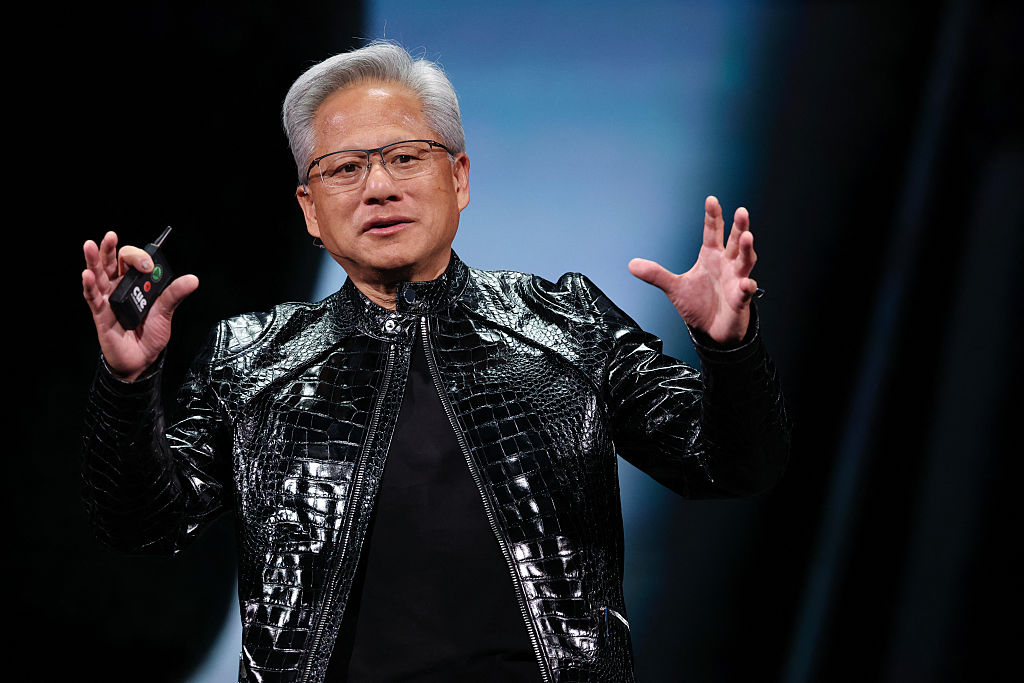
Nvidia chief executive Jensen Huang referred to AI-controlled robots as "AI immigrants" at a question and answer session with reporters at CES 2026 that Tom's Hardware attended. Huang's comment related to how robotics may do jobs that others do not wish to take on.
Huang started off by saying that "having robots will create jobs," before turning on to discuss a global labor shortage, which he said is tens of millions of people.
"We no longer, as a population, will be able to sustain the economies that we would like to have," Huang said. "And so we need to have more, you know, if you will, AI immigrants to help us on the manufacturing floors and do the type of work that maybe we decided not to do anymore."
He followed up by saying that the "robotics revolution" will drive the economy forward, and that will allow for more jobs to hire more people. "We just need the economy to do well," Huang said. "We need inflation to stay low so that, you know, more jobs will be created, living will be more affordable. All of that's going to come with AI."
The comment didn't cause any gasps or reactions from the crowd of press at the event. Many will think the suggestion that human immigrants do jobs that others don't want to do is already an oversimplification of a complex situation. But it becomes even more complicated when comparing AI robots to the human condition, especially when there is fear about whether humans may have jobs at all.
Huang isn't the first tech leader to say that AI will create jobs. Many have done so with the idea that with agentic copilots, office workers will become far more efficient. He also said that "there are a lot of jobs that won't be replaced by AI for a very long time." But Huang's suggestion that physical, blue-collar labor in manufacturing or other areas could go may scare those who thought their woodworking skills, HVAC certification, or pure grit and determination would keep them working, no matter where they come from.
The CEO also said that he expected to see robots with human-level skills "this year," with work on locomotion, articulation, and fine motor skills.
"We don't just use our eyes, we also use touch," he said. "And the robot only has eyes, so it needs to have touch and so those fine motor skills are hard, hard to develop, but we're developing technology in that area, and I know the rest of the industry is doing so as well."
Get Tom's Hardware's best news and in-depth reviews, straight to your inbox.
Andrew E. Freedman is a senior editor at Tom's Hardware focusing on laptops, desktops and gaming. He also keeps up with the latest news. A lover of all things gaming and tech, his previous work has shown up in Tom's Guide, Laptop Mag, Kotaku, PCMag and Complex, among others. Follow him on Threads @FreedmanAE and BlueSky @andrewfreedman.net.You can send him tips on Signal: andrewfreedman.01
Nvidia CEO Jensen Huang says robots could be 'AI immigrants' that can address labor shortages — can 'do the type of work that maybe we decided not to do anymore'

 1 day ago
9
1 day ago
9




 English (US) ·