
Nvidia CEO Jensen Huang has laid out his vision of how OpenClaw will help shape the future of technology - with a particular focus on robotics.
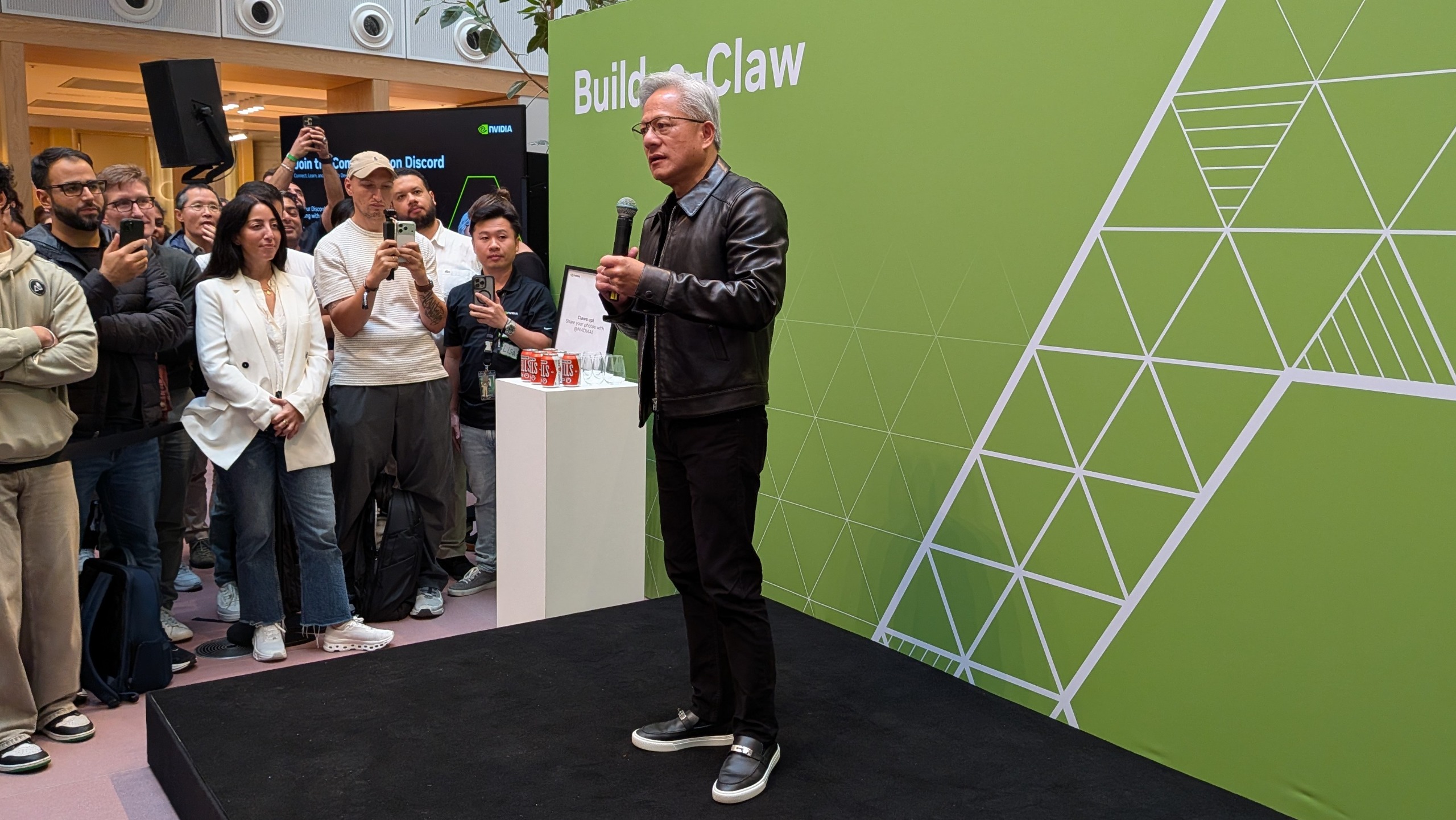
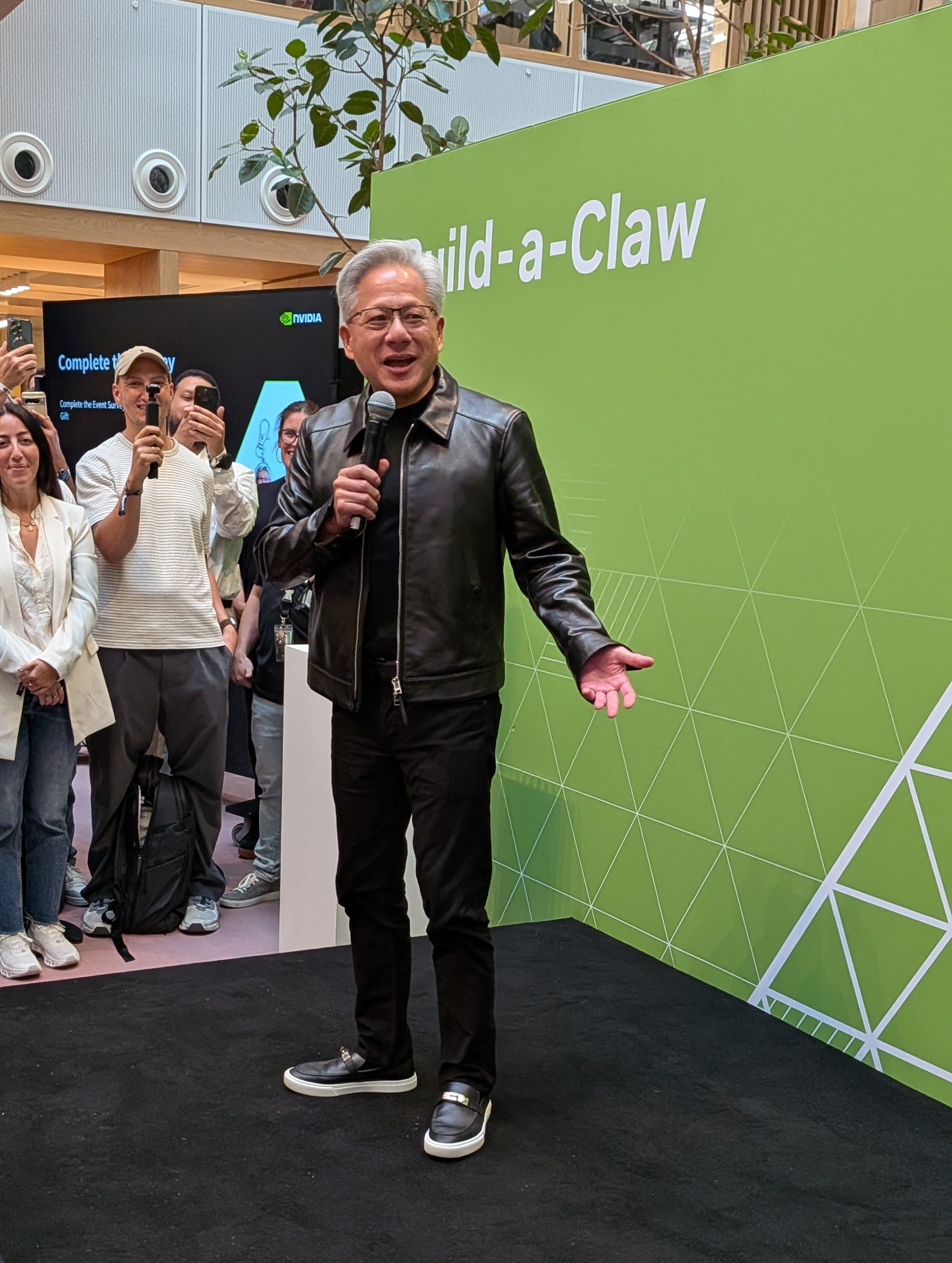
Speaking at a “Build a claw” event in London, Huang explained how OpenClaw and AI agents as a whole can spur on incredible advancements in a range of fields.
However it was the field of humanoid robotics that seemed to catch his fancy, with Huang outlining the need for proper controls to ensure the potential of the technology can be reached.
AI is "becoming useful"
Huang opened by noting how OpenClaw was “one of the most important models” ever seen, helping to further progress across multiple industries.
“We’ve now seen an inflection in artificial intelligence - it’s become useful,” he declared. “The type of things people are doing with it, as simple as software coding, being a marketing agent assistant, research assistant, lab assistant, helping scientists do drug discovery and engineers run experiments - we’ve got agents everywhere.”
Spotting a robot built by Nvidia partner Humanoid, Huang noted how OpenClaw is the “first credible” agentic harness, which he likened to LLMs inside an exoskeleton, before extolling the possible benefits to using the technology for robotics.
“When it first came out, we thought wow, what a really terrific digital robotic system,” he said, “kind of like a human robot, that is basically the physical harness of a large language model, essentially - the motors and the articulation and the wheels and the arms, those are just tools that are used by the agent that’s sitting inside the computer.”
“So when we first saw that we said, this is incredibly useful, and we’re going to help make it even better - but the one observation that we made was that these agentic systems, if they were able to be deployed in a safe and secure way, we’re going to have to create some kind of container for you.”
Huang noted that the current situation was similar to the birth of the internet, when a browser itself was not isolated from the computer, so when a user interacted with a website, it would download an app which had full control of bare metal - and often delivering what he described as “a special package to your PC”.
“The obvious thing to do is create essentially a container, an isolation layer - essentially another operating system inside the operating system - so we created this thing called OpenShell,” Huang said, highlighting how this creates an isolation system for agentic systems.
“When you’re building an autonomous system, the first thing you should do is assume zero trust. So you give it a policy, you get minimal privileges - so if you’re asking an autonomous system to make you an omelet, you don’t have to give it access to a chainsaw - all you need is a frying pan…so whatever the task you give your agent, you give it minimum rights, minimum privileges, and then you get to monitor it to make sure that it’s compliant with policy”
“Zero trust, minimum policy, continuous monitoring, contained inside an isolation system that is separated from bare metal - that’s how you develop and deploy agents safely.”
But what if unexpected incidents or complications arise? Huang was optimistic that things would not get out of hand.
“We will monitor the autonomous systems continuously, and if that robot were to start to violate or do something that’s inconsistent with the privileges we gave it, it would escalate to us, and we can decide whether we want to shut it up!” he laughed.
“These kind of systems, these escalation systems, these security systems, all have to be built so that we can give all these autonomous machines and autonomous agents and deploy them in a way that is able to do so safely and securely, so we can realise the incredible future potential of the technology that we’re building.”

Follow TechRadar on Google News and add us as a preferred source to get our expert news, reviews, and opinion in your feeds.





 English (US) ·