
 3 weeks ago
46
3 weeks ago
46
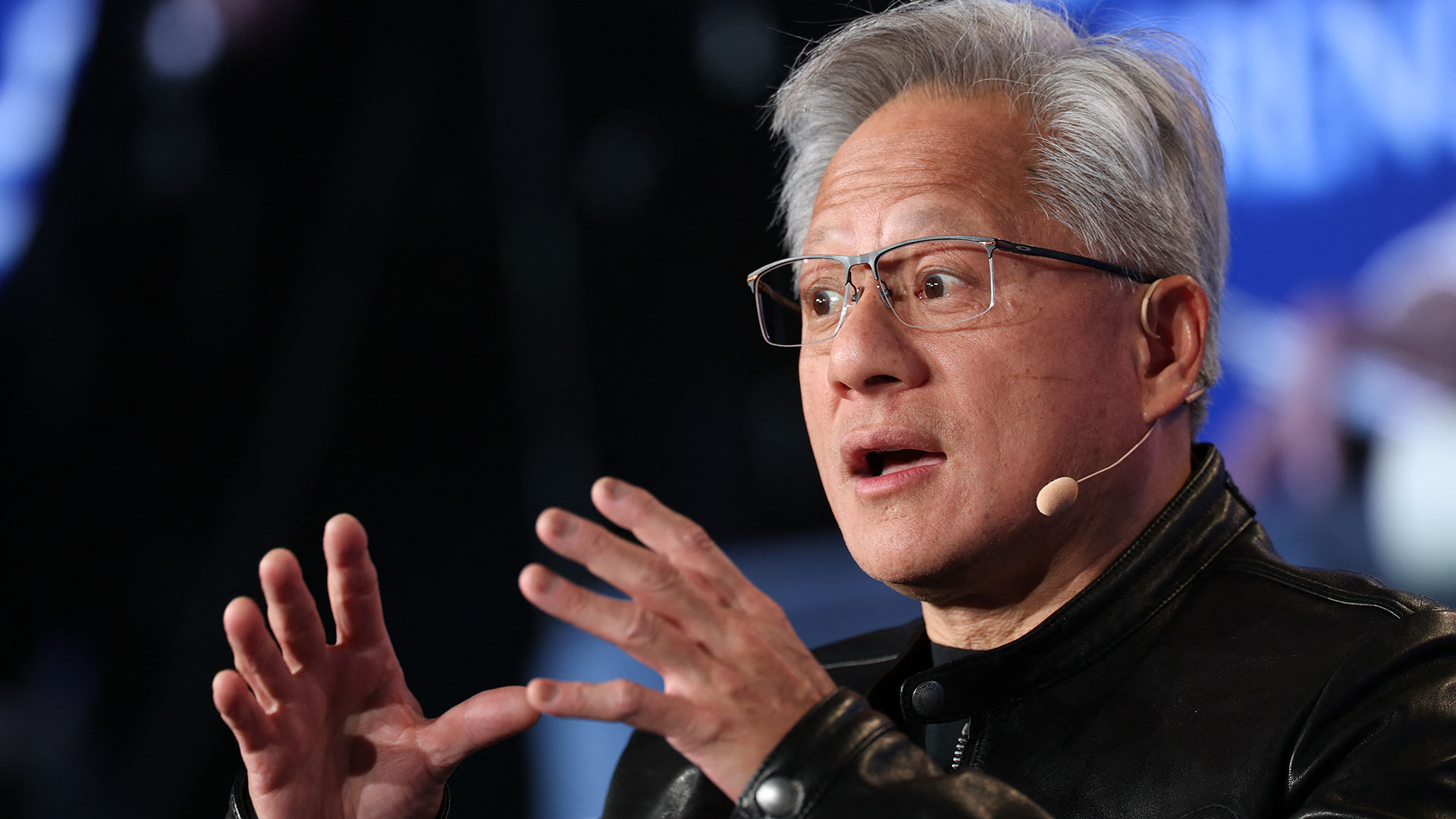
Jensen Huang joined X last month and used his first post Friday to promote Open Weights and American AI Leadership, a three-page policy letter published the same day and co-signed by 25 companies, including Nvidia, Microsoft, Meta, IBM, Dell Technologies, Palantir, and Hugging Face.
Go deeper with TH Premium: AI and data centers
The letter asks Washington to avoid what it calls "premature restrictions on downloadable AI models," and comes just four days after the Trump administration was reported to be reviving a push to ban Chinese models — though the document doesn't directly mention China, Moonshot AI, or DeepSeek. Notably missing from the co-signers are OpenAI, Anthropic, and Google.
The 25 names break down into chipmakers, server vendors, cloud operators, enterprise software firms, security companies, and venture funds: Nvidia, Dell, Microsoft, IBM, Box, ServiceNow, CrowdStrike, Palantir, Telnyx, Replit, Perplexity, Andreessen Horowitz, Y Combinator, and Emergence Capital among them. The model developers on the list, Meta, Mistral, Black Forest Labs, Arcee AI, and Reflection, all publish weights already.
Also present on the list of signatories is the Linux Foundation, which stewards the OpenMDW-1.1 license Nvidia used to release Nemotron 3 Ultra in June, a 550-billion-parameter model that Artificial Analysis scored at 47.7 on its intelligence index against 53.9 for Moonshot's Kimi K2.6.
For my first post, I’m sharing a letter @NVIDIA signed on why open models matter.AI will transform every industry, power every company, and be built by every country.Open models strengthen safety and cybersecurity, accelerate innovation and diffusion, and enable sovereignty.… pic.twitter.com/t02bi51N4CJuly 24, 2026
"The world needs both frontier closed models and frontier open models," Huang wrote in his X post. At Nvidia's CES 2026 press Q&A earlier this year, he put a figure on the shift, saying one in every four tokens generated today comes from an open model. Weights that anyone can download get served from enterprise clusters, regional clouds, and on-premises racks rather than a handful of hyperscaler API endpoints, and those buyers have no in-house TPU or Trainium program to buy instead. The letter's policy section asks for expanded compute access for startups and researchers, alongside public investment in shared datasets and evaluation frameworks.
The letter goes on to urge policymakers not to treat distillation — the practice of training one model on another's outputs — as misappropriation, arguing that unlawful extraction from closed models should be handled through targeted legal frameworks, rather than broad limits on the technique.
Treasury Secretary Scott Bessent said on Fox Business earlier this week that the administration would examine Chinese open-source models for intellectual property theft and could sanction the companies behind them, telling the program that officials had found watermarks from U.S. large language models in Chinese systems. Huang told Axios two days later that American firms should be allowed to use Chinese models, calling claims of Chinese backdoors a misconception. The distillation passage is the only part of the letter that doesn't concern open weights.

Follow Tom's Hardware on Google News, or add us as a preferred source, to get our latest news, analysis, & reviews in your feeds.





 English (US) ·