
 5 hours ago
12
5 hours ago
12
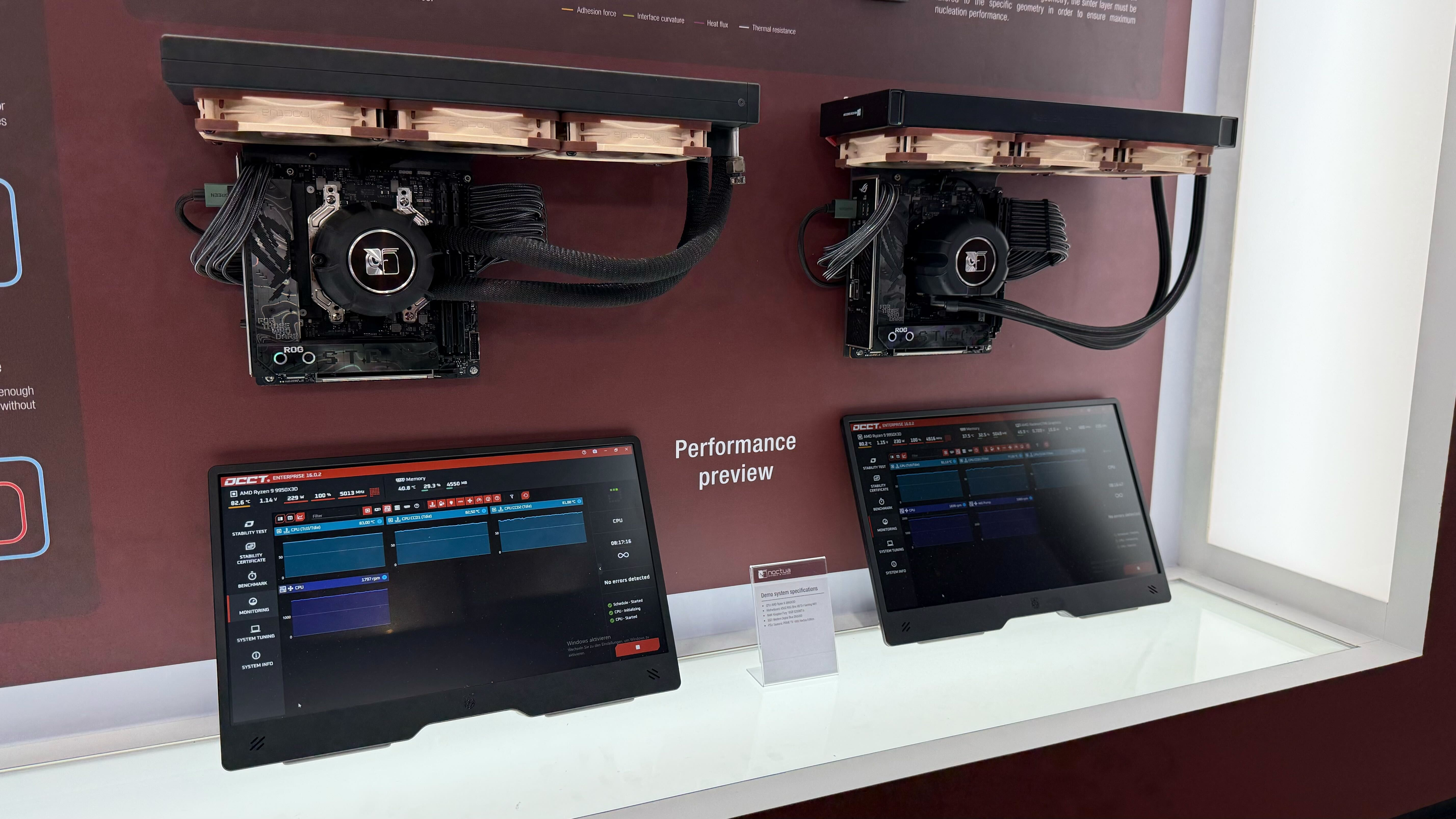
Tom's Hardware got a chance to visit Noctua's booth at Computex 2026, and we went deep on two key products for the company. The first is the NL-LC1 all-in-one liquid cooler, which we've already covered separately. The second regarded the company's ongoing efforts to develop a passively circulated thermosiphon liquid cooling solution.
A thermosiphon CPU heatsink works on a simple principle: a working fluid in a closed loop is exposed to a heat source, changes phase to a gaseous state, enters a condenser, sheds its heat by changing back into a liquid phase, and then naturally falls back toward the low point in the loop.
This simple principle encounters all sorts of challenges on the way toward use in a practical CPU heatsink. And Noctua is both characterizing and combating those problems with its typical thoroughness.
Noctua's problem-solving to this point has included developing a finned evaporator surface that helps ensure that the fluid flow in the evaporator is not turbulent, which causes warm vapor to mix with the colder fluid further from the evaporator surface, reducing the effectiveness of the system.
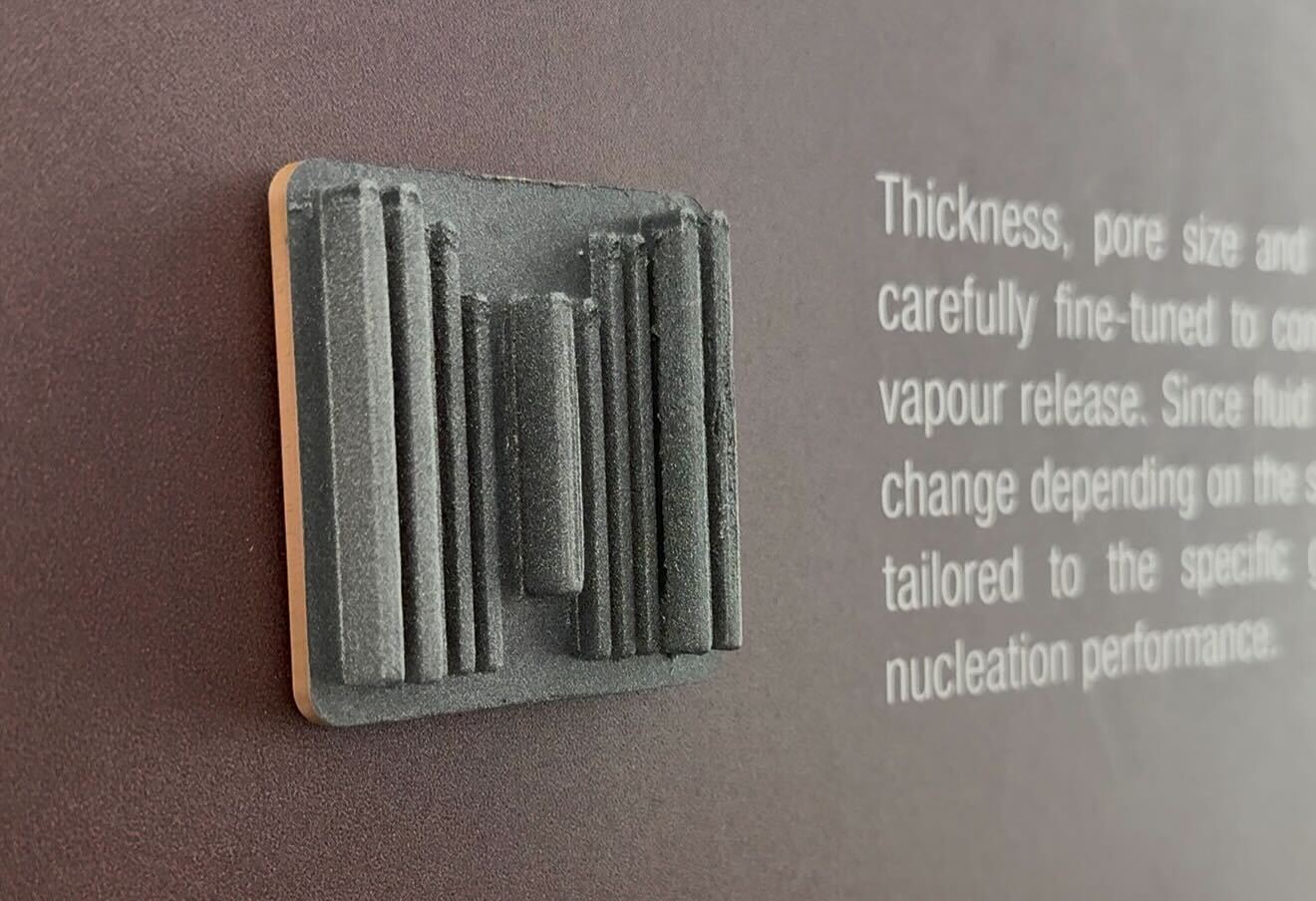
Noctua showed off how it's further improved the performance of its evaporator by applying a thin layer of sintered copper to its surface. Because of the high surface area created by this rough, porous wicking layer, capillary action draws more cool liquid towards the evaporator surface as the fluid already nearest the surface vaporizes.
This sintered layer avoids the formation of insulating bubbles or films over hot spots, as might happen on a smoother surface, which would negatively affect both the thermal performance of the heatsink and the convection of the working fluid through the system.
Noctua demonstrated the performance of this most recent thermosiphon prototype by putting it side-by-side with a 360mm version of its NL-LC1 AIO, both cooling an identical Ryzen 9 9950X3D test system running at a PPT of 230W. Accounting for some variance in the workload, both test systems showed a CPU temperature of just over 80 °C, suggesting that the passively circulating thermosiphon is able to deliver cooling performance similar to that of an AIO with an active pump.
Beyond the sintered evaporator coating, the inlet and outlet hoses of the cooler now sit on the same side of the evaporator, much like those of an active AIO pump, for better motherboard clearance and compatibility. The tubes on this prototype also feature a new material that reduces permeation, seals better at the connectors, and achieves full regulatory compliance.
Overall, the unit now looks much like a typical AIO and much closer to a retail-ready product versus the somewhat rough-and-ready prototypes of years past.
Between the internal and external refinements evident in this latest version of the thermosiphon, Noctua is confident enough in the performance and manufacturability of the product that it has set a potential launch window for the unit, and it tentatively expects a retail version to arrive sometime in Q3 2027. While that's still a ways away, it's typical of the company's dogged pursuit of near-perfection, and it seems safe to say that we should expect an even further refined version of this product at next year's Computex.

Follow Tom's Hardware on Google News, or add us as a preferred source, to get our latest news, analysis, & reviews in your feeds.




 English (US) ·