
 3 weeks ago
58
3 weeks ago
58
DF Retro Super Show 021: The Big Thief: The Dark Project Remaster Episode Ft. Nightdive Studios! - YouTube
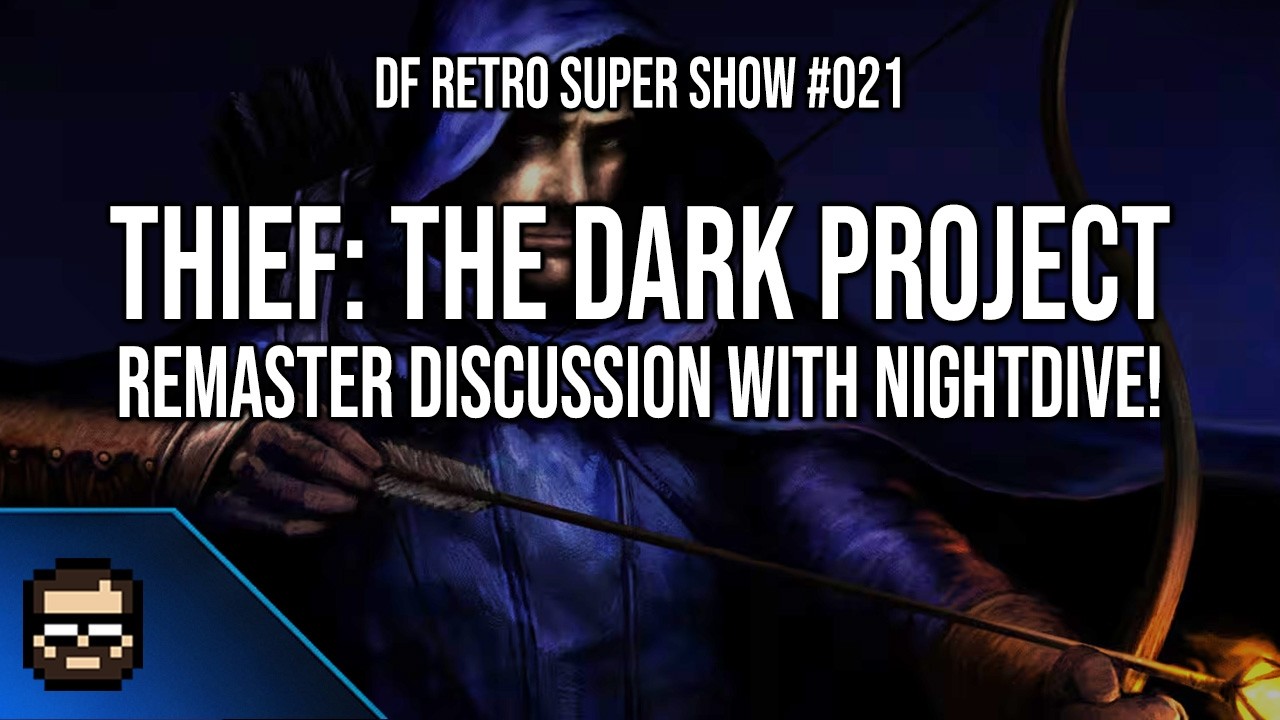
It's great that the Nightdive's remasters of various classic games give new players a chance to experience them without having to download a fixpack or remap the controls or whatever, but it's also a wonderful opportunity to learn new things about games we already loved. Each remaster is like an archaeological dig and you never know what it'll uncover.
Digital Foundry's Retro Super Show recently spoke to Nightdive about their current project, a remaster of Looking Glass Studio's stealth classic Thief: The Dark Project. If you're super into the minutiae of Thief, as you should be, it's a cool insight into the making of the game and in particular, the Dark Engine that powers it.
"There's nothing else like it even to this day," Nightdive software engineer Josh Dowell says. As he explains, Nightdive got to see "a very very out of date version control repository for the code" and that made the origins of its oddities more obvious. "I think most of the team that started working on it ended up moving to different projects and then a whole new team took over for the second half of its development," he says.
Back when it was just called The Dark Project, Thief was shown at E3 in 1997 and scheduled to release later that year. It was soon delayed to 1998, and the comments Dowell found attached to the code make it seem like it was still being worked on as it made its way out the door. "My favorite part of looking through the Dark Engine codebase has been seeing all of the evil comments left by the Looking Glass programmers, all the Irrational Games programmers," he says. "They have the wildest things to say about the code. They say, 'Giant hack! Never replicate this! We must fix this before '98!' 'E3 hack! We must delete this after E3!' and it's still there in Thief 2."
In spite of the rushed and hacky nature of its creation, the Dark Engine is capable of incredible things—feats of audio, AI, and lighting that were cutting edge at the time and still able to impress. Part of why it works so well is what it shares with another boundary-pushing first-person game of the era. "Thief's rendering and the technology that powers the levels is, shockingly, it's just a clone of Quake," Dowell says. "The way they do the lighting is exactly the same as Quake, the way that lights are turned on and off is Quake."
While he calls the two "eerily similar" the differences are "really strange" as he puts it. "So Quake uses precomputed visibility, which means when you're standing in a specific part of the level, the game knows exactly what you can see without having to think about it. But the Dark Engine does what Quake does during its precomputing phase, where every single doorway in the world is a portal and it sees the rectangle that you can see through that portal and it sees the other portals to other doors and then calculates which ones you can see through that portal. It's super complicated and I can't believe they got away with it in '98, because it's doing the thing that Quake did that was slow, but it's doing it in real-time."
Thief: The Dark Project Remastered doesn't have a release date yet, but you can follow its progress on Steam, GOG, and Epic.





 English (US) ·