New York rep announces game ownership bill that would require consumer ownership rather than sale of licenses
5 hours ago
5
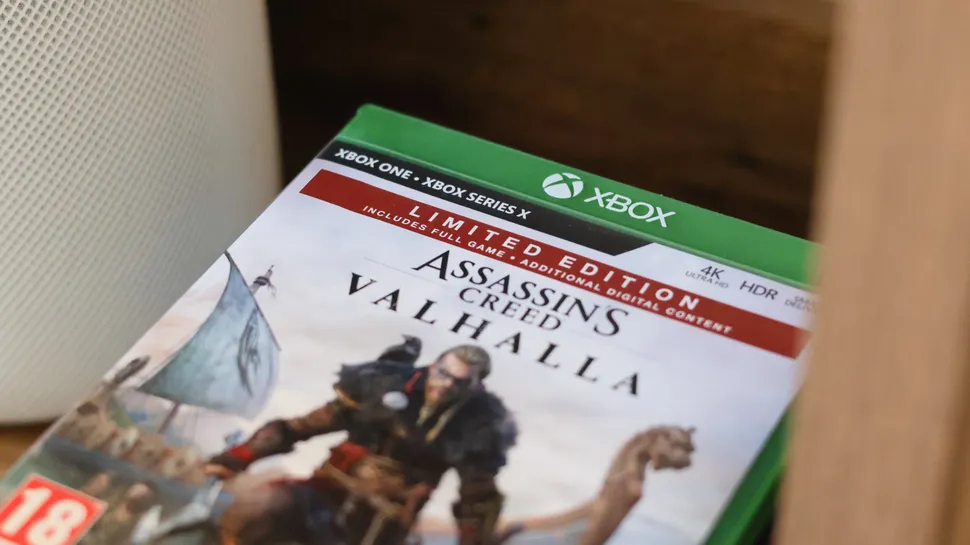
(Image credit: Tom's Hardware)
Rep. Ritchie Torres of New York's 15th congressional district has introduced the Power To The Players Act. This new legislation aims to protect consumers by directing the FTC to establish regulations on game ownership to curb anti-consumer business practices. "Under the bill, buying a video game would give the consumer ownership of the game rather than a license to play it," the release says. "Games with online functionality would also be required to provide an offline mode before the servers supporting them are shut down."
Games having an expiration date despite being more expensive than ever has been scrutinized by players all over the world, along with aggressive monetization schemes within the games themselves. Rep. Ritchie Torres isn’t the first to fight for gamers, as Pennsylvania state senator John Kane also recently introduced the Protect Our Games Act, requiring publishers to provide an offline mode, community servers, or a 25% minimum refund. Players want to be able to enjoy their games even if the publisher decides to stop supporting the game, but Sony doesn’t think the players own their games and that they have the right to pull the rug from under them. Sony’s lawyers even recently said in a defense in an ongoing class action lawsuit that clicking on the “purchase” button would obviously not lead the consumer to think that they were acquiring a durable right to use the game instead of a revocable license; basically a one-time rent fee that Sony could take away at any moment that benefits them.
One of the most prominent recent examples of players not owning their games came in 2024 with The Crew, an online-only racing game that Ubisoft shut down for server upkeep, making it unplayable even for those who had recently purchased it. Ubisoft had not provided a way for community servers to be set up, nor an offline mode, since even the single-player campaign depended on a connection to Ubisoft’s servers. Another is the notorious yearly sports games released by EA, 2K, and Sony, with NBA 2K25 specifically being cited by Rep. Torres in his announcement of the Power to the Players Act; NBA 2K25 is being pulled from digital storefronts, with the online servers being shut down only two years after release, leaving players unable to use a main feature of the game they purchased, and new players unable to purchase the game at all. Overwatch 2’s release also killed the first Overwatch game, replacing it outright instead of the first game becoming a purchasable and separately playable game.
The Crew’s shutdown prompted the Stop Killing Games movement, demanding that publishers leave the games functional after discontinuation in the form of an offline mode, peer-to-peer patching, and the ability to host community servers. The movement also pushes back against the industry standard of selling games as revocable licenses rather than outright ownership of the copy. Concrete definitions and details of the bill have yet to be released, but it aims to require publishers to provide an offline mode before shutting down servers and actual consumer ownership instead of a license that can be taken away, potentially satisfying the demands of the movement. We don’t know whether the right to transfer that Rep. Torres mentions is mandatory for digital purchases, but it will likely be relevant for physical copies. It is also important for the bill to strictly define what ownership is and what rights the owners have over their copy.
One popular phrase against these practices is “If buying isn’t owning, piracy isn’t stealing,” pushing strongly against these revocable licenses that the companies want you to purchase. Piracy is often touted as a better experience by players, as it removes DRM that often slows games down and provides a permanent copy that the publishers cannot modify to be dysfunctional; many players say they would be more glad to purchase the game if it were actually a better experience. It is still yet to be known how well the bill will execute its aims, but this is a big step towards correcting the direction the gaming industry is currently on.
Get Tom's Hardware's best news and in-depth reviews, straight to your inbox.
Jhet Borja is a serial hobbyist who was taking apart toys from childhood and sketching inventions. He now loves doing DIY projects ranging from designing custom 3D-printed parts, building PCs and keyboards, all the way to woodworking. If he's not getting his hands dirty, he's probably brainstorming his next project.

 5 hours ago
5
5 hours ago
5




 English (US) ·