
 3 weeks ago
45
3 weeks ago
45
“What have we been breathing in?”
Million-dollar fines won’t end billionaires’ data center pollution, neighbors fear.
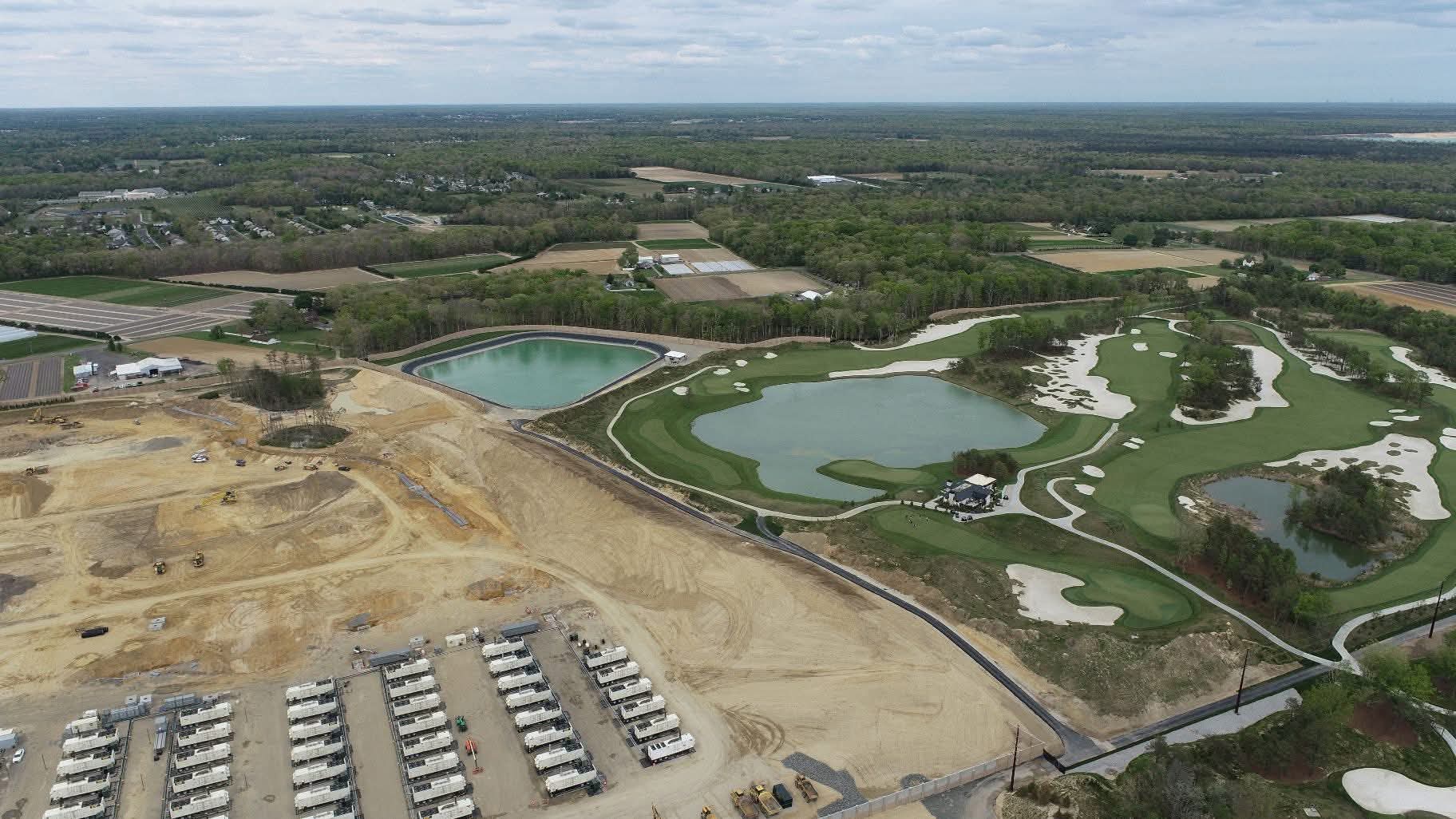
Drone image showing DataOne's Vineland data center. Credit: Sustain SJ
Drone image showing DataOne's Vineland data center. Credit: Sustain SJ
This week, New Jersey ordered the operator of one of the East Coast’s largest planned data centers to pay a $1.1 million fine for secretly installing and operating gas generators in violation of the state’s Air Pollution Control Act.
DataOne got hit with the fine after an investigation by The Guardian and Floodlight News in August shared thermal drone footage showing that 45 of the 62 gas generators were operating. None of the generators had permits required for generators with 37-kilowatt capacity or higher, despite running at 1,982-kw capacities more than 50 times higher than the state limit.
States track gas generators like DataOne uses because they emit “carbon dioxide, nitrogen oxides, carbon monoxide, and other combustion-related pollutants,” officials from New Jersey’s Department of Environmental Protection (DEP) noted. Those pollutants can worsen asthma, trigger heart attacks, and cause early deaths.
Calling out the enforcement action as “by far the largest ever taken against a data center in New Jersey,” DEP Commissioner Ed Potosnak vowed that data centers would not be “constructed or operated with impunity in this state.”
However, while historic, the state’s solution doesn’t immediately relieve residents’ concerns. DataOne was given 45 days to apply for the permits or else cease operations, but they can continue operating the gas engines while seeking permits. Nichole Gardner, a co-chair of a local environmental nonprofit Sustain SJ, told Ars that “we believe it is insufficient, both in dollar amount and enforcement. The DataOne site should be made to discontinue operations during the 45-day period until the proper permits are issued.”
In a statement to The New York Times, the company seemed unfazed by the fine.
“We will apply for the air permits for the temporary generators,” a DataOne spokesperson said, while noting that DataOne “disagreed” with the fine. Eventually, the polluting gas generators will supposedly be phased out, as the data center is “transitioning to low-emission, quiet fuel cells,” the spokesperson noted.
Fine seems like “pocket change”
Previously, DataOne told Floodlight that it “remains committed to meeting all applicable environmental and permitting requirements.”
But trust is broken with the neighbors of the Vineland data center. The residents know the data center is powering Microsoft’s AI tools like Copilot and worry DataOne will do whatever it takes to keep that deal in place. They’re questioning why DataOne would quietly start operating potentially polluting generators in an area “near farmland, homes, and two schools,” the NYT reported. Also baffling, because their concerns were first raised at a public town hall in February, they want to know why it took state and local officials six months to enforce the state’s pollution controls. Tiffany Leone-Vespa, a mother who’s been in the neighborhood for 18 years, told the NYT that questions remain about air quality.
“What have we been breathing in since they’ve been running these generators without permits?” Leone-Vespa said. “What emissions were released? What’s the air quality surrounding this neighborhood? Has it ever been measured?”
Steve Brown, another longtime Vineland resident, told the NYT that “it’s a ‘don’t ask for permission, just ask for forgiveness later’ kind of deal” that wouldn’t deter similar threats.
“It’s still kind of a drop in the bucket for a company that has several billion dollars of capital,” Brown said.
Leone-Vespa agreed that million-dollar fines won’t end billionaires’ data center pollution.
“What’s $1.07 million?” she told the NYT. “They should have done it for each generator they were running, illegally. They’re billionaires. It’s like pocket change.”
Gas generators “impossible to miss”
Zac Landicini founded Sustain SJ to fight for responsible development in South Jersey. He told the NYT that he spoke up at the public town hall meeting last February after a “farmer first spotted ‘some type of unit’ on satellite imagery” taken on DataOne’s site. The farmer wasn’t trying to probe the site, Ars learned, but was innocuously photographing a neighboring golf course.
Floodlight’s report shares many aerial shots showing what the farmer saw, which stunned state inspectors who finally visited the 2.6 million-square-foot data center complex in July. According to the NYT, the “tractor-trailer-size” generators were “impossible to miss” and certainly were not there when inspectors last visited in December 2025.
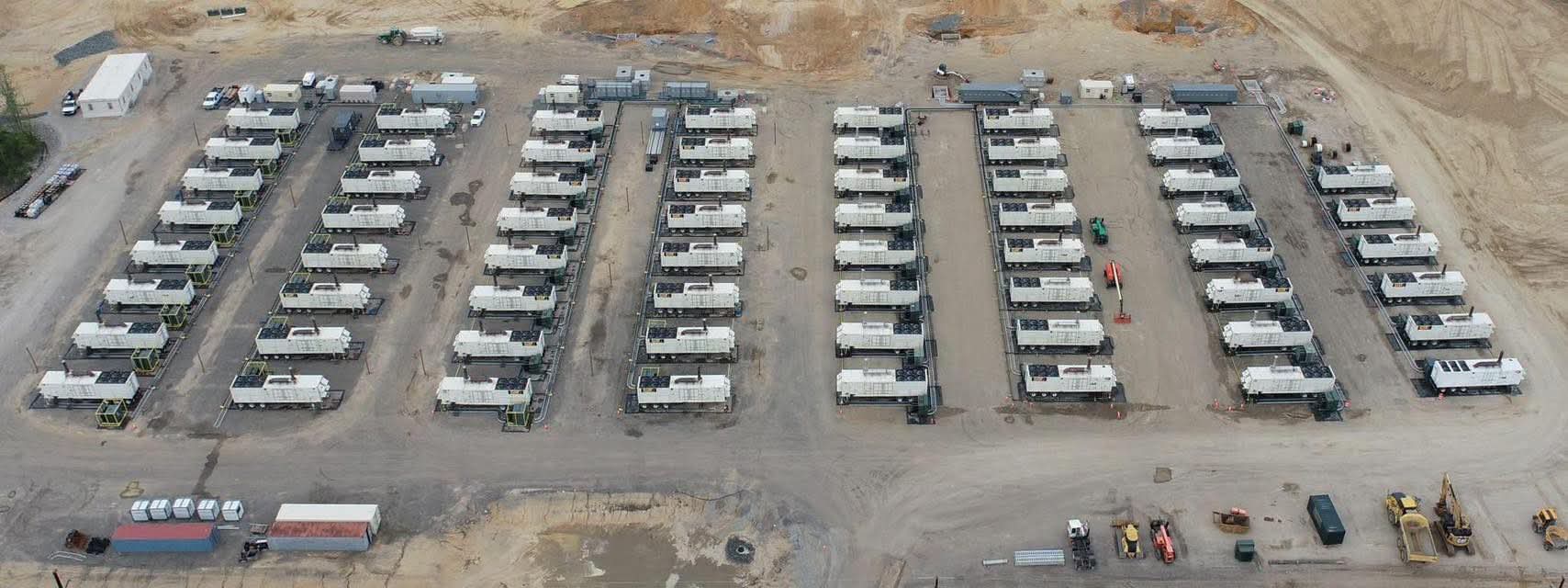
Drone image showing DataOne’s Vineland data center.
Credit: via Sustain SJ
Drone image showing DataOne’s Vineland data center. Credit: via Sustain SJ
In New Jersey, there are more than 80 data centers planned or under construction, but DataOne is notably the first data center operator to rely on gas generators to create its own off-grid supply. Although the state previously was welcoming to such expansive data center projects, public backlash pushed the state to recently pass a law ending data center tax credits. That blocked data center developers from a fund that previously offered $250 million in incentives, and it showed residents that they had more power than data centers might think.
According to Floodlight, DataOne tried to get permits for about 30 gas generators, but after New Jersey’s DEP “found multiple deficiencies,” DataOne withdrew its application in May. At that time, the company planned to pivot to using fuel cells emitting less harmful pollutants. In the meantime, maintenance logs showed it had been using the more problematic generators, some of which were first turned on in October, Floodlight reported.
For the public, DataOne’s project appears continually shrouded in secrecy. After the project was announced in March 2025, construction progressed quickly before the public began to understand how big the data center would be, South Jersey Climate News reported. Backlash was immediate, however, when Vineland’s mayor and council proposed giving DataOne a $6.2 million loan.
Matt Williams, a resident and Sustain SJ member, told SJ Climate News that “it caught everybody by surprise” that the town would try to use public funds for a private project.
DataOne ultimately rejected the loan, but the complaints started rolling in from that point forward. Most immediately frustrating for residents was noise pollution from the data center. That prompted a federal lawsuit from residents after DataOne notched several public health violations for excessive noise. Sustain SJ’s Gardner told Ars that complaints remain while the state’s fine seems like “a slap on the wrist” for DataOne that ignored that “local residents are impacted on a daily basis.”
“This has been a recurring theme with this project—the state and local government consistently prioritize the interests of these companies over the well-being of the community that has been dealing with noise and pollution for months,” Gardner said.
DataOne not trusted as “good neighbor”
On Instagram, Sustain SJ noted that on the same day New Jersey issued the fine, DataOne was holding a public town hall, promising residents in Frankfort, Indiana, that “they’d be ‘good neighbors,’ specifically regarding sound and light.” The group cited a local report where DataOne CEO Charles-Antoine Beyney was quoted saying that his company “decided to build on” the experience they had in Vineland and “do it the exact contrary here in Frankfort.”
To Sustain SJ, it seemed like Beyney was hyping up his company for “just simply following the rules.”
Until there’s more transparency and residents are given a voice in how data centers are operating, groups like Sustain SJ are advocating for a state-wide moratorium on new projects.
“We have been fighting this development for nearly a year and we have proven time and time again that they cannot be trusted to be ‘good neighbors,’” Gardner said.

Ashley is a senior policy reporter for Ars Technica, dedicated to tracking social impacts of emerging policies and new technologies. She is a Chicago-based journalist with 20 years of experience.







 English (US) ·