Lurking among Netflix’s best sci-fi shows, however, is an anthology series that deserves attention for more than its quality. It may not have the reputation of Stranger Things or Dark, but there’s nothing else quite like Love, Death & Robots out there. The four-season, mostly animated anthology sci-fi series arrived in 2019 and redefined what words like “ambitious” and “experimental” can mean when it comes to television. Across 45 episodes, it has moved between more stories, genres and animation techniques than any one series should be able to cover.
To explain the show in its simplest terms, Love, Death & Robots is a collection of self-contained sci-fi stories. However, this broad-strokes summary doesn’t do LD&R justice. Some episodes are cerebral, some action-packed, and others can be disturbing, hilarious, or just outright weird. All of them, however, are incredible. Most importantly, the series doesn’t rely on any single approach, and that embracing of creative freedom makes Love, Death & Robots the most original of Netflix’s original shows, sci-fi or otherwise.
Love, Death & Robots Is The Most Experimental Show On TV
There is a lot to love about Love, Death & Robots, but its two defining qualities are its sheer variety and its willingness to explore ideas other shows can’t and/or won’t. The first four seasons contain 45 episodes, each with an original story, but simply pointing that out doesn’t quite capture exactly how unpredictable LD&R is. Stories can be bleak, absurd, philosophical, violent, tender, grotesque, or comedic, often within minutes of one another. In fact, the only true consistency to be found LD&R is how enjoyable it is.
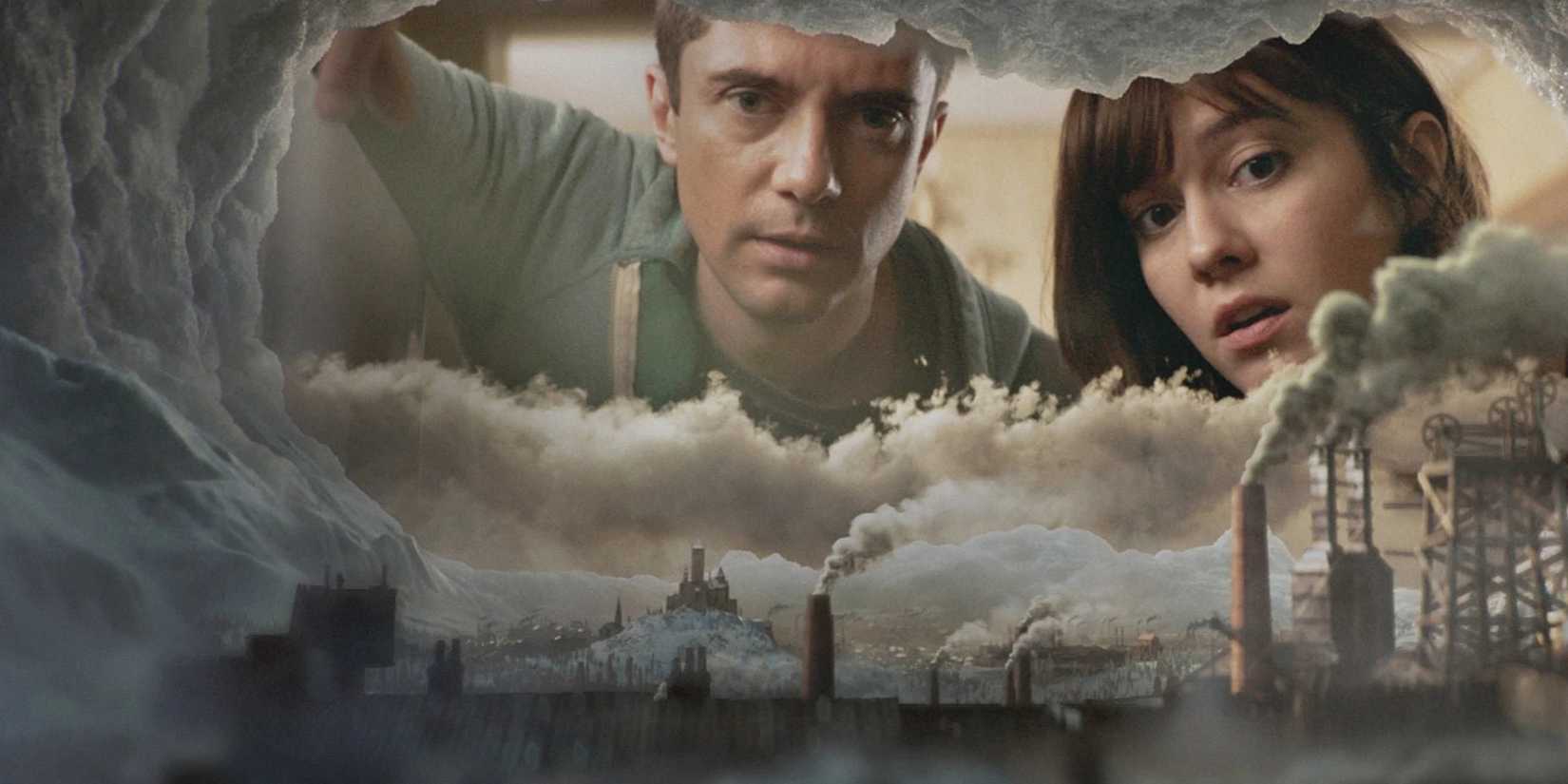
No other show could take, for example, a story about a pool cleaning robot gaining sentience and make it a deeply introspective exploration of the concept of personhood and the peace found in simplicity. LD&R does exactly this with season 1's “Zima Blue”, and it’s absolutely timeless. What’s more, the animation styles are just as varied as the narratives. Love, Death & Robots can shift from photorealistic CGI to stylized 2D animation, stop-motion-inspired imagery, and even unusual live-action hybrids. Episodes don’t merely tell different stories; they can look as though they came from entirely different serIes.
Most importantly, though, Love, Death & Robots has never treated the sci-fi genre as a limitation. It routinely combines its science-fiction with horror, fantasy, satire, romance, war stories, comedy, or pure visual spectacle, and then always uses these ingredients to create something as beautiful as it is unexpected. Hollywood has produced plenty of anthology movies and series, but very few have been given this much room to be strange. Love, Death & Robots is not simply experimental for the sake of it; it’s a bold experiment in making experimentation the point.
Even The Shows Most Like LD&R Are Nothing Like LD&R
Until it is experienced firsthand, it is easy to dismiss Love, Death & Robots as another anthology sci-fi series. There are several other prominent ones out there. For example, Prime Video’s Secret Level is an immediately obvious comparison. Like LD&R, it’s also an adult animated anthology, with each episode telling a separate story. Secret Level, however, has a foundation in video games, with its shorts set within established gaming worlds. That gives it a clear identity to tie its stories together with.
Netflix’s other anthology sci-fi series, Black Mirror, is another easy comparison because it also uses standalone sci-fi stories to examine a variety of different themes and ideas. Just like Love, Death & Robots, Black Mirror’s episodes can jump between genres and tones. However, there is a difference beyond one being live-action and the other predominantly animated. Black Mirror’s episodes remain connected by their exploration of speculative futurism and technoparanoia.
Love, Death & Robots has no such thematic anchor. Its title may suggest recurring subjects, but the series can ignore any or all of them. One episode can focus on alien creatures, another on a bizarre fantasy world, another on military science fiction, and another on something that barely fits a recognizable genre.
Secret Level has video-game worlds to draw from, while Black Mirror has its technological and sociological focus. Love, Death & Robots doesn't have any common threads like this, or the restrictions that come with them. Every episode can establish its own universe, then disappear before the next story begins. That is why calling it an animated sci-fi anthology undersells what makes it special: almost nothing is off the table, and so there’s nothing out there like Love, Death & Robots.
Release Date
March 15, 2019
Network
Netflix
Directors
Víctor Maldonado, Patrick Osborne, Robert Valley, Alfredo Torres Martínez, Jerome Chen, Emily Dean, Rémi Kozyra, Léon Bérelle, Dominique Boidin, Alberto Mielgo, Maxime Luère, Andy Lyon, Robert Bisi, Dave Wilson, David Nicolas, Simon Otto, Damian Nenow, Laurent Nicolas, Kevin Van Der Meiren, Vitaliy Shushko, Owen Sullivan, István Zorkóczy, Javier Recio Gracia, Oliver Thomas
Writers
Tim Miller, Philip Gelatt









 English (US) ·