Based on existing systems from social media to AI, every episode of Black Mirror is a short, self-contained story offering a vision of the future that feels easily within reach, and all the more disturbing for it. Except for a handful of episodes that end happily, most finish on an ominous note, with a haunting final scene or twist. The best episodes of Black Mirror, like "White Christmas" and "Common People," make it one of the darkest TV shows ever created, and even its worst rated ones still beat most great sci-fi shows with a dystopian theme.
Black Mirror's Worst Episode & Why It's Still Pretty Good
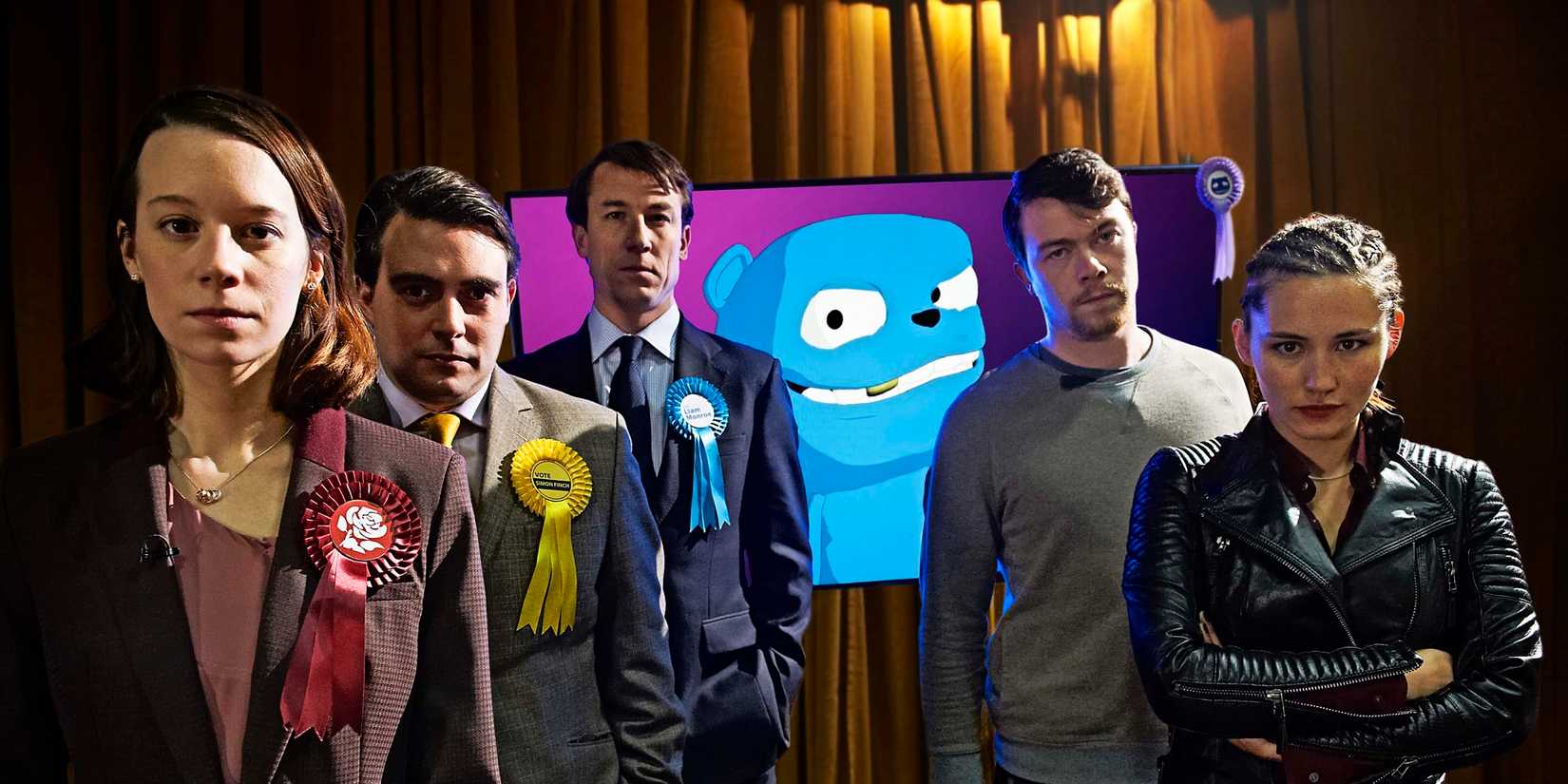
One of the most fascinating things about Black Mirror is the way that viewers' opinions vary drastically, with many episodes of the show polarizing fans. That said, audiences tend to agree on the series' best and worst rated episodes, with three usually occupying the bottom spot in the charts. These are "Mazey Day," which felt more like a supernatural horror, "Rachel, Jack, and Ashley Too," in which a fictionalized version of Miley Cyrus had her ideas stolen from inside her head, and "The Waldo Moment," which, with a 47% positive rating, is the lowest-ranked Black Mirror episode on Rotten Tomatoes.
"The Waldo Moment" is episode 3 of the second season of Black Mirror, and lasts for 44 minutes.
Despite "The Waldo Moment" not seeming to resonate with fans when it first aired, it is one of the many Black Mirror episodes that has aged remarkably well, growing more ominous over time as it appears to have predicted the future. Following a comedian who places his satirical cartoon avatar, Waldo, up for election, the episode has uncanny parallels with both Donald Trump's election loss in 2020, as Waldo's loss results in rioting, and a 2026 British by-election in which a satirical candidate known as Count Binface challenged right-wing politician Nigel Farage, getting 26.9% of the vote.
Black Mirror reminds viewers that the truth can be just as strange as fiction, and of all the underrated episodes of Black Mirror that deserve a sequel, "The Waldo Moment" is one. Ending on a cliffhanger in which its main character is met with police violence, the episode felt like an origin story or prequel, with excellent worldbuilding and pacing that ensured none of the episode's runtime was wasted. Even with comparatively low ratings, "The Waldo Moment" is better than many sci-fi series, which can run out of steam and ideas, resulting in unrealistic twists or early cancelation.
Black Mirror Could Last Forever, But Would That Be Hypocritical?
With advances in technology being made at a rapid pace, there is more than enough inspiration for Black Mirror to last forever, and with the success of TV shows based on roleplaying games, even the series' attempt at a "choose your own adventure" style feature-length episode could be revisited. With nine Emmy Award wins out of 29 nominations, an 83% positive Rotten Tomatoes rating, and a format that reflects the growing trend for anthology TV shows, the idea of Black Mirror continuing indefinitely seems likely.
That said, the idea of Netflix endlessly running a TV show that regularly criticizes streaming platforms, including Netflix itself, and TV shows that dominate the attention of the public, feels like the start of a Black Mirror episode. Black Mirror is Netflix's longest-running sci-fi series, but even so, imagining the show still airing two decades into the future feels more than a little dystopian. Black Mirror may well come to a logical end, but hopefully "The Waldo Moment" will get a sequel before that time.
Release Date
December 4, 2011
Network
Channel 4, Netflix
Showrunner
Charlie Brooker
Directors
Owen Harris, Toby Haynes, James Hawes, David Slade, Carl Tibbetts, Ally Pankiw, Bryn Higgins, Dan Trachtenberg, Euros Lyn, Jodie Foster, Joe Wright, John Hillcoat, Sam Miller, Tim Van Patten, Uta Briesewitz, Colm McCarthy, Jakob Verbruggen, James Watkins, John Crowley, Otto Bathurst, Anne Sewitsky, Brian Welsh
Writers
Jesse Armstrong





 English (US) ·